

Summary
Around the world in 2025, people showed up. In Romania, Poland, Portugal, and Germany, Australia and Canada, voters stared down fear, nationalism, and authoritarian noise and said: Not here. Not now. Not us.
This article is a call to remember that we’re not alone in the fight for democracy. We’re part of something bigger, something global. People everywhere are proving that when we organize, speak up, and vote with conscience, we win. Not every battle, maybe. But enough to protect the soul of a nation.
America can do the same. We can push back against MAGA-style extremism. We can reject chaos, corruption, and cruelty—and choose law, decency, and the Constitution instead.
What others have done, we can do. Let’s get loud. Let’s get involved. Let’s get this right.
Introduction
As an American lawyer, I swore an oath to defend the Constitution. Today, in 2025, I find myself alarmed and heartbroken by what’s happening to that Constitution under President Donald Trump’s new administration. I’ll be clear: I am not a fan of Trump, and I am deeply worried about the future of our democracy and the safety of future generations. His return to the White House has felt like an assault on the values I hold dear.
In my opinion, Trump’s administration is trampling on the rule of law, dividing our country against itself, and shredding our relationships with allies around the world. Each day it feels like we drift further from the America I believe in, one guided by the Constitution, unity, and democratic ideals shared with our friends abroad. The damage being done isn’t just policy; it’s striking at the very soul of our nation.
Sometimes I wonder if our democratic fabric can survive this strain. But as dark as things seem at home, I also see sparks of hope abroad. All around the world in 2025, everyday voters are pushing back against the same kind of right-wing populism and authoritarian politics that Trump represents. From Eastern Europe to Western Europe, people are rising up at the ballot box to say: no, we will not slide into extremism. Despite serious risks and challenges, voters in country after country are mobilizing to reject MAGA-style leaders and far-right agendas.
In recent elections — Romania, Poland, Portugal, Germany, Australia and Canada — citizens have stood up to would-be strongmen and showed that democracy can fight back. As an American, I find inspiration and a clear message in these victories. Let me tell you what’s happening and why it matters to all of us.
Romania: Choosing Hope Over Fear
Romania’s presidential election this spring was one of the most consequential in its modern history. It pitted a bombastic far-right populist, 38-year-old George Simion, against a quiet, pro-European reformer, Nicușor Dan. Simion is an ultranationalist firebrand who modeled himself after Trump, complete with conspiracies and a campaign of fear. He even vowed to cut off aid to Ukraine and spread ugly anti-minority rhetoric. A lot of Romanians were genuinely afraid that Simion’s anger-fueled movement would sweep him into power; he had come out ahead in the first round of voting, and many assumed he was on track to win in the runoff.
But on runoff day, something remarkable happened: the people of Romania said “not so fast.” Voters turned out in the largest numbers since the 1990s, and they delivered a decisive victory to Nicușor Dan instead. Despite the odds, Dan beat Simion by a solid eight-point margin, an outcome almost no one predicted. Romanians from all walks of life essentially decided that hope and democracy were worth fighting for.
When Simion tried to prematurely declare himself the winner and cry fraud (a move straight out of Trump’s playbook), Romanians didn’t buy it. He ultimately had to concede defeat, because the mandate for Dan was clear and overwhelming. I watched videos of Dan’s supporters dancing in the streets of Bucharest in the early hours after the vote, celebrating a win for decency, and I felt a jolt of hope. Romania stared down its would-be autocrat and chose unity and Western democracy over fear. That’s the power of voters refusing to give in to intimidation.
Poland: Standing Up for Democracy
Poland is another country at a democratic crossroads. After years of nationalist rule that eroded the independence of courts and media, Polish voters finally ushered in a more moderate government in late 2023. But even now, Poland’s presidency is still held by an ally of the old regime, acting as a roadblock to reform. So in 2025, the Polish people seized another chance to make things right through a presidential election.
In the first round of voting, liberal Warsaw Mayor Rafał Trzaskowski came out on top, narrowly edging out a hard-right challenger, Karol Nawrocki. Trzaskowski is a pro-European, pro-freedom candidate who promises to protect minority rights and rebuild ties with the EU. Nawrocki, in contrast, represents the nationalist camp that traffics in anti-immigrant fear and wants to keep Poland on a confrontational, authoritarian path. This election has become a battle for Poland’s very soul.
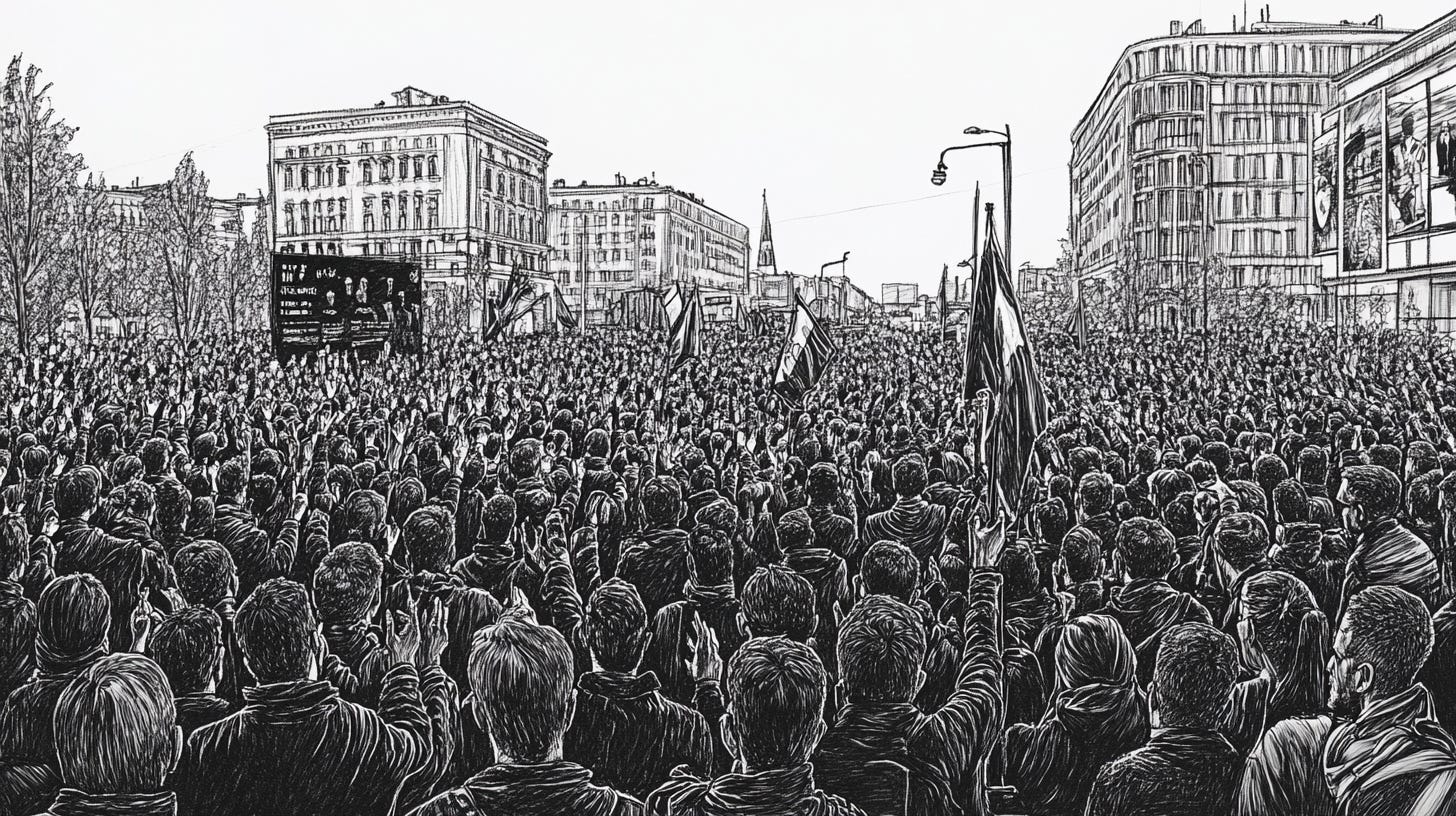
As I write this, Trzaskowski is leading heading into the final runoff on June 1. By all accounts, he’s favored to win, a development that would have been hard to imagine just a few years ago, when Poland seemed firmly in the grip of right-wing populists. What’s truly inspiring is how ordinary Poles are rallying for this change. Just last week, tens of thousands of people poured into the streets of Warsaw in dueling marches for the two candidates.
They came from villages and cities across Poland, not just to back a politician but to stand up for two starkly different visions of their nation’s future. On Trzaskowski’s side, people waved Polish and EU flags, chanting for an inclusive, democratic Poland. They know what’s at stake: their hard-won freedoms, their place in Europe, and the hope that their country can move beyond fear and division. Watching images of those massive crowds, I was struck by the courage and passion on display. Polish voters are refusing to give in to apathy or despair – they are pushing back, determined to reclaim their democracy from the forces of intolerance.
Here are two detailed sections on Canada and Australia’s 2025 elections, highlighting how voters in both countries rejected far-right populism and reaffirmed their commitment to democratic values.
Canada: A Rejection of Extremism and a Vote for Stability
In April 2025, Canadians sent a clear and measured message at the ballot box: they will not be pulled into the chaos next door. While tensions with the U.S. simmered, fueled by inflammatory remarks from Donald Trump suggesting Canada should become the “51st state”, Canadian voters held firm. The result? A win for centrist leadership.
Former Bank of Canada and Bank of England governor Mark Carney led the Liberal Party to a minority government, defying early projections that had the Conservative Party ahead. Voter turnout spiked in key urban ridings, particularly among younger Canadians and first-time voters, many of whom cited Trump’s growing influence and Canada’s shifting media landscape as key concerns.
What changed the tide? Canadians recognized that democracy isn’t immune to erosion. The Conservative Party had begun echoing MAGA-aligned themes, stirring fear around immigration, public safety, and identity. But unlike previous elections, Canadians didn’t shrug this off as fringe politics. They organized. They voted. And they made it known that importing American-style authoritarianism wasn’t on the table.
Strategic voting among progressive and centrist voters played a big role, especially in provinces like Ontario and British Columbia, where Liberal and NDP supporters coordinated efforts to block far-right candidates. The result wasn’t just a win for one party—it was a collective statement from Canadians that democracy, accountability, and social cohesion still matter.
And the impact was immediate. Post-election, Canada reasserted its independence in trade negotiations and doubled down on policies supporting press freedom and public broadcasting, recognizing the role of accurate information in sustaining a healthy democracy. Internationally, Carney’s new government made early moves to strengthen ties with democratic allies and keep the country firmly outside the gravitational pull of authoritarian rhetoric. In a moment when fear could have won, Canada chose steadiness. And that’s worth paying attention to.
Australia: A Resounding Mandate for Progressive Governance
On May 3, 2025, Australians went to the polls, and handed the Labor Party a historic win. Prime Minister Anthony Albanese didn’t just get re-elected. His party gained 93 seats in the House of Representatives, the highest number ever won by a single party under Australia’s modern electoral system. The opposition Liberal-National Coalition collapsed, with even opposition leader Peter Dutton losing his own seat, a political earthquake by any standard. Voters had grown tired of obstructionism, fear-based campaigning, and right-wing media amplification of imported culture wars. From climate action to Indigenous rights, Australians made it clear they wanted progress, not paranoia.
And the message didn’t stop with the vote. Immediately after the loss, the decades-long partnership between the Liberal and National parties fractured. The Nationals walked away from the Coalition and chose to sit on the crossbench, signaling a deep ideological split. This wasn’t just a political defeat, it was a moral reckoning. For years, Australia’s right-wing figures tried to import Trump-style messaging into local debates. They ran on fear of immigration, embraced culture war talking points, and attacked environmental policies as threats to “freedom.” But Australians didn’t bite. Labor’s platform, which focused on cost of living relief, integrity in government, and tackling climate change, resonated across urban and rural areas alike.
This election wasn’t just about who would govern. It was a referendum on values, on whether Australians would give in to imported extremism or stand tall for democratic resilience. They chose the latter. Albanese’s new government is already moving forward with legislation to strengthen anti-corruption watchdogs and expand voting access, setting a model for what bold, pro-democracy leadership can look like. Australia didn’t just dodge the MAGA playbook. They tore it up and threw it out.
Portugal: Keeping the Far Right Isolated
Even in countries where the far right is gaining ground, voters and leaders are finding ways to keep extremism in check. Take Portugal: this year, Portuguese voters faced a snap general election amid political turmoil and public frustration over corruption, immigration, and a housing crisis. A relatively new far-right party called Chega (“Enough”) tapped into people’s anger and fear. Chega’s bombastic leader railed against immigrants and the political establishment, and his message resonated with enough voters to dramatically boost the party’s seat count in parliament. For the first time, a hard-right populist party was no longer a fringe player in Portugal, but a serious force.
Yet here’s the important part: Portugal did not hand the keys of power to the extremists. In the election, the majority of voters still opted for traditional democratic parties, a center-right alliance won the most seats, and the longtime center-left Socialists were not far behind. Crucially, all the mainstream parties, left and right, have refused to form any alliance with Chega. They’ve effectively cordoned off the far right, denying it any say in the new government.
Chega may have gained seats, but it remains isolated, unable to advance its agenda because no one else will work with them. That stance takes real political courage and a commitment to principle. Portuguese society, scarred by a past dictatorship, understands the value of keeping demagogues out in the cold. The lesson is clear: even when extremist voices get louder, a united democratic front can keep them from taking over.
Germany: A Firewall Against Extremism
Germany offers a similar story. Over the last couple of years, the far-right Alternative für Deutschland (AfD) party has surged in support, especially in some eastern regions. They’ve won shocking victories in a few local elections and are polling near record highs nationwide, developments that would have seemed unthinkable not long ago. For many Germans, it’s a chilling reminder of their history and a sign of deep frustration with the status quo.
Yet Germany’s response has been to maintain what politicians call a “firewall” around the AfD. Every other major party, from the center-right to the left, refuses to collaborate with the AfD in any legislature. No matter how many seats the AfD wins, they cannot translate those gains into real power because they have zero coalition partners. This consensus isn’t always easy; it means traditional rivals sometimes have to work together in awkward coalitions just to keep extremists out. But so far, it has worked.
Even as the AfD rants from the sidelines, Germany’s democratic institutions have held firm. The far right is kept out of government entirely, sending a strong message that racism and authoritarianism have no place in the halls of power. Watching the German establishment, and voters, hold that line gives me hope. It shows that if a society is fiercely committed to its democratic values, it can erect safeguards against those who would undermine them.
A Global Wave of Civic Courage
In each of these countries, democracy faced a crisis. In each case, people responded with courage and conviction. These examples span different cultures and histories, but they all tell a similar story: when pushed to the brink, ordinary citizens can rise up to protect their democratic way of life. None of these victories over the far right were easy or inevitable. They happened because enough people chose to get involved, to vote, to organize, to reject the politics of fear.
Some of these citizens risked personal safety or endured intimidation, yet they persisted. I find that incredibly moving. It reaffirms my belief that the true power in any country lies with the people, if only we remember to use it.
As an American watching these events unfold abroad, I feel a mix of gratitude and urgency. Gratitude, because these brave voters have shown that the slide toward authoritarianism can be stopped. Urgency, because their fight is also our fight, and time is running out for us to act here at home. Their stories are our wake-up call. The message is simple: democracy doesn’t defend itself, it needs people to step up. And Americans, we need to step up now.
America: Our Turn to Stand Up
Here in the United States, we are at our own crossroads. Donald Trump’s renewed presidency in 2025 is testing our Constitution and our national character in unprecedented ways. I’ve seen this administration undermine the rule of law, attack the independence of our courts and agencies, and even try to criminalize political opponents. I’ve watched as Trump’s rhetoric pits neighbor against neighbor, pouring gasoline on every cultural fire to keep us divided.
Internationally, he’s insulted our closest allies and cozied up to authoritarian rulers, weakening the alliances that keep us safe. Every day, it feels like another norm is shattered, another line crossed. It’s a daily assault on the guardrails of our republic.
But if there’s one thing the global examples above have shown me, it’s that we do not have to accept this fate. We, the American people, can push back, just as voters in Romania, Poland, Portugal, Germany and beyond have pushed back against their would-be autocrats.
I believe in my heart that the majority of Americans do not want hatred, lawlessness, and isolationism to define our country. We still believe in equality, in justice, in decency, in the idea that America can still be a shining example of democracy and freedom.
We can already see Americans waking up. Communities are organizing to defend voting rights; young people are speaking out against book bans and bigotry; local leaders are standing up to federal overreach when it tramples on their people. These are sparks of hope. But now we need a roaring fire of civic action to truly turn things around.
We cannot wait for a savior; we have to be our own saviors. Every American voter has a role to play in this moment. Our system gives us many chances, there are elections every single year in some form, from local school boards and city councils to Congress and the presidency. Each of those is an opportunity to course-correct.
The authoritarian playbook relies on people giving up, on citizens thinking their voice or vote doesn’t matter. We must prove that wrong. In my opinion, the most patriotic thing any of us can do right now is to stand up and be counted, to defend the America we love against the MAGA-style extremism that threatens it. Because if we don’t, who will?
What We Must Do Now
So what does that mean in practical terms? In a democracy, hope is not a passive feeling, it’s something you do. Here are a few steps each of us can take to fight back and make a difference:
• Vote in every election, big or small. Register, stay informed, and show up at the polls every time. Turnout is the ultimate weapon against extremism, as we saw in Romania, a surge of voters can completely change the outcome. Never think any race is too minor; school board and state legislature elections matter greatly for our values and future.
• Speak out and educate. Share my Uncensored Objection Substack. Have conversations with friends, family, and neighbors about what’s at stake. Don’t let lies, hate, and fear go unchallenged in your community. Sharing facts and personal stories about why democracy and inclusion matter can slowly erode the power of propaganda. Courage is contagious, and your willingness to speak up can inspire others to do the same.
• Support pro-democracy candidates and hold officials accountable. Back candidates, from either party, who demonstrate integrity, respect the Constitution, and reject authoritarian tactics. Likewise, hold your current representatives accountable. Call, write, protest if you must, and let them know loudly and clearly that we expect them to uphold their oath to the Constitution, not bow to any would-be strongman. They work for us, and they need to feel that every day.
• Get involved locally. Volunteer with civic organizations, join a local advocacy group, or attend town halls and school board meetings. Whether it’s a voter registration drive, a community workshop, or a peaceful rally, show up. Our presence and activism send a message that we the people will not be asleep, silent, or intimidated. Change often starts at the local level — be part of it.
• Stand up for the vulnerable. Authoritarians always target minorities and marginalized groups first, hoping others will stay quiet. Don’t. Stand in solidarity with those who are attacked, whether it’s immigrants, religious minorities, LGBTQ+ neighbors, or anyone else being scapegoated. An injury to one is an injury to all in a democracy. By protecting each other, we reinforce the fundamental American values of pluralism and justice.
I know this is a lot to ask. But I believe in the American people. I believe that just as Romanians, Australians, Canadians, Poles, Portuguese, Germans, and so many others have shown courage in 2025, we Americans can rise to the occasion, too. The fight for democracy is truly the fight of our lives, for our country, for our children, and for the values we cherish.
The world is watching, and history will remember what we do next. In my opinion, it’s time to stand up and be counted. Let’s prove that government of the people, by the people, and for the people will not perish on our watch.
Mitch Jackson, Esq. | links
Related:
Trump Gets Nightmare News as World Elections Crush Him (Meidas Touch Podcast)
This post is free—but building a future rooted in truth and democracy takes real investment. If my work speaks to you, subscribe and if you can, chip in $5/month or $50/year—because independent journalism that actually gives a damn (and delivers ideas you can use today) is worth backing.
Use this spreadsheet as a resource to call/email/write members of Congress, the Cabinet and news organizations. Reach out to your own reps, as well as those in other states on a specific committee important to a topic you’re sharing. Use your voice and make some “good trouble.”
https://docs.google.com/spreadsheets/d/13lYafj0P-6owAJcH-5_xcpcRvMUZI7rkBPW-Ma9e7hw/edit?usp=drivesdk
“47 is a self-absorbed narcissist driven by ego, not service—surrounded by a cult-like following that enables his disregard for anyone but himself. The only way to break this cycle of chaos is to reject the party that empowers him—at every level of government, from mayor to president—for decades to come.”