

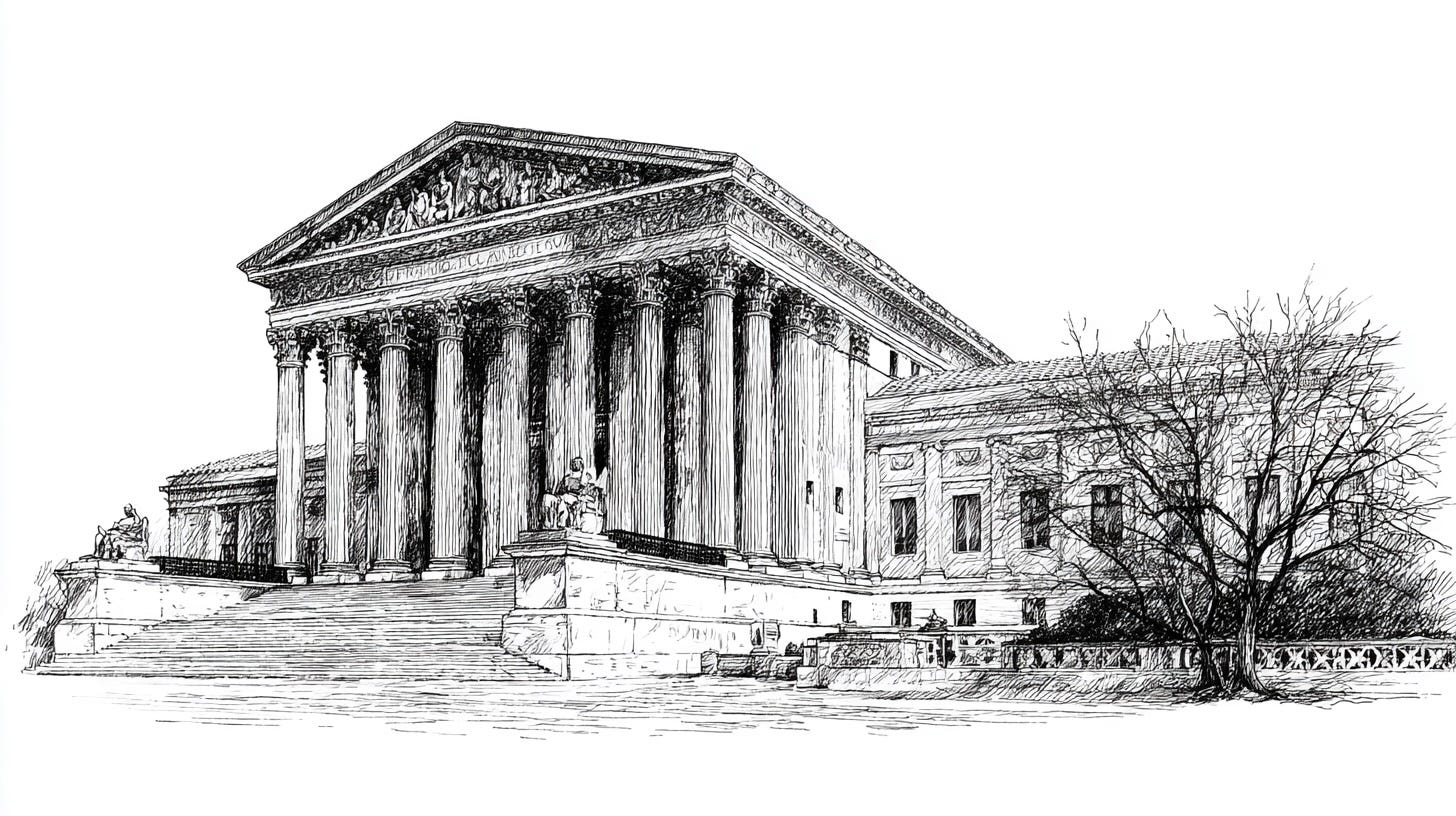
A big test is unfolding in Washington that touches your wallet. The Supreme Court has heard arguments in consolidated cases called Learning Resources, Inc. v. Trump and V.O.S. Selections, Inc. v. Trump. These cases ask if President Trump is allowed to use a 1977 law, the International Emergency Economic Powers Act (IEEPA), to slap tariffs on goods from around the world by himself.
Lower courts in Washington, D.C., and New York already said no. In those decisions, judges found that IEEPA was never meant to let the president rewrite the tariff system without involving Congress. They made clear that no single person should have the power to change our entire tariff system.
Now the highest court is weighing in, this is what I expect to happen next.
This week the justices questioned whether any part of IEEPA even authorizes tariffs at all. They asked if handing so much authority to one person is an unconstitutional delegation of power. The tone inside the courtroom sent a message: skepticism. It did not look like a majority of justices was ready to give the President free rein to tax goods without Congress.
WHAT DOES IEEPA SAY?
IEEPA is an emergency law from 1977. It gives the president power to act when an unusual threat to national security or our economy comes from abroad. In such emergencies, it allows regulation of imports and exports that involve foreign interests. Specifically, Section 1702 says that during a declared emergency the President has authority to “regulate ... importation or exportation” of any property in which any foreign country or person has an interest.
President Trump invoked this law in 2025. He declared one emergency tied to global fentanyl trafficking and immediately imposed higher tariffs on goods from China, Mexico, and Canada. He also declared a separate emergency based on America’s trade deficit, and under that emergency he slapped a 10% tariff on a wide array of imports from around the world.
JUSTICES IN THE HOT SEAT
Inside the courtroom, justices made their worries clear. Liberal Justice Elena Kagan pointed out that Congress, not the President, has the power to impose taxes and to regulate foreign trade. She reminded everyone that the IEEPA statute has many provisions, but it does not authorize raising duties. Justice Ketanji Brown Jackson noted that Congress meant IEEPA to constrain presidential power, not expand it.
Justice Neil Gorsuch went to the heart of the matter: what stops Congress from handing all of its foreign trade authority to the President if they wanted to abdicate? He said if Congress grew “tired of legislating,” it could just do that – and then who would be left to set trade policy? The solicitor general admitted that would be an abdication, not a true delegation.
Chief Justice John Roberts warned about a “major questions” case: taxes on Americans require clear permission. He emphasized that no one had ever used this emergency law before to impose broad tariffs. Justice Amy Coney Barrett pressed on the wording “regulate importation.” She asked how shutting off all trade could be allowed, but imposing a targeted tariff would not. Justice Brett Kavanaugh joined in, noting what an odd gap that would be.
Justice Sonia Sotomayor reminded everyone firmly that tariffs are really taxes on Americans. Even Justice Samuel Alito, who sometimes supports executive power, could not say all was well; he admitted that he didn’t have enough votes lined up for that sweeping interpretation.
WHAT THIS MEANS FOR YOUR WALLET
All this arguing has real consequences for you. If the Court limits these tariffs, everyday Americans will feel some relief. Think about it: these tariffs are like a hidden tax on everything you buy. Economists say they have driven up prices on cars, electronics, food and more. If the Court strikes them down, many prices could ease.
You and your family might save hundreds of dollars per year that were otherwise going toward these import taxes caused by Trump and his administration. Manufacturers and retailers might respond by cutting prices or hiring more people. The pressure that pushed inflation higher could come down. The economy as a whole could pick up speed, because trade would be more predictable and cheaper. More money in your pocket means more confidence and stability.
WHEN THIS HAPPENS TRUMP WILL CLAIM CREDIT
Trump will try to rewrite history when the economy improves. He will stand before cameras and take credit for easing inflation, even though his reckless tariff policies fueled the very crisis he now wants praise for solving. The truth is that the Biden administration had left behind a strong, steady post-pandemic economy that was the envy of the world. Trump and his enablers dismantled that foundation, reignited inflation, and strained supply chains that were finally recovering. When prices begin to ease again after the Court limits his tariff powers, expect a flood of propaganda claiming that his leadership restored prosperity.
In reality, it will be the undoing of his own damage. The misinformation machine will roar back to life, pushing false stories of success while hoping Americans forget who broke the system in the first place.
WHY IT COULD BE TOUGH
Not everything is simple. Some companies liked those tariffs because they protected them from foreign competition. If the Court strikes down the broad use of IEEPA, those industries will feel vulnerable again. They will likely push Congress hard to give them some new law or permanent protection. That fight will be fierce.
Also, the government has been using these tariffs to collect hundreds of billions of dollars. Losing that revenue means Congress will have to find money elsewhere, perhaps by cutting budgets or raising other taxes. The immediate process could be messy.
If the Court throws out the IEEPA authority, billions already collected in tariffs may have to be refunded. Judges and officials will have to untangle who gets that money back, a complicated task. That creates uncertainty for businesses and government budgets. Even if it’s a rough road, the payoff is a clear rule: one person should not have this kind of tax power alone. That power belongs to Congress.
CONGRESS AND THE NEXT BATTLE
What happens next is up to Congress. If the Supreme Court rules against the IEEPA tariffs, President Trump will surely ask lawmakers to pass a new law to keep them.
Congress will face a choice: hand over that power or protect its authority. You should let your representatives know how you feel. Many members will feel pressure from the White House to give the President what he wants, while others will be reluctant. We the people have to remind them: making tariffs and taxes is Congress’s job, not the President’s alone.
It’s possible Congress will try to pass some kind of tariff authority, but with strings attached or limits. Or it might refuse, insisting that any new tariffs need the normal legislative process. Either way, it will be a heated battle in the halls of power. Your voice and vote can make a difference in that fight.
LOOKING AHEAD
If the Supreme Court curtails these tariffs, there will be some clear winners. First, our system of checks and balances will be reinforced. The message will be: Congress makes the tax laws, not one man. That strengthens democracy and shows our courts still work.
For everyday families, it means cheaper goods and lower inflation. Many of the burdens put on Americans by these tariffs will ease. Foreign trade deals will be more stable without surprise taxes. Some U.S. businesses that thrived under the tariffs will protest and have to adjust.
The economy might wobble a bit as importers and exporters reset their plans. Lawmakers will scramble to fill budget gaps. You’ll likely see headlines about lost revenue and political fights for months.
The IMF and others warn that tossing these tariffs could rattle the global economy. Still, think of the bigger picture: this fight is about protecting our future. It shows our kids and grandkids that democracy and law still matter. It reminds everyone that this country has rules. In the end, we will have a fairer process and clear rules for the future.
THE TAKEAWAY
You and your family deserve a government that follows the rules and respects the Constitution. The Supreme Court’s handling of this case is crucial to that promise. Watch closely and talk about it. We all need to let leaders know that their power has limits.
In the end, this fight will shape who pays the next tax and who makes the rules: Congress or one person in the White House. You should stand up and speak out. Your money, your democracy, and your children’s future depend on it.
Mitch Jackson, Esq.
[let’s connect on LinkedIn]
You’re already in this fight, and I don’t take that lightly.
Your support fuels independent journalism that doesn’t flinch when the truth gets uncomfortable. You want to do more? Step up.
Subscribe monthly or annually. Or take it to the top and become a Founding Member. Get direct access to me, real conversations, and a seat at the table where ideas turn into action.
Gift a subscription to someone who still believes in democracy and refuses to be gaslit by noise.
We’re not just publishing. We’re building a movement that holds power accountable. Stay with me. Tuesday was a good sign but we have a great deal of work ahead of us. Let’s finish what we started.
How does a potential rollback of the illegal Trump tariffs have a negative impact on the economy? It's not like tariffs collected to date were really making any dent in the existing debt picture. What am I missing?
Another fine and accessible analysis, Mitch. Thank you.