

50 U.S.C. Section 3023(a)(1) reads: Any individual nominated for appointment as Director of National Intelligence shall have extensive national security expertise.
What Happened On Tuesday
What do you do when the man about to take charge of every American secret tells the United States Senate, in writing, thirteen days before his confirmation vote, he has never managed intelligence activities?
Fifty-one Republican senators answered on Tuesday night.
On July 28, 2026, the Senate confirmed Jay Clayton as Director of National Intelligence (DNI) by a vote of 51 to 47. Every Republican who voted, voted yes; the entire Democratic caucus voted no.
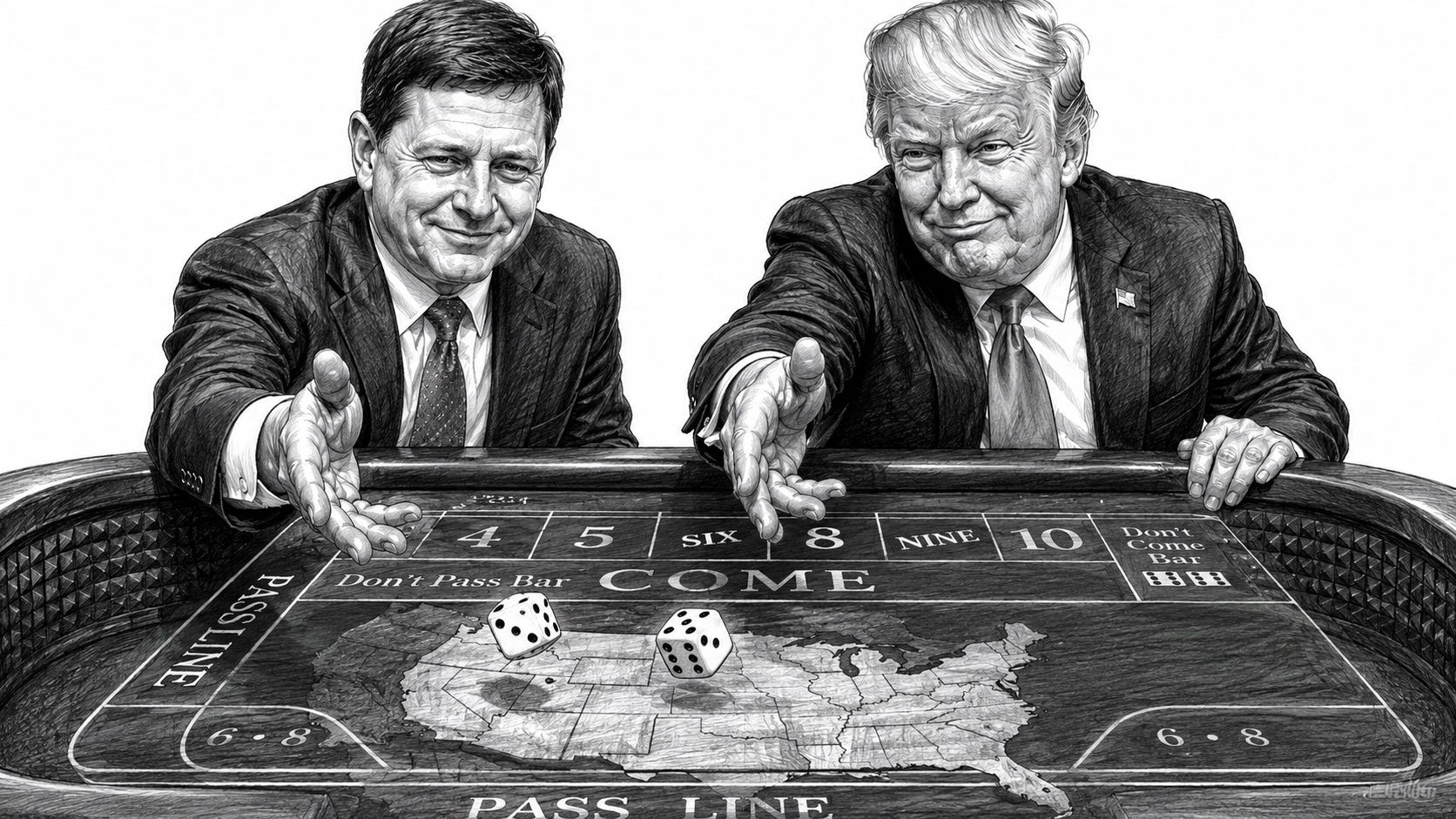
Republicans gave him the job. Now the Trump administration is playing craps with our national intelligence and your security and safety.
Clayton now sits on top of 18 intelligence agencies. He controls the National Intelligence Program budget. He shapes what reaches the Trump’s Daily Brief. He serves as Trump’s principal adviser on intelligence.
This matters. Congress wrote a qualification standard for this exact job into federal law after 9/11, in mandatory language, and the Senate Select Committee on Intelligence built two separate written questions around the standard. Clayton answered those questions honestly. Seven words in one of them should have ended the nomination before the floor ever saw his name.
Section 3023 Is Not a Suggestion
Congress passed the Intelligence Reform and Terrorism Prevention Act in 2004, after the 9/11 Commission found American spy agencies had failed to connect information they already held. Congress created the DNI position to fix a failure of connection. Congress also wrote a qualification standard directly into the law.
50 U.S.C. Section 3023(a)(1) reads: Any individual nominated for appointment as Director of National Intelligence shall have extensive national security expertise.
Shall. Mandatory language, sitting inside a statute governing the most sensitive appointment in the executive branch.
Ask any lawyer in your life about the word shall. You will get the same answer every time. Shall is a command. Congress writes shall into a statute when Congress intends to strip the choice away from whoever comes next. Congress writes may when Congress wants to hand someone room to decide. Section 3023 says shall. Trump wanted Clayton in the chair, and fifty-one Republican senators read a command and heard a suggestion.
Thirty Years of Work, Zero Days Inside the Agencies
Clayton’s résumé is impressive but lacks intelligence work at nearly every point.
He earned an engineering degree from Penn, economics degrees from Cambridge, and a law degree from Penn, followed by a clerkship with a federal district judge in Pennsylvania. He joined Sullivan and Cromwell in 1995 and made partner in 2001. He spent more than twenty years there closing mergers, running capital markets deals, advising banks and telecom companies, and handling corporate governance matters. Trump made him SEC chairman in 2017.
He left government and became non-executive chair and lead independent director of Apollo Global Management, a firm he told the committee manages roughly 800 billion dollars. He chaired the audit committee at American Express. He taught at Wharton and Penn Law. He returned to Sullivan and Cromwell as a senior policy adviser.
In 2025, Trump made him U.S. Attorney for the Southern District of New York.
Now count the missing pieces. Three decades in law, finance, securities regulation, and corporate governance. Zero years inside any of the 18 agencies he now commands. He has never served at CIA, NSA, DIA, NGA, NRO, or any departmental intelligence element. He has never run a collection operation, never handled a case officer, never signed a covert action finding, never supervised an analytic line. Until Tuesday night, no Senate committee had ever vetted him for a law enforcement or national security position of any kind.
Then He Would Not Say Who Won
On July 15, under oath, Democrats on the Intelligence Committee asked Clayton a question requiring no clearance, no briefing book, and no access to a single classified document. Who won the 2020 presidential election.
He would not answer. Over roughly two hours, senators came back to the question again and again. His response: “I am not an election denier. Joe Biden was certified.”
Certified describes a paperwork step performed by state officials and a joint session of Congress. The senators asked who won.
Senator Mark Warner told Clayton the committee had tried every route available to give him room to acknowledge a simple public fact. Warner has known Clayton for years, worked with him, and welcomed this nomination in June. He walked out of the hearing “bitterly disappointed.”
Senator Mark Kelly put the stakes in operational terms. Clayton will sit in rooms with this President many times over the next three years. The job sometimes requires him to say the opposite of what the President wants to hear. A nominee who declines to contradict Trump when Trump is not even in the room will decline in the Oval Office and in the Situation Room too.
Here are two more moments from that hearing that really got under my skin.
Clayton defended his office’s subpoenas of four New York Times journalists over their reporting on security concerns involving the Qatari gifted aircraft now serving as Air Force One. The Committee to Protect Journalists called the subpoenas an extraordinary escalation of efforts to intimidate independent news organizations. After being hammered by a judge in court and stumbling through the hearing, the Justice Department withdrawn the subpoenas. I’m sure you heard about it. The DOJ’s actions were big news. But Clayton was of OK with all of this. In addition to his lack of intelligence experience, Clayton’s position on this issue is a problem for me.
Clayton also said he was unaware his predecessor, Tulsi Gabbard, took part in the FBI’s January 28 raid on the Fulton County, Georgia election office, where agents seized 2020 ballots, tabulator tapes, and voter rolls. Gabbard confirmed to Congress in writing that Trump personally directed her to be present, and that she arranged a phone call between the President and agents on the ground. The episode produced congressional letters in January, a public Intelligence Committee hearing in March, and litigation from Fulton County. The incoming head of American intelligence told the Senate he did not know about any of it. Just like the subpoenas, this is a problem for me too.
Why These Two Failures Multiply
Either problem alone produces a weak appointment. Stacked together, they produce a structural risk to the country.
The DNI job exists to carry unwelcome facts to the President of the United States. Everyone who held the position seriously understood the assignment. James Clapper brought 46 years in intelligence. Mike McConnell ran NSA and served as the Pentagon’s chief of intelligence during the Gulf War. John Negroponte spent four decades in the Foreign Service and briefed Reagan from the President’s Daily Brief. Dennis Blair spent 30 years in the Navy and held an intelligence community leadership post.
Those credentials did real work every single day. Expertise is what lets you recognize an assessment massaged to please someone upstairs. Expertise is what lets you push back with specifics in hand. A director who lacks the tools to evaluate the tradecraft lacks the tools to protect the tradecraft.
Independence supplies the other half of the equation. Clayton committed in writing to shield analysts from retaliation, to keep political litmus tests out of personnel decisions, to notify Congress if anyone substitutes political judgment for analytic judgment, and to stop any effort to push employees out over their perceived politics. Those commitments hold for exactly as long as his willingness to tell this President something he does not want to hear.
He got a free rehearsal at his own confirmation hearing. Documented public answer. Cameras rolling. No classified equities at stake. He declined to take it.
A man who will not state a public fact in an open hearing gives you thin reason to believe he will defend an inconvenient assessment inside a SCIF.
Four Things to Watch Starting Now
Oversight keeps running long after yesterday ends. Here is where to point your attention.
Declassification tied to 2020. Declassification means the government takes secret intelligence material, strips the classification off, and hands the contents to the public, which converts an internal document into a political instrument the moment someone times the release for maximum effect. Clayton pledged in writing to keep the congressional intelligence committees fully and currently informed. Watch whether he notifies them before the next election related release, ahead of the fact, on the record.
Domestic election operations. This means pointing the machinery built for spying on foreign governments at Americans, at county clerks, at ballots, at voter rolls inside the United States. Gabbard set a precedent by appearing at a domestic election office raid at the President’s direction. By statute the DNI is barred from exercising police or law enforcement powers. Watch what Clayton does in November.
Section 702. This is the law allowing the government to collect emails, calls, and messages of foreign targets located overseas with no warrant, sweeping in the communications of Americans on the other end of those conversations. He called the authority indispensable and the lapse damaging. The reauthorization fight has centered on whether to pair the authority with the President’s voter ID legislation, a pairing Majority Leader John Thune publicly called unrealistic in June. Watch whether Clayton says anything on the record about where the blockage sits.
The workforce. The workforce means the analysts, collectors, and career officers who produce the intelligence a president reads every morning, along with the hiring and firing decisions deciding who stays in those chairs. He pledged personnel decisions would ignore political loyalty. He inherits an office whose acting director publicly celebrated the firings and whose staffing numbers the public has no way to verify. Watch the first personnel action he signs.
Do This Today
Call both of your senators. Not tomorrow. Today.
Ask one question and demand a specific answer: what will your office do to enforce 50 U.S.C. Section 3023(a)(1)?
If your senator voted yes, make them explain on the record how a nominee who told the committee in writing he has never managed intelligence activities meets a statutory requirement for extensive national security expertise. Get the answer in writing. Screenshot the reply. Post it.
Send this to the people in your life who believe confirmation votes are inside baseball played by other people in another city. Send it to the ones who already sense something has gone sideways and lack the vocabulary to say why. Give them the statute number. Give them the seven words.
Congress wrote a qualification standard into federal law because nearly 3,000 people died on September 11th when the intelligence community failed to connect what it already knew. Fifty-one senators decided the standard was optional.
It’s not, and you know it.
To speak to a U.S. Senator or representative’s office, the public number to the U.S. Capitol Switchboard is (202) 224-3121.
Make the call.
Mitch Jackson, Esq.
Please Subscribe and Support
The people who wrote shall into federal law counted on someone paying attention when fifty-one senators decided the word was optional. Subscribe to Uncensored Objection and stand with the readers who refuse to let a statute get quietly downgraded to a suggestion.
Calls made to uncle tim scott and ralph norman. Both offices thanked me for my input.
Trump requires only one qualification for any job. Blind loyalty to him.