

Judge Luttig’s Article
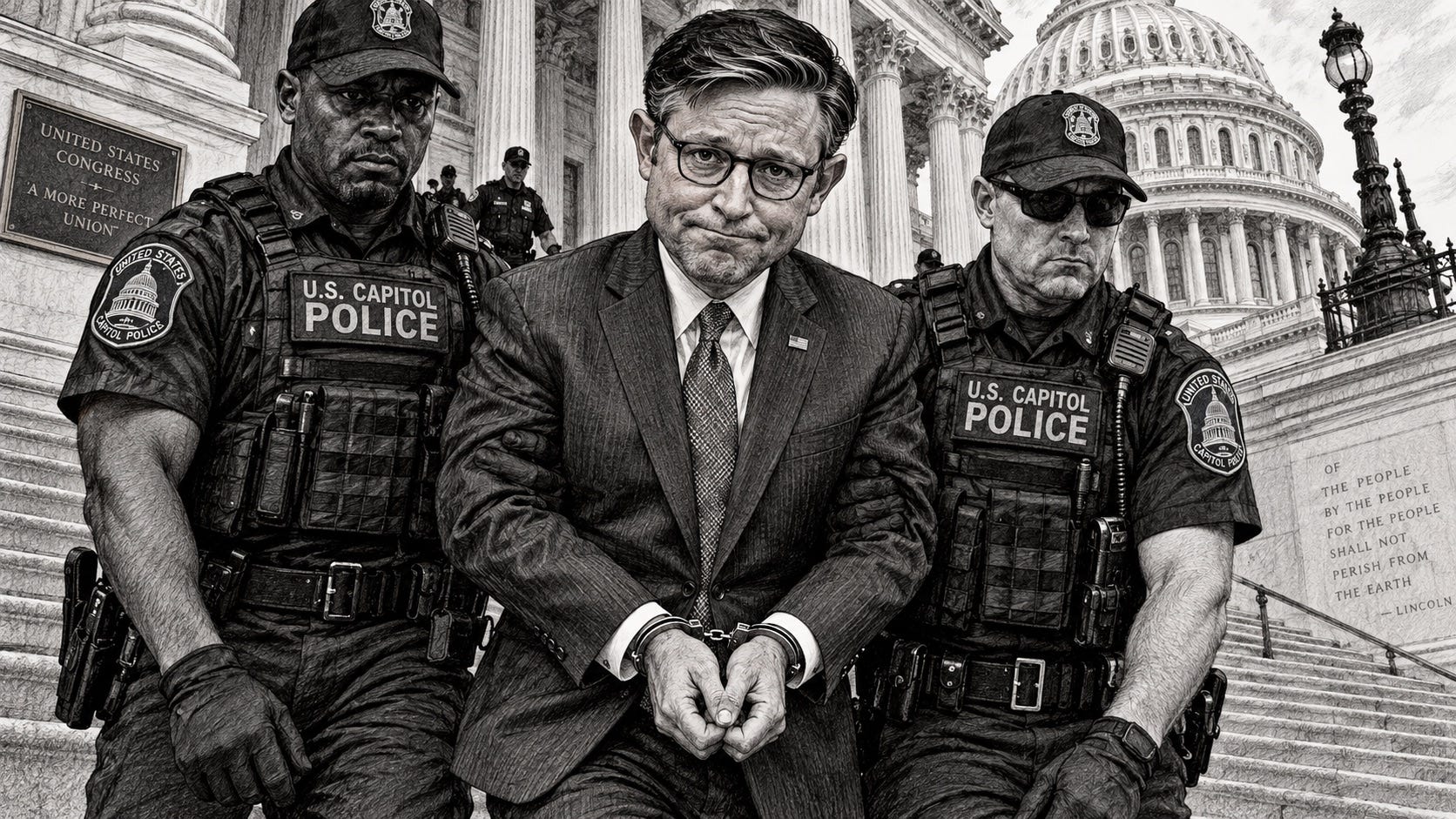
Former federal judge J. Michael Luttig has laid out an extraordinary hypothetical for January 2027: If Democrats win control of the House in the 2026 midterms, Republican officials could attempt to prevent enough duly elected Democrats from participating in the organization of the new House to preserve Republican control.1
Although criminal liability isn’t the focus of Luttig’s article, his warning raises another serious question: What happens if people actually try to carry out this scheme? The consequences may reach far beyond a constitutional showdown. Depending on who does what, and with what intent, those involved could find themselves facing a federal criminal investigation, and potentially federal prosecution.
Luttig describes a potential scenario in which Speaker Mike Johnson replaces the House Clerk before the new Congress convenes with someone willing to omit certain certified Democratic representatives-elect from the official roll. Those representatives-elect could then seek a federal court order requiring their inclusion. Luttig goes further and considers what would happen if such an order were issued and deliberately disobeyed. In my opinion, four federal criminal statutes deserve particular attention.
18 U.S.C. §371 — Conspiracy to Defraud the United States.
This may present one of the strongest potential theories. Section 371 applies when two or more people agree to interfere with a lawful function of the United States through deceitful or dishonest means, someone knowingly joins that agreement intending to further it, and a conspirator commits an overt act.
No theft of government money is necessary. If prosecutors could prove that officials secretly agreed to manipulate the House’s organization through knowingly false representations, fraudulent records, deceptive manipulation of the official roll, or other dishonest means, §371 could potentially apply.
The critical words are prove and dishonest. Hardball politics or even constitutionally questionable conduct does not automatically become a §371 felony. Prosecutors would need evidence establishing the agreement, deceitful or dishonest means, criminal intent, and an overt act.
18 U.S.C. §241 — Conspiracy Against Rights.
This statute makes it a crime for two or more people to conspire to injure, oppress, threaten, or intimidate someone in exercising a right secured by the Constitution or federal law. The Supreme Court has recognized that federal voters possess a protected right not simply to cast their ballots, but to have those ballots honestly counted and given their full value without fraudulent dilution or distortion.
That creates a serious legal question under Luttig’s hypothetical. If voters lawfully elect a representative and conspirators intentionally use fraud to prevent that certified representative-elect from participating in the organization of the House, prosecutors could argue that the conspiracy effectively nullified the voters’ constitutionally protected choice.
There is an important caveat: Supreme Court voting-rights cases such as United States v. Classic and Anderson v. United States involved fraudulent interference with voting or vote counting. They did not decide whether §241 reaches the precise post-election congressional-seating maneuver Luttig describes. So §241 presents a plausible prosecutorial theory, not a settled conclusion.
18 U.S.C. §401 — Criminal Contempt.
This becomes much more straightforward if a federal court enters a clear, lawful and enforceable order requiring an official to perform a particular act.
Section 401 gives federal courts authority to punish willful disobedience of their orders. If litigation reached a federal court and an official were clearly ordered to place certified representatives-elect on the roll, deliberate refusal to obey that order could expose that person to criminal contempt proceedings. Again, liability would depend upon the validity and clarity of the order and proof that the violation was willful.
18 U.S.C. §1512(c)(2) — Obstruction of an Official Proceeding.
This possibility requires special caution. Congressional proceedings fall within the statute’s definition of an “official proceeding.” But in Fischer v. United States, the Supreme Court substantially narrowed §1512(c)(2), holding that prosecutors must establish that a defendant impaired, or attempted to impair, the availability or integrity of records, documents, objects, or other things used in an official proceeding.
That distinction matters. Simply interfering with Congress is not necessarily enough. If conspirators intentionally falsified, corrupted, withheld, or otherwise impaired the integrity or availability of the official roll, certifications, or other records or things actually used to organize the House, prosecutors could investigate whether §1512(c)(2) applies. Whether Luttig’s hypothetical conduct would satisfy Fischer would depend heavily upon precisely how the scheme was carried out.
There is also major Supreme Court precedent supporting the underlying constitutional issue. In Powell v. McCormack, the Supreme Court held that the House could not exclude a duly elected representative who satisfied the qualifications for membership established by the Constitution.
And there is another constitutional complication: the Speech or Debate Clause. Members of Congress cannot be prosecuted on the basis of protected legislative acts such as their votes, speeches, or legitimate committee activity. The Supreme Court has made that protection clear. At the same time, the Clause does not create blanket immunity from federal criminal law for everything a member does.
That distinction could become decisive. A prosecutor could face serious constitutional barriers to using a member’s actual House vote or other protected legislative acts as the basis of a prosecution. Agreements, communications, fraudulent activity, pressure on nonlegislative officials, manipulation of records, or other conduct outside the protected legislative sphere can present a different question.
Moving Forward
None of this establishes that anyone has committed these crimes. Luttig is describing a potential future constitutional crisis, not documenting a completed criminal conspiracy. But if officials actually agreed to use deception or fraud to prevent certified representatives-elect from taking their constitutionally authorized places in the House, the consequences could extend well beyond a political dispute.
They could trigger a federal criminal investigation. The FBI could investigate potential federal offenses, and the Department of Justice could seek charges through the appropriate U.S. Attorney’s Office or DOJ component. Because much of Luttig’s hypothetical centers on Congress and events in Washington, D.C., the District of Columbia could be a potential venue for offenses committed there, although venue would depend on the particular charges and conduct.
Whether Republicans or Democrats control the House or Senate would not determine whether these federal crimes exist or whether DOJ possesses authority to investigate them. Congressional control could, however, dramatically affect committee investigations, subpoenas, hearings, referrals, congressional oversight, and most importantly in Luttig’s scenario, the organization and operation of Congress itself. Ultimately, criminal charges would be brought by federal prosecutors, and guilt or innocence would be decided in federal court, not by a vote of Congress.
Mitch Jackson, Esq. | Resources
Johnson is certainly one Republican clown I’d love see in handcuffs and eventually in jail.
Thank you very much for covering this. Judge Luttig's warning has been on my mind since he first brought it up. This is very helpful.