

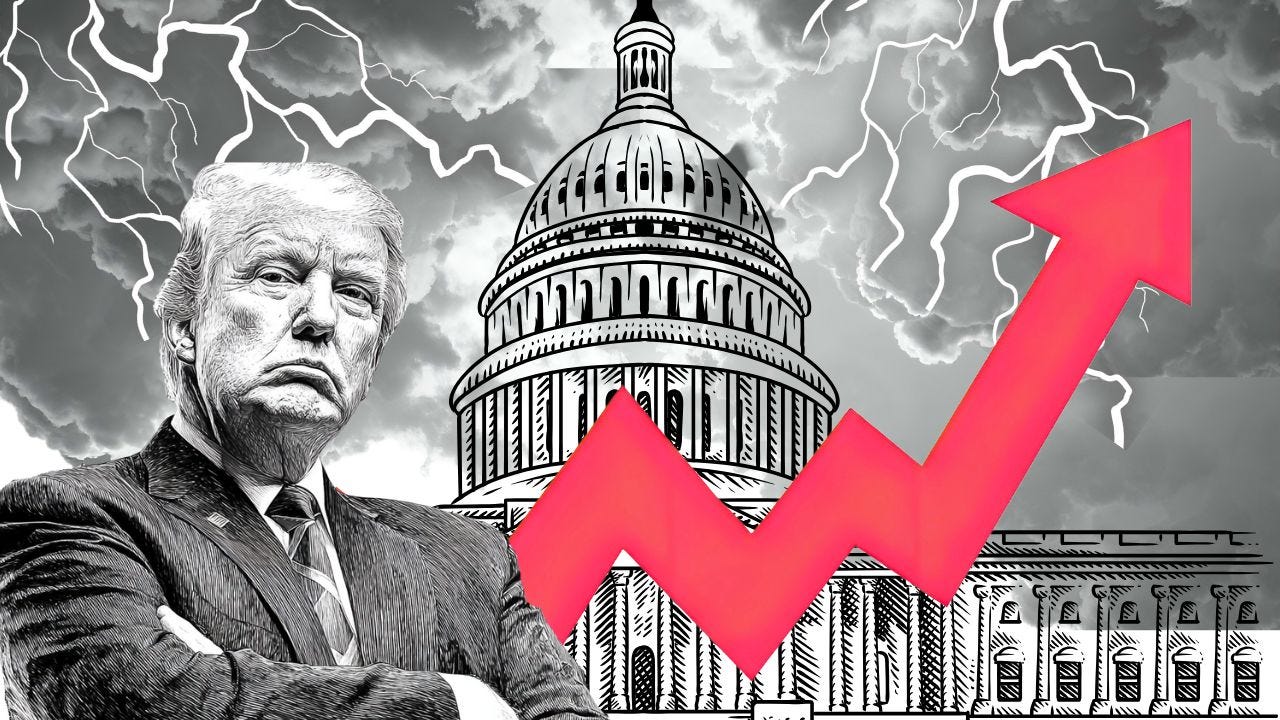
It’s bad.
The cost of simply living in America has become a daily emergency for people across the country. As an attorney who has spent more than three decades fighting for working families, and as someone who has studied how economic stress affects, individuals, families and our communities, I have a question that demands an answer.
Why is Trump constantly telling us everything is affordable when so many can barely afford anything at all?
The Reality
Imagine walking into your grocery store or gas station and feeling your stomach drop at the prices, then hearing the President brag that costs are lower than ever. It is frustrating to hear those claims, and frankly it feels insulting to our intelligence and our sense of reality. I have covered politics for years and I have never seen a leader so blatantly try to rewrite the truth of what people experience every day.
All across America, people are being squeezed. It does not matter if you live in a rural small town or a bustling city, or whether you are a young graduate or a retiree on a fixed income. Families with two jobs are lined up at food banks. Parents are skipping their own meals so their children can eat. Seniors are rationing their medications so they can keep the heat on in the winter. I hear from clients, neighbors, and friends every day about the impossible choices they face, and they are tired of being told that they have never had it so good.
Let us confront this false narrative head-on and arm ourselves with the truth. Everything is not more affordable today, not by a long shot. The rising cost of living under this administration is an undeniable fact, and it is hitting everyone. The numbers, the receipts, and the personal stories all point in the same direction. By the end of this article, you will have the truth and the talking points you need to push back when you hear these lies. Allow me to break down exactly what is happening to our food bills, gas prices, and utility costs, and why those costs are crushing our budgets in a way we have not seen in a long time.
Grocery Bills Are Still Rising
On the campaign trail, Donald Trump told Americans that he would lower the cost of groceries on his first day back in office. Here we are one year later, and the truth is painfully clear: our grocery bills have never been higher. Food prices at the end of 2025 were climbing at the fastest pace seen since 2022.
Staple items are up across the board. The price of beef jumped around sixteen percent over the past year, and coffee is up nearly twenty percent. Walk through any supermarket and you feel the difference: a cart of basic groceries costs about five percent more today than it did a year ago. Families notice every dollar in those aisles.
Most Americans name grocery costs as their number one financial worry, and it is easy to see why. Almost half of all households have had trouble even affording enough food. I see this crisis every day in my community. Food banks that used to serve the poor are now seeing middle-class parents in line, embarrassed and desperate to feed their kids.
Meanwhile, this administration has made that struggle even harder by gutting vital nutrition assistance programs. Last summer Trump signed a law he boasted about as a ‘big, beautiful’ bill. That law ended up slashing the largest amount of food aid in U.S. history. At the moment when milk and fruit are getting more expensive, he took help away from families who rely on it. Nothing about this is making life more affordable. It is making hunger a reality for more of our neighbors.
Gas Prices Are Nowhere Near $1.99
If you listen to President Trump at his rallies, you would think the price of gasoline has miraculously dropped to a dollar ninety-nine a gallon. He loves to paint a picture of dirt-cheap fuel, as if filling your tank now costs next to nothing. Drive up to any gas station in the real world and you will see a much higher price on the sign.
Right now, Americans are paying around $2.80 on average for a gallon of regular gas. That is significantly higher than the fantasy price the President is peddling. For a typical family, the difference between $1.99 and $2.80 is no small matter; it means spending about ten or fifteen dollars more every time you fill up. Over the course of a year, that adds up to hundreds of dollars out of your pocket.
We have all felt the sting at the pump these past few years. I get why they’re high and wouldn’t even bring it up except that Trump keeps making it an issue with his gaslighting and lies.
Look, it’s true that gas prices have come down from the extreme spikes of a couple of years ago. However, they are nowhere near any historic low. The last time gas averaged around two dollars was during the early pandemic slump, when the world was shut down and demand collapsed. Today, with our country open and people driving to work and school again, gas is naturally higher than that rock-bottom.
Nothing this President has done has delivered any special relief. Global uncertainty and saber-rattling on the world stage have kept oil markets on edge. America remains at the mercy of global oil prices because we still lack cheaper, sustainable alternatives. This administration has only hampered the shift to affordable clean energy that could free us from this dependence. Bottom line: you are not filling your gas tank for anywhere close to $1.99, and it is absurd for our leaders to pretend otherwise.1
Utility Bills Are Surging
Donald Trump also pledged that he would slash Americans’ utility bills by fifty percent within his first year back in office. That bold promise did not come true; the opposite happened. In 2025, electricity prices jumped at the fastest rate in over a decade. They rose about two and a half times faster than overall inflation, which is the largest annual increase in power costs since 2014. Households that heat with natural gas were hit especially hard, as the price of natural gas soared more than fifty percent compared to the year before. So as we went into the winter, families were paying a fortune to keep the heat and lights on.
Across almost every state, millions of people are facing higher utility bills than ever, and many cannot keep up. Within the first year of this administration’s return, tens of thousands of additional households fell into severe utility debt. Roughly fourteen million Americans are now behind on their electricity or heating bills to the point where they risk shutoffs. Imagine the anxiety of choosing between paying the electric bill and buying groceries or medicine. That is the reality for far too many today.
Why did this happen. The answer starts with choices made at the top and the ripple effects spreading through every household. This administration attacked cleaner and lower cost energy paths that offered long term relief, then paired those moves with sweeping tariffs and reckless damage to global relationships that drive energy markets. Tariffs on steel, aluminum, and key components raised the cost of building power plants, maintaining pipelines, and upgrading electric grids, costs utilities now pass directly to families.
Trade fights and diplomatic hostility injected instability into global oil and gas markets, pushing prices higher through uncertainty alone. At the same time, renewable programs lost funding, private investment pulled back, and thousands of solid clean energy jobs disappeared, shrinking future supply options and locking households into higher priced fossil fuels.
Utility companies across nearly every state now seek repeated rate hikes to cover rising fuel costs, infrastructure expenses, and tariff driven supply chain shocks. When monthly bills keep climbing, personal failure plays no role. This pressure reflects policy choices, global isolation, and an energy strategy leaving families exposed and paying more every month.
Health Insurance Costs Keep Rising And Families Pay The Price
Health insurance prices keep climbing because specific choices in Washington shifted risk and cost straight onto families. Since returning to office, Trump and a MAGA majority Congress weakened the Affordable Care Act in ways that produced measurable increases.
Premiums for benchmark marketplace plans rose between 20-35% in many states from 2025 into 2026 after outreach funding dropped by more than 89% and enrollment assistance programs were dismantled, shrinking the insured pool and raising insurer risk. Millions of middle income families lost enhanced tax credits that previously reduced monthly premiums by roughly sixty to seventy five percent, translating into an annual hit of about eight hundred to fifteen hundred dollars per household depending on income and age.2
For older Americans not yet eligible for Medicare, premium increases often exceeded two thousand dollars per year. Congressional refusal to extend those subsidies pushed an estimated three million additional Americans off coverage entirely, raising the national uninsured count after years of steady decline. Promotion of short term plans with limited benefits siphoned healthier people out of comprehensive coverage, driving average premiums up another ten to fifteen percent for those who remained. At the same time, weakened enforcement of surprise billing protections allowed higher out of pocket costs, with deductibles rising an average of ten percent nationwide.
Tariffs added another layer of pressure by raising the price of medical devices, hospital equipment, and pharmaceuticals by high single digit percentages, costs insurers passed directly to policyholders. Health insurance now takes a larger share of household income because leadership reduced financial support, narrowed risk pools, and expanded corporate pricing power.
We Deserve Better and We Demand It
The facts are plain: our nation is in an affordability crisis, and no amount of political spin can change that. No matter your background or where you live, if you are struggling to afford the basics, you are standing shoulder to shoulder with millions of other Americans. We cannot let anyone gaslight us into thinking otherwise.
We see the truth in our bills every single day. It is time to stand up and call these false claims out for what they are. We deserve leaders who acknowledge our reality and fight to fix it. We cannot settle for empty promises. Families are drowning in costs, and they need real relief. We have to speak up at the dinner table, at community meetings, and at the ballot box about what is really happening.
When someone tries to tell you that you have never had it so good, do not stay silent. Share the real stories and the real numbers. Remind your neighbors and friends that they are not alone in feeling the squeeze. Americans have overcome hard times before, and we will do it again. We will do it by facing reality head-on and demanding real solutions. Living in a fantasy solves nothing.
The next time you hear Trump or his allies claim that everything is affordable, remember what you have paid this week for groceries, for gas, for electricity. Remember how that felt, and remind them that you know the truth.
We the people have the power to write a different future: one where our leaders stop feeding us lies and start making life in America something we can genuinely afford once again.
Mitch Jackson, Esq.
When Trump talks about gas being $1.99 a gallon in 2026, he is pointing to isolated, short-lived pricing events that do not reflect what most Americans actually pay at the pump. Nationally, the average price for regular gas sits closer to about $2.80 to $2.90 per gallon right now, with some states like Oklahoma and Texas seeing averages in the low-two dollar range but still well above the $1.99 figure. Some individual stations may briefly drop prices near or below two dollars as a promotional tactic or in response to local competition, and in rare cases a handful of stations have dipped under $2 per gallon in late 2025. Those instances are limited, fleeting, and regional at best and do not mean that the price of fuel across the country is at that level. No state currently reports an average gas price as low as $1.99, and the national picture remains one where most Americans pay significantly more at every fill-up than the administration’s misleading talking points would suggest.
The enhanced tax credits that were introduced during the pandemic and boosted through subsequent laws did expire on December 31, 2025 because Congress has not passed a permanent extension. This means that for 2026 coverage year, those expanded subsidies that had cut premiums significantly for millions of Americans are no longer in effect at the federal level. People who qualified for enhanced credits in 2025 will generally see those benefits fall back to the original ACA tax credit levels in 2026 if they still qualify, or lose eligibility entirely if their income exceeds the old thresholds. The loss of the enhanced credits is a major driver of higher premium prices because some enrollees now have to pay much more out of pocket than they did before. Analysts calculate that premiums for affected marketplace enrollees are increasing by about 114 percent on average in 2026 compared with 2025 because those expanded subsidies are gone. An estimated more than 20 million Americans relied on the enhanced credits before they expired, and millions are cutting coverage or paying sharply higher costs as a result, with projections that millions could become uninsured due to these affordability barriers. State efforts in a handful of states are stepping in with their own subsidies, but those are narrow and limited compared with the federal program. In January 2026, and because of pressure from the Democrats and general public (the voters), the U.S. House of Representatives passed a bill to extend the enhanced premium tax credits for three years, sending that legislation to the Senate for action. That House vote passed on January 8, 2026, but as of this date, the Senate has not yet passed the extension into law. Congressional leaders on both sides continue negotiations that could still result in restoring the expanded credits, but nothing has been signed and enacted yet as of January 29, 2026.