

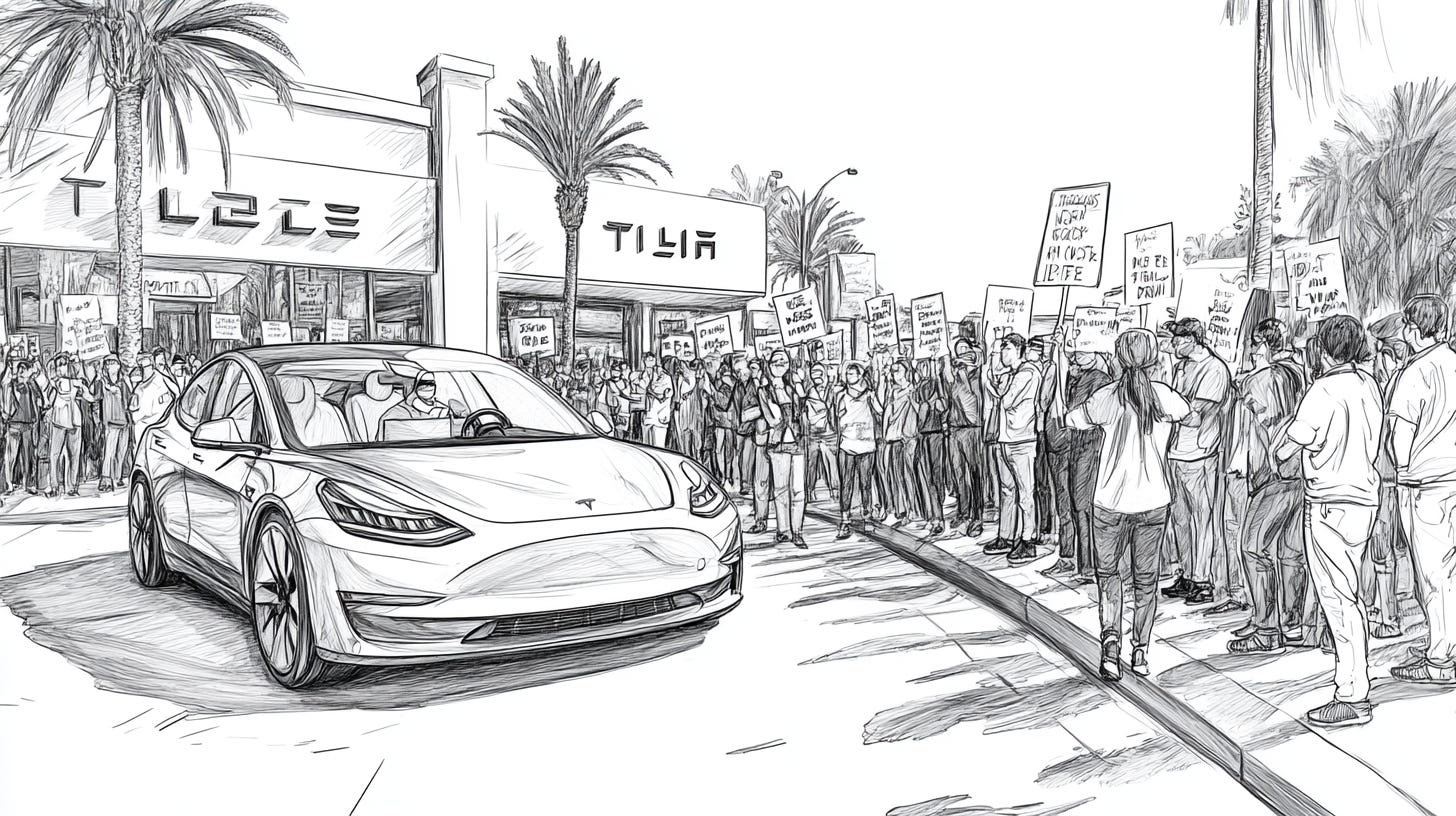
—For the next 7 days, you have full access to this article that’s normally behind a paywall. Never be afraid to share your opinions and stand with others in peaceful protest.
Introduction
Freedom of speech is one of the most cherished principles in the United States. The First Amendment of the U.S. Constitution guarantees every American the right to speak out and stand up for what they believe in. This includes the right to protest peacefully.
In today’s world, figures like Elon Musk — the billionaire entrepreneur behind Tesla and SpaceX — hold enormous influence over our society and politics. It’s no surprise that some Americans may strongly disagree with his actions or ideas and feel compelled to protest against them. Whether you’re upset about Musk’s political tweets, Tesla’s business practices, or the outsized power one individual can wield over public discourse, it’s important to know that you have the right to make your voice heard.
This article is a guide to understanding your rights as an American when protesting Elon Musk and Tesla, whether at a Tesla dealership or any other location. We’ll explain what the First Amendment protects, where you can legally protest, what you can (and can’t) say or do, and how to handle encounters with the police. By educating and empowering yourself with this knowledge, you can exercise your protest rights safely, legally, and effectively. Remember: speaking out is patriotic. The United States was born out of protest and dissent, and everyday people continue to shape our democracy by using their voices. Let’s ensure you know how to use yours.
DISCLAIMER: This is an informative piece and does not provide legal advice. Always do your own due diligence and consult with an experienced lawyer in your state, region or country.
Understanding Your First Amendment Rights
The First Amendment to the U.S. Constitution protects several fundamental freedoms, including freedom of speech, freedom of the press, and the right of the people to peaceably assemble and petition the government for a redress of grievances. In simple terms, that means you have the right to express your opinions and gather with others to protest, as long as your protest remains peaceful.
This is the constitutional foundation for all lawful protests in America — from large demonstrations in the nation’s capital to a handful of neighbors holding signs on a street corner. Protesting Elon Musk or Tesla is protected by the First Amendment just as much as protesting any government policy or public issue. You have the right to voice criticism of powerful individuals and companies. In fact, doing so is a vital part of how Americans hold leaders accountable and debate the issues in our society.
However, it’s important to understand what the First Amendment does and does not cover. The First Amendment protects you against government censorship or punishment for your speech. This means government officials (like police, city authorities, or other state actors) cannot stop you from expressing your views just because they disagree or because your message is critical of Elon Musk, Tesla, or anyone else. But the First Amendment does not give you the right to do anything you want, anywhere you want. For example, it doesn’t mean you can go onto private property to protest without permission (more on that in the next section), and it doesn’t protect violent or dangerous behavior.
The law distinguishes peaceful protest (which is protected) from acts like vandalism or assault (which are crimes). The phrase “peaceably assemble” means your protest must be nonviolent. So you absolutely have the right to chant slogans and hold signs saying “Stop Musk’s Abuse of Power” or “Tesla Customers Deserve Truth” on a public sidewalk – that’s classic free speech. But you do not have the right to, say, throw rocks at a Tesla store or threaten harm to its employees – such actions are illegal and not protected by free speech rights.
Another thing to remember is that the First Amendment’s protections are broad but not absolute. Certain very limited types of speech are not protected under law. For instance, using your speech to incite imminent violence or lawless action (“Let’s go break the windows of this Tesla dealership right now!”) is not protected. Likewise, making a “true threat” of violence against a person (for example, threatening Elon Musk’s life or safety) is not protected speech and can lead to arrest.
Aside from these narrow exceptions like incitement, threats, or other illegal activity, you are free to express virtually any criticism or message during your protest. You can strongly denounce Musk’s political influence, call out Tesla’s practices, and use sharp language or satire – the content of your message is up to you, and the law is on your side if you keep it nonviolent.
It’s also worth noting that while the First Amendment is a federal protection, state and local laws may impose additional requirements or restrictions on how protests are conducted. For example, local governments can enforce “time, place, and manner” rules – these are content-neutral regulations like requiring permits for large marches, limiting excessive noise at night, or designating certain areas for public demonstrations. Such rules are generally legal as long as they don’t target the message of the protest.
This means before you head out to protest, it’s wise to familiarize yourself with your city or state’s specific laws. Some cities require a permit for any gathering above a certain number of people. Some states have laws about staying a certain distance from building entrances, or ordinances against blocking traffic. These local rules don’t take away your First Amendment rights; they just shape the logistical details of how you exercise those rights. The ACLU has several good resources to help you get started.
Be aware of them so that you can plan your protest properly and avoid unintentional violations. In short: the First Amendment gives you the power to protest, and understanding its scope (and local laws) will help you use that power confidently and responsibly.
Do a Deep Dive with AI: When it comes to protesting, and saving democracy, the stakes have never been higher. What you know—and how you voice your opinion—matters. This special Perplexity AI page allows you do use AI to dig deeper on this article. No filters. No limits. Just more details, explanations and answers. Ask. Learn. Act.
Where and How You Can Legally Protest
One of the most common questions would-be protesters have is: “Where am I allowed to protest?” The answer depends on whether the location is public or private property.
Public property — like city streets, sidewalks, public parks, and plazas — are generally the best places to hold a protest. These areas are often referred to as “traditional public forums” because they’ve historically been used for speeches, marches, and demonstrations. If you want to protest Elon Musk or Tesla, a public sidewalk outside a Tesla dealership or an open plaza in your town are typically lawful places to do so.
For example, you can stand on the sidewalk in front of a Tesla showroom with signs criticizing Musk’s policies, and as long as you’re not obstructing the walkway, that is your legal right. On public property, government officials cannot kick you out just because of your message. You and your fellow protesters have every right to be there peaceably advocating your cause.
Private property is a different story. The owners of private property (including companies like Tesla) have the right to control their property and set rules for its use. That means if you wander onto Tesla’s private property — say, inside a dealership, in their parking lot, or in the lobby of Tesla’s offices — you do not have a guaranteed right to protest there without permission. If you try to hold a protest on private property against the owner’s wishes, you could be asked to leave, and if you refuse, you might be trespassing, which could lead to removal or arrest. So, while you might be tempted to take your demonstration straight into a Tesla store to confront employees or customers, understand that the law is not on your side in that scenario.
The safer (and legal) approach is to protest from public property just outside the private property you’re targeting. For instance, gather on the public sidewalk or a nearby public park adjacent to the Tesla dealership. This way, your protest is visible to the business and the public, but you’re not violating trespass laws. It’s a fine line, but an important one: stay on public land unless you have explicit permission to be on private property.
If you’re ever unsure if an area is public or private, do some research ahead of time — check property maps or ask city officials. Sometimes areas that seem public (like a shopping center’s open courtyard or a privately owned parking lot) are actually private, so don’t assume. When in doubt, stick to clearly public spaces like the sidewalk, and you’ll generally be on solid legal ground.
Another aspect of “where and how” to protest involves the size and method of your demonstration. If you’re planning a large protest, a march that goes down a street, or using amplifiers (like loudspeakers or bullhorns), you may need to obtain a permit from the city or local authorities. Many cities have permit requirements for events that could disrupt traffic or require police presence.
For example, if your group wants to march down Main Street in front of the Tesla dealership, blocking part of the roadway, you likely need to apply for a march permit from the police or city hall. This usually involves filling out an application, possibly a small fee or meeting certain conditions (like providing advance notice, outlining the route, etc.).
Don’t let permits intimidate you: the First Amendment prevents cities from denying permits just because they dislike your message. Permits are supposed to be content-neutral, meaning whether you’re protesting Elon Musk or holding a holiday parade, the rules are the same. Start the permit process well ahead of time, and keep records of your communications. If your protest is more impromptu or small-scale, and you’re sticking to sidewalks without blocking them, typically no permit is required.
For example, if a dozen of you show up spontaneously outside a Tesla store with signs and stay on the sidewalk, that’s usually fine without any permit, as long as pedestrian traffic can still get by. Police might ask you to keep moving or stay to one side if a crowd gathers, but they shouldn’t shut you down just for protesting. If a breaking news event or sudden action by Elon Musk spurs you to protest on short notice, the law recognizes that you might not have time to get a permit, and spontaneous demonstrations in public forums are generally protected too (authorities are not supposed to use lack of a permit as an excuse to squelch a timely, peaceful protest).
The key is, use common sense: if you plan to use streets or make noise, check permit rules; if you’re just holding signs on a sidewalk, you’re usually within your rights without any paperwork.
While protesting, one crucial rule is do not block or interfere with others’ rights while exercising yours. That means if you’re on a sidewalk, don’t completely obstruct the path for pedestrians. If you’re outside a Tesla dealership, do not block the store’s entrance or the driveway where cars come in and out. You can absolutely position yourselves where people will see and hear your message — that’s the point of a protest — but you cannot physically bar customers from entering or leaving the business.
If you surround someone’s car or impede foot traffic into the dealership, police may have grounds to intervene, not because of your message, but because of the obstruction. Keep your protest mobile or off to the side enough that regular activities can continue around you. This not only keeps you within legal behavior, it also often wins more sympathy from onlookers who see you as respectful and law-abiding even as you passionately advocate your cause.
During your protest, you might encounter law enforcement officers. Police are sometimes present at protests to ensure public safety. How you interact with them can be very important. Stay calm and respectful, even if you feel the police presence is unwarranted. Remember that you have rights, and you can politely assert them.
For example, if an officer tells you to “move along” and you’re on a public sidewalk not blocking anyone, you can calmly respond that you have a First Amendment right to be there and ask what law you are violating. There’s a balance to strike: you don’t want to be confrontational or aggressive, but you also don’t have to instantly obey an unlawful order that has no basis. Often, asking “Can you tell me what I am doing wrong, officer?” or “Am I violating any ordinance?” can either make the officer articulate a valid reason (like, “Yes, you’re blocking this driveway” — which you should then correct) or it might make them realize they have no grounds and back off.
If an officer does give you a lawful instruction (for example, “Please step aside so people can pass on the sidewalk”), it’s usually best to comply rather than argue in the moment. You can comply and still continue your protest in a slightly adjusted manner.
Always avoid physical resistance or angry shouting at police — that can escalate the situation quickly. It helps to know your local laws so you can be confident that you’re in the right.
If you have a permit, keep a copy with you and politely show it if needed. If police ask for ID, in many states you aren’t required to show ID unless you are being detained or cited for a crime, but refusing to provide it can sometimes prolong the encounter (laws on this vary, so again, knowing your state’s rules is helpful). Importantly, police should treat protesters and any counter-protesters equally – they are not allowed to favor one side’s message over the other.
If you find yourself in a situation with an opposing group (say, Musk supporters counter-protesting nearby), the police might keep groups separated for safety, but both have a right to be “within sight and sound” of each other. So don’t let anyone, officer or otherwise, shoo you out of earshot of your intended audience unless there is a genuine safety issue.
In summary, you can legally protest Elon Musk and Tesla in any public forum — sidewalks, parks, and streets (with proper permits if required) — as long as you remain peaceful and don’t trespass or obstruct others. Plan your protest location thoughtfully: choose a spot where you can be seen and heard without breaking the law. Understand the difference between public and private property.
If needed, go through the permit process so your event is officially authorized. And throughout it all, interact wisely with law enforcement by knowing your rights and sticking to lawful behavior. By doing these things, you’ll be able to get your message across loud and clear, all within the bounds of the law.
What You Can Say and Do
When it comes to what you can actually say or do during your protest, the good news is that the law gives you a lot of freedom. A protest is an exercise of free expression, so you are allowed to speak out with passion and creativity. You can chant slogans at the top of your lungs, you can hold up bold signs, and you can engage passersby in conversation about why you’re protesting Elon Musk and Tesla. Chants and slogans (for example, shouting “Stand up to Musk!” or “People over Profit!”) are classic forms of protest speech and are absolutely legal. Signs and banners are also a traditional part of protests — you can carry signs with messages like “Musk’s Money ≠ My Voice” or “Tesla: Respect the People” or any statement you want to make.
It’s okay if your language is strong or your message is controversial; the First Amendment protects offensive speech too, as long as it doesn’t cross into direct threats or incitement. So if your sign calls out Elon Musk as a threat to democracy or uses humor and satire to critique him, that’s fine. The key is that your speech (spoken, written, or artistic) remains peaceful in nature.
You also have the right to use symbolic expression in your protest. Symbolic speech means conveying a message without words — for example, you might dress up in a costume (perhaps as a rocket ship or a canary-in-the-coal-mine to symbolize warning, get creative!) to draw attention to your point. You could stage a bit of street theater or carry props (maybe fake money to represent billionaires’ influence) as part of your demonstration. These types of expression are generally protected just like verbal speech. If you want to sing songs or perform a skit as part of your protest outside a Tesla location, go for it. Just be mindful of noise ordinances if you’re using amplified sound or if it’s late hours.
Online advocacy is another powerful way to protest, and it’s protected by the First Amendment as well. In today’s digital age, protesting isn’t only done with picket signs on the sidewalk — it can also take the form of tweets, Facebook groups, TikTok videos, and other online campaigns. You have the right to speak your mind about Elon Musk and Tesla on the internet just as you do in person.
You can create a Facebook event to organize your protest, start a hashtag on Twitter to spread your message, or post videos afterwards to raise awareness. Keep in mind that private social media platforms have their own rules, so for example, if you say something on Twitter (which Elon Musk now owns) that violates Twitter’s terms of service, they can remove it or ban you as a platform rule. But in terms of the law, government authorities cannot punish you for voicing your opinions about Musk or Tesla online.
If a public official tried to silence your online speech because they didn’t like your viewpoint, that would be a First Amendment violation. So feel free to use the internet to amplify your protest—coordinate with others, share live updates, and make your case to the world. It’s an extension of your free speech. (Just be cautious not to inadvertently break any laws online, like hacking or direct threats, which of course you wouldn’t do.)
While you enjoy broad freedom in what you say, remember that not all speech is protected. We touched on this earlier, but it’s worth repeating in practical terms. You can criticize, even harshly. You can express anger or outrage (“I’m furious at what Musk is doing!”). You can use strong language (yes, even curse words directed at public figures are generally protected speech — though hurling personal insults at individual police officers in the heat of the moment, while legal, might not be wise as it could provoke a reaction). However, you cannot:
- Incite violence or illegal acts. Don’t encourage anyone to commit a crime or act of violence. Saying “Let’s burn down the dealership” or “Someone should hurt him” is absolutely off-limits — not only would that go against everything a peaceful protest stands for, it could get you arrested for incitement. Keep your rhetoric passionate but focused on lawful action (like calling for boycotts, urging people to vote or speak up, etc., which are all legal).
- Make threats. Do not threaten Elon Musk, Tesla employees, counter-protesters, or anyone else with harm. Even if you’re speaking figuratively or out of anger, words that a reasonable person would interpret as a serious intent to cause violence can be considered “true threats,” which are not protected speech. So don’t say things like “He’s going to get what’s coming to him” in a menacing way. Stick to issues and demands, not personal threats.
- Engage in harassment or intimidation. You have a right to speak, but so does everyone else. Do not physically or verbally harass individuals. For instance, it’s fine to hold a sign criticizing Musk in front of a Tesla store; it’s not okay to chase an individual Tesla customer down the sidewalk screaming in their face or blocking their way to their car. You can offer them a flyer or ask if they’ll hear your perspective, but if they decline, it’s best to let them go on their way. Focus on getting your message out to the general public, not targeting private individuals for harassment.
- Commit acts of vandalism or violence. This might seem obvious, but during the excitement of a protest, sometimes a few individuals might think throwing a tomato at a window or spray-painting a slogan on a wall will make a statement. Don’t do it. Not only could you be charged with a crime, it also undermines the legitimacy of your protest. Your strength is in your words and the morality of your cause, not destructive actions.
It’s also wise to avoid spreading any false information that could be defamatory. If you’re speaking about facts, try to be accurate. Elon Musk and Tesla are public figures/companies, so you actually have some leeway under defamation law (since the bar is higher for public figures), but as a responsible protester, you want to maintain credibility. It’s perfectly okay to voice opinions like “I believe Musk’s actions are dangerous” (that’s clearly your opinion) or to cite well-known facts or reports about him. Just don’t fabricate accusations that you know are untrue, because false statements can potentially lead to legal trouble (and they detract from your message’s integrity). Generally, sticking to your genuine beliefs, opinions, and true stories is the best course.
In a nutshell, what you can say and do at your protest is extremely flexible: speak loudly, speak boldly, use signs, art, music, and online platforms to get your point across. The First Amendment is there to protect exactly this kind of civic activism. Just steer clear of the relatively few types of speech and conduct that are illegal (like threats or property damage), and your protest will not only stay law-abiding, it will also be more persuasive to the public. Remember, the more peaceful and focused your protest is, the more powerful your message will be.
What to Do If You Are Unlawfully Detained or Arrested
Protesting is a right, but it sometimes comes with challenges — including the risk of police detainment or arrest, especially at high-profile demonstrations. If you find yourself being detained or arrested during a protest and you believe you’ve been acting lawfully, it’s important to know how to handle the situation to protect yourself and preserve your rights. Here’s what to do:
1. Stay Calm and Composed: Being approached or grabbed by police can be scary, but try your best to remain calm. Do not run, yell insults, or physically resist the officers, even if you feel they are wrong. Keep your hands visible and don’t make sudden movements. Staying calm will help keep the situation from escalating and will also help you think clearly about your next steps.
2. Clarify Your Status: If officers stop you, you can politely ask, “Am I free to leave?” If they say yes, you can calmly walk away from the situation. If they say no or do not let you leave, then you are being detained. At that point, you can ask, “Why am I being detained?” They should have a specific reason (reasonable suspicion of a crime). If they place you under arrest, they should tell you (and they must have probable cause that you committed a crime). Even if you think the reason is bogus, do not argue extensively on the spot; just note what they say for later.
3. Assert Your Right to Remain Silent: You have a constitutional right to remain silent if you’re detained or arrested. You should explicitly (and calmly) say, “I am invoking my right to remain silent.” From that moment, aside from identifying yourself, you do not have to answer any questions. It’s usually wise not to discuss anything about the incident or your protest activities with police without a lawyer. Anything you say can be used against you later, so it’s better to say nothing at all about the situation. You can also state, “I want to speak to a lawyer.” Once you invoke your right to silence and request an attorney, police are supposed to stop questioning you.
4. Do Not Consent to Searches: If you are detained or arrested, police might attempt to search your person or your belongings. You can and should say “I do not consent to a search.” They might still pat you down or search your bag (especially if they suspect a weapon or illegal item), but voicing your non-consent is important to preserve your rights in later legal proceedings. Do not physically resist a search — just be clear that you haven’t agreed to it. For instance, if they ask to look at your phone or camera, you can refuse unless they have a warrant. Police generally cannot confiscate or delete your photos or videos without a court order.
5. Ask for a Lawyer Immediately: If you are arrested (meaning they are taking you into custody), ask for an attorney right away. Say something like, “I will not answer any questions without a lawyer present.” If you cannot afford a lawyer, one will be appointed for you (public defender). Do not be afraid to request legal counsel; this is your right. Do not sign any documents or make any statements without legal advice. Sometimes officers might try to get you to explain your side of the story on the spot — it’s usually not in your best interest to do so without an attorney, no matter how confident you are that you did nothing wrong.
6. Handle the Detention with Discipline: During any detention or arrest, comply with basic instructions (like providing your name if asked). In many states, you are required to give your name if police intend to cite or arrest you, but you don’t have to go beyond that. If you’re handcuffed or taken to a station, be polite. Remember, you’ll have the opportunity to contest the arrest later with a lawyer; you can’t win that battle on the curb by arguing or resisting. Also, keep in mind that **police can lie to you** during an interrogation (for example, say “your friend already told us everything” even if they didn’t) — don’t fall for tricks. Just keep staying silent or repeating that you choose not to speak without a lawyer.
7. Document the Encounter (Afterwards): As soon as you are safe to do so, start documenting everything you remember about the incident. If you’re released on the spot, step aside and write down the officers’ names, badge numbers, patrol car numbers, the time and location, and any witness names or contact info. If you’re taken to jail and then released, do this immediately after release. Collect witness statements if possible — perhaps a fellow protester recorded the incident on their phone. Photographs of any injuries or marks (if there was physical handling) are important. All this information could be vital later if you need to challenge the arrest or file a complaint or lawsuit.
8. Seek Legal Help and Recourse: If you believe you were wrongfully arrested or mistreated, contact a lawyer or a civil rights organization as soon as you can. Explain what happened in detail. You may have grounds to file a complaint against the police department or even a lawsuit for violation of your rights. Organizations like the ACLU (American Civil Liberties Union) often help protesters defend their rights and may be interested in your case if it’s part of a larger pattern. Even if you don’t go to court, reporting the incident through an internal affairs complaint or civilian review board can hold officers accountable. Also, make sure to show up for any court date if you were given a citation or charges — not showing up can lead to a warrant. With legal counsel, you might get charges dropped if the arrest was indeed without proper cause.
Most importantly, do not be discouraged. Sometimes police make unlawful arrests or trumped-up charges to intimidate protesters. Many such charges don’t hold up in court. By knowing your rights and staying nonviolent, you put yourself in the best position to prevail in the end. The law is ultimately on the side of peaceful protesters. If it happens that you face legal trouble for your activism, remember that you are part of a proud tradition of Americans who have stood up for justice. Protect yourself by exercising your rights smartly, and you’ll be able to continue the fight another day.
Talking Points for Protesters
When you’re out protesting Elon Musk and Tesla, people (whether media, bystanders, or counter-protesters) may ask, Why are you protesting Elon Musk and Tesla?” It’s good to have clear, strong responses that get your message across. Here are a few powerful talking points you can use to explain your cause, focusing on Musk’s political influence and actions that many see as harmful to America and democracy:
- Defending Democracy: “Elon Musk has an enormous megaphone in our society, especially with his ownership of X (formally Twitter), and we’re concerned that he’s using it to spread misinformation and extremist rhetoric that undermines our democracy. We’re protesting to defend truth and democratic values against the dangerous influence of a billionaire who isn’t accountable to the public.”
- No One Is Above Accountability: “We believe no individual — not even the richest man in the world — should be above scrutiny. Elon Musk uses his wealth and power to sway politics and public opinion for his own benefit. We’re here to hold him accountable for actions that we feel hurt everyday Americans and threaten our democratic institutions. In a healthy democracy, everyone, including powerful CEOs, must answer to the people.”
- Protecting Free Speech (Not Just for the Powerful): “Musk claims to be a ‘free speech’ champion, but he’s been selective about it, often silencing or retaliating against critics and workers. By protesting, we’re exercising real free speech and standing up against the hypocrisy. We want a country where free speech isn’t just for billionaires on social media, but for everyone — without fear of being bullied or fired for telling the truth.”
- Challenging Harmful Influence: “Elon Musk has inserted himself into politics and public policy in ways that we find harmful. We didn’t vote for him. His DOGE group are firing hundreds of thousands of federal employees, about 1/3 are veterans). From spreading unproven conspiracy theories to cozying up to political figures who attack our institutions, his influence is toxic to the respectful, fact-based debate democracy needs. We’re pushing back to show that Americans won’t accept one man distorting our national conversation with impunity.”
- Democracy Over Profits: “Tesla and Elon Musk have benefited greatly from America — from taxpayer-funded subsidies to our legal system — yet Musk often acts like the rules don’t apply to him. He has fought regulators, busted unions, and threatened to pull businesses out of communities to get his way. That behavior is undemocratic and un-American because it puts profits over people and personal power over the public good. We’re protesting to say our democracy and communities matter more than his bottom line.”
Feel free to adapt these talking points to your own voice and specific concerns. The key in any response is to tie your protest to bigger principles that fellow Americans can relate to: fairness, honesty, accountability, and the health of our democracy. By doing so, you not only explain why Musk’s actions trouble you, but you might also persuade others to pay attention and perhaps even support your cause.
Wrapping Things Up
Throughout American history, the right to protest has been a driving force for change. From the Boston Tea Party to the civil rights marches of the 1960s to present-day demonstrations, everyday people have used their voices, their signs, and their collective presence to shape the nation’s direction. When you stand up and protest — whether against a government policy or a powerful figure like Elon Musk — you are participating in that grand tradition of democracy in action. It takes courage to protest, but remember that the Constitution and laws of this country are on your side when you do so peacefully and lawfully.
By knowing your rights and how to exercise them, you equip yourself to make a real difference. You have learned that you can legally gather on public sidewalks and parks to call for change. You know you can speak out boldly, with passion and purpose, as long as you steer clear of violence or threats. You understand how to handle encounters with police and what to do if things go wrong. This knowledge is powerful. It means that no matter how influential or wealthy a person is — be it Elon Musk or anyone else — your voice cannot be easily silenced when you stand firm within the protection of the law.
So, let this empower you: your voice matters. In fact, your willingness to speak truth to power is one of the greatest strengths of our society. Don’t be discouraged by those who might sneer at protest or try to intimidate you into silence. Every important movement in America started with people who refused to stay quiet. If you believe strongly that Elon Musk’s influence is hurting our country and our democracy, then raising awareness through protest is not just your right — it’s a meaningful way to push for accountability and positive change.
Keep it peaceful, keep it smart, and keep it powerful. America needs engaged citizens like you who are willing to stand up for what’s right. By protesting within the bounds of the law, you carry the spirit of freedom forward. Stay safe, stay strong, and never forget: the First Amendment protects you — now go out there and use it to make your voice heard.
That’s my uncensored objection to anyone who has a problem with you exercising your right to peaceful protest, and I’m sticking to it.
Mitch Jackson, Esq. | links
This post is free.
But free doesn’t build the future.
Independent journalism only works when people like you choose to lean in—not just with attention, but with support.
If this work matters to you, today’s a great day to take the leap.
$5 a month. $50 a year.
A small investment in something bigger than all of us.
