

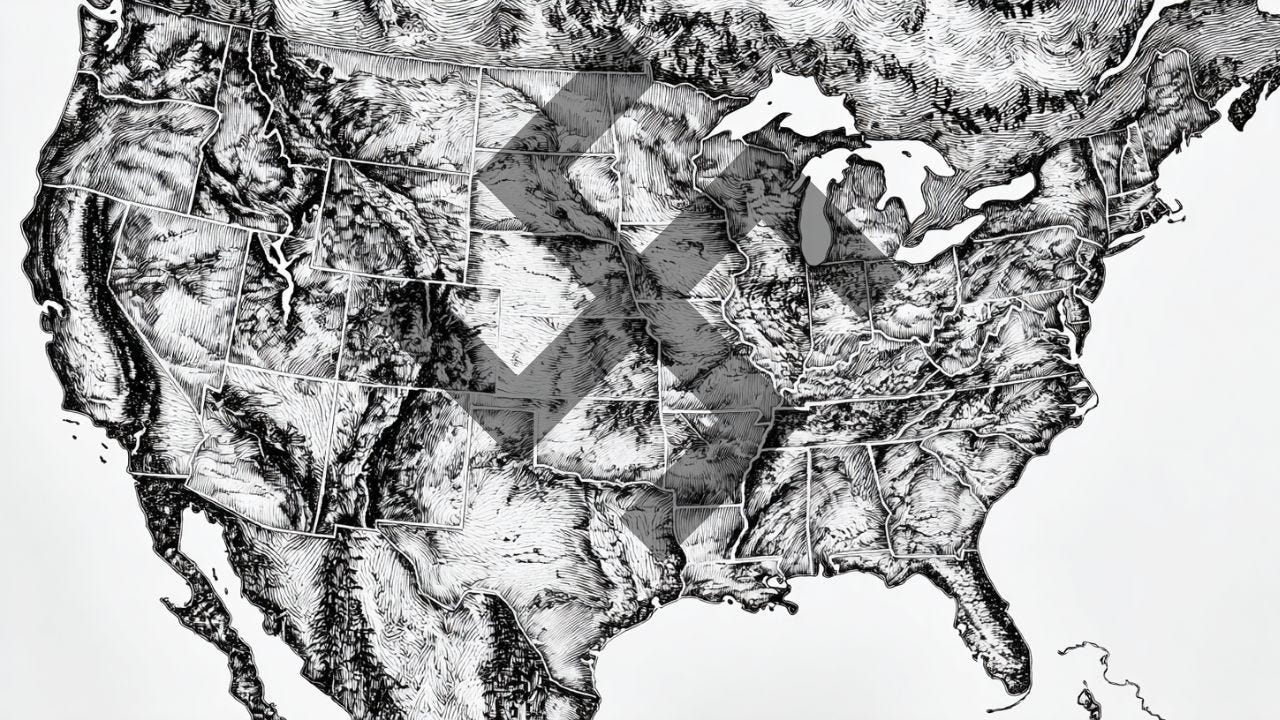
I don’t care how many times it’s printed on official documents or blasted across press briefings, it still doesn’t sit right with me. Every time a U.S. official says “the homeland,” something in my gut tightens. Not because I don’t love this country. Because I do. Fiercely. But because I know where that word comes from, and it sends a chill down my spine.
Let’s be clear: “homeland” wasn’t a thing in American political language until after 9/11. Go back and search speeches, documents, media coverage before 2001, you’ll find “America,” “the United States,” “our nation,” “this country.” But not “the homeland.” That changed overnight.
After the towers fell, President Bush and his team began referring to the continental U.S. as “the homeland.” They created the Office of Homeland Security in October 2001, and by 2002, we had the full-blown Department of Homeland Security. Just like that, a new word embedded itself into the American psyche.
And here’s the part that most people don’t talk about: the term “homeland” has some really dark roots.
It wasn’t coined in D.C. It was imported, both linguistically and culturally. In Nazi Germany, the word Heimat carried far more than the literal meaning of “homeland.” It was a propaganda cornerstone, romanticizing the idea of a sacred, ancestral soil that defined one’s identity.
The Nazi regime infused it with concepts of racial purity, insisting that only “true” ethnic Germans could claim belonging. It became a rallying cry for Blut und Boden meaning “Blood and Soil”, the doctrine that tied ethnicity to territory and fueled policies of exclusion and displacement. Heimat appeared in speeches, school lessons, and state-sponsored art, teaching citizens that loyalty to the homeland meant protecting it from outsiders, dissenters, and anyone deemed “un-German.”
It was a word used to draw hard borders not just on maps, but between people. To justify surveillance, suspicion, forced relocations, and the stripping away of civil rights, all in the name of protecting the homeland from imagined threats.
And now we’ve got it printed on letterhead and spoken from podiums like it’s always been ours.
Look, I get that “homeland” was supposed to make us feel safe. Post-9/11 America was scared. We needed strong language. We needed to pull together. But somewhere along the way, the word stopped being a rallying cry and started sounding like something else. Like control. Like overreach. Like the government looking inward with suspicion instead of outward with confidence.
Words matter. Especially words that governments use to define who we are and what we’re protecting.
I’m uncomfortable with the term because I know history. And I’ve seen how quickly fear can be weaponized into policy. “The homeland” isn’t just a word, it’s a framing device. It says, “This is ours and we must defend it at all costs.” Sounds noble, right? Until it starts justifying surveillance, racial profiling, travel bans, and kids in cages.
We’ve got to be more honest about the words we absorb. Not every term that makes us feel strong is rooted in freedom. Some are borrowed from playbooks that built regimes on fear and exclusion.
I’ll always defend this country. But I’m never going to call it “the homeland” like it’s just some neutral phrase. It’s not. And the sooner we acknowledge that, the sooner we stop normalizing language that was never meant to be American in the first place.
Let’s call it what it is: America. The United States. Our country.
Not the homeland.
That word doesn’t belong here. And deep down, you probably feel it too.
Mitch Jackson, Esq.
Brilliant analysed. Thanks so much, mr. Mitch. This kind of fear never leads to freedom, but to narrow minded people.
Another commentary that should be widely read. Mostly because I agree with it.
In 2001, like most people I was shocked by the attacks on 9/11. Yet, not so shocked to think the forming of DHS was a good idea. I said so frequently to folks in my circle. I worried that it would be a national force which is un-American.
Mitch, you explained why I disliked the homeland. All I knew was it was disturbing when Bush would the word. I guess subconsciously I had connected it to totalitarianism. I did know that I was concerned DHS would be an unnecessary bureaucratic layer that could filter intelligence to the President. I wanted it disbanded then and even more now.
Thanks for your time
Cheers
Patriotic Left