

DISCLAIMER: This communication does not provide legal, financial or investment advice. Always do your own due diligence and consult with an experienced professional.
You open your phone in the morning and see red everywhere.
Bitcoin once roared past one hundred twenty thousand dollars in October. Now the price hovers far lower, and the drop feels personal. Savings feel smaller. Retirement feels shakier. For some, the future for your kids feels less secure.
This is not a random crypto winter.
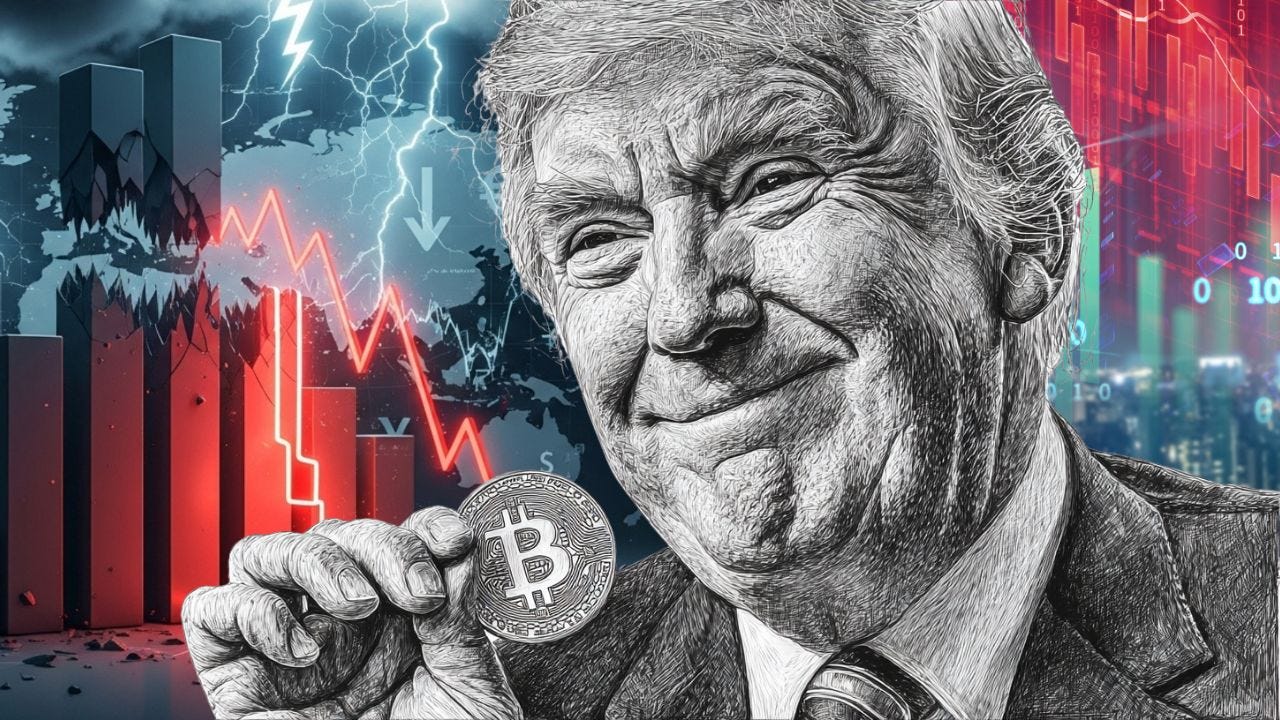
This is what happens when a president turns trade, global alliances, and even Bitcoin itself into props. Trump’s second term policies pump chaos into every corner of the financial system. Bitcoin simply reacts first.
As a lawyer, I listen to my clients who are in the Bitcoin space. I look at rules and power.
As a journalist, I look at patterns.
As a student of psychology, I look at fear and behavior.
All three point in one direction.
The current crash in Bitcoin is wrapped around Trump’s economic choices, his obsession with tariffs, his self serving crypto agenda, and his open disrespect for stable democratic norms.
Trump’s Second Term, Your Wallet, And Bitcoin
Start with the basic picture.
Trump returned to the Oval Office in 2025 and moved straight back to a high conflict trade posture. New tariffs hit partners across the world. A sweeping package followed with broad taxes on imports from dozens of countries. The White House framed this as toughness. Households see higher prices and more uncertainty.
Economists who model these moves project weaker growth and lower wages over the long run. The average American household now faces an extra tax burden from these tariffs alone. Your paycheck covers less. Your cash cushion shrinks.
Markets sense stress before headlines catch up. Risk assets fall first. Bitcoin sits at the top of that list.
During this same period Trump pushed through an order named “Establishment Of The Strategic Bitcoin Reserve And United States Digital Asset Stockpile.” Seized government Bitcoin now sits in a federal pool. That order pairs with a broader push to brand America as a crypto friendly superpower. Conversations now circulate in Congress to route federal tax payments in Bitcoin into that reserve.
So on one side you have tariff shock and global tension.
On the other you have a president turning Bitcoin into a symbol of national strength and personal influence.
Together those forces build a bubble and then rip it open.
The Chart Break That Never Needed To Happen
Bitcoin’s cycle pattern has a history. Long climbs from deep lows to new highs. Long slides back down once those highs give way. Traders count days between peaks and troughs. They watch the fifty week moving average. They program rules around that line.
Bitcoin’s price stayed above that moving average through most of the recent surge. Confidence grew. Spot Bitcoin funds poured money into the asset. The October move above one hundred twenty thousand landed as proof of a new era.
Then the policy shocks arrived.
Trump floated and then announced harsher tariffs on China and other countries. Threats of one hundred percent rates on some imports hit the tape. Analysts started talking about trade war escalations again. A new round of selling hit stocks tied to global trade.
Large funds holding Bitcoin saw these headlines and looked at the chart. Price already hovered near key support levels. Liquidity in derivatives looked stretched. Many funds followed pre written risk rules. Secure profits during stress. Drop exposure to the most volatile assets.
Selling through those levels pushed Bitcoin below the fifty week line for several weeks. That technical break sent more automated orders into motion. Forced liquidations in leveraged positions piled on. Billions in long positions unwound in days. The technical damage on the chart links directly back to a policy storm out of Washington.
The pattern existed already.
Trump’s second term decisions turned a fragile setup into a sharp collapse.
Tariffs, Liquidity, And A World On Edge
Everyone in my community deserves a clear macro picture without empty jargon.
Tariffs on dozens of countries function like a tax on imports. Companies pay more for materials and parts. Many pass that cost through to shoppers. Some cut staff. Some pull back on new investment. Growth slows. Inflation pressure lingers.
The Federal Reserve watches inflation and financial conditions. With tariffs pushing prices higher, Fed officials hold rates higher for longer. Yields on bonds stay attractive. Cash suddenly looks safer than a nerve shredding ride in crypto.
Under a steady administration, markets might recalibrate with less drama. Under Trump, nothing feels steady.
Foreign partners now watch an American president insult leaders at international gatherings, undercut Ukraine’s territorial claims for the sake of a photo moment with Moscow, and ramp up aggressive moves around Venezuela. Agreements feel less reliable. Security alliances feel weaker.
For global investors, this environment builds a simple instinct. Pull risk back. Reduce exposure to assets tied to confidence and liquidity. Bitcoin sits on that front line.
When Japanese and European funds model this world, money flows out of risk assets and into home markets or shorter term bonds. Crypto holdings become a source of cash. Bitcoin takes hits long before slower moving assets like real estate respond.
So when you see Bitcoin down twenty or thirty percent from recent highs, remember the chain. Tariffs raise stress. Geopolitical bluster shakes alliances. Central bankers hold rates higher. Big money retreats from risk. Bitcoin pays the price first.
Bitcoin As Prop In A Trump Show
Bitcoin never asked to become a campaign accessory. Trump and his enablers in the Bitcoin space made that choice.
The executive order for the Bitcoin reserve framed government holdings as a “digital Fort Knox.” Seized coins stay in federal custody as national assets. No sign of sales to pay down debt. In parallel, Trump world figures push private Bitcoin treasuries inside Trump linked companies. Investments in Bitcoin reserves for his media vehicle send a loud message to supporters.
During rallies and interviews, Trump now presents himself as a champion of crypto. His team courts donations in digital assets. Bills in Congress now seek to fold Bitcoin tax payments into the same reserve structure Trump designed.
For small investors, this message feels like validation. They see a president who hated crypto in his first term now praising it as the future. Many interpret this as a green light.
For early Bitcoin whales and high net worth traders, the scene looks different. They see deep new liquidity from spot funds, a price above one hundred twenty thousand, and a White House preaching digital gold. That combination presents a once in a lifetime exit ramp.
Large over the counter transactions start to move serious volume from old wallets into funds and retail accounts. Billion dollar transfers clear through market makers. Price holds up for a while because fresh money keeps arriving through funds that track Bitcoin.
Then tariffs hit harder. Talk of wider trade action arrives. Concerns around conflict with major powers spread. Fund inflows slow. Outflows begin. The ladder breaks. Late buyers discover that the rally doubled as an exit event for early insiders and Trump aligned interests.
Human Psychology In An Age Of Chaos
Numbers tell one side of the story. Nervous systems tell the rest.
Families now live under a president who treats independent agencies as opponents, attacks judges, questions elections, and glorifies strongmen. That behavior erodes trust in the rule of law. Markets see that erosion in real time.
When leaders treat the Constitution as a suggestion, global capital watches closely. When a president uses national policy to serve private financial projects, large investors begin to price in corruption risk. When White House messaging changes from day to day, market participants add a “chaos premium” to every decision.
Bitcoin investors also carry the emotional history of this asset. Many early adopters saw Bitcoin as a protest against reckless central banking and unaccountable leaders. Trump’s new embrace flips that script. For some long term holders, the asset now feels captured by the very political forces they wanted to escape.
Inside the Bitcoin community, debates over technical changes and new uses for the chain add further strain. Expanded data capacity on the base layer, waves of meme assets, and endless arguments over purpose deepen a sense of fatigue. Under a stable government, those debates would feel like growing pains. Under a Trump administration that thrives on division, they fold into a wider sense of burnout.
Fear, exhaustion, and mistrust feed selling pressure. Charts show the end result. Families live the experience through shrinking balances and rising anxiety.
Early Whales Quietly Head For The Exit
Some early Bitcoin holders now sit on wealth that rivals small nations.
For many years those holders lacked a smooth path to exit large positions. Liquidity was too thin. A single sale of size would send the price crashing.
The 2025 environment changed that math. Spot Bitcoin funds pulled in massive inflows. Traditional finance built easy ways for pensions and advisors to gain exposure. Government policy around reserves signaled tolerance for high prices.
At that point a smart early holder with billions in Bitcoin had a clear path.
Offload chunks through private deals and large fund channels.
Let public enthusiasm fueled by pro crypto speeches and executive orders provide the other side of the trade.
Once tariffs, trade fears, and political drama started to rattle confidence, those same early actors stepped up selling before smaller holders reacted. Price weakness followed. Headlines about outflows from funds appeared. Retail accounts then watched stop orders slide into place and trigger more selling.
This is not a moral judgment on someone who bought early and secured life altering wealth. The point is simpler. The design of this moment handed early insiders a graceful exit while many families walked into a storm. Trump’s second term amplified that pattern through hype, favors to allies, and policies that stirred volatility across markets.
Reframing The Crash: A Democratic Alarm, Not Only A Crypto Story
If you own Bitcoin, the experience feels individual. You see a red chart and think about personal decisions.
Step back for a moment.
Bitcoin’s crash under Trump’s second term acts as a real time stress test for American democracy.
An executive who assaults the press, bullies regulators, praises authoritarians, and treats public office as a family business sends one clear message to global markets. Rules bend around power. Agreements hold only when convenient.
Tariff waves without a coherent long term strategy send another message. Policy arises from impulse rather than serious planning.
A Bitcoin reserve tied to seizure funds and promoted as a patriotic symbol sends yet another signal. National assets now sit inside a story where private gain, campaign messaging, and public policy blur.
Financial markets soak up these signals. Bitcoin, as the most liquid and sentiment driven asset in the system, responds first and hardest. Stocks follow on a lag. Bonds shift over time. Real estate trails even further behind.
So when you watch Bitcoin fall, see more than a failed trade. See a warning flare about constitutional stress, policy recklessness, and the cost of leadership that treats public power as a personal casino.
What You Do Next As A Voter And As A Saver
You cannot control presidential tweets or late night tariff threats. You decide how to respond as both an investor and a citizen.
As a saver, you treat Bitcoin and other speculative assets as pieces of a larger plan. You size positions so a crash hurts feelings, not survival. You avoid chasing rallies driven by political stunts. You ask hard questions before trusting any leader who turns an investment into a campaign slogan.
As a citizen, you connect the dots between stable institutions and stable markets. You listen when independent experts warn about the long run effects of tariffs on growth and wages. You pay attention when presidents undermine courts, attack independent agencies, and flirt with autocrats.
Most of all, you speak up. With friends. With family. Online. In community spaces. You tell the truth about how this crash feels and what you see behind it. You remind people that democracy and economic security sit in the same boat.
No single post or Substack article fixes this mess. Your voice adds weight. Your vote sets direction. Your willingness to call out Trump’s reckless economic behavior, his dangerous affection for strongmen, and his self serving use of Bitcoin sends a message to anyone who seeks power next.
Every honest conversation moves us one step away from chaos and one step closer to a country where markets, money, and democracy feel steady enough for you and your family to breathe again.
All of this starts with you voting in the 2026 midterms. Everything, and I mean everything, depends on it.
Mitch Jackson, Esq.