

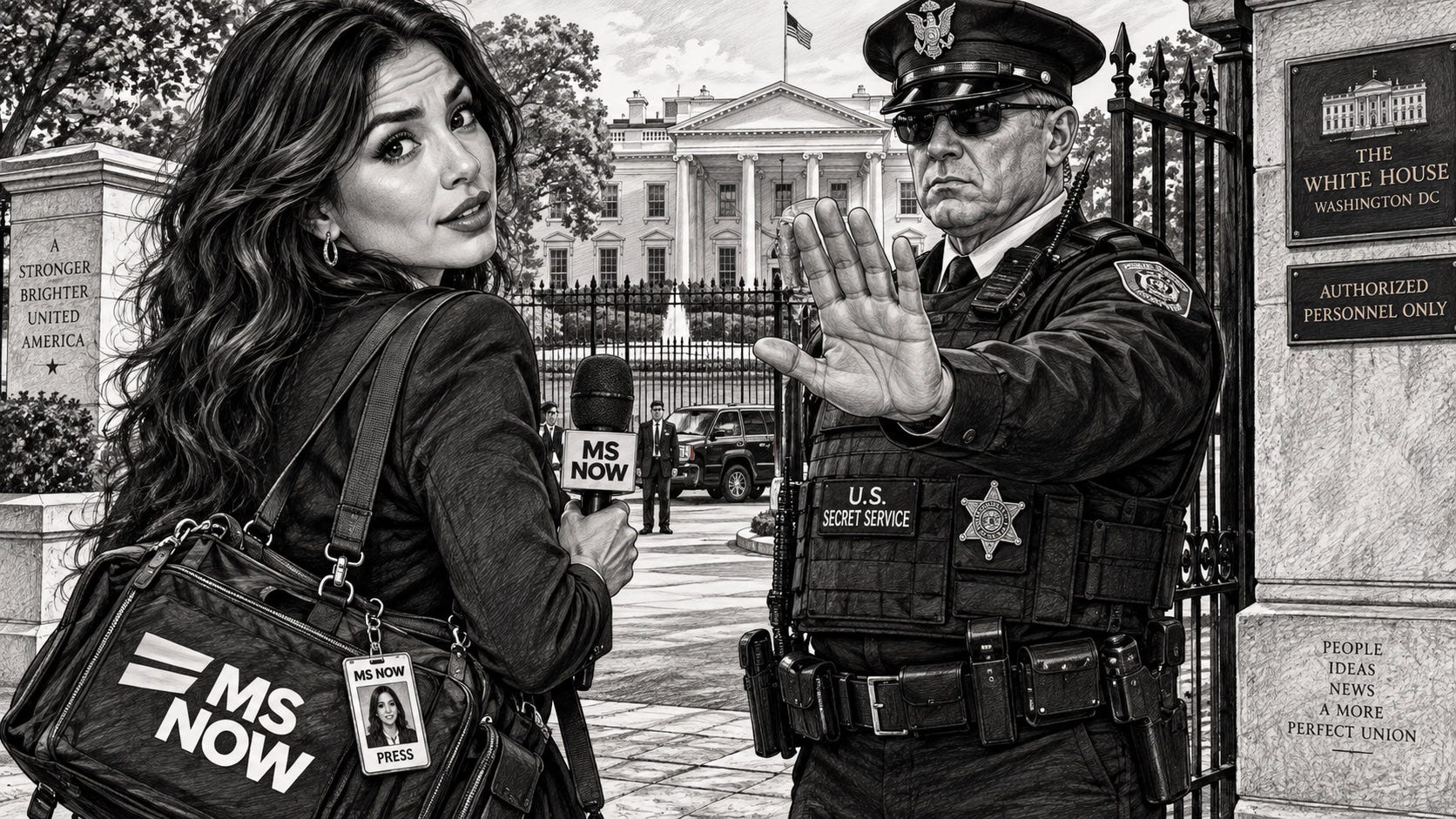
A reporter walked up to the White House gate this morning. Security turned her away, hours after a federal judge ordered the White House to let reporters in.
Judge Timothy Kelly ordered the reinstatement of press credentials for CNN, MS NOW, and POLITICO reporters on Wednesday night. If this morning’s reports hold up, the White House didn’t just lose a legal argument. It defied a direct order from a federal court, and that changes everything about what comes next.
Judge Timothy Kelly’s order is not a suggestion. He found the reporters’ hard passes were revoked without notice or a hearing, in direct violation of two binding D.C. Circuit cases, Sherrill v. Knight and Karem v. Trump. He rejected the administration’s national security justification because the government offered no evidence connecting the reporting to any actual security risk. He ordered the hard passes reinstated immediately. You can read the order here.
One detail matters here: the order binds the President’s agents, representatives, and White House officials, not President Trump personally, so the officials physically enforcing the ban carry the direct legal exposure. He set a $1 bond. The order runs for 14 days while a preliminary injunction motion is briefed.1
Here is what happens when officials ignore that kind of order.
The reporters’ lawyers file a motion for civil contempt. This is the standard first move, and it can happen fast, because the judge already ruled the conduct illegal once. Civil contempt exists to force compliance, not to punish for its own sake. The judge can impose escalating daily fines against specific officials until every reporter is let back in. Courts have used fines running into the tens of thousands of dollars per day for exactly this kind of stalling. In this case, I don’t see fines having an positive effect on the Trump administration.
The judge can also name individuals. If the Press Secretary or Secret Service officials are the ones physically blocking reporters at the gate, the court can hold those people in contempt directly. A named official facing a contempt order cannot hide behind a press release, and this order specifically leaves them, not the President, holding that exposure.
Criminal contempt is rarer but available. When defiance of a clear order is willful and open, a judge can refer officials for criminal contempt, which carries potential fines and jail time for the individuals responsible.
The damages picture is real but less certain than it sounds. The reporters’ due process claim already survived the first test, and continued defiance strengthens it. But claims for money damages against individual federal officials proceed, if at all, as Bivens actions, and the Supreme Court has narrowed those significantly in recent years, so a damages remedy here is not guaranteed. Attorneys’ fees against the federal government typically run through the Equal Access to Justice Act rather than the civil-rights fee statute that applies to state officials, and EAJA carries its own eligibility limits and a “substantially justified” defense for the government.
A judge who gets ignored rarely stays quiet about it for long. An emergency hearing and demands for an explanation has already been sought by MS NOW, CNN and Politico.
Contempt of court is not a talking point. It is a fine, a sanction, or a subpoena with your name on it.
I’ll keep you updated here in the comments as this story continues to develop.
Mitch Jackson, Esq.
Because of the Separation of Powers, courts are wary of injunctions running directly against a sitting President. Franklin v. Massachusetts (1992) doubted courts can enjoin the President’s own official acts, following Mississippi v. Johnson (1867), which held courts generally can’t enjoin a President’s execution of his duties. Judge Kelly’s carve-out almost certainly reflects that doctrine. He still reaches the same result by binding “Defendants (except for President Trump) and their agents, representatives, and all persons or entities acting in concert with them,” which covers the Press Secretary, Secret Service, and staff who control the gate.
Trump remains a named defendant for liability and any eventual judgment. The carve-out only affects who the injunction commands, not who can be sued. For enforcement, this means a contempt motion would target the officials actually blocking access, not Trump personally, even though he triggered the ban.
Like the order to release the Epstein files….
Shame on security. They should be fired.