

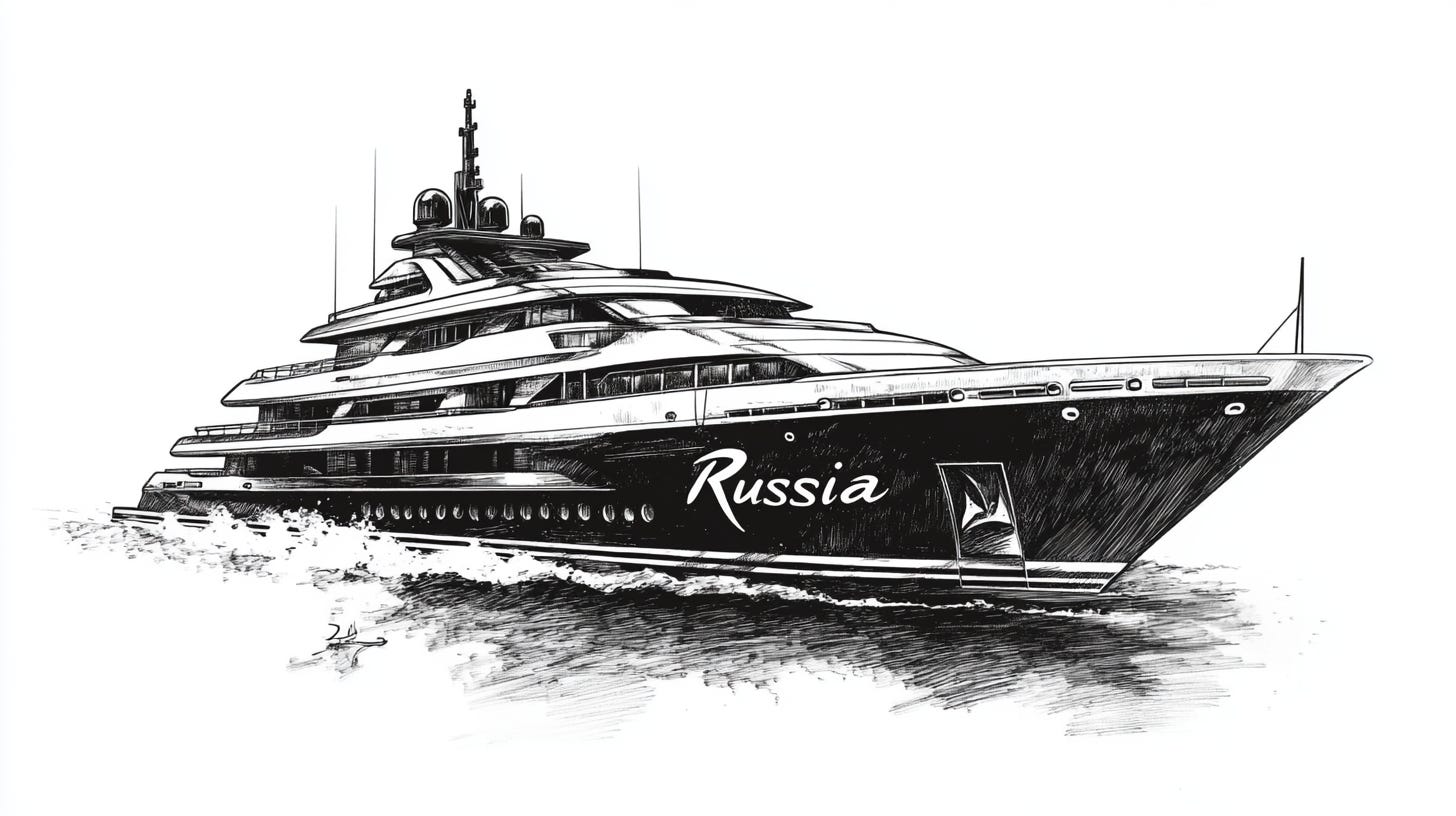
Tucked inside a quiet Justice Department directive in early 2025 was a death notice: the disbanding of KleptoCapture, the very task force created to hunt down and seize the ill-gotten yachts, jets, and luxury real estate of Putin’s billionaire allies.
Current Developments
Did you know that since coming into his second term of office, Trump and his administration have made significant changes to U.S. policies regarding the seizure of Russian oligarch assets and corporate transparency enforcement? These changes represent a substantial shift from policies implemented during the Biden administration following Russia's 2022 invasion of Ukraine.
Key Policy Changes
Disbanding of Task Force KleptoCapture
On February 6, 2025, the U.S. Justice Department disbanded Task Force KleptoCapture, a specialized unit created in 2022 to enforce sanctions against Russian oligarchs and seize their assets. The task force was established by President Biden just one week after Russian forces invaded Ukraine, with the explicit goal of confiscating wealth from Russians with close ties to the Kremlin and redirecting proceeds to Ukraine.
The task force had achieved notable successes, including the seizure of multiple luxury yachts worth hundreds of millions of dollars. The most prominent case involved the Amadea, a $300 million yacht allegedly owned by sanctioned Russian billionaire Suleiman Kerimov. In March 2025, a federal judge ruled that the government could proceed with selling the yacht, representing a significant legal victory even after the task force's dissolution.
Suspension of Corporate Transparency Act Enforcement
If that wasn’t bad enough, on March 2, 2025, Treasury Secretary Scott Bessent announced that the department would suspend enforcement of the Corporate Transparency Act (CTA) for U.S. businesses. The CTA, enacted in 2021 with bipartisan support during Trump's first term, required shell companies to disclose their beneficial owners to combat money laundering and illicit finance.
The Treasury Department stated it would issue new rules limiting enforcement to foreign companies only. Secretary Bessent characterized this change as "part of President Trump's bold agenda to unleash American prosperity by reining in burdensome regulations."
Historical Context
The Offshore Financial System
The policies being dismantled were designed to combat what experts call the "offshore financial system," a network of jurisdictions and legal structures that allow wealthy individuals to hide asset ownership through shell companies, anonymous trusts, and other opaque arrangements. This system has been extensively used by Russian oligarchs since the 1990s to move wealth out of Russia and shield it from potential seizure.
Previous Bipartisan Support
The Corporate Transparency Act originally had bipartisan backing, with supporters arguing it was essential for national security and law enforcement. The first Trump administration explicitly supported the legislation, with the White House calling it "important progress in strengthening national security."
Task Force Achievements
Before its dissolution, Task Force KleptoCapture had seized multiple high-value assets, including:
- The Amadea yacht ($300 million)
- The Tango yacht ($90 million)
- Multiple other vessels and properties
- Precision machinery intended for Russia
The task force operated by using civil forfeiture laws to seize assets suspected of sanctions violations, even without criminal convictions of their owners.
Congressional Response
The policy changes have drawn criticism from both Republican and Democratic lawmakers. Senators Sheldon Whitehouse (D-RI) and Chuck Grassley (R-IA), who were original sponsors of the Corporate Transparency Act's predecessor legislation, sent a letter to Secretary Bessent demanding an explanation for suspending enforcement of the bipartisan law.
Expert Analysis
Anticorruption experts have expressed concern about the broader implications of these changes. The FACT Coalition, a transparency advocacy group, noted that the same offshore structures used by Russian oligarchs are also employed by international drug cartels, including those trafficking fentanyl.
Intelligence and law enforcement officials have previously testified that anonymous shell companies present significant obstacles to investigating various crimes, from money laundering to national security threats.
International Context
The policy changes come as the Trump administration has taken a more accommodating stance toward Russia, including direct communications with President Putin and high-level diplomatic talks that excluded Ukraine. This represents a significant departure from the previous bipartisan consensus supporting Ukraine in its war against Russia.
Current Status
While Task Force KleptoCapture has been disbanded, some of its cases continue to move through the courts. The Amadea case, in particular, may still result in asset forfeiture and potential proceeds being directed to Ukraine, though it's unclear whether the current administration will maintain that commitment.
The suspension of Corporate Transparency Act enforcement for U.S. companies means that the identification of beneficial owners of shell companies will become significantly more difficult for law enforcement agencies investigating financial crimes.
Implications
These policy changes affect not only efforts to target Russian oligarchs but also broader law enforcement capabilities against various forms of illicit finance. The same legal structures and enforcement mechanisms used against Russian assets are also employed in cases involving drug trafficking, tax evasion, and other financial crimes.
The long-term impact of these changes will likely depend on whether they remain in place and how they affect both domestic law enforcement capabilities and international cooperation on financial crime enforcement.
The Path Forward
I believe American voters deserve to understand what is at stake. This is not about partisan politics or regulatory philosophy. This is about whether we will continue to be a nation of laws or become a playground for international criminals with the right connections.
Every American should be asking their representatives in Congress why laws passed with bipartisan support are being ignored. Why task forces that were successfully protecting American interests are being disbanded. Why our law enforcement agencies are having their hands tied just when international cooperation was reaching new levels of effectiveness.
We still have choices to make. Congress retains oversight authority and the power of the purse. Federal courts continue to operate independently. But time is running short, and the consequences of inaction will reverberate for decades.
The oligarchs are counting on American apathy and political division to protect their ill-gotten gains. I believe it is time to prove them wrong.
Mitch Jackson, Esq. | links
Related
For an exceptional detailed analysis, see this New York Times article by By Alex Dziadosz titled, “How to Hide a 350-Foot Megayacht- Russian oligarchs use the offshore system to shield their luxury assets. The Trump administration is ending an effort to find and seize them.”
This post is free—but building a future rooted in truth and democracy takes real investment. If my work speaks to you, subscribe (it’s free), but if you can, chip in $5/month or $50/year—because independent journalism that actually gives a damn (and delivers ideas you can use today) is worth backing.
Shared on LinkedIn