

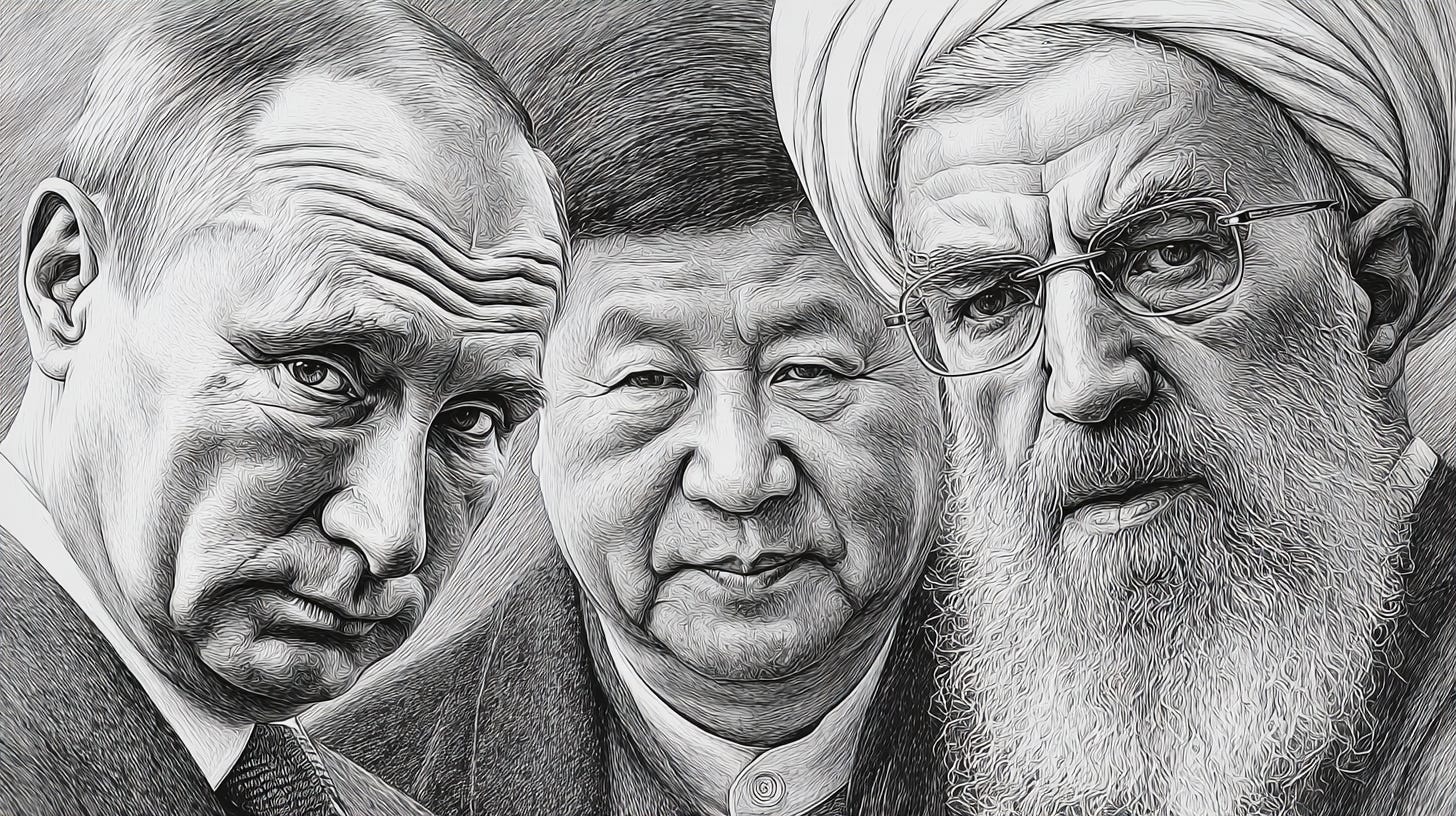
Two things can be true: Iran’s nuclear threat is real, and Trump’s strike was illegal. Skipping Congress isn’t strength, it’s recklessness. This isn’t over, and we need leaders who don’t use war to distract from failure or silence dissent.
Trump’s Unauthorized Strike on Iran Endangers Us All
President Trump’s unauthorized military strike on Iran was a reckless gamble that has put all of us, and our democracy, in peril. This wasn’t a measured act of self-defense approved by our Congress; it was a unilateral act of war launched without the American people’s consent. I believe it has lit a fuse of dangerous consequences that we must urgently reckon with.
A President Who Thinks He’s Above the Law
The U.S. Constitution clearly says Congress, not the President alone, has the power to declare war. Trump’s go-it-alone strike in Iran trampled that bedrock principle. In my view, this act was blatantly unconstitutional. It ignored the very laws designed to prevent one man from dragging our country into conflict on a whim.
I’m not the only one who thinks so. Americans across the political spectrum, from progressive Democrats to staunch Republicans, have voiced outrage that Trump bypassed Congress. I shared details late last night in my post, “No Emergency, No Excuse: Why Trump’s Strike on Iran Violated the U.S. Constitution and is Illegal.”
Iran Will Strike Back – It’s Only a Matter of Time
Make no mistake: Iran will retaliate for this attack. No country would watch its territory bombed and do nothing, especially after President Trump bragged about “obliterating” their nuclear sites on live TV. Iran’s leaders have already vowed to defend their nation “at all costs.” In my opinion, that means Americans must brace ourselves for a response that could come in many frightening forms. We should not underestimate Iran. They may not match America’s military might head-to-head, but they have other ways to hit back and hurt us. Here are some of the very real possibilities:
Direct Military Strikes: Iran has a large arsenal of ballistic missiles and drones capable of hitting targets across the Middle East. We have thousands of U.S. troops stationed at bases in Iraq, Syria, and the Gulf region, all within range of Iran’s missiles. I fear Iran might launch strikes at one of these bases or against our allies’ soil. They have already fired missiles at Israel in anger, injuring civilians in Tel Aviv. Next time, it could be an American base or embassy that suddenly comes under fire.
Even if Iran tries to avoid mass U.S. casualties (as they oddly did in a limited strike after a U.S. drone killing of an Iranian general in 2020), any direct hit on our forces could quickly escalate into a bigger war. One errant missile, one American killed, and we could be locked in a deadly tit-for-tat. The risk of a new full-scale war in the Middle East is sky-high right now, and that’s going to keep me up at night.
Proxy Wars and Terror Attacks: Iran is a master of asymmetric warfare – fighting through proxies and unconventional means. Rather than face the U.S. head on (which would be suicidal), Iran can unleash a web of allied militias and extremist groups to do its bidding. We could soon see proxy wars erupting on multiple fronts.
In Lebanon, Hezbollah (Iran’s powerful ally) might rain rockets on Israel or target American interests. In Iraq and Syria, Shi’ite militias armed and trained by Iran could bombard bases housing U.S. soldiers or diplomats. The Houthi rebels in Yemen, who align with Iran, might attack American ships in the Red Sea or Persian Gulf. These proxies give Iran a way to make us bleed without taking direct blame.
Imagine a U.S. oil tanker mysteriously hit by a mine in the Strait of Hormuz, or a car bomb exploding outside a U.S. consulate in the Middle East. Iran’s hand would be invisible, though suspected. This kind of shadowy war is hard to stop. It could drag on for months or years, spilling blood and treasure, never clearly “owned” by Iran but clearly orchestrated by them. I believe Iran will use every proxy at its disposal to make America pay a price for Trump’s strike.
Cyber Attacks on U.S. Infrastructure: In today’s world, war isn’t only fought with bombs and bullets. Iran has a formidable cyber army, and I am deeply concerned they will retaliate in cyberspace. Imagine hackers taking down portions of the American power grid in the middle of summer, leaving cities sweltering in darkness. Or bank systems collapsing, wiping out financial data. Think about the chaos if hospital networks or air traffic control systems were hit by a massive cyber attack. These scenarios sound like a thriller movie, but they are entirely possible.
Iran’s cyber warriors have already proven their capability by hitting banks, government networks, and even a dam in New York in the past. Cyber attacks offer Iran a way to inflict pain on American civilians directly, without ever firing a shot. Unlike a missile, a virus in our computers can’t be easily traced or responded to with traditional military force. It’s a low-risk, high-impact tool for them.
It appears to me that Americans are frighteningly vulnerable here. We could wake up one morning to find our gas pipelines hacked (remember the havoc when one pipeline hack caused fuel shortages on the East Coast a couple years back?), or our water systems contaminated due to a digital breach. The battlefield of the 21st century can be our own cities and homes, through the internet. Iran knows this, and if they choose to strike back subtly, a cyber assault is one of their likeliest weapons. Every American should be aware that a cyberattack in retaliation could disrupt our daily lives more than we ever thought a distant conflict could.
Economic Warfare – Oil as a Weapon: Iran holds a powerful economic card in its hand: the Strait of Hormuz. This narrow waterway at Iran’s doorstep is the passage for roughly a fifth of the world’s oil supply. If Iran chokes off the Strait, even partially, it could send global oil prices through the roof overnight. We’re talking oil potentially spiking past $100, $150 per barrel, a panic not seen in decades.
For Americans, that means skyrocketing gas prices and heating costs. Every gallon of fuel, every utility bill could get far more expensive quickly, hitting working families hard. And it’s not just gas: when fuel costs jump, the price of everything, food, goods, airfare, tends to rise. Our economy, already dealing with inflation, could tailspin into a crisis. Iran knows this.
They have threatened before to close Hormuz if attacked. Now, their parliament has even voted to consider doing it. Will they go through with it? It’s a double-edged sword, it would hurt Iran too and could provoke a direct military clash with the U.S. Navy, which would be extremely dangerous for them. But if Iran’s leadership feels cornered and furious enough, they might decide they have nothing to lose. Even a few successful attacks on oil tankers or a temporary naval blockade could jolt global markets and cause panic.
Using oil as a weapon is Iran’s way of retaliating against the entire world, not just the U.S., and it’s a very real risk right now. We Americans might soon feel the fallout at our local gas station and grocery store, paying the literal price for Trump’s rash decision.
Diplomatic and Geopolitical Moves: Iran won’t just fight with weapons; they will fight for world opinion. You can bet they are already on a diplomatic offensive, painting the U.S. as an aggressor that violated international law. And frankly, in this case, they have a point. Trump’s strike had no United Nations approval, and Iran will remind the world of that.
I expect Iran to push hard at the U.N., perhaps demanding condemnations or resolutions against the U.S. Of course, the U.S. can veto anything in the Security Council, but the global optics will still hurt us. Our allies in Europe are likely shaking their heads; they remember when we nearly went to war with Iran in years past and how catastrophic it could be. Many countries will sympathize with Iran as the victim of a sudden bombardment. This all undermines America’s moral standing.
And here’s a frightening twist: Iran is not alone. Powerful friends like Russia and China are watching this situation closely. In my opinion, they will seize this opportunity to strengthen ties with Iran and collectively weaken the United States’ influence. We may soon see Russia and China openly backing Iran’s position, supplying them with weapons or intelligence, or helping them evade sanctions. The idea of new alliances forming against the U.S. is no longer far-fetched.
The so-called BRICS nations (which include China and Russia) have already been talking about a world less dominated by America. This conflict could spur them to coordinate more against us, for example, by trading oil in currencies other than the dollar to undermine our economic power, or by sharing military technology with Iran to challenge us. At the very least, Russia and China will use America’s aggression in their propaganda, telling the world that the U.S. is a bully that must be opposed. We could find ourselves more isolated on the global stage than at any time in recent memory, all because of this shortsighted strike.
Let’s be clear: Iran might also take steps toward building a nuclear weapon in response to Trump’s attack. It’s bitterly ironic, the strike was supposedly to stop Iran’s nuclear program, but now Iran’s leaders are furious and feel justified to say, “We need the bomb more than ever to deter the U.S.” Already there are reports that Iran could kick out nuclear inspectors and race to enrich uranium faster.
If they were not fully committed to getting a bomb before, they might be now. That means in a year or two, we could face an Iran even closer to nuclear capability, which is exactly what we didn’t want. In other words, Trump’s rash action may end up unleashing a greater danger than the one it was meant to eliminate.
A Perilous Game of Asymmetric Warfare
What makes this situation especially dangerous is that Iran will likely choose asymmetric warfare, the kind of fight where they use their strengths against our weaknesses. The Iranian military knows it cannot defeat the United States in a conventional war. They won’t send tank battalions to face our Marines or dogfight with our F-35 jets. Instead, they will hit us where we’re least prepared. They will avoid set-piece battles and opt for sneaky, unexpected, and unconventional attacks.
This could mean lone wolf terror strikes, sporadic missile volleys, naval mines hidden in busy shipping lanes, deniable cyber sabotage, and a constant fear of “what’s next.” Fighting an enemy like this is like battling shadows. It’s frustrating, exhausting, and costly. Many Americans experienced this truth during the Iraq and Afghanistan conflicts, how insurgents with roadside bombs and guerrilla tactics managed to bog down the most powerful military on Earth for years. Iran’s leadership studied those lessons well. They won’t play by our rules; they’ll make their own.
The result is a volatile, unpredictable conflict that could simmer for months or explode into something much larger without warning. One day things may seem calm; the next, a U.S. navy ship might be hit by a swarm of Iranian drones or a sudden attack might occur at a crowded American shopping mall by someone claiming revenge for Iran.
These are the kind of scenarios we have to contemplate now. It’s a nightmare chess game, and many people, including yours truly, believe Trump just made the opening move without a plan for the next. In my opinion, this is the height of irresponsibility. He’s put American lives in the crosshairs of an enemy that will fight dirty and fight long. And if we think we can easily stomp out Iran’s will to fight by flexing our muscle, we’re likely in for a rude awakening.
The Involvement of Global Powers – A Dangerous Domino Effect
Another sobering reality: this conflict might not stay just between the U.S. and Iran. The world’s other major powers are watching and they have their own stakes in this crisis. Russia, for one, has every reason to cheer Iran on quietly. Russia and Iran have been partners in places like Syria, and both share a rivalry with America. If the U.S. gets entangled in a messy war with Iran, Russia stands to benefit. I wouldn’t be surprised if Moscow now steps up covert support for Iran, anything from supplying advanced anti-aircraft systems to sharing intelligence on U.S. forces.
Russia might also exploit our distraction. Picture Russian forces in Eastern Europe pushing harder, or doubling down in Ukraine, calculating that the U.S. can’t effectively respond because we’re tied up with Iran. This is how global conflicts can spread, like wildfire jumping from one dry field to the next.
China is another key player. China gets a lot of its oil from the Gulf, so it has an interest in stability, but it also has an interest in seeing the U.S. knocked down a peg. Publicly, Beijing might call for peace and restraint, but behind closed doors I suspect they are strategizing how to turn this to their advantage.
Perhaps China will increase purchases of Iranian oil in defiance of U.S. sanctions, propping up Iran’s economy when we are trying to cripple it. Perhaps Chinese diplomats will join with Russia to shield Iran in international forums, portraying the U.S. as the villain. And here’s a chilling thought: if the U.S. is bogged down in a new Middle Eastern conflict, China might see an opening to make a move of its own – say, against Taiwan. The calculus could be that America’s military bandwidth and public appetite for another confrontation will be low. In that sense, Trump’s action in Iran doesn’t just risk one war, it risks emboldening other adversaries elsewhere.
The BRICS nations (Brazil, Russia, India, China, South Africa and their partners) have been talking about a new world order not dominated by the West. This crisis could accelerate that trend. We might see tighter cooperation among these countries to counterbalance the U.S. For example, more trade among them in currencies other than the dollar to blunt our sanctions power, or diplomatic alliances that challenge U.S. initiatives.
It’s a kind of geopolitical ripple effect: America’s aggressive move could be the push that drives a lot of other nations to band closer together in opposition. The bottom line is that Trump’s strike on Iran isn’t happening in a vacuum, it could trigger a broader realignment against American interests around the world. That is profoundly risky for us. It means the potential consequences of this one decision could stretch far beyond Iran, affecting global stability and American security in ways we haven’t even fully grasped yet.
American Lives and Interests at Risk
I want to speak directly about what all this means for American civilians, our infrastructure, and our economy, because it’s easy to think of conflict as something “over there” that doesn’t touch us at home. That’s a dangerous illusion. In truth, Trump’s actions have put everyday Americans in harm’s way in very real terms.
First, consider our fellow Americans in uniform. We have sons and daughters, mothers and fathers deployed in the Middle East right now, tens of thousands of them. Each one of those Americans woke up after this strike to a much more perilous situation. They are now prime targets for Iranian missiles, drones, or militia ambushes.
I’m praying I don’t wake up to news of dozens of our troops killed in a retaliatory barrage on some base in Iraq or Syria. But that is a very real possibility. I feel sick at the thought that more American families might get that knock on the door from a military officer bearing terrible news. And for what? Because the President wanted a “spectacular” show of force? We cannot accept our troops being placed in needless danger like this.
Now, beyond the military, U.S. civilians and infrastructure could also be in the line of fire. I mentioned cyber attacks earlier, that is arguably the biggest direct threat to us at home. Our power grids, communication networks, and financial systems are not as secure as they should be. A well-placed piece of malware by an Iranian hacker could derail trains, shut down factories, or cripple hospital equipment.
Think about the cascading effects: no electricity means no refrigerated food or medicine, traffic lights out, chaos on the streets. It might sound extreme, but cybersecurity experts have warned for years that hostile nations could cause such disruption. Iran, facing the world’s strongest military, might see an attack on our critical infrastructure as the only way to hit us back effectively. If that happens, American lives could be endangered not by a foreign bomb, but by failures of our own critical systems.
There’s also the horrific prospect of a terror attack on U.S. soil. While Iran itself has not traditionally launched direct terror operations in the continental U.S., they have proxies and sympathizers. Iranian agents or allied extremists could attempt to target soft civilian spots, a crowded public event, a transit hub, who knows. Our homeland security officials are surely on high alert now for any signs of this. Living under that kind of threat was something many of us remember from the post-9/11 years. I hate that we might be returning to that atmosphere of fear, all because of an unnecessary provocation.
And then, the economic repercussions: even if you feel far removed from foreign policy, you will feel this in your wallet. War in the Middle East makes markets jittery. Oil prices spiking will make gas and goods more expensive for all of us. Our stock market could swing wildly or even crash if a wider war seems likely. Retirement savings, 401(k)s, pensions, they’re all at risk in a global crisis.
If Iran closes the Strait of Hormuz or even significantly disrupts it, we could see a global recession triggered. Jobs could be lost as companies cope with rising costs and uncertainty. The last thing American families need right now is another economic slump brought on by foreign chaos. Yet that is exactly what we must now prepare for. In short, this strike doesn’t just threaten people in some distant land; it threatens the stability of life right here in America. From the gas pump to the grid, from our troops abroad to our cities at home, we are all less safe and less secure today than we were before Trump pulled the trigger on Iran.
The Damage to America’s Global Standing
I also want to talk about the intangible but crucial damage this incident has done to America’s standing in the world. For decades, even when other nations criticized us, there was a basic belief that the United States, though powerful, followed certain rules and respected the international order. We weren’t seen as the country that started wars on a whim, at least not openly. We tried to justify any military action with reasons, coalitions, evidence of threat, etc. But what Trump did looks to the world like a rogue action. It was launched suddenly, with questionable provocation, and outside the bounds of U.N. approval.
This feeds a narrative our adversaries have long been peddling: that America is a trigger-happy empire, not a responsible leader. And it weakens the trust our allies have in us. If you’re a European or Asian ally, can you rely on such a U.S. President to act carefully and consult you? Probably not. This could lead to further alienation, where countries decide to distance themselves from U.S. policies or form new partnerships without us.
Moreover, the moral high ground, something we often claim in international disputes, is severely eroded. How can we lecture any other country about respecting law or not using force, when our own leader acted so recklessly? We’ve damaged our credibility. This may not have a dollar cost you can tally, but it’s hugely important.
American influence often depends on the idea that we stand for something more than brute force, for democracy, rule of law, human rights. Trump’s strike sent the opposite message. It signaled that under his leadership, the U.S. can be capricious and aggressive. That makes it harder to rally allies for anything we might need in the future, be it sanctions on a bad actor, or collective action to solve a global crisis.
I am strongly concerned that this single decision by Trump has shrunk America’s stature on the world stage. We are now more feared but less respected. Some might think fear is good – “peace through strength,” as Trump likes to call it. But fear without respect breeds resentment and resistance. Countries may now be less willing to cooperate with us and more eager to defy us.
In the long run, that makes Americans less safe. We cannot go it alone against every threat, and we shouldn’t want to. By damaging our alliances and our reputation, Trump has made the world a more hostile place for America.
Conclusion: A Call to Action for Americans
In summary, President Trump’s unauthorized strike on Iran has set in motion a perilous chain of events. I believe this reckless action has invited retaliation that could range from missiles flying at our bases, to cyberattacks crippling our cities, to economic shockwaves punishing American families at the pump and the grocery store.
Of course, I hope none of this unfolds, but I’m not holding my breath. I don’t believe Iran, or the other nations and powers I’ve outlined here, will just sit back and let it slide.
These bombings have opened the door to a wider war that could entangle global powers like Russia and China, risking confrontations we haven’t seen since the darkest days of the Cold War. It has put the lives of U.S. soldiers and civilians alike in greater danger, and it has deeply undermined our democracy’s fundamental checks and balances. This is not just about foreign policy, it’s about the kind of country we are, and the safety of each and every one of us.
I am urging all Americans: wake up to the danger we’re in. This is a moment for citizens and lawmakers alike to prepare and to act. Congress must step up immediately and assert its constitutional authority. They need to rein in a president who has gone rogue and insist on debate and votes before any further military action.
If our representatives don’t do this, they are failing in their duty to protect both the troops and the Constitution. Some in Congress are already moving to enforce the War Powers limits, and they deserve our strong support. And if the President won’t respect the law, then yes, he must face consequences, even if that means serious measures like impeachment. Our democracy cannot survive many more assaults from within like this.
Everyday Americans, too, must stay vigilant and engaged. We need to demand transparency and truth about what’s happening in this brewing conflict. Don’t let propaganda or shock jingoism blind us to the facts: our leaders owe us a clear explanation and a plan to de-escalate this crisis before it’s too late.
We should continue holding peaceful protests, call our members of Congress, and make our voices heard that we do not want another endless war. We must also brace ourselves for potential hardships, whether that’s higher prices or even potential security threats, and come together as communities to get through them. This is a time for unity and level-headedness among the American people. We can’t afford to be divided when facing external threats; we have to remember we’re all on the same team, and our true enemies will exploit our infighting.
The dangers of Trump’s leadership in this moment are clear and present: he has undermined our democracy, endangered our unity, and jeopardized America’s standing in the world. If we do nothing, we risk disaster. But if we act now, if Congress, the public, and responsible leaders of all stripes rise to the occasion, we can mitigate the damage, restrain this President’s worst impulses, and steer our nation away from the abyss of war.
We are facing one of the most dangerous moments in our recent history. We must prepare for the worst even as we work to prevent it. That means shoring up our cyber defenses and protecting infrastructure, standing ready to support our troops and allies under attack, and having plans in place to keep our economy stable if global markets plunge. It means educating ourselves and our neighbors about the stakes, so fear does not turn into panic or hatred. And it means insisting that our leaders pursue diplomacy with clear eyes, yes, even with Iran, to find a way back from the brink. Diplomacy may be hard to imagine in this white-hot moment, but eventually, every war ends with talking. The sooner we start that process, the safer we’ll all be.
America has been through tough times before, and we’ve always come out stronger when we’ve stood by our values. Now is the time to do that again. We must demand leadership that is wise, not impulsive; collaborative, not autocratic. We must hold President Trump accountable for this dangerous folly and ensure it stops here, before it grows into a broader catastrophe. Our future, our freedoms, and our lives depend on it.
Mitch Jackson, Esq. | links
This post is free.
But free doesn’t build the future.
Independent journalism only works when people like you choose to lean in—not just with attention, but with support.
If this work matters to you, today’s a great day to take the leap.
A small investment in something bigger than all of us.
