

What did we buy with this war?
Let me give you the good news first, plainly and without spin. If this deal holds, the killing stops and the Strait of Hormuz opens back up to the ships that carry the world’s oil. I want that. Every service member who comes home instead of arriving at Dover, every family spared the next knock at the door, that is real and it matters. But there’s more to this story, and almost no one is telling it to you. That is the reason I wrote this.
But what exactly did we buy? What really happened?
Sit with those questions, because the paper the White House is selling us as peace answers it in the cruelest way. The United States and Iran Memorandum of Understanding released today, set for formal signing on June 19, tells us the truth in plain language. We bought our way back to where we started. We paid for the trip in blood, in tens of billions of dollars, and in a world economy that seized up the moment the Strait of Hormuz went dark.
Read the fourteen paragraphs closely and we find something worse than a draw. You find a deal that lets Iran keep the very nuclear fuel the old agreement made it surrender, hands Tehran its money back before the real talks even begin, and gives away your bargaining power one clause at a time. Read the MOU in the footnote below.1
You deserve a lawyer’s read of this document, not a press release. So here it is.
A war we never voted for
On February 28, 2026, the United States and Israel launched what the Pentagon named Operation Epic Fury, a wave of strikes inside Iran. Iran struck back across the Gulf, at bases in Kuwait, Saudi Arabia, the UAE, and beyond. Within weeks the fighting pulled in Lebanon, dragged in more than forty countries, and turned one of the planet’s busiest shipping lanes into a war zone.
Our Congress never authorized any of it.
The Constitution gives the power to declare war to Congress alone. Article I, Section 8. Not to one man. The War Powers Act of 1973 gives a president sixty days, ninety with an extension, then the operation stops unless lawmakers vote to back it. The clock ran out. On June 3, 2026, the House of Representatives passed a war powers resolution 215 to 208, with four Republicans crossing the aisle, the clearest bipartisan rebuke to date of how this president has run this conflict. He called the vote meaningless. The White House claimed a fragile ceasefire froze the clock.
Read that again. The people we elected to declare war on your behalf voted to end this one. The president along with Vance and Hegseth all pressed on anyway.
Count the cost in lives and in dollars
Thirteen American service members came home in flag draped coffins. Roughly 373 more were wounded. Six of the dead were Air Force crew killed when a refueling tanker went down in western Iraq. Others died from enemy fire at a Kuwaiti port and at facilities in Saudi Arabia. Read their names when the Pentagon releases them.
Now widen the lens. Across Iran, more than 3,400 people were killed, including over 1,600 civilians by independent rights monitors. In Lebanon, the death toll climbed past 1,500 and kept rising. The broadest estimates of the total dead across the region reach toward 10,000 human beings.
Here is the part that should make you furious. In the summer of 2025, after an earlier round of bombing, this president stood before you and said he had totally obliterated Iran’s nuclear sites. The Pentagon’s own assessment that summer found the strikes set the program back a year or two, and an early intelligence read put it at months. Months later, he reversed himself. He told you Iran had rebuilt the program, and he used that claim to launch this war. Independent weapons analysts found no evidence Iran was restarting enrichment or rebuilding the bombed sites. We went to war over a threat the president had already declared dead, on the strength of a claim his own experts never backed up.
Then there is our money. The Pentagon’s own comptroller has testified that operational costs run somewhere between 25 and 29 billion dollars, most of it spent replacing munitions and maintaining equipment, and that figure leaves out the damage to American installations. The first week alone ran past 11.3 billion. Early on, the meter hit roughly a billion dollars a day. Independent trackers put the running tab anywhere from 34 billion to well over 100 billion, and budget modelers at major universities warn the full economic cost lands somewhere between 630 billion and a trillion dollars once we fold in interest on the debt, fuel, veterans’ care, and the hit to the broader economy. The Pentagon reportedly went back to ask for another 200 billion.
That is our tax money. Every dollar of it was a dollar not spent on our groceries, our gas, our kid’s school, or our own struggle to make the month stretch to the paycheck.
The strait that choked the world
For weeks, traffic seized up in the Strait of Hormuz, the narrow channel where roughly a fifth of the world’s oil passes every single day. Iran mined it, threatened it, and choked it. The United States answered with a naval blockade of Iranian ports. Asia ran short on fuel. Energy prices whipsawed. The ripple reached our wallets and the wallets of every family on Earth that buys anything that has to be shipped or fueled.
A billboard went up in Tehran. It read, the Strait of Hormuz remains closed. That sign was a message to all of us.
We gave away your strongest cards
Open the document and watch our bargaining power leave the table, paragraph by paragraph.
The blockade comes off within thirty days. The day it lifts, Iran’s ports open and its oil starts moving again to its largest customer abroad. Money flows back into Tehran’s treasury, and the economic stranglehold that brought Iran to the table loosens its grip. The pressure that handed us a seat of strength disappears. Iran now has every reason to drag the sixty day clock to a crawl, to let it stretch into months, into years, collecting oil revenue the entire time.
The Treasury waivers come even faster. The moment the memo is signed, Iranian crude, petroleum, banking, insurance, and shipping all get a pass. The loudest alarms here are coming from the right. Hawks and conservative critics, the very people who spent a decade attacking the 2015 deal as a giveaway, are calling this one the 2015 deal reborn. They watch this president surrender the most durable economic pressure the country holds, hand it over as a reward for reopening a waterway Iran shut in the first place, and do it before the hard part of the talks has even started. Republican senators are demanding to see the full text before they will defend it.
Then read the fine print on the Strait itself. Iran agrees to safe passage with no charge for sixty days only. Count the days. After that window closes, the door opens for Iran to assert a toll authority it never claimed before, charging the ships that pass for a service it gave away free for decades. International law on free transit would dispute any such charge, which sets up a fresh fight Iran now has the standing to pick. The administration promised us that trade would snap back to its prewar normal. A clause that ends free passage in sixty days puts that promise in doubt the moment the ink dries.
What the document gives, and what it gets
The United States lifts its naval blockade. The United States pulls its forces back from Iran’s neighborhood. The United States terminates every sanction, the United Nations resolutions, the international watchdog resolutions, and all of its own sanctions, primary and secondary. The United States issues Treasury waivers so Iranian crude, banking, insurance, and shipping all flow again. The United States unfreezes Iran’s restricted funds and makes them fully usable for any beneficiary the Central Bank of Iran names.
Now find what Iran gives in return. Iran reaffirms it will not build a nuclear weapon, a promise it has made many times before. Iran agrees to dilute some enriched material on its own soil, under inspection, on a schedule to be agreed later. Iran keeps the current status quo of its nuclear program until a final deal arrives. Iran agrees to talk about enrichment and its stockpile inside some framework to be defined down the road.
To be defined later. To be mutually agreed. That language carries the weight of a handshake in a parking lot.
Compare it to the deal this president tore up
In July of 2015, the United States and five world powers signed the Joint Comprehensive Plan of Action with Iran. The JCPOA was no act of trust. It was a cage built out of hard numbers. Iran’s uranium enrichment was capped at 3.67 percent, far below weapons grade. Iran’s stockpile of enriched uranium was slashed to 300 kilograms. Two thirds of Iran’s centrifuges were pulled offline. International inspectors got eyes on the entire supply chain, from the mines to the centrifuges. Break the cage, the sanctions snap back.
Those caps were set to run as long as fifteen years. In May of 2018, Trump recklessly walked the United States out of that deal, called it the worst agreement ever negotiated, and promised something stronger, longer, even permanent. Look at what stronger turned out to mean.
Read paragraph eight, the only paragraph in the entire document that touches the nuclear program, the reason this war was fought at all. It goes vague everywhere it matters.
Start with Iran’s central promise, the line the White House wants us to read as a victory. Iran reaffirms it will not build or buy a nuclear weapon. Reaffirms. Iran first made that exact pledge more than fifty years ago, when it joined the global treaty against the spread of nuclear weapons. It made the pledge again in the 2015 agreement. A vow recycled for the third time in half a century is no concession at all.
Then look at the fuel. By the most recent accounting, Iran sits on roughly eleven tons of enriched material, including close to a thousand pounds refined to sixty percent, a single short step below the grade used in a bomb. This deal asks Iran to dilute that material. This deal does not ask Iran to give it up. The fuel stays inside Iran, on Iranian soil, watered down and waiting.
Hold that against 2015. Under the deal Trump destroyed, Iran shipped roughly ninety seven percent of its enriched stockpile out of the country and into foreign hands. That material sat at a low grade, far beneath the level Iran holds today. The point stands. The old deal pulled the bulk of the fuel off Iranian soil. This memo lets Iran keep all of it, the near weapons grade material included, at home.
Everything hard got pushed down the road. Whether Iran surrenders the material. Whether Iran shutters the sites still standing. Whether Iran keeps enriching or pauses the work for thirteen to twenty years. None of it is settled. All of it waits for a deal still to come. The document even nods to Iran’s nuclear needs, a tidy little phrase that lets Tehran keep insisting on its right to enrich, its path to the bomb kept warm for the day it decides to walk it.
The 2015 cage came with one more thing this memo lacks. Inspectors who saw. In the years that deal ran, from 2016 into 2018, international monitors tracked Iran’s program from the mines to the centrifuges, the whole chain, in daylight. That clear window closed years ago, and the recent bombing made it worse. Today those inspectors have no access to Iran’s enrichment sites. They cannot confirm the size of the stockpile, its makeup, or even where inside the country it sits. Much of the fuel is believed to lie buried under the rubble of the sites this president bombed. We went to war over this program and we came out the far side seeing less of it than the 2015 deal once let us see.
That is the heart of it. We spent thirteen American lives and tens of billions of dollars to swap a binding cap for a vague intention to keep talking, and we came out with weaker eyes on the program than the deal this president tore up once gave us.
Follow the 300 billion
Then comes paragraph six, and the number that should make every taxpayer sit up. At least 300 billion dollars for Iran’s reconstruction and economic development.
Here is the honest accounting, the kind a good lawyer owes you. The administration insists this is not your money. The vice president went on television and said Iran gets access to a 300 billion dollar reconstruction fund backed by a Gulf coalition and private investors, not American taxpayers, only if Tehran honors the deal. Reporting describes the vehicle as a privately financed fund, with more than half the money said to be committed already by companies across the Gulf, Asia, and beyond. Iran first demanded 400 billion in war reparations from the United States. Washington refused. This fund is the workaround that lets everyone avoid the word reparations.
Stay skeptical, because the structure has a tell. The memorandum says the United States undertakes to build this plan and grants every license, waiver, and permission the money needs to move. The United States is the broker and the guarantor of the whole arrangement. The men telling us not one taxpayer dollar touches Iran are the same men who told us this war would wrap in four weeks, who told us in 2025 that Iran’s program was obliterated, then turned around and started a second war over the program they said they had destroyed. We have earned the right to demand the receipts before we swallow the slogan.
Now read paragraph eleven, and watch the clock speed up. Iran’s frozen funds, a reported twenty four billion dollars and possibly far more, become fully available upon implementation of this memo. Not after the final deal. Upon implementation. The money starts moving early, before Iran concedes a single hard point on its nuclear program. The document places no restriction on how those funds get used, and it lets them flow to any ultimate beneficiary the Central Bank of Iran names. Read that clause the way a careful lawyer reads it. It opens a door wide enough for Iranian military accounts, intelligence accounts, and entities already sitting on terror and sanctions lists to line up and collect.
Sit with the irony for a beat. This president built a career attacking the predecessor he replaced for sending a billion and a half dollars in cash to Tehran, hammering it for years as a ransom. His own deal now clears the way for sanctions relief, a reconstruction fund many times that size, and the release of Iran’s frozen billions on top of it. The fund runs on Gulf and private money by the administration’s own account. He is still the broker who signs every license that lets the money move.
Watch the calendar, and read the fine print on Congress
Notice the timing. The memo sets a sixty day sprint to a final deal. That clock parks a possible peace headline right in front of the midterm elections, at the very moment this president’s standing with most Americans is sliding. His approval sits near the lowest point of his second term, dragged down by this war and by prices we feel every week. The schedule is a gift to him. The bill is a gift to all of us.
Now the part about our voice in all of this. A law on the books since 2015 says any agreement touching Iran’s nuclear program goes to Congress for a review window before sanctions come off. This president has said he will send the final deal to Congress. Hold that promise against his record on promises. The review that law provides is a paper check. Congress gets to vote a resolution of disapproval. A presidential veto erases it. Overriding that veto takes two thirds of both chambers, one of the steepest climbs in American government. The document itself routes the final deal somewhere else for its real blessing, a binding resolution of the United Nations Security Council. A council of foreign governments gets named in the text. Our Congress gets a review it would need a supermajority to enforce, handed to the same body this president called meaningless when it voted to end his war.
Where this leaves us
Strip away the ceremony and one sentence remains. If this holds, the killing stops. That matters. Thirteen families get a measure of closure, and no fourteenth family joins them. Hold that truth with both hands.
Hold this truth right beside it. None of those families should have been visited in the first place. This was a war of choice and distraction away from the Epstein file scandal, picked by one man, fought without the vote the Constitution demands, paid for with your sons and daughters and your paycheck, and ended with a document that gives Iran sanctions relief, a fast track to its frozen billions, an open shipping lane it is now positioned to put a price on, a 300 billion dollar runway, and a nuclear stockpile left sitting on its own soil, in exchange for a promise to negotiate the very limits we already had locked in writing in 2015.
We did not get a better deal. We got the old deal with the safeguards filed off, after a detour through a graveyard, and with the inspectors who used to watch the threat now standing outside a locked door.
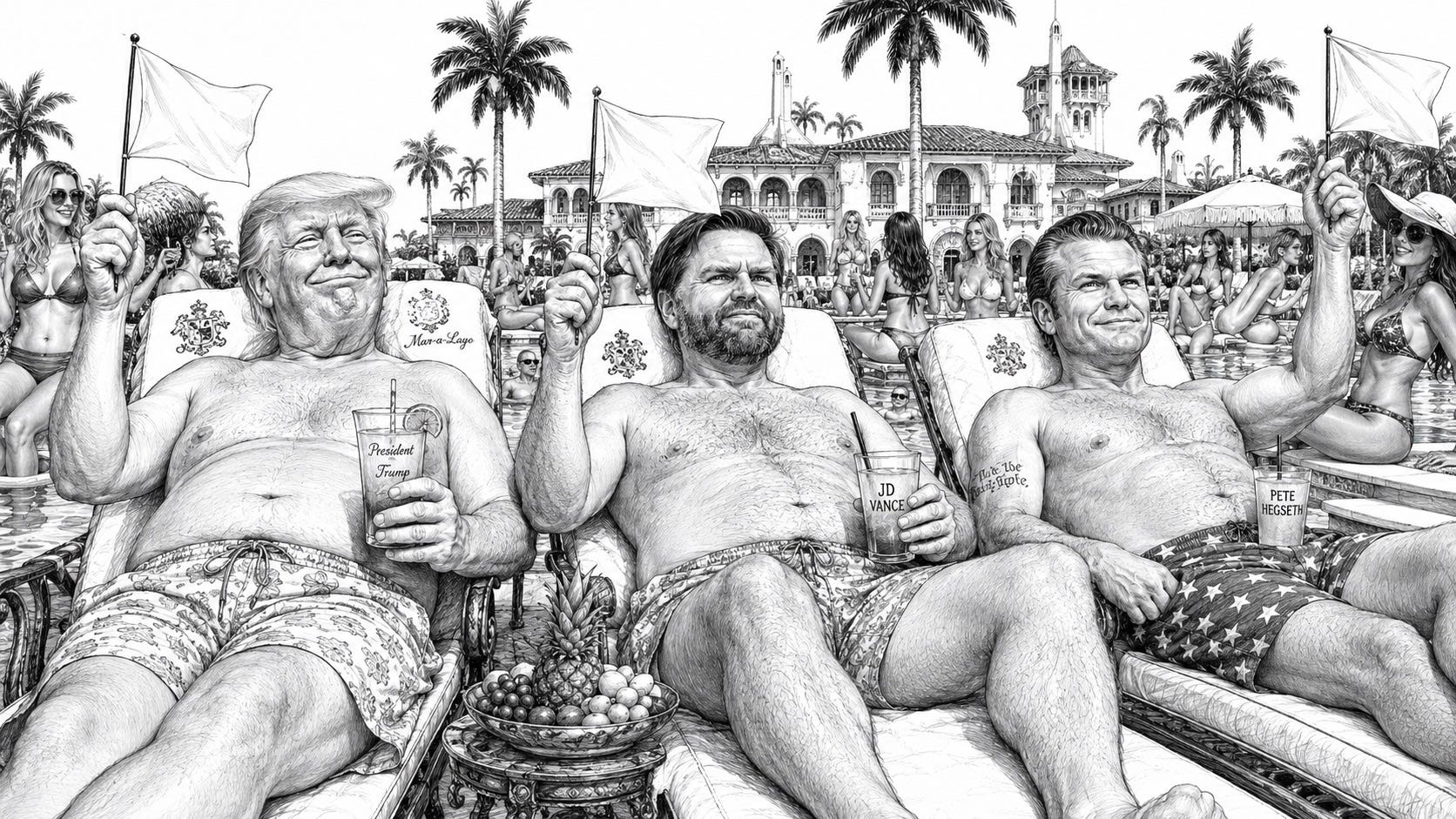
The peace they are selling us is a white flag with a flag pin on the lapel.
So do something with this. Read the memorandum yourself, every paragraph, and decide if it looks like victory for America. Send it to the friend who told you this war was worth it. Call the office of your member of Congress and ask one question out loud. Who voted to start this, and who voted to stop it. Then carry the answer with you into November.
Peace is not simply the absence of shooting. Peace is what you have left to show for it. Right now, the answer is staring back at you from paragraphs six, eight, and eleven.
Mitch Jackson, Esq.
The Iran MOU is fourteen paragraphs of “to be defined later.” Subscribe to Uncensored Objection Premium and I promise the opposite: clear, concise breaking political news with sharp legal commentary built on 40 years of practicing law and cross-examining the bad guys on the witness stand.
Full Text: U.S.-Iran Memorandum of Understanding
The United States of America and the Islamic Republic of Iran have jointly agreed in good faith on [ _ _ date] on the following:
1 — The United States of America and the Islamic Republic of Iran and their allies in the current war are signing this MOU to declare the immediate and permanent termination of military operations on all fronts, including in Lebanon, and undertake from now on not to initiate any war or any military operation against each other, and to refrain from the threat or use of force against each other, and ensuring the territorial integrity and sovereignty of Lebanon. The final deal will confirm the permanent termination of the war on all fronts, including in Lebanon and other provisions of this paragraph.
2 — The United States of America and the Islamic Republic of Iran undertake to respect each other’s sovereignty and territorial integrity and to refrain from interfering in each other’s internal affairs.
3 — The United States of America and the Islamic Republic of Iran commit to negotiating and achieving the final deal in maximum 60 days, extendable with mutual consent.
4 — Immediately upon the signing of this MOU, the United States of America will begin the removal of its naval blockade and any disturbances or impediments against the Islamic Republic of Iran, and will fully end the naval blockade within 30 days. During this period, the traffic of vessels will be in proportion to the numbers of pre-war traffic being restored by the Islamic Republic of Iran. The United States of America further undertakes to remove its forces from the proximity of the Islamic Republic of Iran within 30 days after the final deal.
5 — Upon the signing of this MOU, the Islamic Republic of Iran will make arrangements using its best efforts for the safe passage of commercial vessels with no charge, for 60 days only, from the Persian Gulf to the Sea of Oman and vice versa. The traffic of commercial vessels will immediately start, and considering the need for removing the technical and military obstacles, and demining by the Islamic Republic of Iran will be instated within 30 days. The Islamic Republic of Iran will conduct dialog with the Sultanate of Oman to define the future administration and maritime services in the Strait of Hormuz in discussion with other Persian Gulf littoral states in line with the applicable international law and the sovereign rights of coastal states of the Strait of Hormuz.
6 — The United States of America undertakes with regional partners to develop a definitive, mutually agreed plan with at least USD 300 billion for the reconstruction and economic development of the Islamic Republic of Iran. The mechanism for the implementation of this plan will be finalized as part of a final deal within 60 days. All required licenses, waivers and permissions needed for the relevant financial transactions will be granted by the United States of America.
7 — The United States of America undertakes to terminate all types of sanctions against the Islamic Republic of Iran, including the United Nations Security Council resolutions, IAEA Board of Governors resolutions, and all unilateral US sanctions, primary and secondary, in an agreed upon schedule as part of the final deal. The Islamic Republic of Iran and the United States of America acknowledge the critical importance of the sanctions termination issue above mentioned, and expressed their intentions to immediately address these issues in the negotiations in order to achieve mutual agreement on them.
8 — The Islamic Republic of Iran reaffirms that it shall not procure or develop nuclear weapons. The United States of America and the Islamic Republic of Iran have agreed to resolve the disposition of stockpiled enriched material pursuant to a mechanism that will be mutually agreed upon in accordance with the schedule mentioned in paragraph seven, with the minimum methodology to be down blended on site under the supervision of the IAEA. The two parties also agreed to discuss the issue of enrichment and other mutually agreed matters related to the Islamic Republic of Iran’s nuclear needs, based on a satisfactory framework being agreed upon in the final deal. The final deal will confirm the provisions of this paragraph. The United States of America and the Islamic Republic of Iran acknowledge the critical importance of the nuclear issues above mentioned. They express their intention to immediately address these issues in the negotiations in order to achieve mutual agreement on them.
9 — Pending the final deal, the United States of America and the Islamic Republic of Iran agree to maintain the status quo. The Islamic Republic of Iran will maintain the current status quo of its nuclear program, and the United States of America will not impose any new sanctions and will not deploy additional forces in the region.
10 — The United States of America undertakes that immediately upon the signing of this MOU and until the termination of sanctions, US Department of Treasury will issue waivers for the export of Iranian crude oil, petroleum products and derivatives, and all associated services, including banking transactions, insurances, transportation, etc.
11 — The United States of America undertakes to make fully available for use the frozen or restricted funds and assets of the Islamic Republic of Iran upon the implementation of this MOU. The United States of America and the Islamic Republic of Iran will mutually agree on the procedures related to the release of these funds during negotiations. Such funds, whether retained in the original account or transferred, shall be made fully usable for payment to any ultimate beneficiary designated by the Central Bank of the Islamic Republic of Iran. The United States of America undertakes to issue all necessary licenses and authorizations accordingly.
12 — The United States of America and the Islamic Republic of Iran agree that an executive mechanism will be established to monitor the successful implementation of this MOU and the future compliance of the final deal.
13 — After signing this MOU, and subject to the beginning of the implementation of paragraphs 1, 4, 5, 10 and 11 of this MOU, and the continuing implementation of these measures, the United States of America and the Islamic Republic of Iran will start negotiations regarding the final deal exclusively on the other paragraphs.
14 — The final deal will be endorsed by a binding UNSC resolution.
Related Note I Posted: "Trump's Iran Deal Is the Obama Deal Wearing a New Coat of Paint"
https://substack.com/@mitchthelawyer/note/c-277516350?r=2fe7t3&utm_source=notes-share-action&utm_medium=web
I'm sick.