

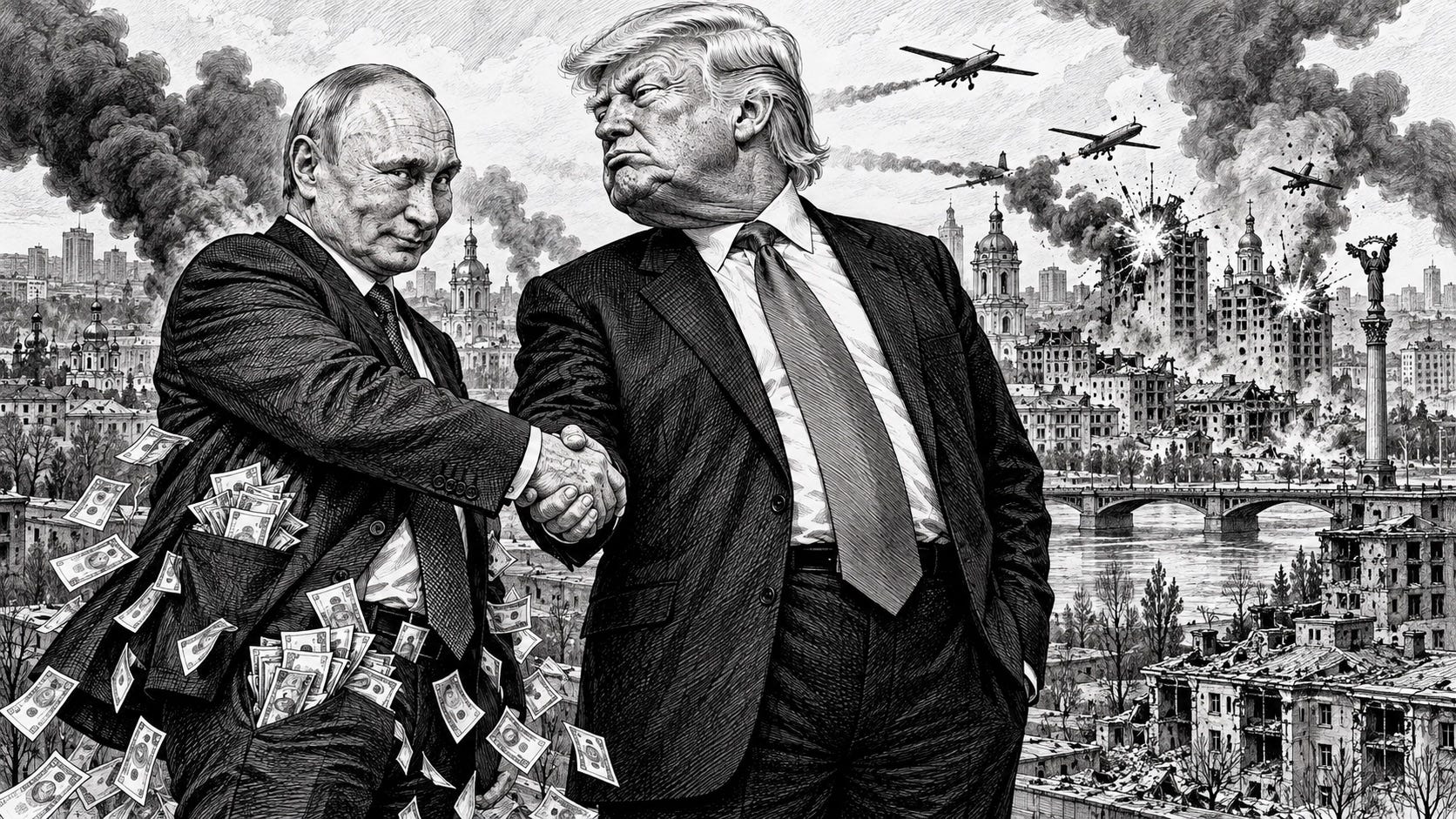
What The Heck is Going On?
Everyone is talking about Russian oil right now, and much of what you hear comes wrapped in spin. I’m a trial lawyer. Energy policy and international sanctions sit outside my area of expertise, so I put my team to work digging through the laws and the deals behind the headlines, with one goal in mind: hand you a plain English breakdown of what is happening and why it should worry every American who fills a gas tank or cares about a stable Ukraine, a stable Europe and a safer world.
Each major section closes with a short summary in plain language, so we all walk away holding the same facts. Read it, then share it with the people you talk to about this.
Oil Pays for Russia’s War
Russia leans hard on oil money. Oil and gas supplied about 30 percent of Moscow’s federal budget in 2024 and close to a quarter in 2025, making energy sales the Kremlin’s single biggest source of cash for missiles, drones, tanks and soldiers aimed at Ukraine, a country Russia first carved up in 2014 when it seized Crimea and then invaded outright on February 24, 2022, starting the largest war in Europe since World War II. America answered with two weapons. We armed Ukraine, and we went after Putin’s wallet.
In plain terms: Russia pays for its war in Ukraine largely by selling oil and gas, so America chose to fight back by arming Ukraine and shrinking Putin’s oil paycheck, and every decision that loosens that squeeze puts money back into Russia’s war machine.
How America Squeezed Moscow
In March 2022 the United States banned Russian energy imports outright. Europe stopped buying Russian crude by ship and then Russian diesel. The G7 nations set a price cap of $60 a barrel, so Western shippers and insurers would only touch Russian oil sold below that line, and Europe and Britain later pushed the cap down to $44.10.
Allies sanctioned hundreds of aging shadow fleet tankers Russia used to cheat. In August 2025 Trump himself slapped a 25 percent penalty tariff on India for buying Russian oil, and in October 2025 he sanctioned Rosneft and Lukoil, Russia’s two biggest oil companies. India’s Russian oil purchases fell to about 1.1 million barrels a day by January 2026, the lowest since late 2022. In the end, every dollar we let Putin earn on oil helps pay for the bombs falling on Ukrainian apartment buildings.
In plain terms: America and its allies spent four years shrinking Russia’s oil income through bans, a price cap and sanctions on ships and companies, Trump added his own penalties in 2025, and the numbers show the pressure was working.
Then Iran Lit the Fuse
In late February 2026 the United States and Israel attacked Iran, and Iran shut the Strait of Hormuz, the narrow sea lane that carries about a fifth of the world’s oil trade, sending crude above $100 a barrel in March and pushing diesel to a record of about $6.53 a gallon on September 22. Diesel moves your groceries. By October, regular gas topped $4 a gallon for the first October ever.
In plain terms: the war Trump unilaterally started with Iran without Congressional approval, shut the narrow sea lane that carries a fifth of the world’s oil. That is what drove your gas and diesel prices to record highs, along with the cost of nearly everything diesel trucks deliver.
Congress Passed the Graham Act
Senator Lindsey Graham, a South Carolina Republican and Trump ally, spent 2025 building a Russia sanctions bill he called an economic bunker buster. He died suddenly in July 2026. Congress renamed the bill for him and passed it 86 to 11 in the Senate on August 7 and 262 to 159 in the House on September 16, and Trump signed it on September 18.
The bill ordered sanctions on Russia’s central bank along with Sberbank, VTB and Gazprombank, tariffs of up to 500 percent on Russian goods, and tariffs of up to 100 percent on the five biggest buyers of Russian energy that kept buying, such as China and India, plus the five countries doing the most to help Russia dodge sanctions. The law also targeted the shadow fleet, banned new American investment in Russia, ordered Russian state companies off our stock exchanges and allowed the penalties to end only after Russia signs a peace deal Ukraine accepts. The deadline was October 18.
The law came with one trapdoor. The president could switch the penalties off by telling Congress they hurt the national interest and sending a written report. Congress forged a heavy weapon against Putin and handed the trigger to the one man unwilling to pull it.
In plain terms: Republicans and Democrats joined forces to pass the strongest Russia sanctions law in American history, but they gave the president a switch to turn it off, and he used it two days before the penalties were set to begin.
The October Reversal
The door had opened back in March, when Treasury issued two 30 day waivers letting India and then any buyer take Russian oil already at sea. On October 9, as Steve Witkoff and Jared Kushner sat across from Ukraine’s negotiators in Miami, Trump called Putin and announced a diesel deal of more than 300,000 tons now, 500,000 in November, 1 million after that and 3 million more down the road. Treasury followed with General License 135, allowing Russian diesel sales and imports into the United States until April 2027.
Zelenskyy called it a birthday present for Putin and said his team had been used as a smokescreen. Trump fired back that Ukraine should get a new leader, and a U.S. official told reporters that Kyiv ignored six requests to stop striking Russian refineries.
Then came October 16. Two days before the deadline, Trump signed an executive order waiving the 500 percent tariff, the tariffs on Russia’s customers, the sanctions on foreign banks, the investment ban and the peace deal requirement. He also stripped the legal lock off older executive order sanctions, including those on Rosneft and Lukoil, so he alone decides their fate.
The White House says enforcement would impede peace talks. Republican Senators Mitch McConnell, Thom Tillis, Susan Collins and John Cornyn had urged him to enforce the law. Tillis called the waiver beyond irresponsible, and Cornyn said Graham would be appalled.
In plain terms: a narrow 30-day emergency exception in March grew into a six-month green light for Russian diesel in October, and then into a near-total shutdown of the Graham Act’s penalties, handing Putin relief before he agreed to anything at the peace table.
What This Costs You and Ukraine
Energy experts say Russian diesel barely dents your pump price, since it leaves Russia’s other customers short and the real choke point stays in the Strait of Hormuz. Putin wins big, because he no longer has to cut his oil prices even deeper to find buyers.
Europe held its ground, adding about 1,600 new names to its sanctions list in a package already in the works, and German Chancellor Friedrich Merz called a similar diesel deal out of the question. Ukraine heads into winter with its strongest American economic lever switched off. Sanctions only work when a nation keeps them on even when it stings at home.
In plain terms: the Russian diesel deal does little to lower what you pay, puts more money in Putin’s pocket, splits America from its European allies and leaves Ukraine weaker heading into winter.
Why Trump Is Doing This
Start with the reasons the White House gives. Trump says lowering fuel prices for farmers, ranchers and truckers is his top priority, and his team argues that enforcing new sanctions on Russia right now would impede the peace talks his envoys are running. Look past the talking points and a bigger picture comes into view.
With diesel above $6 a gallon and a leading forecast giving Democrats strong odds to win the House on November 3, Trump needed a headline promising relief at the pump, and critics say a deal with Putin handed him one along with a ready scapegoat in Zelenskyy if prices refuse to fall, since he already blames Ukraine’s drone strikes on Russian refineries for driving diesel higher. The waiver also spares him from deciding whether to hit China and India, two giant trading partners that objected to the law, with tariffs of up to 100 percent, and the Kremlin says the two leaders discussed Iran on the same call.
Then follow the money. Trump has called Russia a tremendous business opportunity since early 2025. Recent reporting reveals that his two lead negotiators, Steve Witkoff and Jared Kushner, have discussed a multibillion dollar sale of sanctioned Lukoil’s overseas assets. The buyers include a $2 million Trump donor. They also include Middle Eastern firms that have done business with the Witkoff or Kushner families. The deal needs Washington’s approval under the sanctions rules. So far, no evidence shows either man profiting personally.
Add Trump’s years of warmth toward Putin and his open feud with Zelenskyy. The waiver stops looking like a policy choice and starts looking like a favor.
In plain terms: the White House says it waived the sanctions to lower fuel prices and protect peace talks, but election pressure, trade worries and business ties around Trump’s negotiators offer other more realistic explanations. Together they make the decision look more like a favor to Putin than a policy for Americans.
Your Move
Call your senator and your representative this week, tell them to force the Graham Act back into effect, share this with someone who still thinks this fight has nothing to do with their grocery bill, and show up on November 3 ready to vote like Ukraine’s survival and our own credibility depend on it.
Mitch Jackson, Esq.
Subscribe to Uncensored Objection and I’ll keep cutting through the cable news noise and the social media spin, handing you the plain facts behind stories like this one so your decisions rest on what’s true.
Wrong, there’s a myth about Trump that he sees this opportunity in Russia. It’s absurd. I mean it’s not absurd that he sees an opportunity in Russia, but it’s absurd to subscribe his extreme behavior for a simple tower in Moscow. Trump has repeatedly deferred to Russia are clear enemy while they’ve committed crimes and admittedly supported Trump for president in the US. The Steele dossier points at some sort of compromise leverage, a pee tape, etc. Then of course there’s the Epstein file. And 800 megaton King Kong in the room. She could Vladimir Putin know anything about that? Trump wouldn’t risk his entire presidency and defy Congress with a established nearly century old enemy of the US for a simple building. He’s clearly being blackmailed. What’s the one thing that Trump can’t come back from? It certainly isn’t fraud. It certainly isn’t insurrection. And it certainly isn’t garden variety rape. What’s the one thing that even prisoners won’t tolerate in their prisons? Please stop saying Trump admires dictators, yes in a vague sense he does but what he’s really looking for our partners in crime. In the unique case of Vladimir Putin, he’s trying to keep a terrible secret quiet, and he’s willing to risk his presidency and geopolitical stability.
Please stop saying he sold out Ukraine for Diesel—it’s a red herring. It’s just an excuse to remove sanctions from his Russian master and a way to continue to sell out our European allies.
Bottom line, you can’t sell out a country that you never supported in the first place. From the dressing down in the Oval, the Helsinki, to Alaska, and most recently Trump’s coming out party in which he announced to the world that he’s Putin’s BITCH!!!!!!
So while I enjoyed the newsletter, please start in the realm of reality!..:)