

What does it cost to start a war nobody asked for? About fifty extra cents a gallon, and climbing.
Right now, the average American is paying $3.58 for a gallon of regular gasoline. Two weeks ago, that number was $2.98. In California, drivers are staring at $5.40 a gallon. And if you think this is the ceiling, I need you to sit down, because oil just crossed $100 a barrel for the first time since 2022 and briefly surged past $120. As a trial lawyer with more than four decades of experience reading the fine print that powerful people hope you will never see, I am telling you this: the fine print on this war has a price tag, and you are the one paying it.
On February 28, 2026, the United States and Israel launched coordinated strikes on Iran, hitting military targets, nuclear sites, and senior leadership. Within hours, the Supreme Leader was dead. Within days, the entire global energy market was on fire. And now, ten days into this conflict, you are watching the economic shrapnel land in your own driveway, every single time you fill up your tank.
Why Your Gas Prices Exploded Overnight
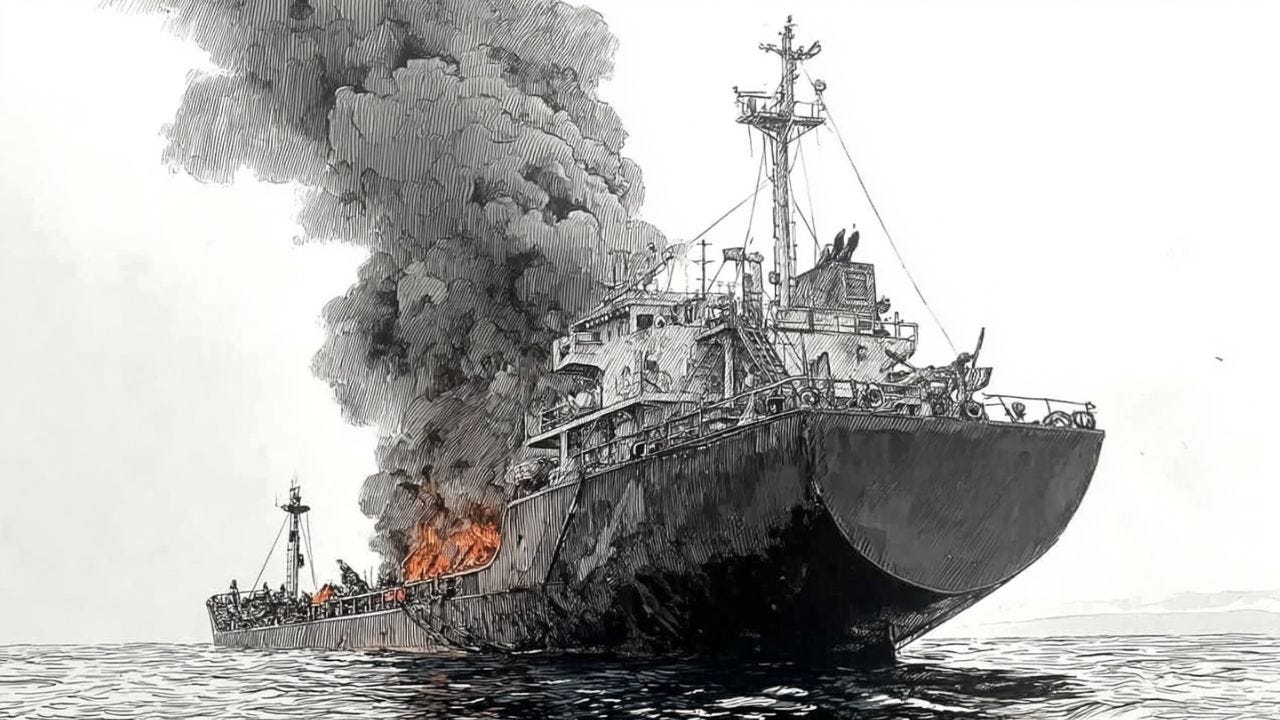
Let me make this simple. About twenty percent of the world’s oil supply passes through a narrow waterway called the Strait of Hormuz. It sits between Iran and Oman and it is the single most important chokepoint for global energy. When this war started, Iran’s Revolutionary Guard declared the strait closed and began attacking tankers. Shipping traffic dropped ninety five percent in the first week of March. That is not a disruption. That is an amputation.
Oil tankers are not moving. Insurance companies have pulled coverage for ships in the region. Major shipping lines like Maersk and Hapag Lloyd suspended all transits. More than 150 tankers are sitting anchored outside the strait with nowhere to go. Iraq, Kuwait, Bahrain, and Qatar have either reduced production or shut down fields entirely because there is no way to get the oil to market.
This is supply and demand at its most brutal. The supply just got choked off, and the demand did not go anywhere. When one fifth of the world’s oil vanishes from the market overnight, prices do not nudge upward. They spike. Brent crude, the global benchmark, went from about $70 a barrel before the strikes to over $90 by the end of the first week. By Sunday, it crossed $100 and briefly hit $120. Analysts at Kpler are warning that if the strait stays closed through the end of March, oil could reach $150 a barrel.
What This Means for You and Your Family
Every penny increase in the price of crude oil gets passed along to you. The cost of oil accounts for roughly sixty percent of what you pay at the pump. The rest comes from taxes, refining costs, and distribution. When crude doubles in price in ten days, gas stations do not absorb that hit. You do.
Diesel has been hit even harder. The national average for diesel jumped nearly 89 cents in one week to $4.66 a gallon. That matters because diesel powers the trucks that deliver your groceries, your packages, and your building materials. When diesel goes up, everything goes up. Food prices, shipping costs, the price of getting anything from point A to point B.
And it goes deeper than fuel. The Strait of Hormuz also handles twenty percent of the world’s liquefied natural gas. Qatar, one of the largest LNG exporters on the planet, declared force majeure on gas exports after Iranian drone attacks hit its facilities. European natural gas futures nearly doubled. That means higher heating bills, higher electricity costs, and inflationary pressure rippling across every economy on earth.
OPEC agreed to increase production. Normally that would calm the market. It did nothing. Because the oil cannot leave the Gulf. As one analyst put it, those barrels are becoming stranded assets. You cannot sell oil that you cannot ship.
The Bottom Line
President Trump posted on Truth Social that rising oil prices are “a very small price to pay” for safety and peace. Read that again. He called what you are paying at the pump a small price. For a family spending an extra thirty to fifty dollars a week on gasoline and watching grocery bills climb, there is nothing small about it.
This war was a choice. Nobody voted on it. No clear and present danger to the American homeland forced this decision. Congress didn’t approve any of this. And now the financial consequences are landing squarely on the shoulders of working families who were already stretched thin. Gas prices are rising at one of the fastest rates in years. If the strait stays closed and infrastructure damage mounts, four dollars a gallon becomes the floor, not the ceiling.
You deserve to know why your paycheck is shrinking before it ever hits your bank account. You deserve to demand accountability from the leaders making decisions that empty your wallet. And you deserve to remember this moment the next time someone asks for your vote. The price at the pump is not an accident. It is the cost of a war that was started without your permission.
Mitch Jackson, Esq.
Subscribe to the Uncensored Objection Substack so you have every fact, figure, and argument you need before you step into the voting booth this November. The 2026 midterms will decide who holds power in Congress, and this newsletter will make sure you walk in armed with the truth.
It would appear the US unilaterally started the dominoes of a significantly potential Global economic collapse!
Gee, thanks, potus...when will you take all of your ill-gotten money, your corrupt family members, hop on your Big Qatar Plane and leave for never, never land? We can't wait to wave goodbye!
A deeply concerning piece, Mitch. Your breakdown of the geopolitical and economic ripple effects here is as clear as it is alarming. I find it completely reckless on the part of Trump to have placed his country—and by extension, the global community—in such a volatile position. No citizen should bear the financial and emotional cost of a war nobody asked for. Thank you for shining a light on the fine print and helping people see beyond the political spin to the personal realities this decision is creating.