
Trump Bought $100 Million in Bonds While Demanding Fed Rate Cuts
A president who profits when rates fall cannot be trusted to pressure the Fed

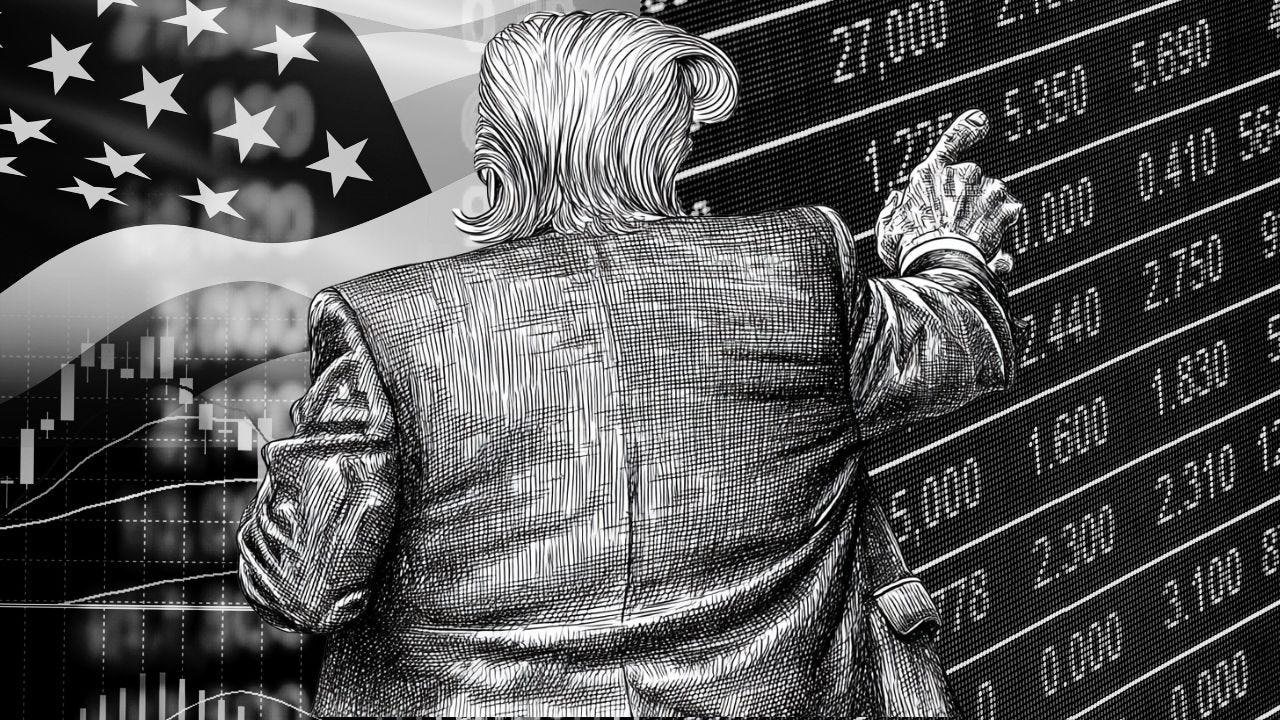
Executive Summary: Donald Trump has invested over $100 million on bonds since taking office, all while hammering the Fed to cut rates. Bond values rise when rates fall, which means the president’s financial bets stand to profit directly from his own pressure campaign. This isn’t policy, it’s self-dealing, and the conflict of interest is staggering. Voters need to see this for what it is: a president using public power to serve his private portfolio.
Trump’s been back in the Oval Office eight months and the disclosures already show he’s dropped more than a hundred million into bonds. That number isn’t background noise. It’s the tell and here’s why you need to pay attention.
These are not routine transactions by a private citizen. These are trades made by a sitting president who never placed his wealth into a true blind trust. And they line up with the way he has been pounding the Federal Reserve to slash interest rates. When you step back and look at the whole picture, what you see is a president behaving less like a public servant and more like a portfolio manager on television trying to pump the value of his own holdings.
Here is why that matters. Bond prices rise when interest rates fall. Trump has been relentless in demanding rate cuts. If you own a massive amount of bonds, rate cuts can make you millions. Rates often fall fastest for corporate bonds because they carry more risk than government debt. So when Trump goes on camera pressuring the Fed, it is not only about economic policy. It is about his own bottom line. That looks a lot like “talking your book,” the market slang for hyping what you already own so others will buy in and push the price higher.
This week’s new disclosures tell us he made more than six hundred trades since January. These include corporate bonds from Citigroup, Morgan Stanley, Wells Fargo, Meta, Qualcomm, Home Depot, T-Mobile, and UnitedHealth, along with debt issued by states, cities, counties, school districts, and even gas districts. These are not random picks. Each of these issuers can be affected by federal decisions on regulation, aid, or policy shifts. That is why we need more than broad ranges on a disclosure form.
We need the cusips, the maturities, the coupons, the call features. We need to know whether these bonds were bought in primary offerings or scooped up in the secondary market. We need exact dates, timestamps, and allocation details. Without that, we cannot see the full picture of who benefited and when.
The timing of these trades must be mapped against Trump’s public actions. Every tariff announcement, every disaster declaration, every infrastructure grant, every federal waiver needs to be compared to the moments those trades went through. Were his public statements on markets and interest rates conveniently timed after he or his accounts had taken positions? Were there memos drafted in the White House before trades were executed? Was market-sensitive information from agencies like Treasury, Commerce, or FEMA sitting in his briefing book before trades were placed? If the answer is yes, that moves this conversation into classic insider trading territory.
Remember what it means for the president to sit at the top of government. He hears about sanctions before they are public. He sees procurement decisions before they hit the wires. He knows about credit rating actions and disaster aid packages before anyone else. If trades were made while holding that information, Rule 10b-5 comes into play. That rule does not bend for anyone, including the president.
Then there is the signaling effect. Markets move when a president speaks. If Trump was loading up on positions and then telling the world that the Fed needed to slash rates, he was not only shaping monetary policy. He was also potentially shaping the value of his own portfolio. That crosses a line into market manipulation. Section 9 of the Exchange Act makes clear that creating a false appearance of market activity or stability is illegal. The overlap between his words and his trades deserves serious scrutiny.
Conflicts run even deeper when you look issuer by issuer. Did he hold municipal bonds in a state that later received major infrastructure dollars? Did he hold corporate debt in a company facing antitrust action or procurement decisions from his administration? If federal actions lined up with his holdings, that is a personal financial conflict that strikes at the heart of trust in government.
We also need to know who gave him these bonds. Were they allocated in primary offerings with special treatment? Did underwriters flag his accounts as VIP? Which private banks, family offices, and dealers executed the trades, and what kind of contact did they have with White House officials? If he received preferential treatment because of his office, the problem grows even larger.
Another layer is leverage. Were these purchases financed with repo agreements or margin loans? Were there swaps or hedges placed on top of them to magnify gains? Did he or his financial handlers use derivatives to time market moves? Every one of those questions matters because they reveal whether this was a simple bond buy or a sophisticated strategy to exploit presidential power for personal gain.
Ownership is also an open question. Who controls these accounts? Are they in Trump’s name, his children’s, in trusts or LLCs, or handled by managers taking direct instructions? Were there letters of direction, ethics screens, or standing orders? Without a true blind trust, the answer is obvious. Trump remains the beneficiary and the American people are left with no protection against conflicts of interest.
Then there is the issue of compliance. The STOCK Act requires periodic transaction reports within 45 days. Were those filed on time? Do the forms match the broker confirmations? Were any filings late or altered? Presidents may be exempt from some conflict statutes, but the optics and ethics still matter. If filings were incomplete, missing, or inconsistent, that is a breach of public trust.
Look for the red flags. Primary allocations followed closely by favorable decisions. Multiple trades bunched together right before he made public statements on markets. Trades made just before embargoes lifted. Broker notes hinting at VIP handling. Missing or late filings that do not line up with broker records. Each one of those is a reason for Congress to subpoena documents and demand testimony.
All of this matters because when a president mixes personal bets with public policy, the integrity of our system collapses. Every dollar he made from these trades is a dollar pulled from a market that should be free from manipulation. Every decision shaped by his own financial exposure is a decision that failed to put you first. Democracy runs on trust. Markets run on transparency. When both are corrupted at once, the damage is enormous and lasting.
Congress must act. The press must demand answers. Regulators must test the theories of manipulation and insider trading with real evidence. None of that will happen unless the American people demand it. This is your government. It is your voice, your vote, and your future on the line.
Donald Trump has turned the Oval Office into his own trading desk. That is not leadership. That is self-dealing at the highest level. The longer this continues without investigation, the deeper the harm to our democracy.
You should not accept it. Speak up. Call it what it is. Demand accountability. If you do, you protect not only your own future but the future of your children and grandchildren. If you do not, you accept a system where public service is nothing more than a side hustle for personal gain.
Mitch Jackson, Esq. | links
Related: The Crypto Con: How Trump Is Looting America from the Oval Office
Trump is treating the presidency like his personal trading desk. If that makes your blood boil, you’re in the right place.
This is where I’ll keep exposing the conflicts of interest, the self-dealing, and the corruption that threatens your future and mine. I won’t whisper. I’ll call it out directly.
You can follow along for free, or step up and go premium for $7/month or $70/year. That support keeps this work independent, unfiltered, and impossible to silence.
It’s ALWAYS and only about the money and the appearance of wealth. Louis XVI et al were pikers compared to 47 for stealing from the populace. Maybe it’s time for “Aux barricades!” ??
My grandfather would most likely characterize Trump as "a lowly stump jumper ... crooked as a dog's hind leg. I would agree with Papa.
P.S. For those unfamiliar with the term, a stump jumper is the lowest of the low.