

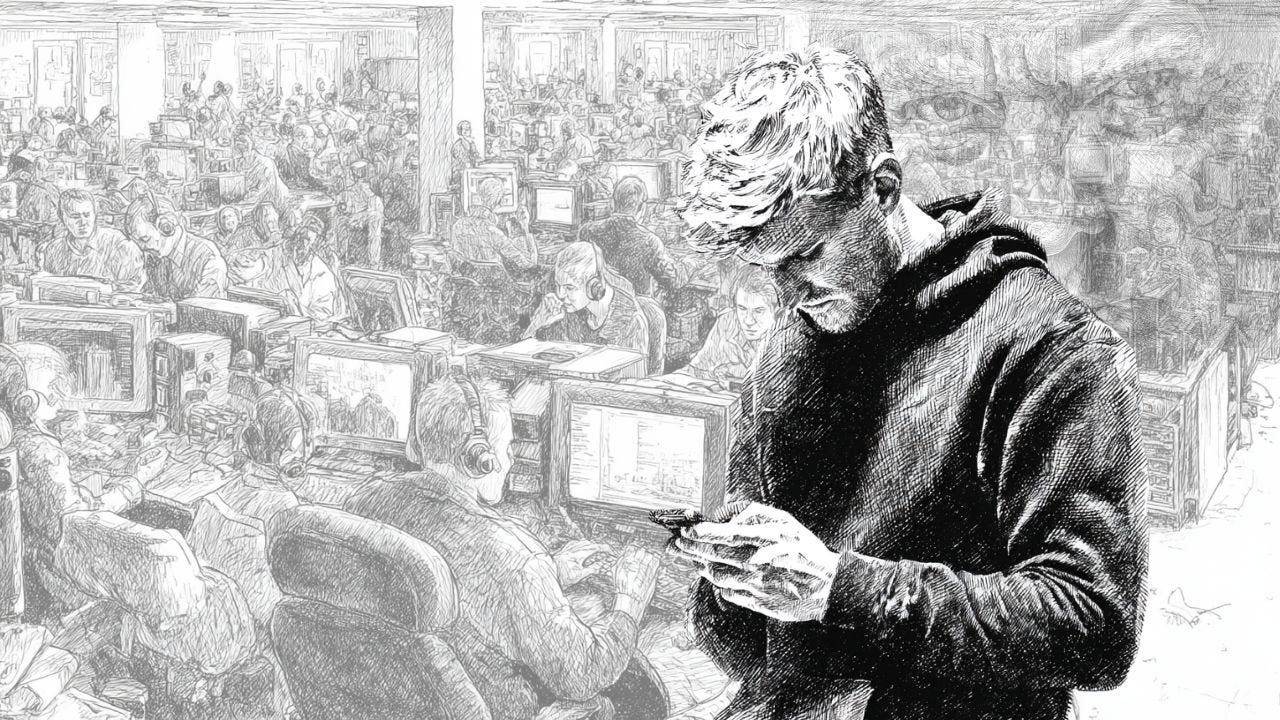
They said it was for terrorists. That was the story they sold you while they built a system that sees everything you do, reads everything you write, and listens when you think you’re alone. Power never stops where it’s supposed to, and now the target isn’t the enemy abroad, it’s you.
You wake up. You check your phone. You send a private message. You trust that your communications are yours. But the tools exist now that let a government, or the vendor working with a government, silently take over that device, read your messages, access your camera, track your location.
This is no longer a hypothetical threat. The global commercial spyware market has grown into something governments and private actors deploy not just against “hard-core criminals” but against people who are simply doing their jobs, raising questions, telling stories. Under the second term of President Trump, this threat is moving into sharper focus inside the United States and on Americans. We have a duty to see it, talk about it, and act before the damage grows deeper.
How the Threat Works, And Why It Reaches Beyond “Big Criminals”
Spyware firms market their wares as tools for governments to target terrorists and serious criminals. In reality the design and infrastructure of these tools make them far easier to deploy than advertised, which means the scope of targets expands.
A government agency buys software. The vendor promises they can surveil a certain number of devices at once. The license model encourages broad access. Once the system exists, the temptation to use it beyond the original stated purpose is strong. Researchers describe a huge “abuse temptation.”
One major factor: the technical barrier to deployment has dropped. Some spyware can deliver “zero-click” attacks, meaning the target doesn’t even have to click a link. The phone itself becomes compromised. Once inside, the device reveals everything it holds: messages, encrypted chats, location, photos, camera, mic. When a journalist or activist is targeted, the effect is chilling not just for them but for all of us.
This threat isn’t theoretical. A recently accelerated global market shows firms like that in Israel and elsewhere working to expand into Western democracies, including the United States. Tech-giant platforms have begun warning users in the U.S. if their phones are targeted by known government spyware. The U.S. government also held a hearing earlier this year titled “A Continued Pattern of Government Surveillance of U.S. Citizens,” which signals recognition of the domestic dimension.
Why This Threat Matters to Journalists, and Then to You
When a journalist’s device is hacked, stories get suppressed, sources vanish, investigations stop. If a government uses spyware to get access to reporting before publication, the power imbalance shifts dangerously. Press freedom is a pillar of democracy and your ability to know what is happening. When that pillar is hacked it weakens democracy itself.
Next, if the government can hack a journalist’s device, make no mistake: it can hack yours. Your phone, your messages, your photos might be under threat. A poll found that a strong majority of Americans believe government surveillance has increased in the past 25 years. Nearly half say surveillance makes people less likely to express political views online. When people self-censor because of fear even when they have done nothing wrong, freedom of speech and civic participation shrink.
Under the current administration the risk multiplies. The administration has shown little interest in reining in surveillance authority or restoring strict due-process and privacy protections. At a time when the presidency and other centers of power are speaking in divisive tones and undermining institutions, the ability to surveil broadly outside transparent bounds is a recipe for deeper harm to democratic norms.
What We Are Seeing Under Trump’s Second Term
The Trump administration in 2025 has allowed more data sharing across agencies, invited secondary use of that data, and placed fewer visible guardrails around surveillance technologies. For example the federal government now uses “secondary data” more often, meaning you give your data for one purpose and it gets reused in ways you did not expect or consent to.
The U.S. has recognized commercial spyware as a global threat. The export of such tools was addressed in a United Nations Security Council meeting this year. The government also imposed sanctions against a Greek-based spyware vendor for targeting US officials and journalists. A U.S. platform-vendor dispute resulted in a record damages award against a spyware maker for hacking WhatsApp accounts belonging to journalists, activists and government figures. These actions matter but they are isolated and reactive rather than proactive and systemic.
Meanwhile a branch of the U.S. government within the Department of Homeland Security quietly reactivated a contract worth two million dollars for an Israeli firm’s spyware product. Legal groups filed FOIA requests to uncover how U.S. agencies use commercial-spyware vendors. The legislative oversight hearing in April 2025 highlights expanding domestic surveillance and lack of transparency.
Under this administration the push toward broad surveillance feels continuous. The rhetoric around “law and order” and “national security” gives room to expand tools in the name of public safety, but the checks and balances have not kept pace. Your due process rights, your privacy rights, your freedom to speak in private or to work as a journalist without fear are under strain.
The Psychological Impact on the Individual and Society
When you suspect your phone, your messages, even your computer might be bugged you begin to shrink inside your life. You stop saying what you would have said. You stop doing what you would have done. Privacy is not just a luxury. It is how you think your own thoughts without feeling watched, how you talk without feeling someone listens, how you live without assuming your every move is monitored. When that breaks, your sense of self and agency begins to erode.
On a societal level when entire populations believe they might be watched, the free exchange of ideas falters. The journalist who does not feel safe, the citizen who does not feel free to express ideas, the whistle-blower who thinks twice before speaking. The sum of these individual hesitations is serious. It undermines trust in institutions and weakens democracy’s root.
I say this not to terrify you but to energize you. Because once you see how this threat hits you personally you will see why it matters to your community, your children, your grandchildren.
What Must Be Done, and What We Should Demand
You should demand transparent oversight. You should insist that the government reveal how many devices are being surveilled, by which agencies, based on what legal authority. Surveillance tools must operate under clearly defined judicial oversight. You should demand that journalists and their sources be protected from untargeted spyware attacks, because when the press is under attack you all are under attack.
You should insist that commercial spyware vendors be held to account. The record damage award against one spyware vendor should not be an exception. It needs to be a rule. The export of these tools must include strict ethical guardrails.
You should speak up. Contact your representatives. Write. Share your concerns with your community. Every citizen must treat surveillance abuse as a civic issue not just a technical one. If you let the current drift continue you hand over your privacy, your voice, and eventually your freedom.
Final Thoughts
The threat of government spyware is real and current. It affects journalists, it affects you, it affects all of us.
Under this administration our rights of due process and privacy are being eroded. Our democracy if fragile right now and this is not someone else’s problem. It is your problem. It is your voice that must rise.
Share. Speak. Act. Our kids and grandkids depend on our willingness to guard the privacy we still have, to defend the freedom we still believe in, and to demand accountability today.
Mitch Jackson, Esq.
Related
No Consent, No Oversight, No Escape: Inside Trump’s Palantir-Powered Surveillance Takeover
The Government Is Watching You Online, And They’re Using AI to Do It
Spyware will become an epidemic under this administration. A couple companies are called out in the article link below but as you pointed out in a previous posts, there is also Palantir & AI. Hard to imagine big tech protecting anyone from anything.
https://www.theguardian.com/technology/2025/nov/10/apple-whatsapp-spyware-paragon