

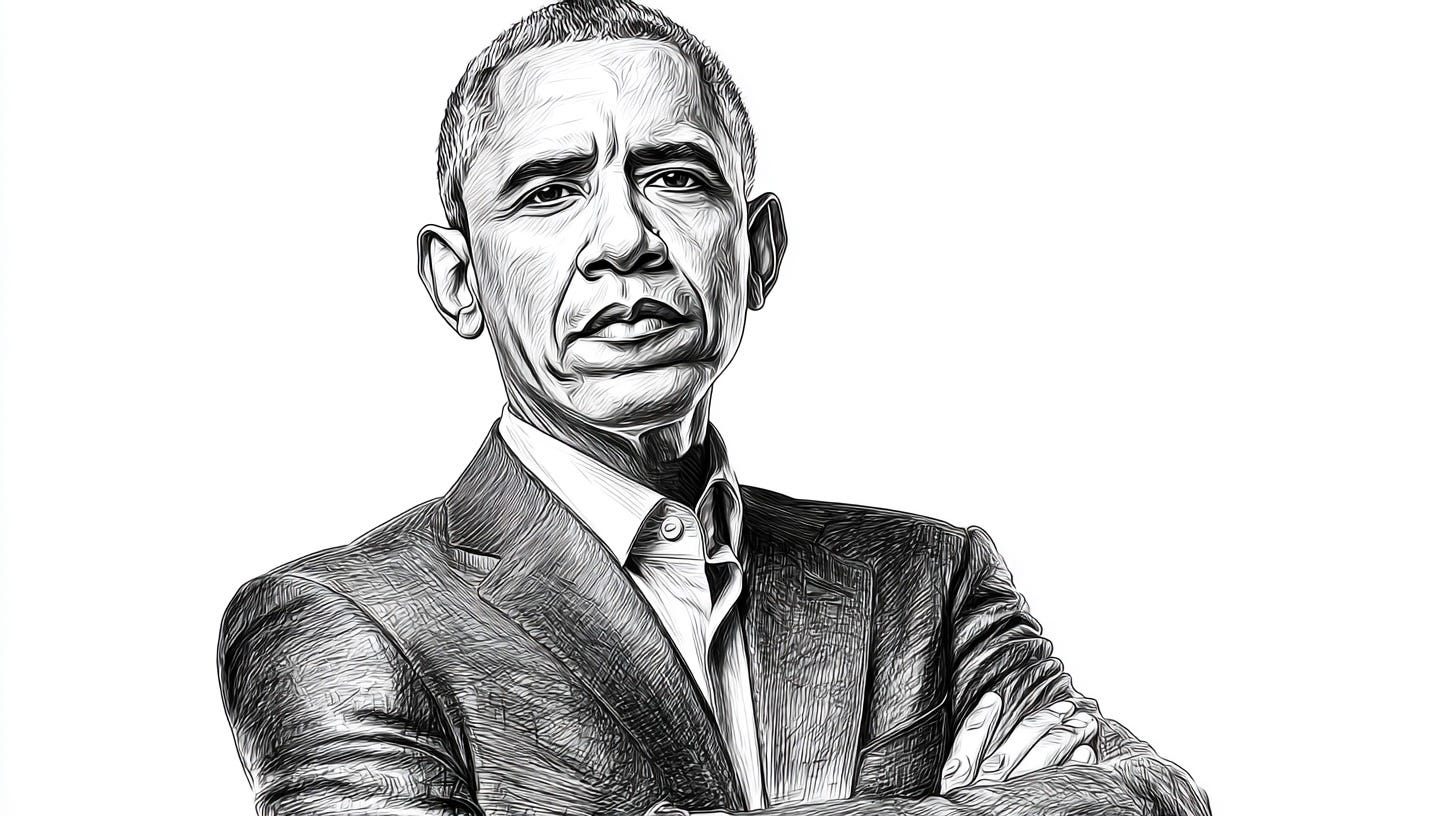
Wednesday night, Trump called Obama’s Iran nuclear deal a disaster and pushed a false claim that Obama handed Iran $1.7 billion in cash pulled from banks in Virginia, D.C., and Maryland to buy loyalty, saying Iran laughed and kept moving toward a nuclear bomb and would already have a massive arsenal if the deal had stayed in place. The reality is the exact opposite: that money was part of a legal settlement returning Iran’s own funds, and the deal put real limits and inspections in place that slowed Iran’s nuclear progress, not accelerated it.
The Official Record (Not Trump, Fox or MAGA Republicans)
For a decade now, the same talking point has circulated through cable news, social media, and dinner tables across this country. Obama gave pallets of cash to Iran. Obama paid off the mullahs. Obama funded terror. You have heard it so many times that it sounds like a settled fact. It is not a settled fact. It is a distortion of the official record, and it has been weaponized to manipulate your opinion about one of the most important national security decisions of the twenty first century.
I read government testimony, court filings, and agency records for a living. I have done it for 40 years. And when you sit down and read the actual documents, the Treasury testimony, the State Department hearing transcripts, the IAEA verification reports, the congressional record, a completely different story emerges. The story the official record tells is one of calculated strategy, legal process, and a diplomatic achievement that delayed Iran’s ability to build a nuclear weapon by years.
You deserve to know what the record says. Not what someone on TV told you it says. Not what a campaign ad told you it says. The actual record.
Let me walk you through it.
The World Before the Deal
Before anyone argued about cash or politics, there was a crisis building in real time. Iran’s nuclear program was advancing. Its breakout timeline, the amount of time it would need to produce enough weapons grade material for a bomb, was shrinking. Intelligence assessments warned that the window to prevent a nuclear armed Iran was closing fast.
This was not a theoretical concern. Allies in the Middle East were openly discussing military strikes. The possibility of a preemptive attack on Iranian nuclear facilities, and the regional war that would follow, was no longer hypothetical. It was on the table.
The pressure on the United States was enormous. Do nothing and watch the situation accelerate toward armed conflict. Or step in with a strategy designed to slow Iran’s program, increase international visibility into its activities, and pull the world back from the edge.
President Obama chose the second path. And every piece of evidence in the official record shows it was the right call. And that same evidence shows that President Trump’s cancellation of President Obama’s deal was all about ego and misinformation.1
The Money, Because You Have Been Told a Lie About It
Let me take the cash issue head on, because this is where the misinformation has done the most damage.
People still say that Obama gave Iran billions of dollars as a reward for signing the nuclear deal. That version of events collapses the moment you open the hearing transcripts.
The January 2016 settlement and the nuclear agreement were related in timing. They were not identical in purpose. Treasury testified that the settlement involved two separate payments tied to an account that had existed for decades, funded entirely with Iranian money, plus Iran’s claim for interest on that account before the Iran U.S. Claims Tribunal in The Hague.
That distinction matters. It means the money was not a bonus for signing the nuclear deal. It was the resolution of a separate legal dispute that had been hanging around since the fall of the Shah and the collapse of the old Foreign Military Sales relationship between the U.S. and pre revolutionary Iran.
Start with the first $400 million.
Treasury testified that this money came from what is commonly called the Foreign Military Sales Trust Fund. Treasury said that fund was built from Iranian money deposited in connection with Iran’s pre 1979 military purchases from the United States. Iran paid for weapons and equipment before the revolution. The revolution happened. The equipment was never delivered. The money sat in a U.S. controlled account. Treasury also confirmed that the fund had once held about $600 million, and that a 1990 settlement under the first Bush administration had already returned $200 million to Iran. That left about $400 million in the account.
Read that again. This was not Congress sending new American taxpayer money to Iran. This was the return of money tied to a decades old account that Iran itself had funded. Iran’s money. Sitting in a U.S. account. For nearly 40 years.
Now the second piece, the $1.3 billion.
The most accurate description is this. It was a compromise settlement of Iran’s claim for interest on the FMS account. It was not a judicial ruling that the United States definitely owed exactly that number. In the House hearing record, State Department Legal Adviser Brian Egan testified that the United States faced significant exposure, potentially in the billions, if the principal and interest claims had gone to a final decision at The Hague. DOJ’s Mary McCord testified that the Attorney General approved the settlement and certified payment from the Judgment Fund because DOJ assessed the amount was in the best interests of the United States and significantly less than the country’s potential exposure at trial.
Think about that for a second. The government’s own lawyers looked at the case, ran the numbers, and determined that settling for $1.3 billion was the smart move because the alternative was losing a much larger amount in an international tribunal. That is not a payoff. That is a litigation settlement. Every lawyer in America understands this. You take the deal that limits your exposure when the risk of going to trial is worse. That is exactly what the United States did.
Treasury also testified that the payments complied with existing U.S. sanctions law and did not require a unique license, waiver, or special authorization. The payments were lawful under the existing legal framework.
So the next time someone tells you Obama gave Iran a gift, ask them one question. Have you read the Treasury testimony? Because the testimony says the opposite.
What the Nuclear Deal Did
Now let me walk you through the deal itself, the Joint Comprehensive Plan of Action, because this is where the facts destroy the political spin.
Treasury’s August 2015 testimony was direct. There was no immediate sanctions relief. There was no signing bonus. Iran first had to satisfy the required nuclear conditions, verified by the IAEA, and only then would sanctions relief begin. Treasury also confirmed that sanctions related to terrorism, militant proxies, missiles, the IRGC, and human rights abuses remained in place. The deal was never built on trust. It was built on conditions, sequencing, and verification.
And the restrictions were not symbolic. Look at the numbers.
Iran agreed not to enrich uranium above 3.67 percent for at least 15 years. It agreed to cut its low enriched uranium stockpile from about 12,000 kilograms down to 300 kilograms for 15 years. It agreed to reduce installed centrifuges from about 19,000 to 6,104, with only 5,060 allowed to enrich uranium for 10 years. It agreed not to enrich at Fordow for at least 15 years and to convert that site to peaceful purposes. It agreed to redesign Arak so it would not produce weapons grade plutonium, and the old reactor core was to be removed and filled with concrete.
Stop and absorb those numbers. Iran went from 19,000 centrifuges to 5,060 that were allowed to operate. It slashed its enriched uranium stockpile by 97.5 percent. It gave up the ability to produce weapons grade plutonium at Arak. It opened its doors to the most intrusive international inspection regime ever negotiated.
These were not talking points. These were physical, measurable, verifiable constraints on Iran’s nuclear capability. And every single one of them was confirmed in the official White House archive and IAEA reporting.
Congress Knew. Congress Voted. Congress Had Its Say.
Another piece of misinformation that keeps circulating is the claim that Obama bypassed Congress to push the deal through in secret. The congressional record and the facts tell a different story.
Before the Iran deal was finalized, Congress passed the Iran Nuclear Agreement Review Act of 2015 with overwhelming bipartisan support. That law required the Obama administration to submit the full agreement for congressional review and gave lawmakers a defined window to approve or disapprove it.
Congress used that window. During the review period, opponents attempted to block the deal through a resolution of disapproval. Senate Democrats prevented that measure from advancing to a final vote. It never reached the President’s desk. Because Congress did not successfully pass a disapproval resolution, the agreement proceeded under existing presidential authority, consistent with the framework Congress itself had established.
That is the process working. Congress created the review mechanism. Congress used the review mechanism. The deal survived congressional scrutiny through the process Congress designed. Calling that a bypass ignores the entire legislative record.
The Deal Worked. The Inspectors Said So.
The strongest evidence that the deal achieved its purpose came from the one body whose job was to verify compliance, the International Atomic Energy Agency.
In March 2018, IAEA Director General Yukiya Amano said Iran was implementing its nuclear related commitments and called the JCPOA a significant gain for verification. The agency confirmed it had the access it needed to monitor Iran’s nuclear activities.
Then the later IAEA report from May 2025 made the timeline even clearer. The Agency verified and monitored Iran’s implementation from January 16, 2016 through May 8, 2019. After May 8, 2019, Iran stopped implementing its nuclear related commitments on a step by step basis. By February 23, 2021, it stopped implementing them altogether, including the Additional Protocol.
Read those dates carefully. The deal was working from 2016 through 2019. Iran was complying. The inspectors were verifying. The nuclear program was boxed in.
What changed in May 2019? That is when the consequences of withdrawing from the deal started showing up in Iran’s behavior. The compliance ended after the deal was abandoned. Not before.
Before the deal, the White House estimated Iran’s breakout timeline at roughly 2 to 3 months. Under the JCPOA, that timeline was extended to at least 1 year for at least a decade. Treasury described that as a five fold extension. The deal took a 2 to 3 month sprint to a bomb and turned it into a year long obstacle course, monitored at every stage by international inspectors.
That did not solve every problem in the Middle East. It was never designed to. It did something narrower and vital. It bought time. It reduced capability. It increased visibility into Iran’s nuclear activities. It raised the cost of a dash to a bomb. In national security terms, that is not weakness. That is a strategic win.
The Cash Delivery, Optics Versus Reality
The image of pallets of cash delivered to Iran drove more outrage than almost anything else in the entire debate. So let me explain what the record says about that, too.
Treasury confirmed that the settlement funds were converted into foreign currency and delivered as banknotes through a European bank. Treasury also explained the reason. The sanctions regime had effectively cut Iran off from the international financial system. A wire transfer was not a viable option. Cash was the most reliable way to ensure Iran received the settlement funds in a timely manner, and that method was preferred by the relevant central banks involved. Treasury further testified that no direct transfer was made from a U.S. account to Iran.
The optics were dramatic. The explanation was bureaucratic, legal, and far less sinister than the talking heads made it sound. The delivery method was a function of the sanctions environment, not evidence of wrongdoing.
This Was Exactly How Serious Diplomacy Works
None of this turns the Iranian regime into a good actor. Iran was not a good actor then, and it is not a good actor now. Treasury said plainly that terrorism, missile, IRGC, and human rights sanctions remained fully in place throughout the JCPOA period. The Obama administration never claimed Iran had become trustworthy.
The point was different. One specific threat, the risk of a near term nuclear breakout, needed to be contained. The deal contained it. Inspections were in place. Restrictions were in force. The breakout timeline was extended. And the United States maintained pressure on every other dangerous aspect of Iran’s behavior through the sanctions that remained.
That is how serious diplomacy is supposed to work. You isolate the most dangerous fire and address it directly. You do not wait for a perfect solution to every problem before you act on the most urgent one.
President Obama made a calculated decision grounded in intelligence assessments, legal analysis, international cooperation, and verified enforcement. The record shows that decision worked for as long as the agreement was in force.
Your Responsibility
You live in a country where the truth is under assault every single day. People with political agendas are counting on you to never read the actual record. They are counting on you to accept a bumper sticker version of history because it is easier than doing the work.
Do not give them that satisfaction.
The Obama Iran deal was not a payoff. The $400 million was tied to Iranian money in the FMS Trust Fund. The $1.3 billion was a compromise settlement of Iran’s claim for interest, approved through the legal process because the United States faced greater exposure if it kept litigating. The JCPOA imposed real nuclear restraints, delayed Iran’s breakout timeline by years, and put in place a verification system the IAEA called a significant gain. Congress had its say through the process Congress itself designed.
Every one of those facts comes from official government testimony and agency reporting.
We are living through a moment where facts are treated like opinions and lies are treated like gospel. The people running this country right now are banking on your ignorance. They need you confused. They need you angry about the wrong things. They need you repeating slogans instead of reading records.
You are smarter than that.
Share this piece with someone who still believes Obama “paid off” Iran. Send it to the person in your life who keeps repeating the talking point at Thanksgiving dinner. Post it on your feed. Read the testimony yourself. The links are out there. The hearing transcripts are public. The IAEA reports are available.
The truth is not hiding. It is sitting in plain sight, waiting for you to pick it up and use it.
This is how you fight back. Not with slogans. With facts. With receipts. With the record.
Mitch Jackson, Esq.
Trump made destroying the Iran deal a campaign promise in 2016, long before he read a single intelligence briefing or sat through a single national security meeting on the subject. He called it “the worst deal ever” on the trail because it gave him a reliable applause line and a clean way to attack Barack Obama. And that is the part of this story most people refuse to say out loud. Trump did not withdraw from the JCPOA because of a policy failure. His own administration certified that Iran was complying with the deal in April 2017 and again in July 2017. Secretary of State Rex Tillerson personally recertified Iranian compliance to Congress. The State Department’s own April 2018 report said Iran was “transparently, verifiably, and fully implementing the JCPOA.” The IAEA confirmed the same thing in report after report after report. The deal was working. Iran was complying. The inspectors had access. The breakout timeline was extended. And Trump killed it anyway. As Brookings put it, the decision was “all ego,” driven by a need to undo his predecessor’s legacy, deliver on a campaign stunt, and feed his inflated belief that he was a superior negotiator to Obama.
And the results speak for themselves. When Trump took office, Iran’s breakout timeline sat at roughly one year under the JCPOA restrictions. After withdrawal, Iran began stepping back from its commitments in May 2019 and steadily expanded its enrichment program, eventually enriching uranium to 60 percent purity and stockpiling hundreds of kilograms of it. The Arms Control Center reported that Trump’s withdrawal moved Iran closer to a nuclear weapon, not further away. He promised a “bigger, better deal” to replace the JCPOA. He never delivered one. Not in his first term. Not in his second. He took a verified, functioning, internationally supported agreement and burned it to the ground to score political points. And now we are at war against Iran. American service members are deployed in the Middle East dealing with the consequences of that decision. Every one of those consequences traces back to a choice driven by vanity, not strategy.
Really fine essay, Mitch; Thank you. At the time, I opposed the J.C.P.O.A. out of skepticism that the document was all there was -- i.e., possible side-agreements not disclosed -- and a disbelief that snap-back sanctions would work. Thank you for clarifying 'the deal', much better informed than my opinion at the time. Once the U.S. was in, however, I felt the U.S. should stay in.⚖️
https://nedmcdletters.blogspot.com/2015/09/letter-113-do-we-say-iran-or-i-ran.html (2015)
The pallets of cash looked bad, but allegations were easily dispelled by even a cursory look at the facts of that situation. I did not know about the $200 million released by President G.H.W. Bush. Back then, I did a quick-&-dirty calculation of the annual interest rate as 3.3% per year; now the guesstimate would be roughly 3.5% per annum. Hardly loan-sharkey.🤫
Thanks Mitch for writing the truth and bring to light the Obama/Iran deal. A deal that was actually preventing Iran from nuclear enrichment. Clarifying the money situation too.
Then along comes Trump, rips up the deal instead of working with Iran to continue the deal. Trump, his misinformation, his lies, are just getting the US into deeper trouble while he and his cronies line their pockets with deals, taxpayer money....and it goes on and on. Pathetic.
But I'm happy you take the time to research and write the truth.
😊♥️🐾🌿🌎🔆
Judy