

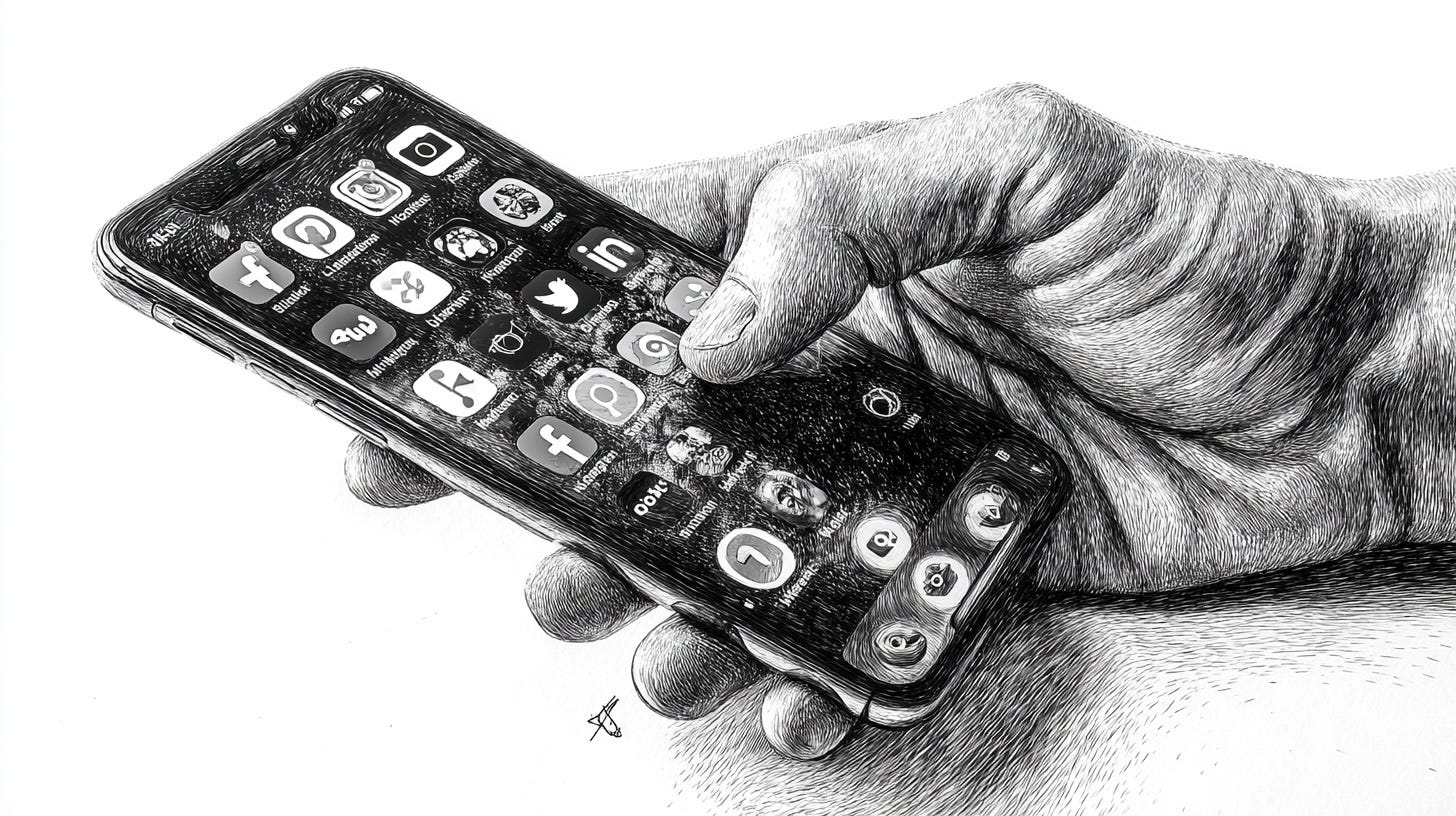
Over the past several years, my law firm has been contacted by multiple families asking whether they have legal options against well known social media companies for harm caused by a loved one’s addiction to these platforms. These are serious conversations involving real people, real consequences, and real pain.
I am not at liberty to share details about any specific client or case, but I can share that as part of evaluating these matters, we have spent significant time researching how these platforms are built, how they affect the brain, and how courts and regulators are beginning to respond. What follows is an explanation of what we learned and why it matters to you, your family, and anyone who has ever felt the pull of the scroll.
The Scroll You Feel And The System Behind It
Most people describe the pull of social media as a personal habit problem. A few minutes turn into an hour. A quick check stretches late into the night. The experience feels private and self directed.
After four decades working as a trial lawyer and studying persuasion in courtrooms and everyday life, and the last twenty years helping creators do business in the different digital sandboxes (I even wrote a book about social media back in 2018), a different picture emerges. The pull follows design. The design follows incentives. Recent legal action, regulatory pressure, and long standing behavioral research now sit in the open, telling a single connected story about addiction by design.
Why TikTok Now Sits In The Spotlight
TikTok stands at the center of the current moment because lawsuits finally reached the edge of a courtroom. A case in California involving a young woman who began using social platforms as a child described anxiety, depression, and body image harm tied to compulsive use. Hundreds of similar claims followed, brought by families, school districts, and state officials. The legal theory focuses on product design rather than personal weakness. Infinite scroll, autoplay, and algorithm driven recommendations removed natural stopping points and pushed prolonged use.
TikTok and Snap settled ahead of trial. Meta and YouTube now face juries prepared to hear whether social platforms function as defective products causing foreseeable harm. These cases matter because a verdict could reshape how responsibility attaches to digital design. The legal system rarely moves quickly. When courts move at all, pressure already reached a breaking point.
Europe Steps In With A Design Mandate
Across the Atlantic, regulators reached similar conclusions through a different path. The European Commission accused TikTok of building an addictive interface that failed to account for harm to minors and vulnerable adults. The findings focused on infinite scroll, autoplay, push notifications, and recommendation systems that reward prolonged engagement without meaningful interruption.
Regulators cited patterns of late night use and repeated app openings as signals of compulsive behavior. The concern centers on how constant rewards push the brain into automatic behavior, reducing self control over time. Europe now demands changes to core interface design, including disabling endless feeds and adding real friction through screen time breaks. Fines tied to global revenue remain on the table. The message from regulators sounds clear. Design shapes behavior. Responsibility follows design.
The Brain Science Behind The Pull
Long before lawsuits and regulatory findings, former technology insiders described how social platforms work on the brain. Phones function like portable slot machines. Each refresh offers the possibility of a reward. Likes appear in bursts. Notifications arrive unpredictably. Variable reinforcement strengthens habit more than consistent feedback.
Neuroscience explains why this loop holds such power over attention, because dopamine fuels anticipation and desire rather than satisfaction, training the brain to chase what might come next instead of resting in what already arrived. Each swipe carries the promise of novelty, each promise reinforces repetition, and with no built in pause to signal completion, the feed moves forward without a natural stopping point, encouraging continued engagement long after intention fades.
Behind the screen, engineers track emotional responses in real time while algorithms learn which images, sounds, and topics most reliably trigger fear, validation, envy, or a sense of belonging. These primitive emotional cues hold attention longer than calm reflection, and as repeated activation becomes routine, the nervous system adapts to constant stimulation, creating unease and tension whenever the stream of input briefly disappears.
Stress, Anxiety, And The Cost To Focus
Psychological research shows measurable stress responses when phones remain nearby yet unreachable, as cortisol levels rise and the body reacts before conscious thought has a chance to enter awareness. Many people reach for their phones repeatedly without any external alert, driven instead by internal tension and anticipation that builds until the device is checked and the cycle briefly resets.
Over months and years, this pattern fragments attention and weakens sustained focus, with the cost spilling into relationships that compete with screens for presence and connection. Children carry the greatest exposure, engaging daily with systems refined by thousands of engineers who constantly adjust persuasion, where streaks reward uninterrupted presence, visible metrics shape self worth, and habits form long before judgment fully develops.
Incentives Driving The System
Advertising revenue grows as attention increases, because more time on screen fuels constant data collection, and that data feeds increasingly precise targeting designed to keep users engaged and advertisers satisfied. This system does not require malicious intent to function, because incentives quietly guide outcomes, rewarding design choices that hold attention longer and discourage meaningful pauses.
Within this structure, tools meant to slow usage often face internal resistance or remain buried behind optional settings, while features framed as wellness stay easy to dismiss and simple to bypass. Persuasion continues to operate automatically in the background, shaping behavior without conscious awareness, while meaningful control remains optional, placing the burden on users rather than on the systems built to capture and keep their attention.
Legal And Cultural Momentum
Courts now examine whether specific design choices created foreseeable harm, moving responsibility closer to the systems that shape behavior rather than leaving the burden solely on users. At the same time, regulators demand structural change instead of surface adjustments, while public awareness grows as once technical language enters everyday conversation, making terms like infinite scroll and recommendation engines feel concrete and familiar, and allowing understanding to restore a sense of agency that had quietly slipped away.
Politics As A Business Model For Attention
Political operatives study the same attention loops that keep you scrolling, then shape messages to fit those loops, because outrage and fear travel faster than careful explanation, and short clips reward sharp edges instead of honest nuance. When a recommendation system learns what spikes your emotion, campaigns learn how to feed that system, pushing content built to trigger instant reactions, keep you watching, and pull you back for the next hit, even when the message leaves you tense, angry, or hopeless. The incentive rewards whoever grabs attention and keeps it, and attention often follows the loudest signal rather than the most truthful one.
The danger runs deeper than persuasion. When political speech is tuned for compulsive engagement, voters absorb a steady stream of simplified villains, constant emergencies, and identity based conflict, and your nervous system stays activated long enough that reflection feels like a luxury. People begin to confuse repetition with truth, virality with legitimacy, and the feeling of certainty with real evidence, and in that climate, bad actors gain room to spread rumors, distort reality, and even discourage voting through targeted cynicism and learned helplessness.
This environment also increases the risk of escalation, because emotionally loaded content primes people for harsher language, harsher assumptions, and real world hostility, and once that pattern locks in, democracy becomes easier to manipulate and harder to protect, since your attention, your trust, and your time sit on the auction block every day.
What Awareness Makes Possible
Start with recognition, because compulsion thrives in silence and loses strength once you understand how design shapes behavior and creates the illusion that the pull feels personal. When you recognize the mechanics at work, you can create pauses where none exist, talk openly with children about how feeds are built and why stopping feels so difficult, and use your voice, your choices, and shared knowledge to demand accountability from systems that depend on remaining unseen.
After decades watching persuasion shape verdicts, decisions, and real world outcomes, one lesson continues to hold true. Influence works best when it stays invisible, and once exposed, its power weakens, returning value to your attention and agency. Choose where your focus lives, share this story with others, and step back from the scroll long enough to decide what truly deserves your time next.
Mitch Jackson, Esq.
If this piece made you pause, that was the point. Uncensored Objection exists for people who want clarity instead of noise, facts instead of manipulation, and accountability instead of shrugging it off. This is where we slow the scroll, name what is happening in plain language, and talk honestly about power, persuasion, and the systems shaping our lives. Subscribe, support the work, and bring others with you. Serious conversations matter more when we have them together.