

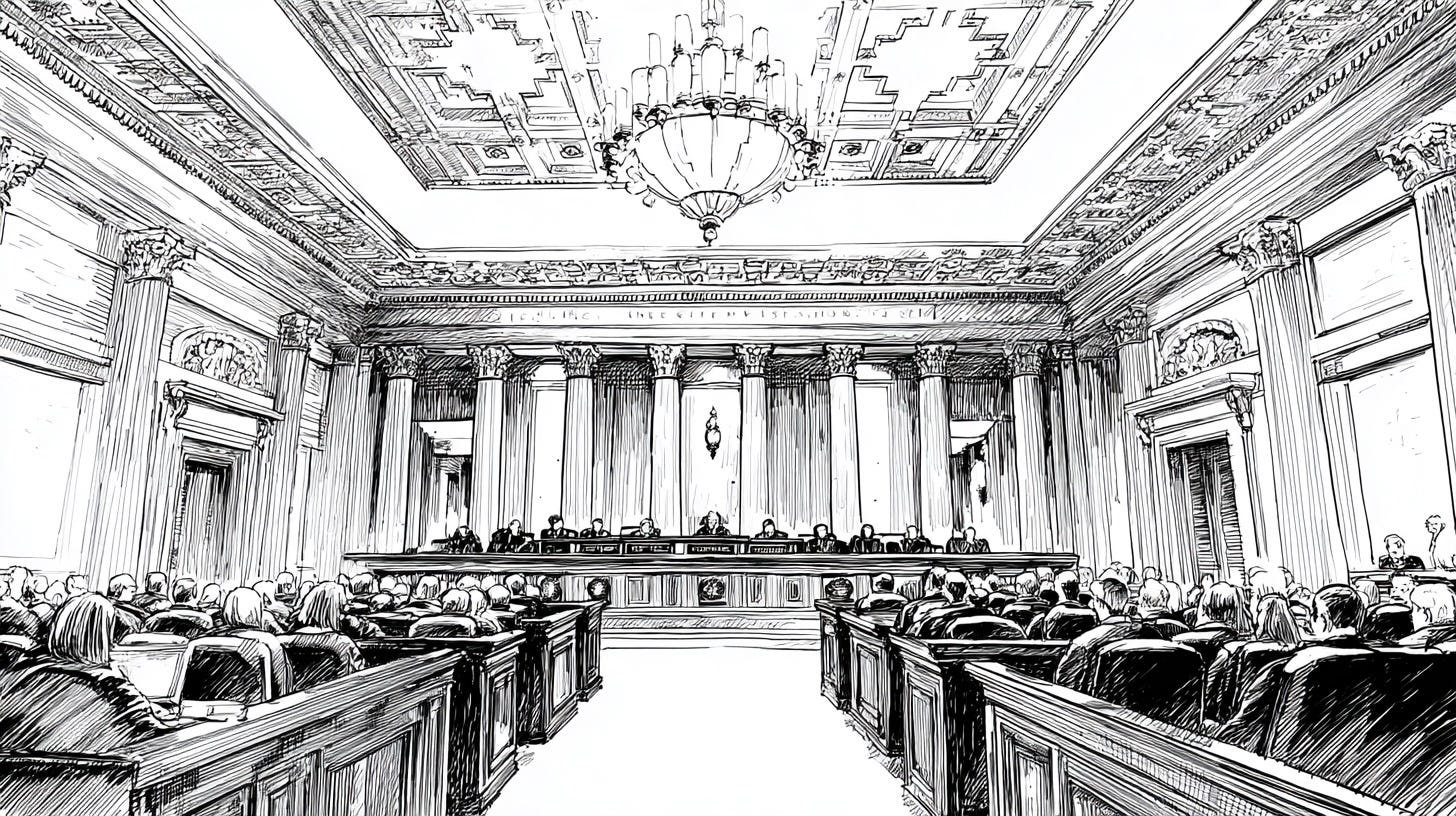
The Supreme Court just told a president he does not get to tax the world by himself. Six justices drew a hard line, made it clear that unlimited tariff power belongs to Congress, and proved that separation of powers still means something in this country.1
What Just Happened
Stop what you are doing and pay attention, because the Supreme Court just made a ruling that will affect your wallet, your country, and the balance of power in American democracy for years to come.
On Friday, the Supreme Court issued a 6-3 decision striking down President Trump’s sweeping tariff program. The court ruled that Trump went beyond his legal authority when he used a 1970s-era emergency law to slap import taxes on goods coming from nearly every country that trades with the United States. Six justices said the same thing: the president does not have this power. Not under that law. Not without Congress. Read it here.
This is a big deal. And you need to understand exactly why.
What Trump Actually Did
Let’s go back to the beginning. Early last year, Trump reached for a law called the International Emergency Economic Powers Act of 1977, known as IEEPA. He used it to declare a national emergency and then imposed sweeping tariffs on imported goods from more than 100 countries. His stated goals were to shrink the trade deficit and bring more manufacturing jobs back to American soil.
Over time, he expanded the tariffs even further, extending them to nearly all U.S. trading partners. He also used them as a pressure tool, a negotiating lever he could pull during trade talks with other nations.
Here is the critical detail you need to hold onto: the 1977 law does not use the word “tariffs.” It does not say “taxes.” It does not say “duties.” The administration argued that language allowing the president to “regulate” the “importation” of foreign property was broad enough to cover tariffs. Twelve states and a group of small businesses, ranging from an educational toy company to a wine importer, disagreed. They sued, arguing that the Constitution gives Congress, not the president, the power to impose taxes. These businesses told the courts that the tariffs had wrecked their operations, driven up consumer prices, and forced staffing cuts.
Three federal courts agreed with the businesses. Then the Supreme Court agreed with the businesses.
What Chief Justice Roberts Actually Said
Chief Justice John Roberts wrote the majority opinion, and the language he used is worth sitting with for a moment.
He wrote that the president was claiming “the extraordinary power to unilaterally impose tariffs of unlimited amount, duration, and scope.” Roberts said that given how sweeping that claimed authority was, the president needed to point to clear congressional authorization to exercise it. No such authorization existed in the 1977 law.
Read that again. The president wanted unlimited power to tax imports from every country on earth, for as long as he wanted, at whatever rate he chose, without a single vote from Congress. Six Supreme Court justices, including three conservatives, said no.
Three conservative Justices joined the majority. Justices Thomas, Alito, and Kavanaugh dissented.
Why This Ruling Reaches Into Your Life
You might be thinking this is a policy dispute for politicians and trade lawyers. It is not. This ruling touches your daily life directly.
When tariffs go up on imported goods, companies that rely on those goods face higher costs. Those costs move downstream. They show up in the price of the shoes you buy, the electronics you use, the wine you drink, the toys you give your kids. The small businesses that sued in this case were not abstract economic actors. They were real companies with real employees telling real courts that these tariffs were forcing them to cut staff and raise prices.
The Supreme Court heard that. The majority agreed that the legal foundation for those tariffs was not solid.
What Comes Next
I doubt that the Trump administration is walking away from tariffs entirely. Before this ruling even came down, the administration was already looking for workarounds. The president’s top trade negotiator signaled that the administration would move fast to replace any invalidated tariffs with other legal tools.
Trump has other statutes available to him. He has already used national security laws to impose tariffs on specific goods and industries. Those laws are more limited and less flexible than the emergency statute, which is precisely why the administration preferred the 1977 law. The president loses some of that sweeping, unchecked flexibility now.
The administration had warned the Supreme Court that losing this case could force the unwinding of trade deals, trigger massive refunds to importers, and cause economic disruption on par with the Great Depression. That framing was meant to pressure the court. The court ruled on the law.
The Bigger Picture You Cannot Afford To Miss
This ruling is about more than tariffs. At its core, this case was about who holds the power to tax in America. The Constitution is not ambiguous on this point. Article I gives Congress the power to lay and collect taxes and duties. That was not an accident. The founders put that power in the legislative branch deliberately, so that the people’s elected representatives, not a single executive, would control the government’s taxing authority.
When the Federal Circuit Court of Appeals ruled against the tariffs last August, the majority of that court said something that cuts right to the heart of the matter. Whenever Congress wants to give the president the power to impose tariffs, it does so explicitly. The 1977 law did not do that.
The Supreme Court confirmed that logic on Friday.
What You Should Take Away From This
You are living through a moment when the boundaries of presidential power are being tested in real time. Courts are doing their jobs. In this case, the separation of powers functioned the way the framers designed it to function.
That is not something to take for granted. When a president claims the authority to impose unlimited taxes on goods from every country on earth, acting alone, without congressional approval, the courts stepping in to say “show us where Congress actually gave you that power” is democracy working as designed.
Pay attention to what happens next. Watch whether Congress acts to either authorize or reject expanded tariff authority. Watch whether the administration finds other legal avenues. Watch how trading partners respond. Watch what happens to prices.
This ruling does not end the tariff debate. It redirects it back to where it constitutionally belongs, to the branch of government that you vote for, that you can call, that you can pressure, and that you can hold accountable at the ballot box.
Your move.
Mitch Jackson, Esq.
Here is the bottom line. The Constitution gives Congress, not the president, the power to impose taxes and duties. IEEPA does not mention tariffs, taxes, or duties, and the Supreme Court has now confirmed that it did not authorize a sweeping, global import tax regime of unlimited scope and duration. That means the tariffs were unlawful from the start. When the government takes money without lawful authority, that is an unlawful exaction. Under long standing federal claims law, businesses that paid those tariffs have the right to seek refunds, and interest should attach to make them whole. Disruption is not a legal defense. The government does not get to keep money it had no authority to collect. If separation of powers means anything, it means repayment when executive overreach hits your wallet or balance sheet.
Watching Trump give a live legal analysis of today’s Supreme Court ruling banning his tariffs is embarrassing, the kind of embarrassing you can’t spin, only survive.
Let’s call it what it was: an illegal cash grab dressed up as policy, jacking up prices, squeezing working families, and torching alliances that took decades to build.
Every dollar Trump took without authority should get paid back. With interest.