

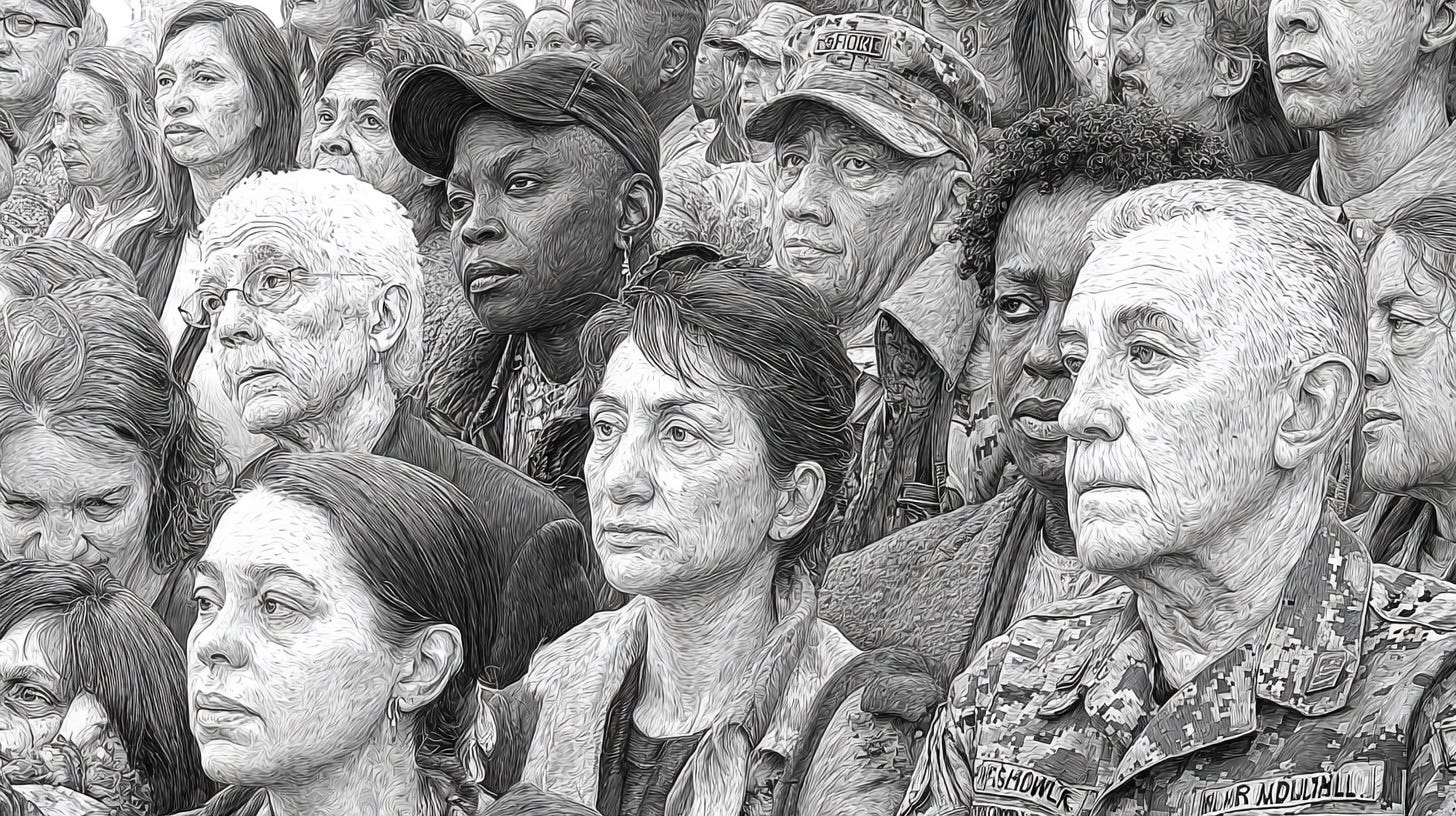
That is where this story lands right now. The SAVE Act, now moving under the name SAVE America Act, sounds clean and protective at first glance. The name sounds safe. The sales pitch sounds simple.
The real question is what happens when a federal law tells millions of eligible Americans that a sworn statement is no longer enough, normal registration systems are no longer enough, and a missing document, an old name, a distant county office, or an overseas address stands between you and the ballot box. As of March 17, 2026, the House has already passed the latest version, and the Senate has opened debate.
What the bill does in plain English
The current version would require documentary proof of United States citizenship to register for federal elections. Think passport, certified birth certificate, naturalization papers, or another narrow set of approved records. The White House’s own page promoting the bill says the measure requires a valid ID before registering, proof of citizenship, and pushes tighter limits on mail voting, with stated exceptions for illness, disability, military service, or travel. Senate Republicans are also openly describing the 2026 push as a package that pairs proof of citizenship at registration with photo ID at the polls in federal elections.
That shift matters because the current system already requires people registering to affirm under penalty of perjury that they are citizens. Election systems already include identity checks and penalties for false registration. The new bill moves the system toward document first voting access. Papers first. Database checks first. Federal and state verification steps first. Your word under penalty of law no longer carries the same weight under this model. Critics across voting rights groups say the measure would block or delay eligible citizens on a large scale, especially people who do not have easy access to matching documents.
Why this is a fear based power play
You do not need a psychology degree to see the emotional engine behind this bill, though one helps. Fear moves people fast. Fear narrows attention. Fear makes a false emergency feel urgent enough to excuse harm. For years, a large part of the political right has repeated the claim that noncitizens are voting in meaningful numbers and corrupting elections. That story has worked as a political weapon because fear does not need proof to spread. Fear needs repetition, outrage, and a target.1
That is why this bill matters far beyond election procedure. This is about teaching voters to look at neighbors with suspicion. This is about making paperwork feel patriotic. This is about turning bureaucracy into a gatekeeper and calling the result integrity. The public language centers security. The practical result falls on ordinary citizens who already hold the right to vote and now face a new obstacle course if their life records are incomplete, old, damaged, or mismatched.
When lawmakers sell a hard rule built around a rare problem, you should ask one question. Who gets squeezed first? In this case the answer is not some imaginary flood of unlawful voters. The answer is women, military families, overseas citizens, seniors, rural voters, people hurt by disasters, people with name changes, and people whose lives do not fit neatly inside a single file folder.
Women stand in the blast zone first
This is where the bill becomes personal fast. Millions of women changed their names through marriage, divorce, remarriage, or other life events. A birth certificate often carries one name. A driver’s license may carry another. A passport may be expired. A marriage certificate may be buried in a box, lost in a move, or filed in a county across the country. None of this is unusual. This is ordinary American life.
Now picture a law that turns those ordinary facts into a registration problem. Each mismatch creates friction. Each extra document creates another chance for delay, rejection, confusion, or fear. Each missing paper turns a citizen into a problem to be solved by a clerk behind a counter. That is not a small burden. That is a system choice.
The bill’s defenders talk as if this is a simple administrative step. Real life says otherwise. Bureaucracies punish mismatch. People with seamless records glide through. People with complicated records lose time, money, peace, and sometimes access. That burden lands hard on married women, divorced women, widows, and women who rebuilt their lives after abuse, relocation, or loss. Voting rights groups have warned for months that women with name changes face special risk under proof of citizenship rules because the document trail often breaks clean alignment between identity records.
Military families and Americans overseas face a serious collision
This part deserves far more attention than it gets.
Federal law already protects absentee voting for active duty service members, eligible military family members, Merchant Marine members, and American citizens living abroad. Through UOCAVA and the Federal Voting Assistance Program, many of these voters register and request ballots remotely through the Federal Post Card Application. That system exists for a plain reason. A deployed service member in another country is not walking into a local election office back home. An American teacher living overseas is not driving to a county registrar in person. Remote access is the point.
Now place an in person documentary proof model on top of that world and the conflict becomes obvious. If the law demands papers in a way that does not clearly preserve a lawful remote path for military and overseas voters, geography itself becomes disenfranchisement. Your service to the country becomes one more reason you face a harder road to the ballot. Your life abroad becomes a penalty.
That should offend every American, left, right, and center. People serving this country, family members stationed with them, and citizens living abroad still carry duties to this country. Many still pay taxes. Many still follow every election closely. A system that shrinks their vote through distance and paperwork drifts toward a modern form of taxation without representation. The danger here is not abstract. The structure of the bill points straight at that risk.
Seniors, rural voters, and disaster survivors get hit next
A lot of Americans do not keep original documents at arm’s reach. Seniors born many decades ago may not have easy access to a certified birth certificate. Some were born at home. Some were born in hospitals that no longer exist. Some have records from another state or another country because their parents worked abroad or lived near a border. Older married women may need documents from marriages that took place half a century ago.
Rural voters face a different burden. Distance. In some places there is one county election office serving a very large area. One trip is not always one trip. One missing paper turns into another drive, another day off work, another childcare problem, another bill. Election access starts to depend on your gas tank, your schedule, your internet, your health, and your luck.
Disaster survivors face a burden that policy people often miss. Fires, floods, hurricanes, and displacements wipe out records. Paper documents vanish in a single night. A law built around original records punishes people during the worst chapter of their lives. That is not election security. That is civic cruelty dressed up in formal language.
The fraud claim does not carry the weight used to sell this
A democracy should not build a federal paperwork wall around the ballot box on the strength of a ghost story. Supporters of the bill keep returning to the claim that noncitizen voting is a major threat. As evidenced in footnote #1 below, public evidence does not support that claim. Voting rights groups, election law analysts, and years of investigations have repeatedly found that noncitizen voting in federal elections is rare. Even the political energy around this bill shows the real battle is over perception, power, and public trust, not a proven wave of unlawful ballots.
That point matters because law follows story. If the story is false, the law built on top of that story will carry false urgency into the lives of real people. That is how rights erode. Not always through one loud event. Often through small administrative choke points sold as common sense.
Where things stand right now
The latest version passed the House in February 2026. On March 17, 2026, the Senate voted 51 to 48 to open debate, and Senate leaders from both parties are framing this as a major fight over voter access and election control. Republicans are calling for passage. Democrats are calling the bill voter suppression. That means this is not a museum piece. This is live. Right now.
What you should take from this
Your right to vote should not depend on whether your papers line up perfectly after a lifetime of marriage, moves, service, storms, aging, and ordinary human messiness. Your daughter’s vote should not hang on whether a clerk accepts a chain of documents. Your son or daughter serving overseas should not face a federal barrier layered onto an absentee system built to protect their voices. Your mother should not need a scavenger hunt through old files to keep a right she has carried for decades.
This bill is closely related to the earlier SAVE Act I warned you about. The new name and the new packaging do not change the core move. Fear enters first. Paperwork enters second. Exclusion follows.
The Senate now decides whether voting remains a right ordinary citizens can reach or a process that treats citizenship like an application file waiting for approval. You should care because once a democracy starts telling eligible citizens to prove themselves again and again in the right way at the right place with the right papers, the burden never lands evenly. The people carrying the hardest load are almost always the people with the least room for error.
Talk about this. Share this. Call your senators. Ask them one plain question. Why should an eligible American lose ground because life records do not fit neatly inside a government checklist?
That question belongs in every kitchen, every classroom, every church, every veterans hall, and every family group chat in this country right now. Because a democracy worth keeping does not make ordinary citizens beg for access to their own voice.
Mitch Jackson, Esq. [recommendations]
If you want the truth behind bills like the SAVE Act before the spin machine buries the facts, subscribe to Uncensored Objection and stay current on the breaking political stories shaping your rights, your family, and your future. This is where we cut through the noise, name what is happening, and keep you informed when the stakes for our democracy are too high to look away.
Even if you use conservative and Republican sourced material, the claim of widespread voter fraud still falls apart. The Heritage Foundation’s own Election Fraud Map says it is only “a sampling of proven instances of election fraud,” and Heritage reported in January 2023 that its database contained 1,412 proven cases nationwide, spread across many years and all types of election misconduct.
Using presidential elections alone, the number is about 938.5 million votes from 2000 through 2024. That total comes from the published presidential vote totals for 2000, 2012, 2016, 2020, and 2024, plus the 2004 and 2008 totals, and it means Heritage’s 1,412 proven fraud cases amount to roughly 0.00015 percent of those votes, about 1 case for every 665,000 votes cast. If you include midterm federal elections too, the denominator climbs well past 1 billion ballots, which makes the rate even smaller.
On noncitizen voting, the evidence is even thinner. A Cato review of Heritage’s much cited database said it contained only about 85 cases involving noncitizens since 2002, and Republican led state reviews have produced the same basic result: Georgia’s Republican secretary of state said a 2024 audit found 20 noncitizens among 8.2 million registered voters, and Iowa’s Republican secretary of state said a 2024 review found 35 noncitizens voted out of more than 1.6 million ballots cast. Even Trump’s own voter fraud commission disbanded without finding evidence of widespread fraud. Taken together, the right’s own numbers show isolated misconduct, not documented fraud on any scale that comes close to justifying claims of a broad national crisis.
From the ACLU. https://action.aclu.org/send-message/stop-anti-voter-bills-now