

The moment your government buys what the Constitution orders it to get a warrant for, your Fourth Amendment rights stop being rights and become inventory on a data broker’s shelf. —Mitch Jackson, Esq.
Under Oath, the FBI Said Yes
On March 18, 2026, Senator Ron Wyden asked FBI Director Kash Patel to commit, under oath in front of the Senate Intelligence Committee, that the FBI would stop buying Americans’ location data without a warrant. Patel would not commit. He told the committee the FBI purchases commercially available information and uses all tools available to accomplish its mission.
Your daily routine, the doctor you see, the church you walk into on Sunday, and the protest you attended last month all sit on the open market, and your own government stands at the register with a purchase order in hand.
A Widget With Your Name on It
Here is how the surveillance loophole works. The law requires a warrant before the government forces your phone carrier to hand over your location history. Federal agencies figured out they get the same data, equally detailed and equally personal, by purchasing it from a data broker for a fraction of the cost, with zero judicial oversight and no notice to the person whose life sits inside the file. One senior Homeland Security attorney compared buying your location data to buying a widget.
ICE bought access to Venntel, which claimed to process more than 15 billion location signals a day from over 250 million phones. The NSA admitted it buys records of the websites Americans visit. In March 2026, an internal DHS document confirmed Customs and Border Protection pulled location data straight from the ad auctions that serve banners on your phone. Your tax dollars fund every contract.
My take is simple. The moment your government buys what the Constitution orders it to get a warrant for, your Fourth Amendment rights stop being rights and become inventory on a data broker’s shelf. And you can call me crazy, but I don’t think that’s what our Founding Fathers had in mind when they wrote the Constitution.
Guy and I Sat Down to Talk
Guy Kawasaki built his name in Silicon Valley. I built mine in the courtroom. Technology, privacy, and security brought us together, and in this conversation we dig into the bigger issues shaping what happens to your data and your freedom. Hit play.
Why Every Client of Mine Uses Signal
I have tried cases since 1986, and what I see now worries me deeply. As a litigator, I watch my clients’ privacy and their First and Fourth Amendment rights get trampled, and lately, ICE sits at the center of much of it. The agency’s 2025 surveillance budget ran ten times its entire surveillance spending over the previous thirteen years combined, and in February 2026 ICE signed a Palantir agreement carrying a one billion dollar ceiling, which tells you where this is headed for anyone whose case the government cares about.
So I made a rule. Every client of mine talks to me on Signal. When law enforcement has subpoenaed Signal, the company has been able to hand over two facts: the date an account registered and the date it last connected. After all, the attorney-client privilege protects your words only as long as nobody else holds a copy of them.
Steak and Red Wine
Your data privacy starts the day you decide your conversations belong to you and nobody else.
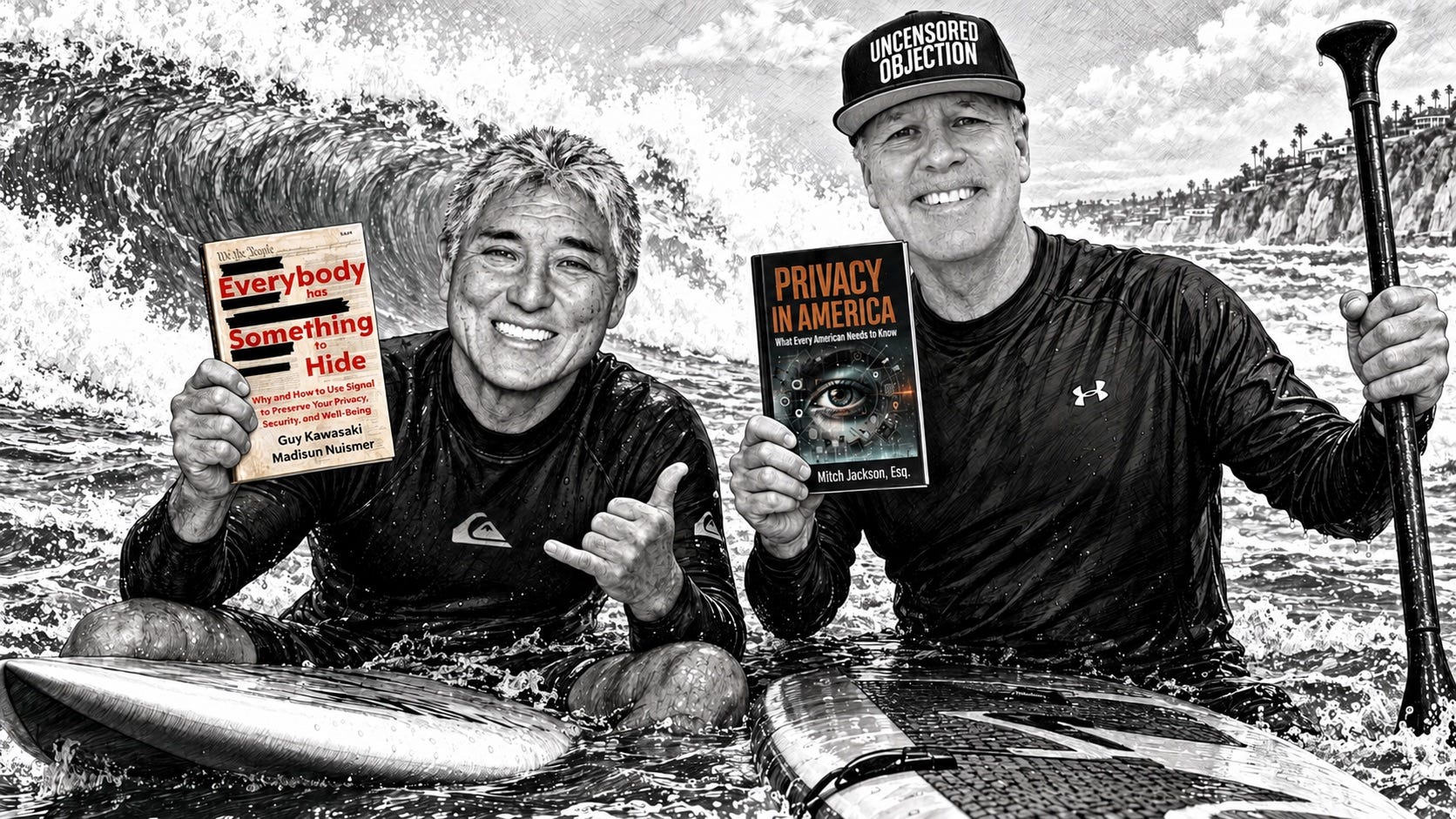
I learned Signal inside and out from Silicon Valley legend Guy Kawasaki’s book, Everybody Has Something to Hide. I have read it at least three times, and the third read taught me things the first two somehow let slip past. Guy and his talented co-author, Madisun Nuismer, walk you through Signal step by step in plain English your whole family will be able to follow. All my clients get a copy.
For the same reasons Guy wrote his book, I sat down and wrote mine. Privacy in America: What Every American Needs to Know runs 251 pages across 21 chapters, and Chapter 18 does a deep dive on everything you see in this post. It covers data brokers, your car, your face, and the federal agencies buying your life. Guy’s book locks down your conversations, and my book maps every other place your data leaks, so the two pair like steak and red wine.
Grab Both Books
For a limited time, Guy and I are giving complimentary PDF copies of our books to every free and paid subscriber of both our Substacks. If you already subscribe to both, you’re all set, and I’m guessing most of you are.
If you haven’t subscribed yet, you’ll find Guy’s Substack here and mine here.
Next, click the links to instantly grab PDF copies of Guy’s book Everybody Has Something to Hide and my book, Privacy In America.
After downloading and reading, open Signal tonight and send your first private message to someone you love, because every agency and data broker profiting from your life is counting on you to stay quiet.
Mitch Jackson, Esq. 🌴
P.S. As an extra thank you for subscribing to both of our newsletters, I’m also giving you instant access to my new 10-page privacy starter guide. Use it today to start locking down your data and your family’s privacy before the next data broker sells another piece of your life.
Explore the private contractor shield preventing FOIA. Like with Flock cameras. Where government wants your data, but can't do it directly. So they create a private mechanism as a single layer insulator away. NDAs prevent even discussing the contract? Explore that, when it started, and how is it not dismantled.
Next, armed security will conduct traffic stops, establishing a contracted exception to constitutional protections and government fiduciary responsibility.
I bet there is a promise to defend in these contracts, off loading legal jeopardy as well.