

The Bottom Line
The families won, and they won decisively. By a vote of six to three, the Supreme Court blocked President Trump’s Executive Order 14160 and held that babies born on American soil to parents who are here illegally or only temporarily are United States citizens the moment they are born. Chief Justice John Roberts wrote the opinion of the Court and decided it on constitutional grounds: the Fourteenth Amendment itself guarantees this citizenship, and five justices signed that reasoning. A sixth justice, Brett Kavanaugh, agreed the order had to fall but on a narrower basis, saying it breaks a federal statute Congress already passed rather than the Constitution. You can read the entire case here.1
Here is what happens now. Trump’s order cannot be enforced anywhere in the country, the nationwide block on it stays in place, and birthright citizenship keeps working exactly the way it has for more than a century.
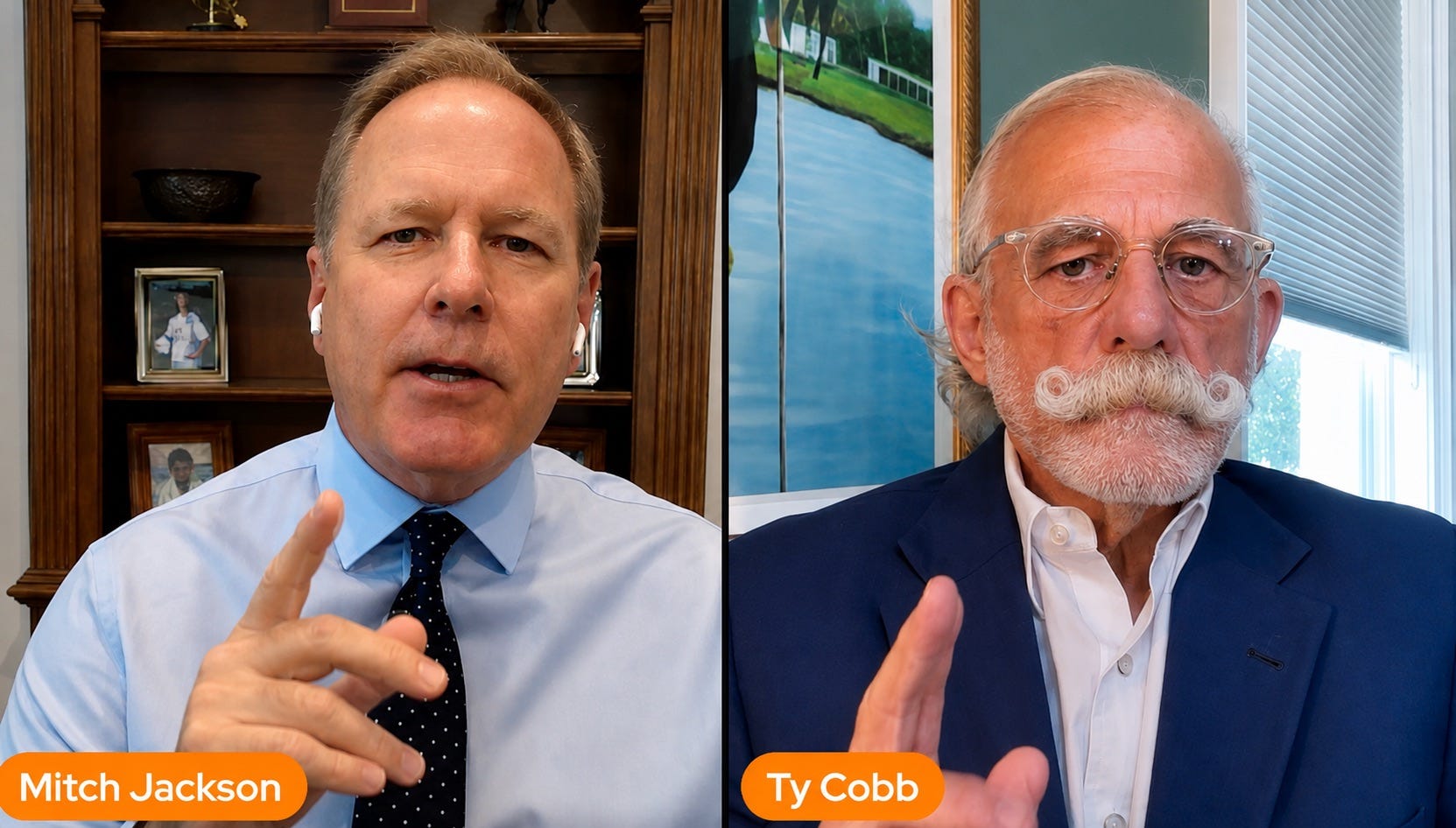
Former Special Counsel to the President of the United States, Ty Cobb, joined me just one hour after the decision dropped for an in-depth discussion of what it means. Watch here…
What This Means For You
For almost everyone reading, the headline is that nothing changes, and that is the entire point of the ruling. If you are already a citizen, you stay one. If your kids were born here, they stay citizens. Nobody loses a passport. No agency starts re-checking who counts as American.
To see why this matters, look at where the law stood the day before. On his first day back in office, January 20, 2025, President Trump signed an order saying the Constitution’s phrase “subject to the jurisdiction” does not cover certain babies born here. The order was specific. It denied citizenship to a child when the mother was here unlawfully, or here lawfully but only temporarily on something like a student, work, or tourist visa, and the father was not a citizen or a green-card holder. It applied only to babies born more than thirty days after the order, and it did not touch the children of green-card holders. A federal court in New Hampshire blocked that order and certified a nationwide class of the children it would have stripped. The Supreme Court took the case early and has now affirmed that block.
The Court grounded its answer in a long history that the Chief Justice walked through step by step. Under old English common law, being born on the soil made you a subject. That rule, called jus soli, or right of the soil, crossed the Atlantic and took hold in the states.
In 1857, the Court broke from it in Dred Scott v. Sandford and said citizenship ran through blood, not birthplace, holding that people of African descent could not be American citizens at all. The country recoiled, and after the Civil War the Fourteenth Amendment was written in 1868 specifically to bury Dred Scott and put citizenship beyond the reach of ordinary politics.
Then in 1898, in United States v. Wong Kim Ark, the Court confirmed a broad rule of birthright citizenship. Worth knowing, the parents in that case were in the country lawfully and had built a permanent home here, and the Court said their American-born son was a citizen. The big question in Barbara was whether that same rule reaches children of parents who are here illegally or only passing through. The majority said yes. The dissenters said the lawful, settled status of Wong Kim Ark’s parents was the whole point, and that the rule should not stretch that far. Five justices won that argument.
So who is affected and who is not. Affected: every baby born in the United States to parents who are undocumented or here on a temporary basis. By one common estimate, that is around 150,000 children born each year. Those children are citizens at birth, and the government cannot deny them that status. Not newly affected: the rest of the population, whose citizenship was never in question. The practical machinery of birth certificates, Social Security numbers, and passports continues without interruption.
Loose Ends and Open Questions
Start with what is locked in versus what is just commentary, because this is where I expect people to get confused.
The holding, meaning the part that is now binding law, is this: children born in the United States to parents unlawfully or temporarily present are “subject to the jurisdiction” of the United States and are “citizens at birth under the Fourteenth Amendment’s Citizenship Clause.” The Court then says plainly, “The judgment of the District Court for the District of New Hampshire is affirmed.” That is the law of the land. Everything in the opinion about Blackstone, Dred Scott, and the 1866 debates is the reasoning that supports the holding. It is strong background, but the operative rule is the one sentence about who is a citizen.
One procedural note so the word “settled” lands correctly. This case reached the Court early, on a preliminary order rather than a final judgment after a full trial. Even so, the majority answered the core constitutional question outright, which is why it functions as settled law on the merits and not just a temporary pause.
Now the door that is left open, and let me say this carefully. Only five justices agreed that the Constitution itself guarantees this result. Justice Kavanaugh did not. He wrote that the order is illegal only because it violates a statute, 8 U.S.C. 1401(a), and he said in his own words that Congress “could, consistent with the Fourteenth Amendment, amend” that statute to create new exceptions. The three dissenters would go further still.
So four of the nine justices believe the Constitution does not compel birthright citizenship for these children. That tells you where the next fight goes: toward Congress. Because five justices is a majority, the constitutional rule holds as binding precedent today, and an ordinary act of Congress cannot strip it. The ruling is settled law right now. The four-justice bloc is the reason it may not stay that way forever.
There is one more wrinkle, and it comes from Justice Gorsuch in dissent. He pointed out that the families brought a facial challenge, the kind that asks a court to wipe out a law in every possible application at once. Under a rule called the Salerno standard, that kind of challenge fails if the order is lawful in even one situation. Gorsuch argued the order had at least one lawful application, so the whole thing should survive. He lost, because he was in the minority. But he raised a genuine puzzle that may resurface. He asked how you can say undocumented parents who have made a permanent home here are not domiciled anywhere, when the law has always assumed every person is domiciled somewhere. Watch that question. It is the seam future lawsuits will pull at.
What is hard to put into practice. Honestly, not much on the ground. Trump’s executive order is blocked nationwide, so hospitals and agencies keep issuing citizenship exactly as before, and parents do not have to do anything. The confusion will not be at the bassinet. It will be in the political arena, where people hear “six to three” and assume the question is closed, when the constitutional vote was really five to four under the hood.
Five Issues Moving Forward
1. Four of nine justices now say the Constitution does not require this. If one seat on the Court changes hands, does birthright citizenship get reopened? Your family’s status could hinge on a single future appointment.
2. Could Congress pass a statute carving out children of undocumented or temporary parents, and would that survive? This ruling closed the executive-order route and quietly pointed at the legislative one.
3. Justice Gorsuch asked where undocumented parents who live here permanently are “domiciled” if not here. Nobody answered that. The next round of lawsuits may turn on that exact word, and it could split children of long-term unlawful residents from children of short-term visitors.
4. The Trump executive order is blocked everywhere because of a nationwide class action. Just a year ago, in a related case, the Court said judges generally cannot issue nationwide orders, and the families had to switch to a class action to get around that. If the Court tightens the class-action route next, does this protection hold up coast to coast?
5. This case was about an executive order. It did not settle every immigration enforcement question around these children and their parents. So what protects the parents, and what happens to a citizen child whose mother or father still faces removal?
Mitch Jackson, Esq.
Thanks for your timely response to this! I wish this horrifying issue would never arise again. I'm really curious what Justice Thomas was doing in the capital yesterday. Taking laps, perhaps.
What would have happened to little Marco rubio if the justices had ruled opposite? His parents were not citizens and his being born here would not made him a citizen correct?