

Mitch’s Quick Take
So, remind me—was the Constitution just a suggestion? Because from what we’re seeing in 2025, the whole separation of powers thing is looking more like an outdated formality than an actual safeguard.
The Constitution is supposed to be the backbone of our democracy, structuring the government into three branches—legislative, executive, and judicial—so no single entity holds too much power. The separation of powers was designed to keep them in check, forcing oversight, accountability, and compromise.
But in today’s reality? The President is treating executive authority like a personal monarchy, Congress is either complicit or powerless, and the courts are discovering that their rulings only matter if the executive branch chooses to respect them.
We’re watching the delicate balance of our government shift from a system of checks and balances to a lopsided power grab—and the consequences aren’t theoretical. They’re happening right now. If this keeps up, we won’t just be testing the limits of constitutional governance—we’ll be proving that those limits no longer exist. I invite you to read on to to see just how dangerously close we are to breaking a system that has held this country together for over 230 years.
DISCLAIMER: This is an investigative opinion piece and does not provide legal, financial, tax or investment advice. Always do your own due diligence and consult with an experienced professional in your state, region or country.
Introduction
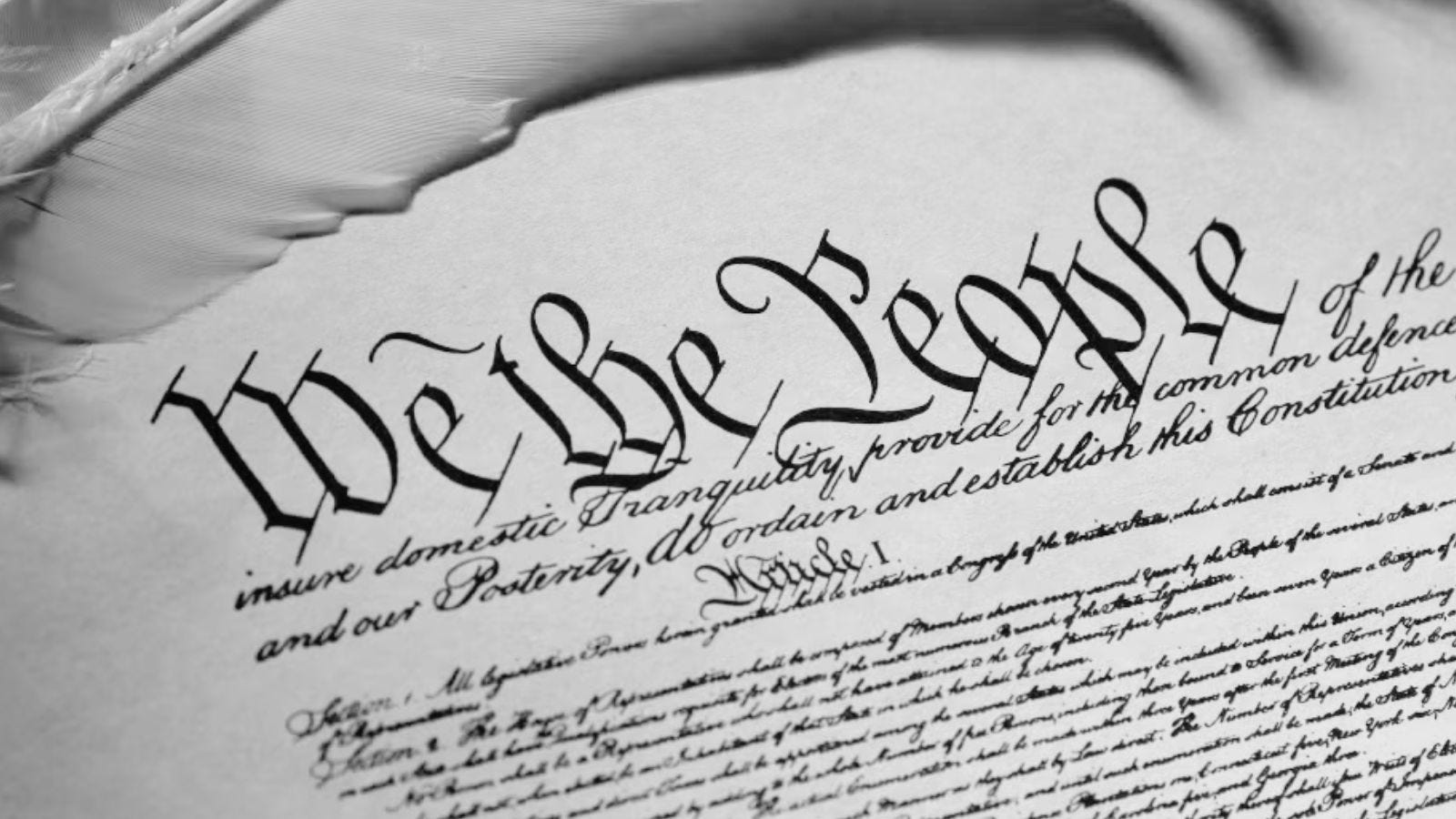
The United States Constitution isn’t just a historical document—it’s the foundation of American democracy, the rulebook that dictates how power is shared and limited within our government. It was written in 1787 by people who had firsthand experience with tyranny, and every word was carefully crafted to prevent any one person or branch from seizing too much power.
At the heart of this system is the separation of powers, a fundamental principle designed to keep government in check, preserve individual freedoms, and ensure that no leader—no matter how popular, powerful, or ambitious—can operate without oversight.
But today, this system is being tested like never before.
The Constitution: America’s Operating System
Think of the Constitution as America’s operating system—a framework that outlines how the country should function. It establishes the government, defines the rights of citizens, and, most importantly, limits power. The writers of the Constitution understood something essential: Power is always dangerous if left unchecked.
They had seen what happened under British rule, where the King could impose laws, collect taxes, and punish dissenters—all without any real accountability. They wanted something different for the United States: a system where power was divided, balanced, and constantly kept in check.
To accomplish this, they designed a government with three separate branches, each with distinct roles:
1. The Legislative Branch (Congress) – Makes the laws.
2. The Executive Branch (President & Administration) – Enforces the laws.
3. The Judicial Branch (Courts & Supreme Court) – Interprets the laws.
This structure wasn’t accidental—it was intentional, built to ensure that no single person or group could control the government outright.
The Separation of Powers: A System of Checks and Balances
The separation of powers means that each branch of government operates independently and has its own responsibilities. But beyond that, the Constitution forces them to work together, creating a system of checks and balances that prevents abuse of power.
Here’s how it works in practice:
• Congress can pass a law, but the President can veto it.
• The President can issue executive orders, but the Supreme Court can rule them unconstitutional.
• Congress can override a veto with enough votes.
• The Supreme Court can strike down a law, but Congress can amend the Constitution to make it legal.
• The President appoints judges, but the Senate must confirm them.
This constant push-and-pull isn’t a flaw—it’s the whole point. The Founding Fathers wanted a government where decisions couldn’t be made on a whim, where every action required debate, scrutiny, and accountability.
They didn’t just expect conflict between the branches—they designed it to protect democracy.
Why the Separation of Powers Matters
Without the separation of powers, democracy becomes a dictatorship in disguise. A system where one branch dominates the others is a system that can no longer protect individual rights or uphold the rule of law.
History has repeatedly shown what happens when a leader gains unchecked power:
• Authoritarian regimes rise when leaders control both the government and the courts.
• Corruption thrives when lawmakers no longer have the ability (or the will) to hold the executive branch accountable.
• Citizens lose their voices when a President can ignore laws, silence critics, or manipulate elections without facing consequences.
The U.S. Constitution was built to prevent this, but here’s the catch: It only works if we enforce it. When a President ignores checks on their power, when Congress refuses to exercise its authority, or when courts become politically compromised, the entire system begins to break down.
That’s where we are today.
The 2025 Test: When the System is Ignored
The separation of powers is under attack. Not in theory, not as some future possibility—but right now, in real time.
In 2025, we’ve seen multiple instances where the Trump administration has either ignored, bypassed, or actively undermined the constitutional balance of power.
• Executive orders that bypass Congress.
• Judicial rulings that are disregarded or dismissed.
• Federal agencies that are gutted and replaced with loyalists.
• Conflicts of interest that raise serious ethical and legal concerns.
These aren’t just minor disputes between politicians—these are fundamental challenges to the Constitution itself.
This isn’t about whether you support Trump or not. It’s about whether the system that has protected American democracy for over 230 years will still function as intended.
The Founding Fathers gave us a blueprint for how to prevent tyranny, but they left one thing up to us: the responsibility to defend the system they created.
What happens next depends on whether the other branches of government—Congress and the courts—are willing to enforce the rules.
The following section details exactly what’s happening in 2025—how executive power is being stretched beyond its limits, how the courts are being tested, and how Congress is failing to act as a check.
Because if we don’t recognize these threats now, we may wake up one day to find that the separation of powers—the one thing standing between democracy and authoritarianism—is gone.
Executive Overreach: Orders and Actions Exceeding Authority
The year 2025 has seen a series of moves by the Trump administration that critics say undermine the U.S. Constitution’s separation of powers – the system of “checks and balances” among the executive, legislative, and judicial branches. These actions have raised alarms about executive overreach (the President exceeding or bypassing legal limits), conflicts with Congress’s authority, challenges to judicial independence, and potential conflicts of interest benefitting President Trump or his inner circle. Below is a detailed report of the most publicized examples in 2025, with plain-language explanations and supporting evidence.
President Trump’s second-term began with a flurry of executive actions that many observers saw as testing – or flatly defying – legal boundaries:
• Freezing Congress-Approved Funds: Within days of taking office, the White House ordered a freeze of an estimated $3 trillion in federal loans and grants across numerous programs (from early education to farm subsidies)  . Courts quickly blocked this move, noting that under the Constitution Congress controls federal spending, and a 1974 law bars the executive from unilaterally withholding funds Congress already appropriated  . A federal judge blasted the freeze as “constitutionally flawed”, saying the President “could not act unilaterally under the Constitution” to halt spending approved by lawmakers . (In other words, once Congress says money must be spent on X, a President can’t just decide not to spend it.)
• Shutting Down Asylum Access: On January 20, 2025 – Inauguration Day – President Trump declared a “national immigration emergency” and even cited an “invasion” clause of the Constitution to justify sweeping immigration crackdowns . He then suspended the asylum process at U.S. borders, cancelling thousands of pending appointments for asylum seekers who had waited for a chance to plead their case . This effectively ignored U.S. asylum laws, which were passed by Congress to give people fleeing persecution a fair hearing . Within weeks, lawsuits were filed. In one case, a judge intervened to stop the immediate deportation of several asylum seekers who feared violent reprisals if sent back home  . The judge noted there was a “substantial likelihood” that Trump’s new policy violated federal law protecting refugees . (One Justice Department attorney even argued courts had no authority to review removal decisions – a stance the judge found unpersuasive .) Immigration advocates say the administration “flagrantly ignored” laws meant to protect vulnerable refugees .
• Attempt to End Birthright Citizenship: The administration also moved to end birthright citizenship (the Constitutional guarantee that anyone born on U.S. soil is a citizen). Legal experts immediately noted this right is enshrined in the 14th Amendment, and any change would require a constitutional amendment – not an executive order. Federal courts swiftly blocked Trump’s attempt to alter this core citizenship rule  , setting the stage for a larger showdown in the Supreme Court. Critics called the move a clear overreach of executive power into an area that the Constitution explicitly addresses.
• Firing Independent Officials Without Cause: President Trump has also asserted power over independent agencies that traditionally operate with some autonomy from the White House. For example, on Jan. 27, he summarily fired Gwynne Wilcox, a Democratic member of the National Labor Relations Board, three years before her term was set to end  . Federal law states NLRB members can only be removed for cause (e.g. neglect of duty or malfeasance) – not just at the president’s whim . Wilcox’s dismissal (via a midnight email) was unprecedented – she is the first Board member ever fired since the NLRB’s creation in 1935 . The firing effectively paralyzed the NLRB, leaving it without a quorum to decide cases, including hundreds of pending labor disputes involving major companies like Tesla, Amazon, and Starbucks . (Notably, Tesla is run by Elon Musk, a Trump ally – and freezing the NLRB’s work benefits companies facing union complaints.) Wilcox sued the administration, calling her ouster “openly illegal” . Trump likewise removed the NLRB’s General Counsel, and has fired a slate of other independent officials early in his term (more on the mass firing of inspectors general below). These actions signal an attempt to assert presidential control over agencies that Congress intended to be at least somewhat independent of politics  .
• “Restructuring” the Government by Decree: The Trump team also unveiled plans to dismantle or overhaul parts of the government through executive action. The President created a so-called “Department of Government Efficiency” by executive order, naming billionaire Elon Musk and entrepreneur-turned-politician Vivek Ramaswamy to lead it  . This new entity was tasked with slashing regulations, reorganizing federal agencies, and cutting “wasteful” spending. However, such a “department” raises separation-of-powers flags: new federal agencies normally require an act of Congress, and it’s unclear what authority this commission actually has  . (The White House described it as an advisory group, but critics note it’s a way to bypass Congress’s role in governing the bureaucracy.) Indeed, President Trump soon issued an order telling every agency to cooperate with Musk’s team and to rescind any regulations that don’t fit his policies . This sweeping deregulation drive – essentially letting Musk and Ramaswamy help direct agency policies – immediately faced multiple court challenges questioning its lawfulness  .
• Eliminating Agencies Created by Congress: In February, President Trump signed orders targeting several federal boards and programs for elimination . This list included the U.S. Institute of Peace, the Inter-American Foundation, and the U.S. African Development Foundation – all organizations established by Congress to carry out specific missions . By ordering their dissolution via executive order, Trump “asserted control” over entities that, by law, only Congress can abolish or defund. Lawmakers and legal analysts argue that the President cannot unilaterally disband legislatively created agencies . These moves, along with efforts to shutter the Consumer Financial Protection Bureau (a consumer watchdog agency born of a congressional act), suggest an intent to shrink or reshape the government without waiting for Congress to pass laws.
President Trump in the Oval Office during his second term, signing a stack of executive orders that critics say test the limits of his authority  .
Each of the above actions reflects the executive branch pushing (or breaking) the limits of its power. In many cases the judiciary intervened swiftly, and we’ll detail those clashes in a later section. First, let’s examine how these moves have sparked conflicts with the legislative branch – Congress.
Legislative Conflicts: Clashes with Congressional Authority
The Constitution gives Congress the power to make laws, control spending, and oversee the executive. In 2025, numerous Trump administration decisions have prompted standoffs with the legislative branch or attempts to bypass it:
• Defying the Power of the Purse: Perhaps the biggest legislative clash was over federal spending. By freezing billions of dollars already allocated by Congress, the administration directly challenged Congress’s constitutional authority over the budget  . The Impoundment Control Act of 1974 was supposed to prevent a president from refusing to spend money on programs he dislikes. Trump’s across-the-board freeze ignored this law, effectively trying to overturn Congress’s spending decisions by fiat. Multiple states (and program recipients) sued, and a federal court quickly ordered the funds unfrozen, affirming that “Congress has not given the Executive limitless power to pause all funds” and that Trump’s action “violates the separation of powers.”  . In short, the courts said: the President must carry out spending as enacted by Congress, not substitute his own priorities.
• Mass Firing of Inspectors General: In his first week back in office, President Trump fired 17 inspectors general (IGs) from various federal agencies  . IGs are nonpartisan watchdogs, installed by law to oversee federal agencies and report waste or abuse. By law, if a President wants to remove an IG, he must notify Congress 30 days in advance with reasons – a safeguard to prevent politically motivated ousters. Trump dismissed the 17 IGs without the required notice or cause, “afoul of federal law”  . This purge alarmed many, including members of his own party. Congress created the IG system to keep the executive branch honest, so lawmakers (especially Democrats and pro-accountability Republicans) warned that mass firings threaten the independence of these watchdogs  . Even some Republicans conceded Trump hadn’t followed the procedure, though they argued a president has broad removal powers  . The concern is that replacing career watchdogs with Trump loyalists guts an important check on executive misconduct – effectively weakening Congress’s oversight via law. (One Republican senator openly defended Trump by saying “he won the election” so he can put in who he wants , an argument that downplays the legal limits set by Congress.)
• Bypassing Lawmakers on Immigration Policy: Immigration has been a hotbed of executive-legislative conflict. Unable to get certain hardline measures through Congress, Trump attempted to bypass lawmakers with executive orders. The shutdown of asylum processing described earlier is one example – it overrode the asylum framework Congress wrote . Another example is Trump’s order to cut off federal funds for “sanctuary” cities and states that don’t assist immigration enforcement  . Congress did not authorize such a blanket punishment, and when a similar attempt was made in 2017, courts struck it down as a violation of the Spending Clause (only Congress can attach new conditions to federal funds)  . By renewing this fight via executive order, Trump again put the executive branch at odds with Congress’s budgeting authority. Lawmakers from sanctuary jurisdictions blasted the move as executive overreach, and legal challenges are underway once more.
• Ignoring Congress’s Intent for Agencies: President Trump’s drive to “assert control” over independent agencies has legislative implications too  . Agencies like the CFPB (Consumer Financial Protection Bureau) or boards like the NLRB and others exist because Congress created them – often intending them to have a degree of independence from political interference. When Trump moves to sideline or dismantle such entities (firing board members, trying to shutter agencies like the Institute of Peace or development foundations), he is essentially trying to undo or remake laws passed by Congress that established those entities. Members of Congress, especially those who sponsored or support these agencies’ missions, have spoken out. They argue that if the President wants to change the mandate or structure of an agency, he must work with Congress on new legislation, not act unilaterally. By attempting end-runs around Congress – for example, instructing his administration to “align spending with Presidential priorities” rather than Congress’s directives  – Trump has provoked a fundamental dispute over who sets policy. As one commentator put it, the executive branch is now “one ring expanding in size to swallow up much of another ring – that of Congress.”   (This metaphor references the classic idea that the three branches of government are co-equal “rings” that should restrain each other.)
• Legislative Silence or Support: It’s worth noting that Congress itself has been divided in response to these power struggles. With Trump’s party (Republicans) holding majorities in 2025, Congress as an institution has been relatively quiet on checking the president . Many GOP lawmakers have supported Trump’s actions or avoided confrontation, leaving it largely to the courts and minority-party Democrats to challenge the White House. This dynamic – where partisan loyalty outweighs institutional pride – has enabled some of Trump’s bolder moves to proceed without immediate legislative pushback . However, as these conflicts play out, even some conservatives worry about the long-term erosion of Congress’s authority if these precedents stand.
In sum, President Trump’s 2025 agenda has repeatedly tested the boundaries of executive vs. legislative power. From money matters to agency management, he has often acted first and forced Congress or the courts to react later, which brings us to how the judiciary has responded.
Judicial Concerns: Courts, Judges, and the Rule of Law
Actions by the Trump administration in 2025 have triggered an unprecedented number of legal showdowns – raising concerns about judicial independence and compliance with court orders. Key issues include Trump’s approach to unfavorable rulings, his commentary on judges, and moves that affect the judiciary:
• Threats to Ignore Court Orders: Perhaps the gravest concern is whether the administration will obey if courts definitively strike down its actions. President Trump and his allies have signaled that they might ignore adverse judicial rulings, something virtually unheard of in modern U.S. history  . In fact, Trump’s team has explored “work-arounds” to court injunctions – for example, searching for ways to keep blocking funds even after a judge ordered the freeze lifted . Legal experts warn that if the President decides to openly defy court orders, it would trigger a constitutional crisis, as the judiciary’s authority would be in jeopardy  . So far, outright defiance hasn’t been confirmed, but the tone from the White House has been combative. (Example: when a federal court halted Trump’s funding freeze and another court restricted access to a financial system by some Trump allies, the White House responded by calling judges “abusive” and one prominent Trump supporter (Elon Musk) called a judge “corrupt.” )
• Attacks on Judges and Impeachment Talk: President Trump and his supporters have escalated public attacks on individual judges who rule against them. In February, after several early setbacks in court, Trump and his surrogates railed against “Obama judges” and others, suggesting they are blocking the “will of the people.” Billionaire ally Elon Musk went so far as to call for ‘an immediate wave of judicial impeachments’ – essentially urging Congress to remove judges who thwart Trump’s agenda . This rhetoric is extraordinary: while past presidents have disagreed with rulings, openly campaigning to oust judges is extremely rare. The American Bar Association (ABA) issued a formal rebuke, condemning these “wide-scale affronts to the rule of law” and defending the integrity of the courts . Even some conservatives have quietly expressed discomfort, remembering that an independent judiciary is a cornerstone of American governance. The fear is that such attacks could intimidate judges or erode public confidence in the courts’ fairness – effectively undermining judicial independence.
• Controversial Appointments & Personnel Moves: While no Supreme Court vacancy has occurred in 2025 so far, President Trump’s approach to law enforcement personnel has raised eyebrows about politicizing justice. Notably, after winning re-election, Trump announced he would replace FBI Director Christopher Wray with Kash Patel, a former aide known mainly for extreme loyalty to Trump and for promoting the theory that the FBI “helped” instigate the Jan. 6 Capitol riot . The FBI director traditionally serves a 10-year term to span administrations and avoid political pressure. Firing one without clear cause (beyond wanting a loyalist) and installing a partisan figure is highly unusual (Trump had also fired FBI Director James Comey in 2017 amid the Russia investigation ). This move signaled a potential politicization of federal law enforcement, blurring lines between independent investigations and political influence. Similarly, Trump brought on board figures like Peter Navarro as a White House adviser even after Navarro was convicted of contempt of Congress for defying a subpoena  . Such appointments of individuals who actively disregarded legal orders send a message that loyalty to Trump may trump loyalty to the law.
• Non-Enforcement of Laws: In a startling move, President Trump instructed the Justice Department to stop enforcing the Foreign Corrupt Practices Act (FCPA) – a federal law that prohibits Americans from bribing foreign officials . The FCPA has been U.S. law since the 1970s, and a president telling DOJ to effectively ignore it is virtually unheard of. Legal scholars note that the Constitution requires the President to “take care that the laws be faithfully executed.” By selectively not enforcing a duly enacted law, Trump is arguably usurping Congress’s role (since it was Congress that passed the anti-bribery law) and marginalizing the courts (since enforcement of that law would normally lead to court cases). This directive not only raises separation-of-powers issues but also alarms anti-corruption advocates. It suggests a vision of executive power where the President picks and chooses which laws apply – a direct challenge to the notion that no one is above the law. As one commentator put it, laws become “meaningless… if those in power choose to ignore them” .
• Court-Packing by Default: During his first term, Trump appointed three Supreme Court justices, moving the Court’s ideological balance sharply right. In 2025, with those justices and other Trump-appointed judges on the bench, there is an ongoing debate about judicial complicity in expanded executive power. Some Supreme Court conservatives have suggested revisiting long-standing precedents that limit presidential removal power over independent agencies . For instance, a nearly 90-year-old decision (Humphrey’s Executor, 1935) affirms Congress’s ability to shield certain agency officials from being fired at will. If the Court (now with a strong conservative majority) were to overturn that precedent, it would tilt power further toward the president, allowing Trump (and future presidents) to fire independent agency leaders more easily . Trump’s recent firings (like NLRB’s Wilcox) could serve as test cases for this theory. In short, the judiciary itself is a battleground: will it act as a check on Trump’s power – as seen with the injunctions on funds and asylum – or will it reinterpret laws to enable his expansive view of authority? The answer may shape the balance of power for years to come.
Thus far, the lower courts have often acted as a check – blocking policies that appear unlawful – but the ultimate outcomes likely rest with higher courts. How President Trump deals with final court rulings (compliance or defiance) remains a crucial question. For everyday Americans, the key point is that the courts are meant to be an independent safeguard of rights and laws; any erosion of that independence or ignoring of rulings strikes at the heart of constitutional governance.
A migrant in Matamoros, Mexico holds up an app showing his U.S. asylum appointment was canceled on Jan. 20, 2025 – the day President Trump took office. Courts later intervened to halt immediate deportations of asylum seekers following Trump’s orders  .
Conflicts of Interest: Personal Gain and Cronyism
Beyond the formal battles between branches of government, observers have pointed to numerous conflicts of interest in the 2025 Trump administration – instances where official decisions or appointments appear to benefit President Trump personally or enrich his friends and family. These raise ethical concerns that parallel the separation-of-powers issues. Some of the most publicized examples include:
• Business Profits and the Presidency: Donald Trump refused to divest from his business empire upon re-assuming the presidency . This means he continues to profit from hotels, golf courses, and other ventures while in office. Ethics watchdogs warn that Trump is violating the Constitution’s Emoluments Clauses (which bar a president from receiving payments from foreign or state governments) from day one  . In practice, foreign officials and lobbyists have been known to patronize Trump-owned properties – such as booking events or rooms at Trump hotels or his Mar-a-Lago resort – widely seen as attempts to curry favor. Every such visit puts money in the President’s pocket  . For example, Mar-a-Lago’s membership fees reportedly shot up to as high as $1 million, and it has become a hub of administration activity and political gatherings  . Trump himself now calls Mar-a-Lago “the Center of the Universe,” and dignitaries or allies often visit him there, effectively paying a premium for access  . This blending of personal property and public office raises questions of whether policy decisions might be influenced by what benefits Trump’s businesses. (Notably, in his first term Trump had attempted to host a G-7 summit at one of his own resorts until public backlash forced a reversal  – a pattern many worry could recur.) New entanglements in 2025 include Trump’s continued ownership of Truth Social (a social media company), a partnership with the Saudi-funded LIV Golf tour, and planned developments in Oman and other countries  – all of which could pose additional conflicts if foreign governments or investors seek to gain leverage by financially supporting these ventures.
• Nepotism and Family Influence: President Trump has a track record of appointing family members and in-laws to influential roles, blurring the lines between family business and national business. In 2025, this trend continues. Trump nominated his daughter Ivanka’s father-in-law, Charles Kushner, to be U.S. Ambassador to France . This is notable because Kushner is a convicted felon (he served time for tax evasion and witness tampering years ago and was pardoned by Trump in 2020) . Putting him in such a prestigious diplomatic post drew sharp criticism as a case of favoritism over merit. Likewise, Trump tapped Kimberly Guilfoyle – the former TV host who is the fiancée of Donald Trump Jr. – to serve as Ambassador to Greece . He even appointed Massad Boulos, the father-in-law of his daughter Tiffany, as a senior advisor on Middle East affairs . These picks underscore how tightly interwoven Trump’s inner circle is with official government business. Ethicists argue this kind of nepotism undermines trust, as it appears positions are being doled out based on personal loyalty or relationships rather than qualifications  . (Federal anti-nepotism laws prevent a President from hiring relatives into the White House staff, but Trump has skirted that in the past by unpaid advisory roles or, in these cases, by placing family in positions that require Senate confirmation.)
• Cronyism and Donor Rewards: Beyond family, President Trump has filled his administration with big donors and loyalists. By one count, almost three dozen people he appointed in early 2025 were financial contributors to his campaign or affiliated groups  . At least eight cabinet-level picks (or their spouses) gave over $37 million to Trump’s campaigns or inauguration  . For instance, Trump nominated Linda McMahon – former pro-wrestling executive and a mega-donor who gave tens of millions to pro-Trump causes – to be Secretary of Education . His Cabinet is on track to be the wealthiest in American history, with multiple billionaires who have sprawling business holdings  . While wealth alone isn’t disqualifying, many have direct financial interests in the sectors they now oversee. His Commerce Secretary pick, Howard Lutnick, drew notice for allegedly mixing business deals with his role as Trump’s transition chief . His Energy Secretary, Chris Wright, is CEO of an oil services company and would likely need to divest substantial assets to avoid conflicts . Perhaps most striking, Trump’s Interior Secretary choice, Doug Burgum (the governor of North Dakota), reportedly organized a meeting at Mar-a-Lago last summer where Trump promised oil executives he’d slash environmental regulations in exchange for $1 billion in campaign support . If true, that’s a quid-pro-quo blending of policy and money that exemplifies the pay-to-play concerns critics have. These examples feed the narrative that in “Trump 2.0,” government policy might be up for sale to the highest bidders or closest friends, rather than serving the public interest.
• “Open for Business” Ethics: The Trump administration’s approach to ethics has been notably lax according to watchdog groups. Within days of the inauguration, Trump rehired or pardoned several individuals with criminal convictions or charges stemming from their service to him  . For example, Peter Navarro – convicted in 2024 for contempt of Congress (refusing to comply with a subpoena in the Jan. 6 investigation) – was appointed as a senior White House adviser in 2025 . By bringing him back into government immediately after that conviction (and a short prison stint) , Trump signaled that loyalty is valued over respect for the law. Similarly, as mentioned, Charles Kushner with his past crimes was given an ambassadorship . Ethics experts say these moves send a troubling message to officials: that legal or ethical violations might be overlooked or even rewarded, as long as one is aligned with the President. Additionally, Trump’s decision to fire agency watchdogs en masse (the IGs, noted above) removed many internal ethics sentinels  . Combined with the White House’s history of Hatch Act violations (staff campaigning on the job without consequences), it paints a picture of an administration operating with minimal accountability. The risk, critics argue, is unchecked self-dealing – where policies and public resources could be steered to benefit Trump’s private interests or punish his opponents.
In summary, the conflicts of interest and ethical controversies of 2025 tie back into separation-of-powers issues in a fundamental way: when a President’s personal interests are intertwined with official decisions, it undercuts the idea that government power is being used solely for public good under the law. It also makes it harder for the other branches to hold the President accountable, because his loyalists populate key positions and watchdogs have been removed. This atmosphere can enable constitutional norms to erode further, as seen in the examples above.
Conclusion
The above incidents from 2025 illustrate a presidency pushing the boundaries of American constitutional norms. From executive orders that bypass Congress, to legislative showdowns over funding and oversight, to attacks on judges and ethically questionable appointments, the Trump administration has tested the limits of each branch’s authority. Supporters argue that Trump is aggressively carrying out the mandate of the voters who elected him, reining in a bloated government and activist courts. But critics – including many constitutional scholars – warn that this path risks concentrating too much power in the executive branch, diluting the checks and balances that have preserved American democracy for over two centuries  .
For everyday Americans, the stakes of these dry-sounding “separation of powers” disputes become clear when we consider their real-world impact. Will laws passed by our representatives be executed faithfully, or only at the President’s discretion? Will judges be free to rule according to law, or will they fear political retribution? Will government officials work for the public, or for the President’s personal profit? These questions aren’t abstract – they affect how accountable and fair our government is. As 2025 continues, Americans are seeing this tension play out in headlines and courtrooms. Congress and the courts still have tools to push back if lines are crossed. Ultimately, the preservation of the Constitution’s separation of powers may depend on officials in all three branches – and citizens themselves – insisting that no leader, not even the President, is above the law.
Mitch Jackson, Esq. | links
This post is free.
But free doesn’t build the future.
Independent journalism only works when people like you choose to lean in—not just with attention, but with support.
If this work matters to you, today’s a great day to take the leap.
$5 a month. $50 a year. For you or gift to a friend.
A small investment in something bigger than all of us.
