

Quick Summary
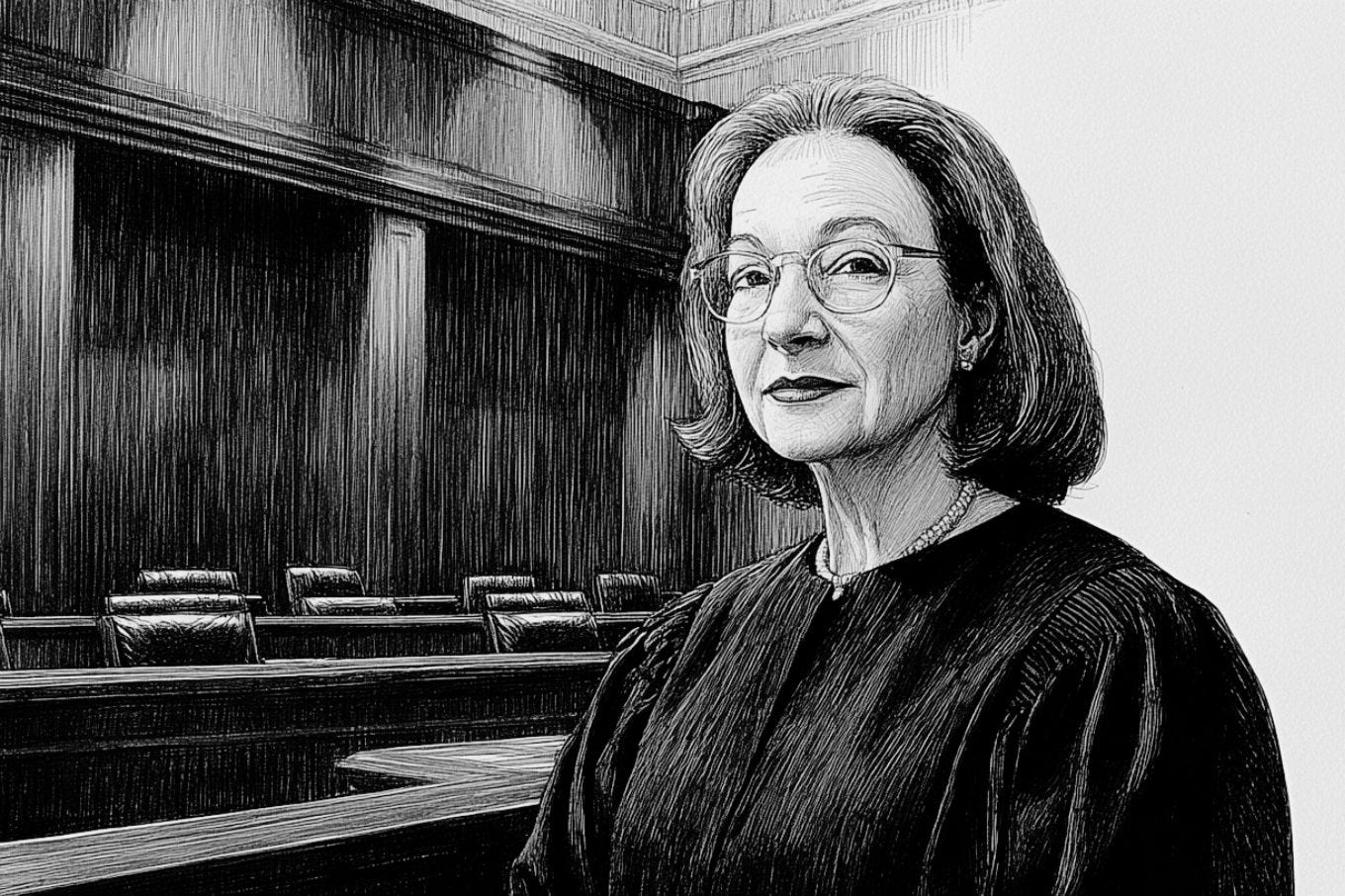
On May 2, 2025, Chief Judge Beryl A. Howell of the U.S. District Court for the District of Columbia issued a landmark opinion that may define the limits of executive power for a generation. In a scathing 102-page ruling, Judge Howell struck down Executive Order 14230, an extraordinary directive from President Trump targeting the law firm Perkins Coie LLP, as unconstitutional on nearly every front.
The opinion doesn’t mince words. It’s a must-read for anyone concerned with the First Amendment, due process, or the integrity of the legal profession. If you care about the health of our democracy and the role lawyers play in protecting it, I invite you to not only read the opinion itself, but also dive into the full legal breakdown and same-day analysis below. This moment matters. Let’s understand it clearly.
Read the full 102-page Memorandum Opinion by Chief Judge Beryl A. Howell of the U.S. District Court for the District of Columbia in Perkins Coie LLP v. U.S. Department of Justice, Civil Action No. 25-716 (BAH), dated May 2, 2025.

Detailed Summary
Overview
This case concerns a direct constitutional challenge by the law firm Perkins Coie LLP against Executive Order 14230, issued by President Donald Trump on March 6, 2025, titled "Addressing Risks from Perkins Coie LLP." You can read the EO here.
The court’s decision:
Struck down EO 14230 as unconstitutional on multiple grounds.
Denied the government's motion to dismiss.
Granted Perkins Coie’s motion for summary judgment and permanent injunctive relief.
Core Findings by the Court
1. Constitutional Violations
The court found EO 14230 violated multiple constitutional protections:
First Amendment:
Retaliation for protected speech and representation (Counts V and VII).
Compelled disclosure of client relationships (Count VI).
Fifth Amendment:
Denial of equal protection (Count IV).
Denial of due process (Count II).
Unconstitutional vagueness (Count III).
Sixth Amendment:
Violation of clients’ right to counsel (Counts VIII and IX).
Note: The court did not rule on the separation of powers claim (Count I) because the constitutional violations alone were sufficient for full relief.
Key Provisions of EO 14230
The EO targeted Perkins Coie and its employees in sweeping ways:
Suspended security clearances for all employees.
Directed agencies to sever all contracts with Perkins Coie or companies doing business with them.
Launched EEOC investigations into Perkins Coie's diversity practices.
Instructed agencies to deny physical and professional access to Perkins Coie lawyers.
Blocked future hiring of any Perkins Coie employee without special waivers.
These actions were based not on any proven misconduct but on the firm’s past representation of political opponents to President Trump and its diversity policies.
Context & Motivation
Perkins Coie previously represented Hillary Clinton’s campaign and fought Trump election challenges.
Trump repeatedly targeted the firm on Truth Social, in public speeches, and even vowed “retribution” if re-elected.
The EO followed these threats and was announced in a televised signing ceremony where Trump referenced the firm as having engaged in “weaponization” of the legal system.
Immediate Harm
Clients severed ties with Perkins Coie.
Federal agencies blocked or canceled meetings with the firm.
The EEOC launched a formal, aggressive investigation.
Attorneys lost government access.
Revenue dropped due to lost contracts.
Court’s Legal Reasoning
Government cannot punish disfavored speech or legal representation.
Lawyers are essential to an independent judiciary and must be protected from executive reprisal.
The EO’s vagueness and sweeping language invite arbitrary enforcement.
The EO undermines client rights by depriving them of chosen counsel.
The targeting of a single law firm by name is unprecedented and dangerous.
Relief Granted
The court permanently enjoined enforcement of EO 14230.
Declared all operative sections (Sections 1–5) unconstitutional.
Ordered federal agencies to rescind any actions taken under the EO.
Affirmed the independence of the legal profession as a cornerstone of democracy.
Notable Quote from the Opinion
“In a cringe-worthy twist on the theatrical phrase ‘Let’s kill all the lawyers,’ EO 14230 takes the approach of ‘Let’s kill the lawyers I don’t like,’ sending the clear message: lawyers must stick to the party line, or else.”
How Will This Case Impact Other Cases?
This case sets a powerful and immediate legal precedent that can have far-reaching implications for any law firm—or potentially any private entity—targeted by Donald Trump or future presidents for political retribution.
1. This is A Landmark Ruling with National Influence
This ruling is legally binding within the U.S. District Court for the District of Columbia, where it was issued. Unless the D.C. Circuit Court of Appeals affirms it on appeal, making it controlling within that circuit, it holds the status of persuasive authority elsewhere. That means other federal courts, such as those in New York or California, are not required to follow it, but may choose to do so based on its well-reasoned constitutional analysis.
Given the opinion’s depth and its focus on core First, Fifth, and Sixth Amendment protections, it is likely to influence decisions in similar future cases. If the ruling is eventually upheld by the U.S. Supreme Court, it would then become binding nationwide. For now, it stands as a powerful signal to the judiciary: political retaliation against law firms for protected legal representation will not be tolerated.
2. Establishes Strong Judicial Rejection of Political Retaliation
Chief Judge Howell's ruling affirms that:
The First Amendment prohibits the government from retaliating against lawyers or law firms for representing politically disfavored clients or causes.
A president cannot use executive power to punish private actors for engaging in protected legal work—even when those actors oppose the administration’s policies or narratives.
Impact: Other law firms can cite this case as persuasive authority if they are subjected to politically motivated executive orders, investigations, or contract terminations. The court drew a clear constitutional line.
3. Reinforces the Independence of the Legal Profession
The opinion underscores that lawyers are:
Essential to the rule of law and democracy, regardless of who they represent.
Not agents of the government, and cannot be coerced into ideological loyalty.
Impact: Firms that fear retaliation for defending political opponents, whistleblowers, immigrants, or marginalized communities now have strong legal protection and judicial validation of their role.
4. Limits Use of Federal Power for Personal Vendettas
The court found the EO violated the Fifth and Sixth Amendments, and was a vague, overbroad weaponization of power that endangered due process and the right to counsel.
Impact: The ruling sends a warning shot to the Trump administration: You cannot weaponize government agencies to “punish” critics or silence dissent, especially not by cutting off contracts, barring access to government buildings, or instigating sham investigations.
5. Creates Legal Ammo for Rapid Relief in Future Cases
Because Perkins Coie won declaratory and permanent injunctive relief, it means:
Other firms can immediately seek emergency TROs and injunctions using this ruling as persuasive authority.
Federal courts now have a blueprint for how to analyze and reject similar executive actions.
6. Could Influence Legislation and Oversight
The opinion may spur:
Congressional oversight into executive overreach.
Potential legislation reinforcing limits on political interference in federal contracting or security clearance processes.
Bottom Line:
This case is a landmark legal firewall protecting the legal profession from authoritarian abuse. It arms future targets, law firms, journalists, nonprofits, tech companies, universities, with a judicial roadmap to defend themselves when Trump (or any future president) tries to use executive power as a sword instead of a shield.
Mitch Jackson, Esq. | links
PS- I was a signatory on an amicus brief filed in support of the law firm Perkins Coie. Recently, I’ve also signed on to the similar Susman Godfrey matter.
My AI Has Receipts. Got a Question? Fire Away.
Every article. Every angle. Every hard truth. My AI is loaded with it all—ready to fact-check, connect dots, and answer your toughest questions. Anytime.

You’re already part of this movement—thank you.
Your support powers independent journalism and keeps this work going strong.
If you’d like to do even more, there are two powerful ways to take the next step:
-Become a monthly or annul subscriber, or a Founding Member and gain direct access to me to discuss issues and share ideas.
-Gift a subscription—monthly, annual, or founding—to a friend or family member who cares about democracy, truth, and fearless commentary.
Together, we’re building something bigger than all of us. Let’s keep going.