

Today, the Trump administration changed the legal definition of “harm” under the Endangered Species Act, stripping habitat destruction from one of the law’s most powerful protections and leaving millions of acres of private land more vulnerable to development that can push endangered species closer to extinction.
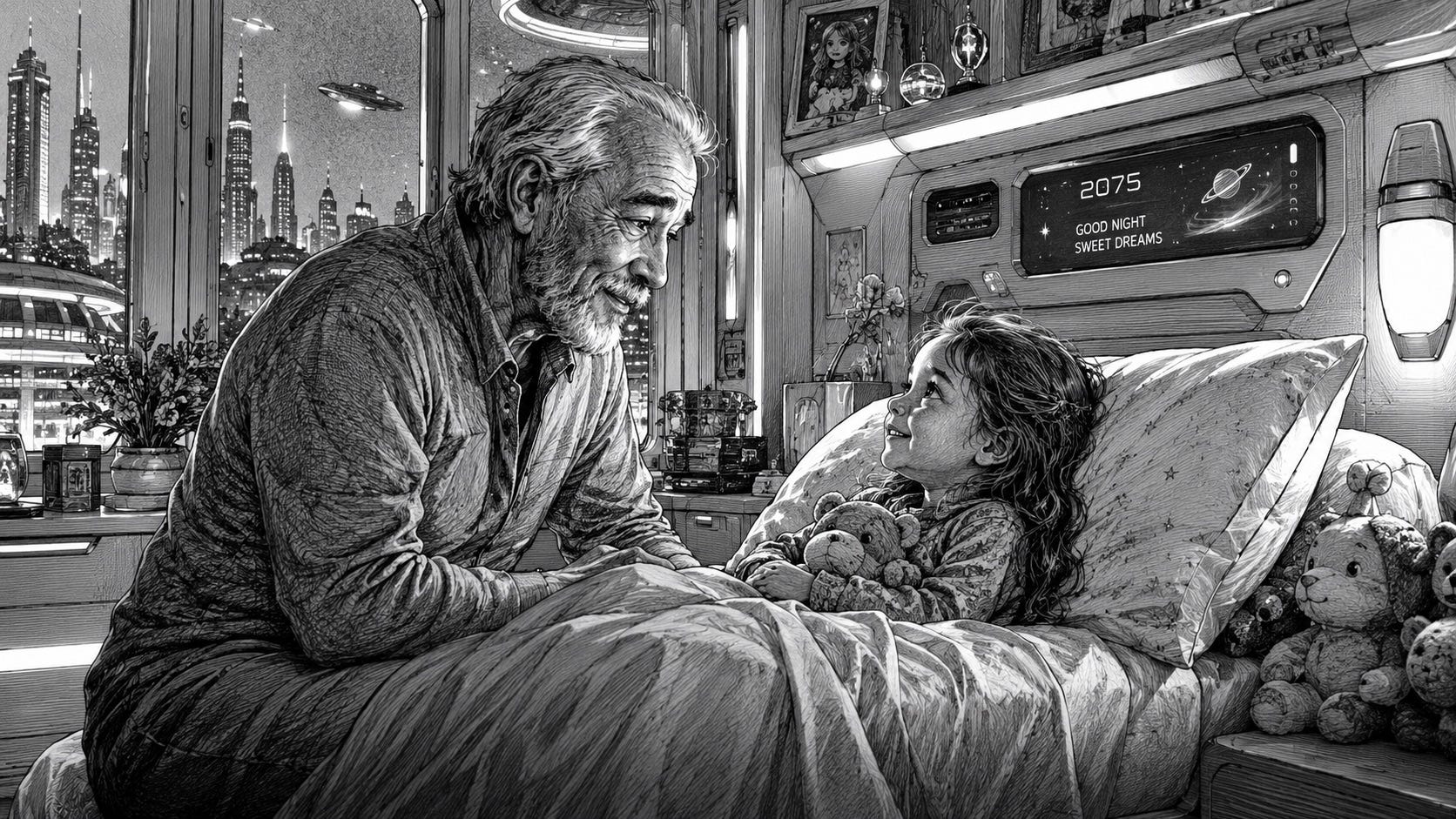
Here’s a bedtime story set 50 years in the future about what happened today, told by a grandfather as he tucks his granddaughter, Sunshine, into bed.
If you prefer my more traditional style of posts, here’s an alternate version.1
The Word They Should Not Have Changed
The rain had settled into the good kind, the steady kind that turned the whole room into a small warm boat. The grandfather touched the corner of the window and the light in it dimmed to the color of a banked fire.
“Tuck me in,” Sunshine said, lifting her arms. He pulled the blanket up and set the gray felt rabbit in the crook of her elbow where it lived.
“A real one tonight,” she said. “From when you were little.”
He sat on the edge of the bed. “All right. It’s about the year they changed one word. And about how a whole country can make a mistake without meaning to, and only understand it later, when the thing it broke won’t come back.”
“Which word?”
“Harm.”
She frowned. “That’s a boring word.”
“The whole fight was about what it meant. And here’s the truest part, so listen. You can hurt a living thing without ever touching it. You can hurt it by taking away the place it lives.” He tucked the rabbit’s ear down. “Say a bird has one strip of beach where it nests and feeds its babies. Somebody pours concrete over the whole thing. They never touch the bird. But what did they do to it?”
She thought hard. “They took its house.”
“Its house. Its food. The place it raises its young. For about fifty years, the law understood that plainly. It called that kind of hurting harm, and harming a protected animal was one of the things you simply were not allowed to do.”
“Who decided that?”
“The very top court in the country, back in nineteen ninety-five. Some landowners argued harm should only mean a direct hit, a trap or a bullet. The court said no. It said the ordinary meaning of the word was big enough to hold the home in it, and that the whole point of the law was to give disappearing animals a wide shield. That reading won, and it held for thirty years. It worked so quietly most people never had to think about it. That’s what good protection does.”
“And then somebody changed it.”
His mouth tightened. “One Friday, two parts of the government, Interior and Commerce, finished a new rule that reached back fifty years and erased the meaning. From that day, on a huge amount of land, harm would go back to meaning only a direct hit. Wreck the beach all you like. As long as no bird happened to die on the day the machines rolled in, the law would look the other way.”
“That’s not fair to the birds.”
“No. And I’ll tell you plainly, love, because I had a long life to think about it. They were wrong to do it. It was a mistake, and it caused real harm. But I still want you to understand why, so you never make the same kind.”
“Two reasons,” he said. “One sneaky, one real. The sneaky one first. The year before, that same top court threw out an old habit where judges used to accept the government’s reasonable reading of a fuzzy law. The court said, from now on, don’t settle for reasonable, go find the single best meaning. Now watch. The old home-meaning of harm had been blessed back in ninety-five as a reasonable reading. So the government said, aha, reasonable isn’t good enough anymore, and the one best meaning of harm is just the direct hit, nothing about homes.” He shook his head. “They took a rule meant to make judges think harder and used it to shrink a protection those same judges had already approved. Even their own paperwork admitted settled meanings are supposed to stay settled, and then they wriggled around their own admission.”
“That’s so sneaky.”
“A great many people used that exact word. Now the real reason. Some families owned a little land and feared the old rule could catch them by accident. Not for pouring concrete, but for clearing brush or mending a fence. The men in charge, Burgum at Interior and Lutnick at Commerce, said the rules had become a trap for ordinary people, and that fishermen had carried the weight too long. And that worry was real, Sunshine. I won’t pretend it wasn’t.”
“So maybe they were right?”
“No. When you have a small problem, you fix the small problem. You don’t burn down the house to get rid of one mouse. There were narrow, careful ways to help those families. Instead they tore out the meaning that was protecting everything, everywhere, to solve a small discomfort. They traded something you can never get back for something they could have fixed a gentler way. That is exactly what short-sighted means. They looked at this year’s inconvenience and could not see next year’s empty beach.”
“Where did it actually hurt?”
“Good question. Shooting or trapping a protected animal stayed illegal. And when the government itself paid for a big project, it still had to stop and check. But there was a third kind of place, the private land, where no government money or permission was in play. On that land, the home-meaning of harm had been the whole shield. And that is exactly where the new rule took it away.”
“Why does that part matter the most?”
“Because the number one reason animals vanish from the earth is not hunting. It’s that we take away the places they live. Habitat loss is the single biggest driver of extinction on the whole planet. So pulling the home-meaning out of harm didn’t trim a rule at the edges. It tore out the part carrying most of the weight, in the exact place habitat gets destroyed the most.”
He looked at the window. “Remember your bird? It flies an enormous distance every spring to the same coast its family has used for longer than there have been countries. Build over that coast in the winter, and on the day the machines come, not one bird dies. That’s the trick of it. Everyone gets to feel innocent. But spring comes, the flock arrives, and there’s nowhere to nest, so the babies are never born. Fewer come the next year, and fewer, until one spring nobody comes at all. Under the old rule that was harm. Under the new one, on private land, it was nothing. And once a kind of creature is gone, Sunshine, it is gone forever. No court can bring it back.”
Her eyes were shining a little.
“Were people mad?”
“They were, and this tells you it was a real mistake, not just my opinion. More than three hundred fifty thousand people wrote in to say don’t. Not only nature groups. Senators. Tribal nations. Scientists and lawyers. And here’s the one that should stop you: the wildlife offices inside states run by the very same party warned it would hollow the whole thing out. A big team of state attorneys general said the reasoning broke the law, that it was arbitrary. And they did it anyway.”
“That’s not fair. If that many people say no.”
“No. And there’s more. That same year, a little panel pulled an old emergency lever nobody had ever dared use and let oil and gas drilling in the Gulf skip the animal rules entirely. And months earlier, while asking the public what it thought, the wildlife agency quietly deleted the phone number people were supposed to call with questions about vanishing animals.”
“They hid the phone number?”
“In the middle of asking everyone to weigh in. That’s not the behavior of people who want to be talked out of a bad idea, love. That’s people who decided not to listen.”
“So what happened in the end?”
He was quiet a moment. “Now, everything up to here I remember. This next part is the rest of my life, the part you’re living the tail end of. The courts fought over it for years. Good people won some, and on the coasts where people showed up and would not let go, there are still wings you’ve heard with your own ears. But we lost things too. Places that are silent now. Creatures you’ll only ever see in pictures. And the hardest part is that so much of it did not have to happen. We had a wiser way sitting right there, and we walked past it.”
Sunshine’s eyes were half closed. “So the word harm used to mean wrecking an animal’s home, and the biggest court agreed, and it kept them safe for fifty years. Then they changed it to only mean touching the animal, using a sneaky court thing. And it mattered most on private land, where most of the hurting happens, because taking away homes is the number one way animals disappear. And once they’re gone, they’re gone. And tons of people said don’t, even their own side, and they did it anyway and hid the phone number.”
“Nearly perfect,” he whispered. “And the most important word?”
“Short-sighted,” she mumbled. “They only looked at right then. Not at later.”
“Not at later. And later is where we all have to live.”
“Grandfather. Is the little bird still around?”
“On some beaches. The ones people fought for. And that’s what I want you holding onto. It wasn’t decided by fate, Sunshine. People made the wrong choice back then, and braver people made better ones after, and that’s the only reason there are any wings left for you at all. Every generation gets a turn. Mine got some of it wrong. Yours gets to do better. That’s not a burden, love. That’s the gift.”
But she was mostly gone now, breathing deep and even, the rabbit against her chin.
He leaned down and kissed her forehead. “Wiser than we were,” he murmured. “I’d bet the whole coast on it.”
He touched the window and the last gray light faded to nothing. At the door he stopped and looked back at the small shape of her. Then he stepped out and drew the door most of the way closed, leaving it open just a crack, the way she liked, so the hall light could find her in the night.
They Changed One Word. Every Endangered Animal in America Just Lost Ground.
The Trump administration finalized a rule on Friday that strips habitat out of the meaning of “harm” under the Endangered Species Act. The legal move underneath the headline is the part you need to see.
On Friday, the federal government tore down the main legal shield that stops people from destroying the places endangered animals need to survive. It took one word to do it.
The word is “harm.”
Start with what that word used to mean, because the meaning is the whole fight. For roughly fifty years, federal law recognized a simple truth. You can kill an animal by destroying the place it lives. Bulldoze the nesting beach, drain the breeding pond, clear the old-growth pines where a species roosts, and you have harmed that species as surely as if you shot it. The regulation said so in plain terms. Significant habitat modification that kills or injures wildlife by wrecking its ability to feed itself and raise its young counted as “harm,” and “harm” is one of the acts Congress made illegal when it barred anyone from “taking” a protected species.
The Supreme Court affirmed that reading in 1995. In Babbitt v. Sweet Home Chapter of Communities for a Great Oregon, property owners argued that “harm” should reach only a direct hit, a trap or a bullet. The Court held otherwise. It ruled that reading habitat destruction into “harm” was supported by the ordinary meaning of the word, by the Act’s purpose, and by what Congress intended when it wrote a law to give vanishing species broad protection. That reading held for three decades.
On Friday, Interior and Commerce finalized a rule that erases it.
Here is the part the wire coverage skated past, and the part that should hold your attention.
The administration reached for a weapon the Supreme Court handed it last year. In Loper Bright v. Raimondo, the Court killed Chevron deference, the old doctrine that told judges to accept any reasonable agency reading of an unclear statute. In its place, the Court ordered agencies and courts to find the “single best meaning” of the law.
Now watch the move. Sweet Home upheld the habitat definition under Chevron, as a permissible reading. Loper Bright buried Chevron. So the administration now argues that “permissible” was never the standard, that the statute carries one best meaning, and that the best meaning of “harm” stops at direct injury to an individual animal. They took the case that demolished agency deference and aimed it at a wildlife protection the Court had already blessed.
The agencies know the ground is soft. Their own rulemaking concedes that Loper Bright left earlier Chevron-era rulings subject to statutory stare decisis, the principle that settled readings of a law stay settled. Then they argue their way around it, claiming Sweet Home found the habitat definition merely acceptable rather than required. It is a slick argument. It is also a standing invitation to litigate, and the litigation is coming.
Understand the limits, because they shape the fight. Section 9 of the Act still makes it illegal to shoot, trap, wound, or kill a listed animal directly. Section 7 still forces federal agencies to consult before they fund or permit a project that would drive a species toward extinction or wreck its critical habitat. The rule aims at a third space, the private land where no federal permit and no federal dollar are in play. On that ground, the habitat definition of “harm” did most of the protective work, and Friday’s rule takes it off the board.
That space is where the damage lands, because habitat loss is the reason most species are disappearing in the first place. The single largest driver of extinction on the planet is the destruction of the places animals need to survive. Strip the habitat meaning out of “harm” and you remove the tool that carries most of the Endangered Species Act’s weight on private land.
Picture it on the ground. A migratory shorebird returns every spring to the same strip of coast to nest. Develop that coast over the winter and no bird dies on the day the machines roll in. Come spring the flock comes back to a place that can no longer hold it, and the next generation never hatches. Under the old rule, that was harm. Under Friday’s rule, on private land with no federal permit in play, it is an activity that no longer triggers the Act.
The administration dressed the change in the language of relief for families and small businesses. Interior Secretary Doug Burgum said federal agencies had “abused” the Act and turned ordinary activity into a “regulatory trap.” Commerce Secretary Howard Lutnick said fishermen had carried the weight too long.
Hold that framing against the record.
Americans filed more than 350,000 public comments on this rule, and the opposition ran overwhelming. It came from more than environmental groups. Senators, tribes, scientists, and legal experts weighed in against it. Wildlife agencies inside Republican-led states warned that gutting the habitat definition would hollow out species protection. A multistate coalition of attorneys general told the government its rationale was “arbitrary, capricious, an abuse of discretion, and contrary to law.” The agencies moved ahead anyway.
The pattern runs deeper than one rule. This past March, the interagency panel known as the God Squad voted unanimously to exempt Gulf oil and gas drilling from the Act’s restrictions, pulling an escape hatch Congress wrote decades ago that no administration had ever used. That vote is already in federal court. And last November, during the public comment period for a separate wave of ESA rollback proposals, the Fish and Wildlife Service quietly deleted the phone number and contact information for endangered-species questions off its own website. The agency charged with fielding your concerns about disappearing wildlife erased the way to reach it, in the middle of asking the public to weigh in on how much protection to strip away.
Now the courts take over, and the case cuts two ways. Earthjustice condemned the rule Friday and has litigated ESA rollbacks for years, so a challenge is coming fast. If it reaches a Supreme Court with six conservative votes, that majority could write the narrow definition of “harm” into hardened precedent and lock every future administration out of restoring the old one by regulation. The administration faces its own risk in the same courtroom. It used Loper Bright, a ruling about judges reclaiming interpretation from agencies, to argue for less judicial scrutiny of its own reading. If a court decides the best meaning of “harm” is not the cramped one the agencies picked, the whole rule collapses and they start over.
So do something with this. Watch the docket, FWS-HQ-ES-2025-0034 at regulations.gov, where the final rule and the original 2025 proposal both live. Read the rule yourself instead of trusting anyone’s spin, mine included. Back the groups heading to court. And keep repeating the fact the entire record already proves. A species with no home is a species on its way out, and on Friday the federal government made destroying that home legal across millions of acres of private land.
They changed one word. The animals will pay in the only currency that counts, which is survival.
This is truly devastating
Sigh. What an incredible and illuminating parable.
You are an amazing story teller Mitch, and I hope you make it far enough into the future to tell your great grandchildren stories.