

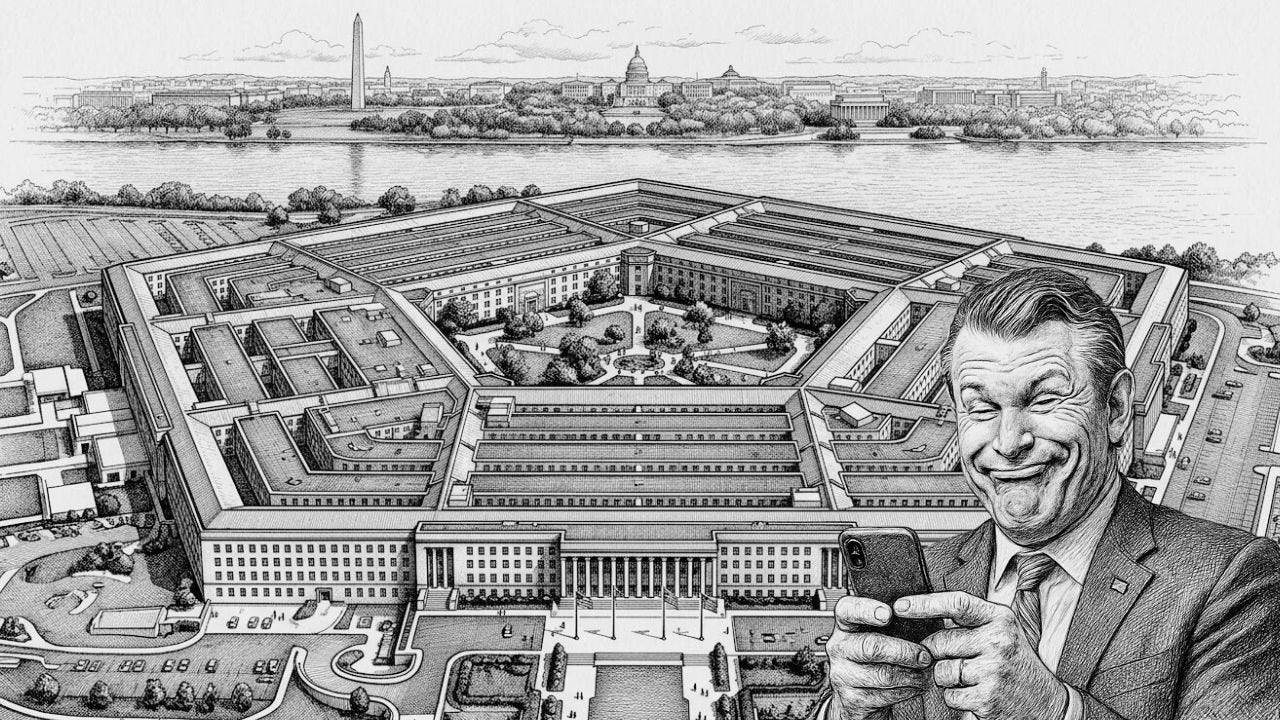
The Pentagon Tried to Turn the Free Press Into a PR Department. A Federal Judge Just Said No.
Imagine this. The Department of Defense tells every journalist in America that they can only report the news the government approves. If a reporter asks a question the Pentagon does not like, that reporter gets labeled a security risk. If a reporter digs into a story the administration finds inconvenient, the Pentagon pulls their press badge and waves goodbye with an emoji.
That is not a hypothetical. That is exactly what Defense Secretary Pete Hegseth tried to do. And on Friday, March 20, 2026, a federal judge told him it is unconstitutional.
U.S. District Judge Paul Friedman issued a 40 page ruling declaring the Pentagon’s press access policy a violation of both the First Amendment and the Fifth Amendment. The New York Times brought the lawsuit in December 2025, and Judge Friedman sided with the newspaper on every major argument. This ruling is a firewall for your right to know what your government is doing with your money, your military, and your children’s future.
Let me walk you through what happened, why it matters, and what you need to do about it.
The Policy That Should Have Never Existed
In October 2025, the Pentagon rolled out new press rules. These were not minor adjustments to building security. The rules required every reporter covering the military to sign a 21 page policy document that included a pledge not to obtain or report on any information the Pentagon had not authorized for public release. This included unclassified information. Reporters who asked Pentagon employees questions, the most basic act of journalism on the planet, could be flagged as a “security or safety risk.” Their credentials could be revoked.
Think about that for a second. A reporter could lose access to the building that houses your military leadership just for doing their job. For asking a question.
Out of 56 news organizations in the Pentagon Press Association, only one agreed to sign the policy. That lone outlet was One America News, a far right network with deep ties to the Trump administration. Everyone else, CNN, NBC, CBS, ABC, The New York Times, The Washington Post, the Associated Press, Reuters, NPR, the Washington Examiner, the Wall Street Journal, the Washington Times, and even Newsmax and Fox, all walked out. They turned in their press passes. They packed up their desks. And they walked out of the Pentagon rather than agree to become government stenographers.
The Replacement Press Corps and the Waving Emoji
Here is what happened next. The Pentagon did not reconsider. Hegseth and his chief spokesperson, Sean Parnell, assembled a new group of “journalists” to fill the empty briefing room. The new Pentagon press corps included the Gateway Pundit. LindellTV, run by MyPillow CEO Mike Lindell. Frontlines by Turning Point USA. Human Events, edited by Jack Posobiec. Podcaster Tim Pool. The National Pulse. Former Congressman Matt Gaetz, who now hosts a show on OAN. And Laura Loomer, a far right activist with ties to the White House.
Parnell celebrated the move on social media, calling these outlets the “formula to circumvent the lies of the mainstream media.” He described the experienced journalists who left the building as having chosen to “self deport from the Pentagon.”
And Hegseth? When the New York Times posted a statement explaining why its reporters would not sign the policy, Hegseth responded on X with a single waving hand emoji. He did the same to the Washington Post. He did the same to The Atlantic. The Secretary of Defense, the person in charge of your military during active operations in Iran and Venezuela, responded to constitutional press freedom concerns with the goodbye emoji.
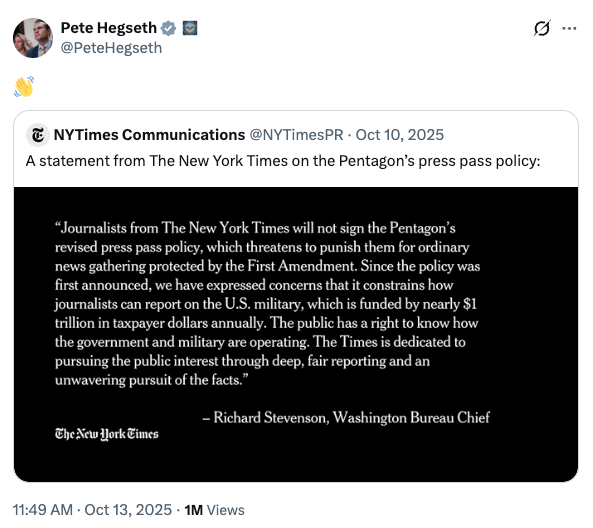
Judge Friedman cited that emoji in his ruling as evidence of the administration’s hostility toward independent media.
What Judge Friedman Actually Said
The ruling is clear and firm. Let me give you the key findings.
First, Hegseth’s policy violates the First Amendment because it amounts to viewpoint discrimination. Judge Friedman wrote that the “undisputed evidence” shows the policy was designed “to weed out disfavored journalists, those who were not, in the Department’s view, on board and willing to serve, and replace them with news entities that are.” He called it “viewpoint discrimination, full stop.”
Second, the policy violates the Fifth Amendment’s due process protections because it is so vague that reporters cannot know what ordinary acts of journalism might get them banned. As Judge Friedman put it, “to state the obvious, obtaining and attempting to obtain information is what journalists do.” Under the policy, he wrote, “essential journalistic practices that the plaintiffs and others engage in every day, such as asking questions of Department employees, could trigger a determination by the Department that a journalist poses a security or safety risk.”
Third, the judge pointed to the administration’s own inconsistent enforcement as proof of discriminatory intent. Laura Loomer, a right wing activist who signed the policy and received press credentials, openly promoted a “tip line” asking for information. The Pentagon had no problem with that. The Washington Post ran a similar tip line. The Pentagon called it a policy violation. Judge Friedman asked the government lawyer directly whether the Washington Post tip line constituted criminal solicitation. The lawyer responded, “I don’t think so, your honor.” The judge noted he could not see any meaningful difference between the two tip lines. That is what selective enforcement looks like.
Fourth, Judge Friedman ordered the Pentagon to reinstate the press credentials of seven New York Times national security reporters immediately. He refused the Pentagon’s request for a one week delay for an appeal. He gave the Pentagon seven days to file a written compliance report. And he vacated the challenged provisions of the policy for all reporters, not just the Times.
This Is a Pattern, Not an Accident
If this were the only time the Hegseth Pentagon had tried to suppress First Amendment rights, you might call it a mistake. It is not the only time.
In February, Judge Richard Leon, who was appointed by Republican President George W. Bush, ruled that Hegseth’s attempt to punish Senator Mark Kelly was unconstitutional retaliation for protected speech. Kelly, a retired Navy captain and former astronaut, had appeared in a video with five other Democratic lawmakers reminding service members that they have a legal duty to refuse unlawful orders. The video never named President Trump. It did not issue commands. It reiterated longstanding military doctrine that Hegseth himself had publicly endorsed before becoming Defense Secretary.
Hegseth responded by issuing a formal letter of censure against Kelly, threatening to reduce the senator’s military retirement rank and pay, and raising the possibility of criminal prosecution. Judge Leon blocked all of it, calling the senator’s speech “unquestionably protected” and writing that the Pentagon had “trampled on Senator Kelly’s First Amendment freedoms and threatened the constitutional liberties of millions of military retirees.” He rejected the government’s legal arguments with the word “Horsefeathers.”
Earlier this week, a separate federal judge ordered the Trump administration to rehire more than 1,000 laid off journalists at Voice of America, finding the mass firing was unlawful. That same judge had previously voided Kari Lake’s actions as acting head of the U.S. Agency for Global Media.
See the pattern? This administration keeps running straight into the First Amendment and losing. They keep trying to silence journalists, punish critics, and replace independent reporting with government approved messaging. And federal judges, including judges appointed by Republican presidents, keep telling them to stop.
Why This Matters Right Now
Judge Friedman made the stakes clear. The United States recently conducted a military incursion into Venezuela. The country is involved in an ongoing war with Iran. American troops are deployed. American tax dollars are being spent. Americans are entitled to know what their government is doing.
The judge wrote that in light of these military actions, “it is more important than ever that the public have access to information from a variety of perspectives about what its government is doing, so that the public can support government policies, if it wants to support them; protest, if it wants to protest; and decide based on full, complete, and open information who they are going to vote for in the next election.”
The founders of this country understood something that this administration seems determined to forget. A government that controls what the press can report is a government that controls what you can think. A military that decides which reporters get to ask questions is a military that decides which questions get asked. And when the government gets to pick who covers the government, the government is no longer being covered. It is being promoted.
As Justice Louis Brandeis once observed, “sunlight is the most powerful of all disinfectants.” That principle existed long before any of us were born. It will exist long after the current occupants of the White House are gone. The question is whether we protect it right now, when it counts.
The Pentagon Will Appeal. You Should Pay Attention.
Pentagon Assistant to the Secretary of Defense for Public Affairs, Sean Parnell, announced on social media that the administration disagrees with the ruling and is pursuing an immediate appeal. That is their right. The appeals process will unfold in the weeks ahead.
So here is what I need you to understand. This ruling is a victory, and it is an important one. Judge Friedman has drawn a constitutional line in the sand. He told the Pentagon that the First Amendment means something, that you cannot weed out reporters who ask hard questions and replace them with loyalists who won’t. He told the Department of Defense that vague policies designed to scare journalists into silence violate the Fifth Amendment. He told the American public that your right to know what your government is doing is not a privilege that can be revoked at the secretary’s discretion.
This administration will appeal. They will keep pushing. They will keep trying to replace independent journalism with friendly propaganda. They have already done it once, filling the Pentagon briefing room with far right bloggers and MyPillow affiliates while experienced national security reporters were locked outside.
This is what it looks like when a government tries to control the narrative. And this is what it looks like when the Constitution still works.
What You Can Do
Share this story. Talk about it at dinner. Bring it up at work. Tell your friends who say they do not follow politics that this is about their right to know what their military is doing during a time of war.
Pay attention to which members of Congress speak up about press freedom and which ones stay silent. Remember their names. The midterms are coming.
Support independent journalism. Subscribe to a newspaper. Donate to a press freedom organization. The reporters who walked out of the Pentagon did not stop working. They kept covering the military from outside the building, using sources, making phone calls, doing the hard work that a democracy depends on. That work needs your support.
The First Amendment is not a suggestion. It is not a guideline. It is not a courtesy. It is the reason you get to know anything at all about what your government is doing in your name. Judge Friedman understood that. The Pentagon does not. And the gap between those two positions is where your democracy lives.
Protect it.
Mitch Jackson, Esq.
Related
Reporters, Start Doing Your Damn Job Before It’s Too Late
If you believe the First Amendment is worth fighting for and you want someone in your corner who will call out every attempt to silence the press and dismantle your right to know, subscribe to Uncensored Objection right now (free and premium). This is where we hold the line, and I need you standing with me.
A small but mighty victory.