

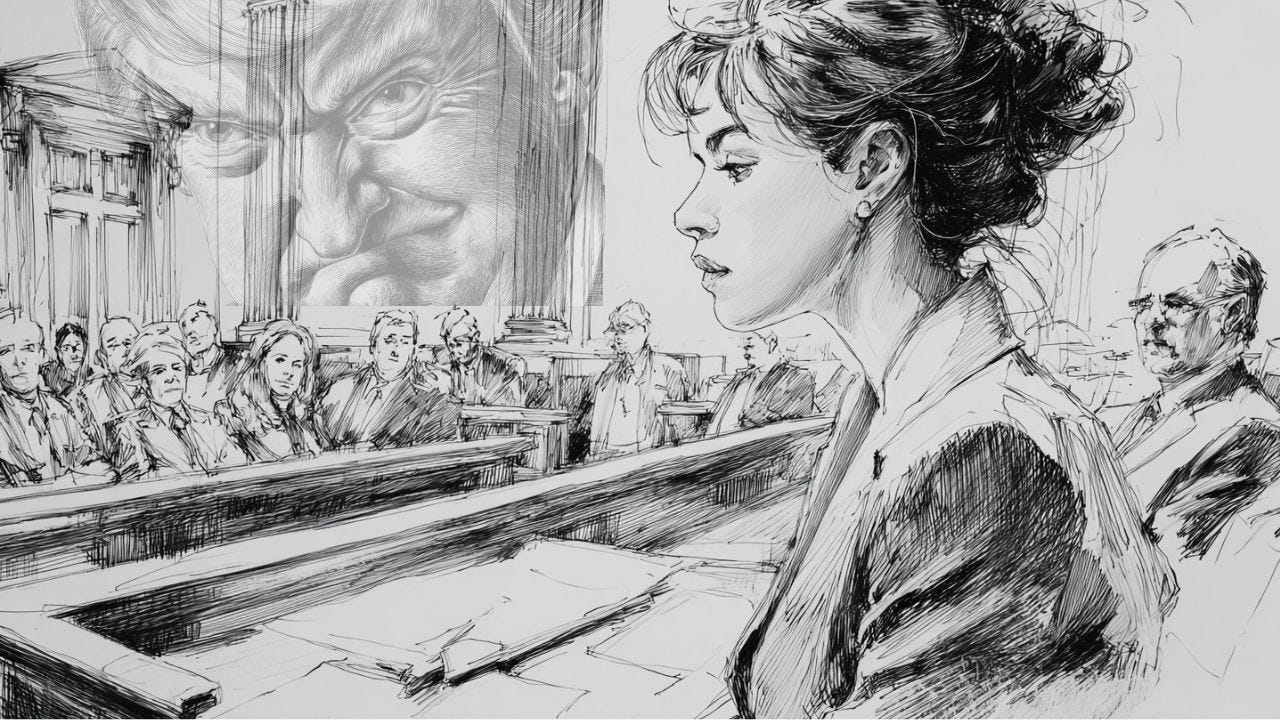
Most lawyers will tell you that a grand jury would indict a ham sandwich if you asked it to. You know why? Because prosecutors control the room. They pull every string, and the jury follows.
In light of James Comey’s indictment, Trump’s unhinged posts, and the chorus of enablers in power cheering him on, I’m bracing for more federal indictments. This is the moment to cut through the noise and explain what indictments mean, what they don’t, and why every American needs to focus on facts instead of swallowing the propaganda pushed by Trump, his administration, and his MAGA allies in Congress.
What is a federal indictment?
A federal indictment is the government’s formal decision to charge someone with a federal crime. It is not a conviction. It is a document that starts a criminal case and sets the stage for everything that follows. To understand what it means, you need to know who is involved and how the process works.
A federal indictment comes from a grand jury. A grand jury is a group of citizens called together to listen to evidence that a federal prosecutor presents. The prosecutor controls the process. The defense is not in the room. There is no judge presiding over objections. The rules of evidence are relaxed. The grand jurors only hear the government’s side of the story.
The standard the prosecutor must meet is probable cause. That means the grand jurors must believe it is more likely than not that a crime was committed and that the person being investigated committed it. This is far lower than the proof required at trial, which is guilt beyond a reasonable doubt. Because the standard is low and the prosecutor runs the show, indictments are common when prosecutors decide to seek them.
The person under investigation does not get to argue their side in front of the grand jury. There is no cross examination of witnesses. The defense learns about the evidence later, after the indictment is returned and the case enters the regular court system. Once the indictment is filed, the accused will be brought before a federal judge to enter a plea and begin the process of pretrial motions, discovery, and preparation for trial.
An indictment is not proof of guilt. It is a formal notice that the government believes it has enough evidence to proceed. It triggers constitutional rights such as the right to a speedy trial, the right to counsel, and the right to confront witnesses in open court. Those rights begin to protect the accused once the case moves forward.
Why Trump’s Indictments Are Nothing Like Biden’s
The indictment of former FBI Director James Comey exposes a dangerous shift in presidential power. President Trump did not simply comment on an investigation or express frustration with prosecutors. He publicly demanded action, removed a U.S. attorney who resisted, and installed a loyal replacement who rushed charges forward just before the statute of limitations expired.
A grand jury delivered two counts after a rushed and confused process that even the presiding judge questioned. Trump designed the prosecution from the inside out, using the Justice Department as a personal weapon to punish a political enemy and send a warning to anyone who crosses him.
No similar pattern existed during the Biden years. Investigations into Trump were handled by an independent special counsel and overseen by a Justice Department leadership that maintained public distance from the White House. Despite the false facts put out to the world by Trump supporting MAGA enablers, there was no evidence of Biden ordering indictments, replacing prosecutors to secure charges, or celebrating legal action against his opponent.
The Hidden Cost of Fighting a Federal Case
Saying “if you’re innocent you can prove it in court” ignores the crushing reality of what a federal prosecution does to a person and their family. Defending yourself against the full weight of the United States government takes years of your life, drains savings, and forces you to fight a team of prosecutors with virtually unlimited resources.
Even when you win and a jury finds you not guilty, the damage does not disappear. Careers are lost, reputations are scarred, relationships are strained, and the emotional toll lingers long after the verdict. The sleepless nights, public suspicion, and financial ruin leave marks that no acquittal can erase.
Conclusion
You should care about federal indictments because they show how raw government power can be used to silence dissent. The Department of Justice holds the authority to charge someone after presenting only its own version of events to a grand jury, and that authority can be turned into a weapon when politics drive the decision to prosecute.
I believe we are watching that power being used to punish people who have done nothing more than doing their job and speaking out against Trump and his reckless actions. This is not about justice. It is about intimidation and control.
As a trial lawyer with decades in the courtroom, I have seen how quickly a prosecutor can secure an indictment when they decide to target someone. I have also seen how different the trial process becomes once both sides finally get a voice before a judge and a jury. The gap between those two stages is where abuse of power takes root.
More federal indictments by Trump’s DOJ are coming. They will keep making headlines. Some will involve public figures and others will involve ordinary citizens.
Each indictment is a stark reminder that our justice system is supposed to serve the people, not those in power. The only way to keep it honest is by staying vigilant, demanding transparency, and electing leaders who respect the rule of law. Under the current president, that system has already been bent and abused, and it’s on us to stop it from breaking completely.
Mitch Jackson, Esq.
Related: James Comey Indicted: Charges, Evidence, Video, Key Players, and What This Case Really Means
Join the Uncensored Objection community and see indictments for what they really are—not the spin, not the propaganda, but the truth. Get the clarity, the context, and the tools to push back against political gaslighting. Join free or premium today and take your stand for justice, democracy, and the future we owe the next generation.
