

“I consider trial by jury as the only anchor ever yet imagined by man, by which a government can be held to the principles of its constitution.” -Thomas Jefferson in a letter to Thomas Paine
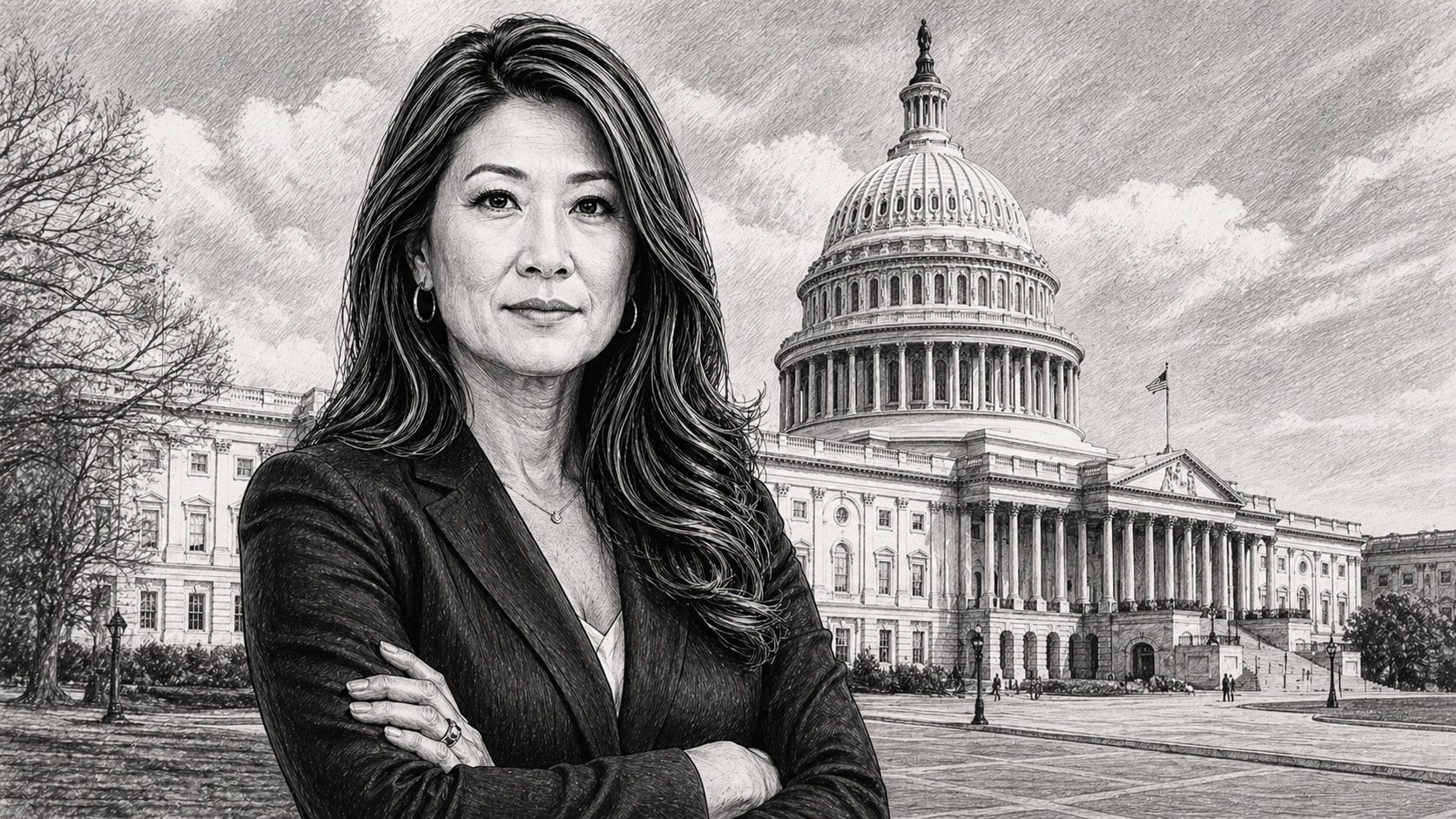
Katie Phang waited long enough for the government to follow the law, and when it became clear that was never going to happen, she stopped waiting and took action. She sued the Acting Attorney General of the United States.
The case is Phang v. Blanche, 1:26-cv-01417. It sits on the docket of the United States District Court for the District of Columbia. It runs fifteen pages. It accuses the most powerful law enforcement officer in the country of a “brazen, shocking, and ongoing violation” of a federal statute Congress passed less than six months ago.
Read that again.
A journalist sued the Department of Justice for breaking the law.
That should not be remarkable in 2026. It is.
Who Is Katie Phang
Katie Phang is a Yale graduate, a University of Miami School of Law graduate, and a Florida-licensed trial lawyer. She served as an Assistant State Attorney in Miami-Dade and Broward Counties. She built a national reputation as a legal analyst at MSNBC, NBC, Fox News, Fox Business, and the local CBS Miami affiliate. From March 2022 through April 2025 she hosted The Katie Phang Show on MSNBC. I’m a big fan of her work.
She now reports legal news through her own YouTube channel, her Substack, and a long list of other outlets. She has covered Jeffrey Epstein, Ghislaine Maxwell, and the network of powerful men around them for years. According to her complaint, she has personally reviewed many of the documents DOJ produced under the Act.
Today she went from simply covering the story to forcing the story. Here’s what happened.
What She Filed
The complaint targets Acting Attorney General Todd Blanche in his official capacity. You may recognize that name. Blanche served as Donald Trump’s lead defense counsel during the 2024 New York criminal trial that ended in a 34-count conviction. Trump then installed him as Deputy Attorney General. On April 2, 2026, Trump fired Pam Bondi and elevated Blanche to Acting Attorney General.1
Phang is represented by Brendan Ballou and Samuel T. Ward-Packard of the Public Integrity Project. Ballou is a former federal prosecutor who served as Special Counsel for Private Equity in the DOJ Antitrust Division from 2020 to 2025. His firm exists to fight and save democracy from corruption because this kind of wrongdoing rigs the economy against merit, replaces the will of voters with the will of the wealthy, and ultimately destroys the foundation of self-governance itself. In my opinion that’s exactly what we’re seeing with how the DOJ is handling the Epstein files.
The complaint pleads four counts.
Count One alleges a violation of the Administrative Procedure Act (the APA) because Blanche acted contrary to law and exceeded statutory authority.
Count Two alleges a violation of the APA because Blanche’s conduct was arbitrary, capricious, and an abuse of discretion.
Count Three pleads ultra vires agency action under the doctrine recognized in Armstrong v. Exceptional Child Center and Larson v. Domestic & Foreign Commerce Corp.
Count Four seeks declaratory relief under the Declaratory Judgment Act.
Phang asks the court for clear remedies. Declare that Blanche violated the Act. Order DOJ to remove every unlawful redaction. Order DOJ to explain the bases for any redaction that survives. Order DOJ to re-produce documents it previously released and then retracted. Order DOJ to produce documents it has withheld entirely. Appoint a special master to police compliance. Award attorneys’ fees. She also demands a jury trial. You can read the complaint here.2
When and Where
The complaint hit the District of Columbia federal courthouse on Monday, April 27, 2026. The court sits a short walk from the Capitol where Congress passed the very law Blanche stands accused of violating. The geography is not an accident.
The timing is not an accident either.
On January 21, 2026, Representatives Thomas Massie and Ro Khanna, the bipartisan co-authors of the Epstein Files Transparency Act, asked Judge Paul Engelmayer of the Southern District of New York to appoint an independent monitor inside the Maxwell criminal case. Judge Engelmayer turned them down in a seven-page opinion. The Maxwell prosecution did not give him jurisdiction over a civil records statute. He explicitly told them they could file a separate lawsuit to challenge DOJ’s compliance.
On Monday Katie Phang filed it.
Why This Lawsuit Exists
In November 2025 Congress did something rare. It passed a nearly unanimous bipartisan law forcing the Department of Justice to release every unclassified record connected to Jeffrey Epstein. Donald Trump signed it on November 19, 2025. The statute became Public Law 119-38.
The law set a thirty-day clock. December 19, 2025 was the deadline. The statute permitted narrow redactions for victim privacy, child sexual abuse material, depictions of injury or death, narrowly tailored and temporary withholdings tied to active investigations, and material classified for national security. Each redaction required a written justification published in the Federal Register.
Congress slammed every escape hatch shut. The text of the statute reads:
“No record shall be withheld, delayed, or redacted on the basis of embarrassment, reputational harm, or political sensitivity, including to any government official, public figure, or foreign dignitary.”
DOJ, then led by Pam Bondi with Todd Blanche serving as Deputy, blew the December 19 deadline. On the deadline itself, the agency released a mere 3,965 files. Then-Deputy AG Blanche conceded the failure publicly the same day, telling an interviewer that “today, several hundred thousand, and then over the next couple weeks, I expect several hundred thousand more” would be released. The actual numbers ran several orders of magnitude below his promise.
DOJ then trickled out additional materials on December 20, 22, and 23, 2025, and on January 30, 2026, all past the statutory deadline. On February 2, 2026 the agency declared its production complete and sent Congress a six-page letter purporting to summarize categories of records withheld and the legal basis for redactions made. The letter was the only attempt at justification. The Federal Register publications the statute requires for individual redactions never came.
The first production included a 119-page grand jury transcript with every page redacted in full. Over 400 additional pages in that same batch came out the same way.
That is not redaction. That is erasure.
DOJ has reviewed approximately six million pages and released roughly 3.5 million. The agency claims the rest are duplicates. The complaint contests that claim with specific examples. The Office of the Inspector General announced an audit last week to evaluate DOJ’s compliance with the Act. Earlier today I shared a post updating my community on the lack of disclosure and production of documents titled, Epstein Files Update: 3 Million Pages Missing. 200,000 Withheld Illegally. 37 Files Vanished. Welcome to the Epstein Cover-Up.
The Trump Problem
Phang’s complaint catalogs a set of documents that share a common feature.
They reference Donald Trump.
A woman the FBI interviewed four times says Trump forced her to perform oral sex when she was a minor. According to logs, DOJ previously produced fifteen documents about her allegations to attorneys for Ghislaine Maxwell during her defense preparation. Only seven of those documents reached the public under the Epstein Act. Reporting suggests fifty-three pages of interview notes remain unproduced.
Another woman alleges that when she was thirteen years old, Epstein introduced her to Trump at Mar-a-Lago. According to the complaint, Epstein told Trump “this is a good one, huh.” Both men allegedly laughed. Her interview was published on the DOJ website, taken down, and restored on February 19, 2026 only after public pressure. Other documents about her never reached the public at all.
DOJ’s first production included an image showing what appears to be Jeffrey Epstein’s desk with two photographs of Donald Trump on it. One showed Trump with Epstein and Maxwell. The other showed Trump with several women in revealing swimsuits. DOJ removed the image from its website. The agency restored it only after public outcry.
A separate file containing interview notes about Trump’s alleged conduct toward minors was taken down from the DOJ website and never restored.
In another document, Epstein wrote in an email that Trump had told him he was never asked to leave Mar-a-Lago. That statement contradicts Trump’s later public claims to the contrary. Congressman Jamie Raskin, who reviewed the unredacted version as a member of Congress, has reported that the redaction had no legal basis.
The pattern is visible. Documents about Trump get pulled, redacted, or never produced. Documents about other people do not get the same treatment.
The Blanche Quote
On April 14, 2026 Acting AG Blanche sat down with Bill Hemmer on Fox News. Hemmer asked whether Blanche had the authority to release more files. Blanche answered, “We have released everything.” He repeated the line during a separate NBC interview with Laura Jarrett the same week.
Two and a half million pages of reviewed material did not reach the public. The agency calls them duplicates. The court will decide.
Why Katie Phang Is Right To Do This
Praise her. She did the hard thing the right way.
Most legal commentators would have written a column. Most lawyers would have signed an open letter. Most journalists would have filed a FOIA request, waited eighteen months, sued for a fraction of what the statute already requires, and called it a career.
Phang did the actual work. She partnered with a former DOJ federal prosecutor. She built a complaint that maps her professional injury with surgical precision. She asked for the one remedy that actually pries documents loose from a hostile agency.
A special master.
A special master is a court-supervised neutral with authority to review every redaction in camera. A special master cannot be fired by the President. A special master answers to the judge. That is the only mechanism designed to defeat exactly the kind of stonewalling DOJ is running.
Phang’s complaint also names the pattern. Documents about Trump get retracted. Documents that do not mention Trump survive. The redactions follow a political logic the statute explicitly forbids. Phang put that pattern in the court record. The judge will see it.
The Standing Fight
DOJ will move to dismiss on standing within thirty to sixty days. Standing is the legal question of who gets to sue.
The defense argument will run like this. Phang has no greater injury than any American who wants to read the files. The harm is shared. The complaint should be dismissed.
That argument loses.
The Supreme Court held in FEC v. Akins, 524 U.S. 11 (1998), that when Congress creates a public right to information through a sunshine or disclosure statute, denial of that information is a concrete Article III injury, even where the harm is widely shared. The Court reaffirmed Akins in TransUnion v. Ramirez, 594 U.S. 413 (2021). TransUnion tightened standing rules for plaintiffs trying to convert private statutory rights into informational injuries. The Court drew an express line. Akins still controls where Congress passes a public-disclosure or sunshine law that entitles all members of the public to certain information.
The Epstein Files Transparency Act is a public-disclosure law. Section 2(a) directs the Attorney General to “make publicly available” the covered records. Phang’s case sits inside the Akins safe harbor. TransUnion’s downstream-consequences requirement does not apply to her.
Phang clears that requirement anyway. The full scope of the government’s investigation is impossible for her to evaluate when DOJ pulls documents from public view. The Epstein story she has spent years reporting is impossible to fully tell when DOJ withholds materials Congress ordered it to release. That is concrete professional injury, not generalized public interest.
Phang is the right plaintiff. The Public Integrity Project is the right firm to carry her case.
What Happens Next
Expect a motion to dismiss inside sixty days. Expect Phang to defeat it. Expect cross-motions for summary judgment by late 2026 or early 2027. Expect the court to find that DOJ violated the Act. Blanche put the proof in the record himself when he conceded on December 19 that DOJ had not complied.
The harder question is the remedy. Getting a court order saying “follow the law” is achievable. Getting the Trump-related documents into public view requires document-by-document in camera review by a special master. That takes months. Appeals stretch the calendar further. The political value of this lawsuit may run faster than the legal value.
Both clocks favor Phang.
Why You Should Care
Strip away the Epstein noise and the political theater. You are left with something simple.
A statute Congress passed says one thing. A federal officer is doing the opposite. A federal court will now decide whether the statute means anything at all.
Every American with a stake in the rule of law has a stake in this case.
Katie Phang took a risk most lawyers refuse to take. She sued the Department of Justice. She named the Acting Attorney General. She asked a federal judge to do what Congress could not get DOJ to do voluntarily.
She did her job, and she did it for the survivors who have waited too long for answers.
Read the complaint. Talk about it. Do not let this story go quiet.
The Epstein files belong to the public. Congress said so. The law says so. And today, Katie Phang walked into federal court to make sure those words mean something.
Stand with her.
Mitch Jackson, Esq.
Make sure to connect with Katie Phang on her Substack.
Governments do not announce what they are doing. They file it. They bury it in a procurement notice, in a sentence a lawyer was paid to make sure you would never finish reading. Somebody has to sit with those documents and translate them back into English. That is the work your upgrade funds.
[audio] One Lawyer/journalist just did what a Republican congress refused to do: She sued to open the Epstein files. We got your back Katie. 👊
https://podcasts.apple.com/us/podcast/katie-phang-just-filed-the-lawsuit-every-american-has/id1805393977?i=1000763975982
The wheels of justice turn painfully slow, yet grist exceedingly fine! May Phang's lawsuit ultimately result in the true justice all of Epstein's & tRump's victims anticipated when they bravelt came forward against two of the nation's most powerful and wealthiest pedophiles and that THAT justice, once uncompromisingly adjudicated, empowers more women who have experienced s*xual assault to bravely come forward, stand-up to, and move to hold their perpetrators accountable for the life-long traumas rhey have selfishly caused!
#TherapyDoesNotFixAssault!
#MoneyDoesNotRestoreInnocence!
#MillionsDoNotCompensateForOnesVirginity!
#MeToo!