

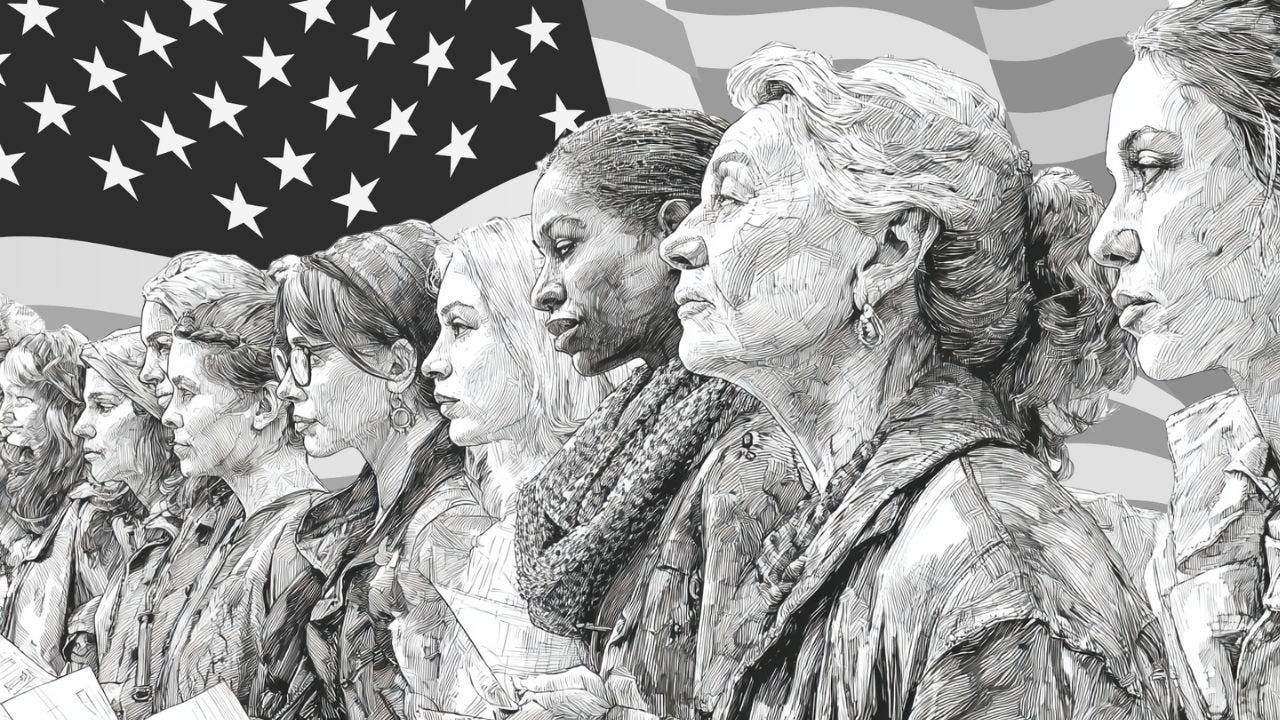
Call it what it is: a legislative maneuver that risks stripping the right to vote from women and marginalized communities under the banner of “election integrity.”
The SAVE Act is back. It is closer. And it is more ambitious than the version I warned you about in March 2025 in my article, “The SAVE Act’s War on Women Voters: A Fake Fix for Non-Existent Fraud That Silences Millions.”
On February 11, 2026, House Republicans passed the rebranded SAVE America Act, 218 to 213, with only one Democrat voting yes. Now it moves to the Senate, where the fight will center on whether a federal paperwork regime becomes the new gatekeeper to the ballot.
Here is what the House just approved, in plain English.
If this bill became law, you could not register to vote in a federal election unless you show documentary proof of U.S. citizenship. Not a sworn statement. Not the normal verification systems states already use. Documents. Think passport. Think birth certificate. Think a narrow slice of IDs that explicitly show citizenship. Most people do not carry those documents through daily life, and many do not have easy access to them when they need them.
And it is not only about new voters.
This bill is built to squeeze you at the moments real life forces you to touch the system. You move. You change your name. You update your registration. You try to make a routine correction. Instead of a simple update, you are pushed into a documentary proof hurdle that millions of eligible citizens will struggle to clear on time.
The 2026 version also expands beyond registration. It adds a restrictive photo ID requirement for voting in federal elections and it pushes states into a new federal data pipeline by directing them to regularly submit voter rolls to the Department of Homeland Security. One earlier version was even more extreme by requiring citizenship documents at the polls every time you vote. The House amended that provision, but do not confuse redesign with retreat. The architecture still does the same thing. It makes voting access depend on whether you can produce the right papers in the right way at the right time, and it increases the chances that eligible voters get delayed, blocked, or discouraged.
Now let’s talk about the group I told you would pay first.
Women.
Married women. Divorced women. Women who remarried. Women whose legal names do not match the name on an old citizenship document. The bill claims there are “accommodations.” The reality is that bureaucracies punish mismatch. The more documents you must assemble to prove that you are you, the more likely the system becomes a trapdoor instead of a doorway. And the people who created this bill know exactly how that friction works.
That is the point.
Noncitizen voting is already illegal. The bill’s champions sell this as an integrity fix. What the House passed is a bureaucratic weapon designed to fix a false problem, aimed at the registration and voting pathways ordinary people actually use. It is an election story disguised as an administrative story.
The House has acted. Now the Senate decides whether your right to vote is treated like a right, or like an application.
And remember this. When legislation predictably shrinks participation by women and marginalized communities, the alarm is not partisan, it is constitutional.
Mitch Jackson, Esq. | about Uncensored Objection
Update per Community Suggestions:
Taxed. Deployed. Silenced?
The SAVE America Act’s new documentary proof of citizenship requirement, combined with language that pushes toward in person presentation, collides directly with UOCAVA, the Uniformed and Overseas Citizens Absentee Voting Act. UOCAVA is the federal law enacted in 1986 to protect the voting rights of active duty members of the U.S. armed forces, Merchant Marine members, eligible military family members stationed away from home, and American citizens living abroad. It exists for one reason: these voters cannot physically walk into a local election office to register or request a ballot, so the law requires states to allow them to register and vote absentee remotely, typically through the Federal Post Card Application.
If Congress now layers an undefined “in person” proof of citizenship requirement on top of that system without clearly providing a lawful remote verification pathway, it creates a direct conflict with the very protections UOCAVA guarantees. For the estimated 6 to 9 million voting age Americans living overseas, including deployed service members risking their lives, the practical result could be disenfranchisement by geography. These Americans are still required to file and often pay U.S. taxes. Stripping them of a workable path to register and vote would edge dangerously close to a modern version of taxation without representation.
UPDATE: The SAVE Act failed in the Senate last night, and make no mistake about what that means: a bill built to strip voting access from millions of eligible Americans just got stopped cold. Pay attention to who tried to take your vote (the Republicans), remember it, and carry that memory straight to the ballot box in the November midterms.
We got this!