
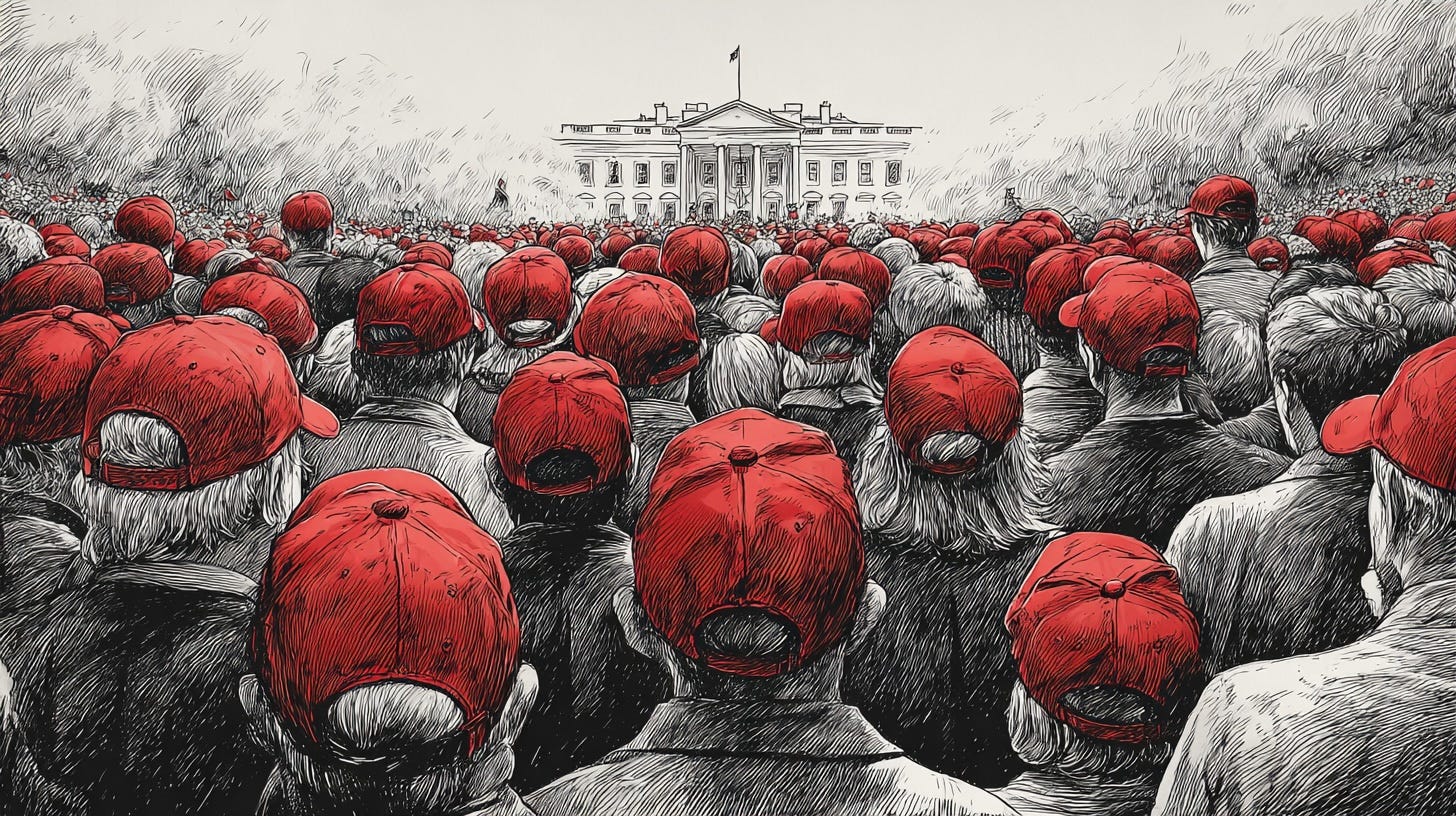
“Just remember, what you’re seeing and what you’re reading is not what’s happening.” -Donald Trump (2018)
Cognitive dissonance is the mental snap that happens when the truth crashes into something we believe. It’s not just discomfort, it’s a psychological alarm bell. When the facts scream one thing but your loyalty whispers another, your mind scrambles to make the noise stop.
That pressure to resolve the clash, between what’s real and what feels safe, is powerful. Most people don’t shift their beliefs. They shift reality. They rewrite the story in their head to protect their pride, their tribe, or their past choices. That’s cognitive dissonance. And Donald Trump didn’t just exploit it. He built a movement on it.
Think about it: we have watched him face a mountain of evidence against him, year after year. Indictments, impeachments, even felony convictions on his record. Every day brought new scandals, from misused campaign funds to election interference. And yet tens of millions still cling to Trump as their champion. How does that happen?
Trump gave an answer himself back in 2018: “Just remember, what you’re seeing and what you’re reading is not what’s happening.” He wasn’t stumbling over words. He was teaching his supporters to protect themselves from truth. If you believe reporters are liars and judges are corrupt, you still see your leader do almost anything and never feel the need to question it.
That’s cognitive dissonance weaponized at a national level. His followers feel the pain of contradiction in silence. They have invested their identities in this man. It hurts too much to admit it all might be a mistake. So instead they chase comfort. They rationalize. When Trump says one thing and does another, they bend over backward to defend him. They blame anyone who shows them evidence. In their minds, their choice was right from the start. Admitting otherwise feels like admitting their own judgment was wrong.
Trump’s Reality Bending
So how did we get here? Donald Trump built this by twisting truth itself. He flipped reality upside down and told his crowd to live there. Every problem was someone else’s fault. The media? Always lying. The courts? Always rigged. And if he said or did something bad, it was proof of heroism or persecution. He lies constantly and runs on lies as fuel for his movement. When he’s caught red-handed, he calls it a witch hunt. When he violates the law, he calls it patriotism. Every scandal is rewritten as a grand conspiracy against his followers. It’s a full-time stream of propaganda.
In his first term, he came into power declaring he would “drain the swamp.” His supporters cheered even as he filled it with allies. If a caravan moved at the border, he claimed invaders, when in reality border security had already dealt with them. If an investigation was closed, he insisted it was a setup. If anyone pointed out a broken promise (say on healthcare or taxes), they pointed at the messenger and shouted “fake news.”
Nothing he did managed to shake their belief. If the economy showed slow growth, they said it was the best ever. If prices or taxes rose, they blamed someone else. If international alliances frayed or conflicts grew, they called it clever strategy. Every setback was hidden, every fear explained away. The rule was simple: if Trump said it, it was true. If anyone said otherwise, they were enemy territory.
Now in his second term, the pattern continues. Look at what’s happening. He’s slashing regulations on oil and coal and calls it energy independence, even as people pay more at the pump. He sidelines climate scientists and calls them troublemakers, yet when a hurricane or wildfire hits home he blames green policies, not his own. He fires inspectors who question him and claims that proves corruption, when it often just means he’s unchecked.
Pardons and protections have become a hobby. People who stormed the Capitol or burned cities in his name get a pardon at the end. Officials who broke laws or took bribes are welcomed into his administration. In their eyes, those are patriots doing their job. To admit those were crimes would tear down their hero. So in their story, the crimes never happened, only the “evil forces” behind them.
With every tweet and speech, Trump builds a bubble where only his version of reality can breathe. Facts are optional. Claims of power grabs become badges of honor. His fans watch him ignore courts, rewrite laws, break promises, and they still believe the problem isn’t with him. Every move feels like a win to them, even as it chips away at our norms. In their bubble, he can do no wrong. The world outside is labeled “fake news.” This is gaslighting on a massive scale.
Identity and Belonging
For millions, supporting Trump is an identity. Wearing his red hat or a slogan shirt is more than a statement. It’s a signal: you belong to the tribe. Once you join, everything the tribe does feels justified. Criticizing Trump feels like criticizing everyone in the crowd. Defending him isn’t optional, it’s survival. People have built friendships, online followings, even personal pride around this loyalty. To leave the tribe feels like losing your community.
Think of it this way. When you were younger, fitting in was everything. It still is. Trump handed out belonging like a prize. He painted a picture of “real Americans” fighting a crowd of enemies. To step out of that circle meant risking everything you’ve invested: community, family harmony, even self-respect. So people stay in and justify it constantly. Criticism of Trump isn’t a debate, it’s a personal attack. Defending him feels like self-defense. That’s how loyalty becomes unshakable.
Fear, Economics, and Racism
Fear is the fuel. Trump knows many Americans are worried about jobs, about bills, and about their kids’ future. Those worries are real: factories closed, prices went up, dreams got put on hold. But he gave those fears a simple target: blame outsiders, blame change. He said, “You’ve been hurt, and I know who did it.” That felt good.
He took real economic pain and turned it into a story. When factories left, he blamed immigrants or China, not technology or policy. When wages lagged, he blamed Congress or globalists, not the super-rich. He didn’t offer a realistic plan to fix hard problems. He offered anger and a villain. This tapped into a deeper worry: some Americans felt their way of life was slipping away. Trump used words they might think but never say out loud: building walls, banning people, mocking cultures. For those afraid of losing status, it felt like relief to hear these fears voiced.
Now, not everyone in the movement is out shouting slurs. But many quietly felt uneasy as society changed. Instead of working through those feelings, they latched onto Trump’s message. Once you start blaming “others” for your pain, cognitive dissonance kicks in. If you think you’re a decent person but your leader is stoking prejudice, you have to twist something. Many do it by thinking, “Well, I’ve been hurt, so this is fair.” And if someone points out that sounds racist, they’ll say you’re the one with hate. It’s a vicious loop of fear and denial.
Information Echo Chambers
Trump built information bunkers. He said the media was lying. Certain news outlets confirmed it. Now many of his followers live in a separate universe. On TV and online, they hear the same lines: “Trump is under siege by the swamp,” “the economy is roaring,” “any protest not supporting us is chaos.” They see his rallies and not the empty seats. They hear his speeches without context. If he makes a claim, their channels treat it as truth. If something contradicts him, it’s shouted down as fake. Over time, only their own version of truth exists in that bubble.
In that bubble, certainty grows. Every fact that could hurt is filtered out. This is confirmation bias on steroids. An honest question from outside is dismissed before it’s heard. Inside, their biases are constantly reinforced. This is why debates feel impossible. You could show a video or chart to them, and they’ve already been warned to dismiss it. Their circles will call it a hoax or deep-state trick. They’re never forced to face a real challenge.
This matters because democracy requires a shared reality. Once people can’t agree on basic facts, we lose the tools to argue fairly. We lose trust. We lose the ability to solve anything together. If truth becomes tribal, democracy dies.
Authoritarian Comfort
Here’s the truth some won’t say: Authoritarianism feels safe to people scared by change. Trump doesn’t spoon-feed complexities. He points at a problem and says, “I alone can fix it.” For many who are tired of uncertainty in their lives revolving around jobs, health care, and safety, that promise feels soothing. It’s like a sedative for anxiety.
Across history, when people are scared, they sometimes trade freedom for the promise of order. They want someone strong to stand up and say, “Stop. I’ll handle it.” Trump sold that. His rallies felt like therapy to those afraid of chaos. They cheered when he attacked judges or journalists. They felt protected.
But that comfort has a cost. It asks you to silence your doubts and obey. In Trump’s world, truth depends on loyalty. He essentially told his followers: trust me completely, and America will be safe. And many did. That is dangerous. It means they gave up critical thinking and surrendered power to one man.
For someone craving certainty, this feels fine. But when you give up questioning, democracy can’t breathe. The freedoms we take for granted start slipping away, and his followers often don’t notice. They feel safer in the moment, ignoring that they’ve traded liberty for blind trust.
The Sunk Cost Trap
Finally, consider this trap we all know: sunk cost. Many of these supporters have invested a lot. They’ve given years of their life defending him, dollars on campaign gear, and social capital online. Admitting they were wrong feels like losing all that investment. Our minds hate that. You’ve seen it if you’ve ever doubled down on a bet because you already lost too much.
So they justify harder. Every new lie is rationalized as a strategy. Every outrage is explained as a necessity. They’ll say things like, “He’s rough around the edges, but he fights for us.” To back off now would be personal defeat. That pride is powerful.
The mark of courage isn’t never making a mistake, it’s being willing to correct it. But telling someone “you were wrong” makes them dig in deeper. We see friends and family act against their own interests because walking away feels like losing. It’s not stupidity. It’s very human. And it’s one reason this cult won’t break easily.
Finding Our Way Back
So what do we do? First, know you’re not crazy for seeing this clearly. You’re actually sane in a room of chaos. That frustration you feel is real and justified.
When talking to others stuck in this, patience is key. Empathy, not anger, gets through. Remember they’re often scared or hurt. Start by listening. Ask gentle questions: “What scares you about our future? Who do you trust for information?” Show you care more about them than about politics. People open up when they don’t feel attacked.
Invite them to think, not as debate, but conversation. “What if this law he signed ends up hurting people you care about?” These questions plant seeds. They might not respond right away, but over time doubts can grow.
Stay informed yourself. Break your own bubble. Read real news. Double-check memes before sharing. Knowledge is your ally.
And vote. Every election counts. Talk to your neighbors and friends about issues, not just personalities. Explain why facts and honesty matter to you. The upcoming 2026 midterms are our chance. Don’t sit it out.
This moment isn’t about Republicans vs Democrats. It’s about reality vs delusion. It’s about accountability vs excuses. It’s about honesty vs a never-ending political show. Remember, you’re not alone. If a friend was hoodwinked by a scam, you’d feel sorry for them, not angry. Approach this similarly. We’re all in this together.
Our democracy won’t save itself. It needs us, the voters, the citizens, to care enough to speak out. If this hits home, share this message. Talk about it at the dinner table. Write a letter. Vote with these truths in mind.
We can make “cognitive dissonance” a thing of the past. The first step is believing we can. Believe your peers aren’t lost forever. If enough of us insist on reality, we can rebuild what’s been broken.
This is our America. We deserve honest leadership and a healthy democracy, not a house of lies built on fear. The power of change is in your hands. Don’t let it slip away.
Vote with clarity. Speak with courage. Protect the truth.
Mitch Jackson, Esq. | links
Related Article
Cognitive Dissonance in Red Hats: The Psychology of Unshakable Trump Support (April 10, 2025)
Subscribe (Free or Paid) — Clear the Fog
When a president rewrites reality and turns the People’s House into a stage for deception, the real damage isn’t just policy. It’s how many of us stop asking questions. This platform pulls back the curtain. No spin. No gaslighting. Just truth.
If you believe facts should matter more than fear, hit subscribe, free or paid. Your support keeps this work honest, independent, and loud enough to cut through the noise. America doesn’t belong to one man or MAGA, it belongs to all of us. So does the truth.
