

No Money, No Power, The One Constitutional Fact Every Authoritarian Fears
You feel the anxiety because words no longer slow a president who ignores limits. You watch Donald Trump press harder in a second term and you wonder where real control still lives.
Here is the answer hiding in plain sight. Every authoritarian impulse runs into the same wall. Congress controls the money. Voters choose Congress. That reality reshapes the next three years.
Here’s the deal. I write as a lawyer who spent decades watching power tested inside courtrooms and institutions. I study how systems bend and how democracies recover. Trump governs through pressure, loyalty demands, and spectacle. When the Separation of Powers becomes temporarily ineffective such as with this particular MAGA Republican majority Congress and knee bending SCOTUS, the Constitution answers that style with something quieter and stronger.
Congress controls federal spending. When voters take back the House and possibly the Senate in 2026, Trump enters the final two years with far less financial leverage. No budget means no action. No funding means no agenda. This shows why your vote can turn a second term into a lame duck presidency without waiting four years. This shows why 2026 may be one of the most important years in America’s history.
The Rule That Never Changed
The Constitution gives Congress exclusive authority over federal spending. No money leaves the Treasury without congressional approval. Presidents propose budgets. Congress decides whether dollars move. Executive orders do not create funding. Speeches do not release payments. Agencies follow appropriations written by lawmakers you elect.
This rule anchors separation of powers. Money drives behavior across government. Contracts depend on appropriations. Programs live through budgets. Ambitions collapse when funding disappears. Authoritarian behavior always crashes into this wall.
Why the House Holds the First Key
All spending bills start in the House of Representatives. Voters reshape the House every two years. That design keeps financial control close to everyday Americans. When Democrats regain House control in 2026, the budget process changes fast.
Committee chairs change. Hearings shift. Draft bills reflect accountability rather than loyalty. Trump’s administration meets limits enforced through numbers rather than noise. Agencies receive instructions tied to funding. Noncompliance triggers consequences.
House control alone changes outcomes. Emergency declarations lose backing. Unlawful programs stall. Political rewards vanish. Oversight moves from talk to results. I share a specific example as to masked ICE immigration raids at the end of this article.1
How the Senate Expands Control
Senate control deepens restraint. Unified congressional majorities write full budgets instead of temporary patches. Confirmation leverage returns. Foreign ventures face scrutiny through funding decisions. Defense spending follows congressional direction rather than presidential impulse.
Divided control still creates leverage. Spending bills require Senate approval. Negotiation follows money. Presidents respond when funding lines close.
What Congress Uses To Enforce Spending Authority
Appropriations bills decide how federal money moves and lawmakers place clear instructions inside those bills that agencies must follow to keep funding. Continuing resolutions allow government to operate under temporary rules written by Congress, which forces presidents to accept those limits or face paralysis. Rescissions allow Congress to pull back unused funds and require money to return to the Treasury rather than be redirected.
Oversight funding supports inspectors general, investigators, and auditors whose work exposes misconduct and stops unlawful conduct before it spreads. Impeachment funding sustains investigations and legal action, turning inquiry into real accountability. Shutdown risk arises only when a president refuses to accept lawful budgets, and in those moments Congress sets the terms and responsibility follows refusal.
What This Means For Trump
Trump relies on dominance and pressure, and spending control undercuts that approach at its core because agencies answer to budgets and contractors follow payment schedules rather than threats. Immigration enforcement exists only through appropriations, military deployments require congressional renewal, foreign operations move forward only with budget approval, and emergency powers weaken quickly without financial support.
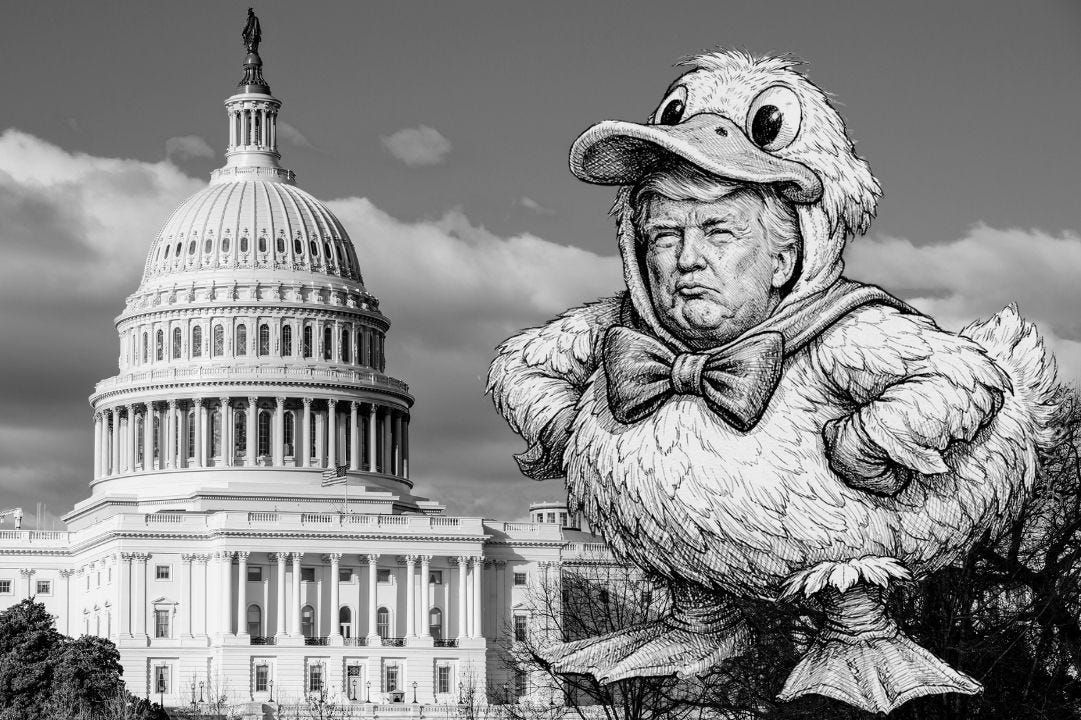
Trump remains president during the final two years of a second term, yet authority shrinks as funding tightens, turning that period into a lame duck presidency defined by firm limits rather than expansion.
The 2026 Midterm is Your Moment
Your vote chooses who writes spending bills. Your vote chooses committee leadership. Your vote shapes oversight. Midterm elections shift national direction without waiting four years.
Every election decides who guards the checkbook. Everyday Americans hold more influence through House races than through presidential contests during a second term. Local races set national limits.
Presidents dominate headlines. Legislators control funding. Voters decide legislators.
The Psychology Behind Control
Authoritarian behavior thrives when people feel helpless and confused, which drains engagement and breeds fear, and clarity reverses that dynamic by restoring a sense of agency. Understanding how spending authority works replaces anxiety with focus and shows where real control lives.
Control does not depend on spectacle or outrage, it depends on structure, and the Constitution provides that structure, Congress applies it through funding, and voters activate it through elections. Democratic repair begins with lawful restraint rather than dramatic confrontation, and money enforces that restraint quietly and effectively.
A New Way To See This Moment
Many Americans focus on personalities, yet systems determine outcomes. Trump holds one office, Congress represents millions, and spending authority turns public will into action.
Budgets may sound dull until abuse stops, and appropriations may feel technical until corruption loses oxygen, which is how democracy survives through mechanics used with resolve. This moment does not require a savior, it requires participation, and participation drives results.
What Comes Next
The 2026 midterms decide whether democracy regains balance. House control imposes immediate limits on executive overreach. Senate control deepens accountability.
Ask candidates how they will use spending authority. Demand answers on oversight. Share this knowledge with neighbors.
Your vote travels further than outrage. Your ballot controls money.
Final Thoughts
Every authoritarian impulse runs into the same reality. Congress controls federal spending. Congress answers to voters. Trump answers to budgets. Democracy still works when citizens engage with clarity because the Constitution still holds, and your participation turns its rules into enforcement.
Share this perspective, start conversations, show up, and vote.
Mitch Jackson, Esq.
Support Independent Journalism
Democracy does not protect itself and accountability does not happen on its own. If you believe your vote still matters and power must be checked, comment, share, and support this work so it stays independent and focused on what comes next.
EXAMPLE: Masked ICE Agents Pulling People Off The Streets in America Would Have Never Happened
What happened in 2025 did not happen because ICE decided on its own to move into cities. It happened because Congress paid for those operations.
ICE cannot deploy agents, rent facilities, contract transportation, or run coordinated city operations without appropriated funds. Every raid, task force, detention transfer, and surveillance operation requires money that Congress already approved in advance.
Now picture a different congressional reality.
If Democrats had held a majority in the House going into the 2025 budget cycle, large scale ICE operations in cities never would have launched. The House would have written the spending bill that funds the Department of Homeland Security. Inside that bill, lawmakers could have done three simple things.
First, they could have prohibited funding for interior immigration enforcement outside ports of entry. That single sentence would have barred ICE from operating in cities. Agents cannot act where Congress forbids spending.
Second, they could have blocked funding for detention contracts and transportation tied to city based operations. No buses, no planes, no private detention beds means no mass operations. Enforcement collapses without logistics.
Third, they could have required all immigration enforcement funds to flow only to border processing, asylum adjudication, and court staffing. That redirects activity away from raids and toward lawful processing. Agencies follow the money or they stop functioning.
Even if Trump ordered ICE into cities, the order would have meant nothing. Federal agencies cannot spend money Congress has not approved. Acting without appropriations violates federal law. Officials who do so risk criminal and civil liability.
This is why those operations did not begin spontaneously. They began because Congress had already written checks that made them possible.
With a Democratic House in place before the 2025 budget passed, ICE city operations would have remained ideas on paper. No funding. No deployment. No nationwide presence in local communities.
The president speaks. Congress funds. Voters choose Congress.
That is the chain of control most Americans never see.
There must be a plan to stop rigging!