

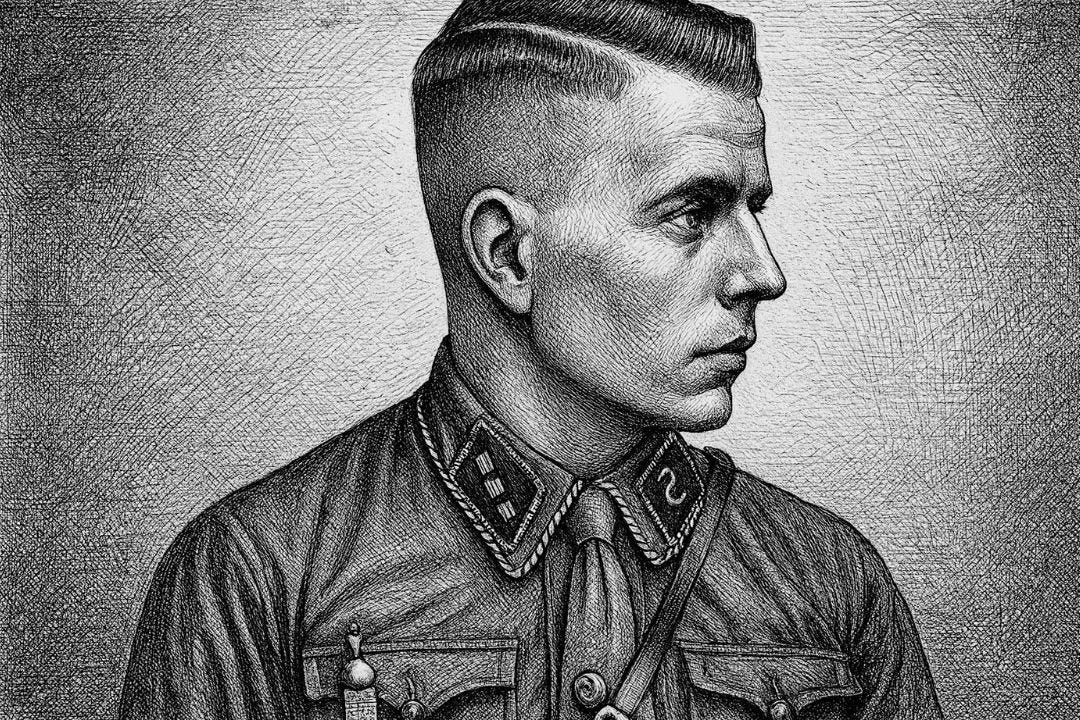
Horst Wessel was not a man of virtue. He was a devoted member of the SA, the paramilitary wing of the Nazi Party, and embraced the hatred that fueled their rise. Born in 1907, he fell into the violent, radical politics of Weimar Germany as a young man. He rejected moderation, joined the brownshirts, and became a street fighter for Adolf Hitler’s movement.
He marched with men who targeted Jews, communists, and anyone seen as standing in the way of Nazi ideology. His life was not one of honor or service but of advancing hate.
In 1930, Wessel was shot and later died of his injuries. His death might have remained a small footnote in the chaos of Berlin, the result of a personal dispute with a communist opponent. Instead, Joseph Goebbels, the Nazi propaganda chief, seized on Wessel’s death and transformed it into myth. He recast Wessel as a martyr who had given his life for the Nazi cause. Goebbels needed symbols to mobilize the masses, and Wessel’s murder became the raw material for a story of sacrifice and loyalty to Hitler.
Wessel had written a song, a marching anthem that glorified the fight for the Nazi movement. After his death, that song was renamed in his honor and became known as the Horst Wessel Lied. The Nazis elevated it into their official anthem, played at rallies, funerals, and state occasions. It became a weapon of influence.
Ordinary Germans heard it and were taught to connect their own struggles with Wessel’s supposed sacrifice. The story drowned out the truth of who Wessel really was and what he believed. His antisemitic outlook and violent politics were erased in favor of a manufactured legend of purity and devotion.
This is how propaganda works. It takes a flawed or misguided figure, strips away the reality, and presents a cleaned up image that people are urged to rally around. The Nazis built an entire myth around Horst Wessel, using his life and death as a rallying cry for tyranny. They knew that people are drawn to stories of martyrs, heroes, and those who appear to have died for a cause. They exploited that instinct to bind people to their movement.
The lesson is simple. Symbols are powerful, and once they take root they are hard to pull out. History shows us how easily truth can be buried beneath myth. We need to stay alert to the figures put before us today as models of patriotism and moral strength. The wrong symbol, elevated and repeated, can move a nation in a dangerous direction.
We cannot allow ourselves to be misled by the stories written for us by those in power. We must question who is being glorified, why their story is being told, and what purpose it serves. Wessel’s story is not just history. It is a warning.
Mitch Jackson, Esq. | links
Propaganda thrives in silence. Truth breaks it apart. No myths, no staged martyrs, no stories dressed up to serve the powerful. Only facts, laid bare for anyone willing to see them.
If this matters to you, subscribe for free and share it with others. If you choose to support with a paid subscription, you help keep the spotlight fixed on what is real. It will never be a condition. Because truth should never be rationed or spun. It belongs to everyone, and it is the only antidote to the lies we are told.

If you know/see (the parallel) of this article, you understand the importance of THIS message. Question "authority". Resist authoritarianism!