

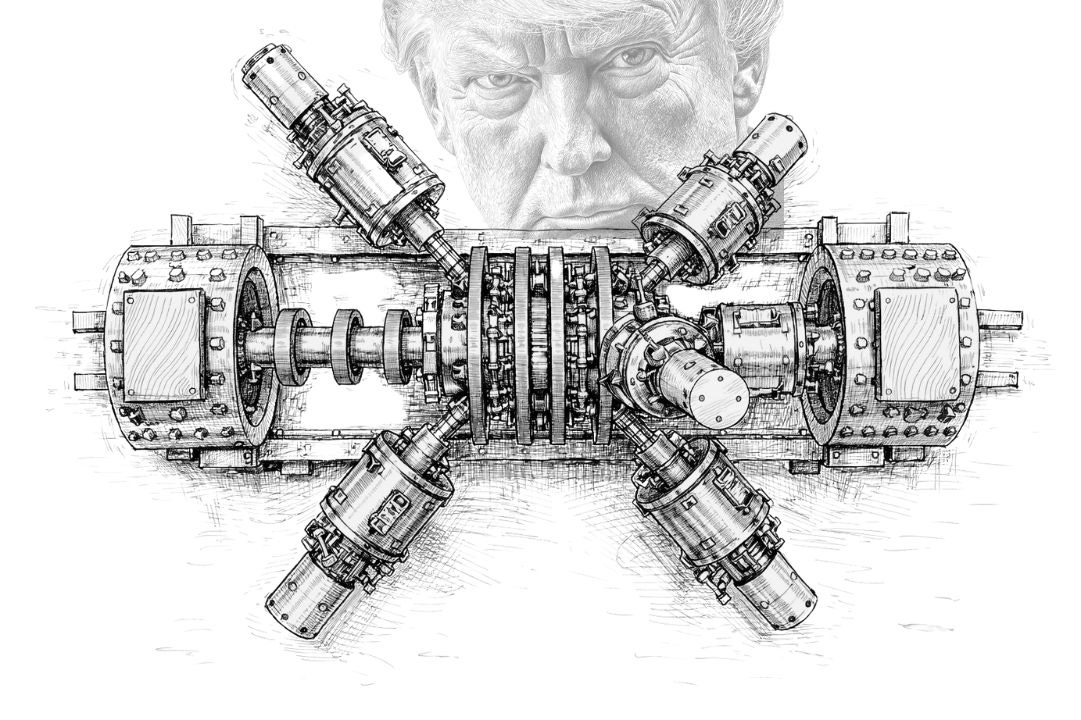
Imagine the President of the United States personally pocketing a half a billion dollar windfall overnight, completely within the bounds of the law. It sounds like a bad political thriller. It’s happening in real life.
President Donald Trump, now in his second term, is poised to profit enormously from a $6 billion deal that ties his private business interests directly to the federal government’s energy policy. As a lawyer and longtime advocate for ethical government, I feel an obligation to shine a light on this blatant conflict of interest. What’s happening in Washington right now is something every American needs to know about, because it strikes at the heart of who our leaders truly serve.
A $6 Billion Deal and an Instant Windfall
Trump’s media company, the parent of his social network Truth Social, stunned everyone when it announced a merger with TAE Technologies, a California-based nuclear fusion firm. The all-stock deal is valued at over $6 billion. Overnight, the mere announcement sent shares of Trump’s company soaring by roughly forty percent, instantly boosting the value of the President’s personal stake by around $500 million. By the end of that week, his share of the new venture was worth nearly $1.8 billion. To put it plainly, Donald Trump made almost half a billion dollars in a day, thanks to a business decision that will soon land on his own administration’s desk for approval.
This merger would create one of the first publicly traded fusion energy companies. Trump will be both its cheerleader and a major shareholder. As President, he oversees the regulators who must bless the deal. His government will influence which fusion projects get funding, permits, and support. And now he has a direct financial incentive to tilt all of that in favor of his own investment.
When the President Picks Winners
Nuclear fusion has been called the holy grail of clean energy: the process that powers the sun, potentially delivering limitless carbon-free electricity if it is harnessed. It’s a risky, expensive field still in experimental stages, heavily reliant on public funding and research support. More than two dozen fusion startups across America are racing to achieve this breakthrough. Some of these companies are further along in development than TAE. None of them have the President of the United States on their board of directors.
Investors aren’t blind to what that means. Trump’s involvement signals that TAE will have a friend in the White House. One veteran market analyst bluntly noted that the real value Trump’s company brings to this merger is political influence, essentially special access to power and the prospect of favorable treatment from the Trump administration. In plain terms, people are betting that the federal government will pour resources into the venture because the President stands to benefit.
It doesn’t take a crystal ball to see the danger. When the President picks a favorite, everyone else gets left in the cold. Fusion firms will live or die on support from Washington: through research partnerships, regulatory greenlights, and potentially billions in future subsidies or loans. If Uncle Sam’s generosity flows disproportionately to the company with “Trump” in its name, other innovators get starved of chances to succeed. The nation risks ending up with an energy solution chosen for political connections instead of technical merit. The public loses when competition becomes a rigged game.
Ethics Norms Broken
How is this even allowed? After all, if an Energy Secretary or any other federal official tried to enrich themselves from a company they regulate, they would end up in handcuffs. U.S. law bars federal officials from participating in matters where they have a financial interest. Incredibly, the President and members of Congress exempted themselves from these rules. In other words, what would be a crime for anyone else in government is technically legal for Donald Trump.
Legal doesn’t mean ethical. Every president since the Civil War understood that even the perception of divided loyalty is corrosive. That’s why, for generations, Presidents have taken pains to divest from their private business interests before or upon taking office. They put their assets in blind trusts or completely cut ties, ensuring that their policy decisions were not swayed by personal financial interests. President Trump has done the opposite. He has retained an empire of business interests: real estate, hotels, golf courses, a social media venture, and now high-tech energy, all while sitting in the Oval Office.
During his first term, we saw constant ethics concerns: foreign diplomats booking rooms at Trump hotels hoping to curry favor, political events hosted at his resorts, and countless questions about whether official decisions were aimed at the public good or the Trump Organization’s bottom line. Now, in his second term, he is doubling down. He shows no interest in separating himself from potential conflicts. He is actively intertwining his presidency with new profit streams.
Public Office, Private Gain
The nuclear fusion deal is the latest and most egregious example. Earlier this year, Trump and his family dove into cryptocurrency ventures. The Trump family amassed billions in crypto-related wealth as the President publicly championed digital assets and pushed policies friendly toward them. The Trump business portfolio has ballooned alongside the family’s political power. It’s a pattern that should alarm anyone who cares about fair government.
Trump’s defenders argue that he’s technically handed over control of his businesses. After winning the 2024 election, he nominally transferred his shares of Trump Media into a revocable trust. Guess who manages that trust? His son, Donald Trump Jr., who is also poised to sit on the board of the merged fusion company.
Let’s not kid ourselves: this arrangement is a thin smokescreen. Trump is still the beneficiary of the trust, which means any profit ultimately lands in his pocket. Putting assets under your son’s watch is not divestment. It’s a shell game. An ethics expert put it this way: saying you’ve given up ownership because your child holds the keys is like claiming you don’t own a house because someone else is managing the property. No one is fooled.
The White House has responded to criticism of this deal by flatly denying that any conflict of interest exists. In an official statement, the press secretary even claimed that neither the President nor his family “have ever engaged, or will ever engage, in conflicts of interest.” The audacity of that statement is stunning, and it flies in the face of reality.
We are watching a conflict of interest unfold in real time, as clear as day. Ethics watchdogs from across the political spectrum have sounded alarms, labeling the arrangement for what it is: an obvious conflict and a recipe for corruption. No spin from the White House will change the fact that the President is trying to serve two masters: the American people and his own bank account.
The Cost to Democracy
Why should everyday Americans care about this seemingly technical ethics saga? Because it strikes directly at the foundation of our democracy: trust. Democracy only works if public officials act in the public’s interest, not their own. When a President uses the power of his office to enrich himself, he betrays that sacred trust. It’s a form of self-dealing that ultimately leaves all of us worse off. Taxpayer money gets steered away from where it is most needed and toward whatever lines the First Family’s pockets. Policies meant to serve you and your community end up distorted to serve one man’s business empire.
This also tears at the unity of our country. Corruption is toxic. It breeds cynicism and division. Half the nation ends up believing the government is up for sale. They are not wrong to think so. The other half is told to ignore the obvious or dismiss it as savvy business. That’s a dangerous recipe for a fractured society. Every time leaders blur the line between public service and private gain, Americans lose a bit more faith in their institutions and in each other. We cannot afford to become a country where we expect politicians to be corrupt. The moment we normalize it, the American experiment fails. Hell, we might already be there.
I also think about the example this sets for our children and grandchildren. If the highest office in the land is openly used as a profit engine, they learn that public service is a scam and that honesty and duty are for suckers. That lesson would be a tragedy. We owe the next generation better than a government that operates like a personal business venture.
Time to Demand Better
It is easy to feel powerless in the face of such brazen behavior from the top. We are not helpless. Our democracy provides tools to address this, if we choose to use them.
Congress should immediately scrutinize this merger and any federal support flowing to it. Elected representatives, from both parties, need to hold hearings, demand transparency, and ensure that any funding for fusion research is awarded based on merit. It must not be steered by political connections. Some on Capitol Hill are already talking about strengthening oversight to guarantee that public funds benefit Americans instead of further enriching the Trump family. We need to turn that talk into action. And if this Congress refuses to act, we need to vote in this year’s midterms and make sure the new Congress does its job.
In the longer term, ethics laws must be strengthened. It’s outrageous that the President is exempt from conflict of interest rules. That loophole needs to be slammed shut so no future president will ever pull a stunt like this. We must push for stricter requirements that force presidents to fully divest from their businesses or put assets in truly blind trusts where they have zero control or knowledge. If that requires new legislation or even a constitutional amendment, so be it. Our republic’s integrity is worth the effort.
Most importantly, let’s remember that in a democracy the ultimate check on this kind of misconduct is us, the voters. Public pressure works. Sunlight and public outrage have the power to force even reluctant politicians to change course. Do not buy into the cynical notion that “politicians all do this” or “nothing matters.” It matters. You have every right to be angry that your President is treating the White House like an investment portfolio. Channel that anger into civic action: call your representatives, support watchdog groups, talk to your neighbors about why this is unacceptable. These conversations and actions are how we build momentum for change.
America has been through dark chapters before, and we have a knack for self-correction when enough citizens demand it. This moment demands it. Our economy, our standing in the world, and the health of our democracy itself are on the line when the President mixes personal profit with public policy. The damage being done now will take years to repair. The longer we wait to confront it, the harder it will be to undo. With enough voices insisting on accountability, we will course-correct.
There’s an old saying: “sunshine is the best disinfectant.” We must shine a light on this abuse of power until it cannot be ignored. We must insist that our leaders play by the same rules as the rest of us, rules that put country over self. The presidency should never be a get-rich-quick scheme. It’s time to reclaim the idea that the Oval Office is occupied by a public servant. It is not a seat for a business tycoon looking for his next big score.
If we succeed, we won’t stop at blocking one bad deal. We will be defending the basic principle that American democracy is not for sale.
Mitch Jackson, Esq.