

Let’s be real. The Bureau of Prisons doesn’t just shuffle around one of the most notorious inmates in the country on a whim. And yet here we are.
Fresh off a two-day, closed-door meeting with Deputy Attorney General Todd Blanche (not a run-of-the-mill prison visit) Ghislaine Maxwell is suddenly moved from FCI Tallahassee, a low-security women’s facility, to FPC Bryan, a minimum-security prison camp in Texas.
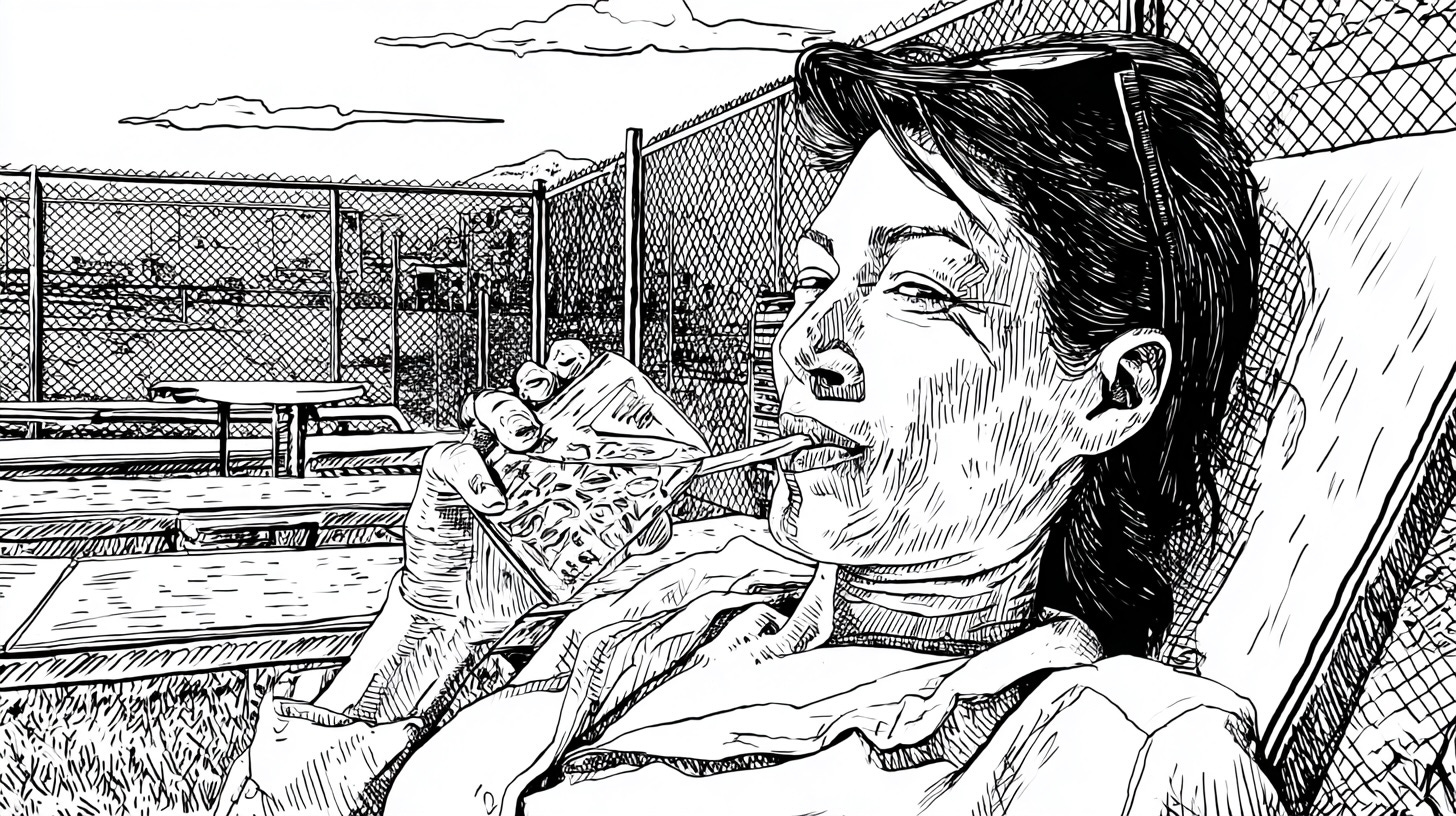
And now, in Bryan, Maxwell’s rubbing elbows with some of the biggest names in the white-collar inmate world, Elizabeth Holmes, Jen Shah, and other headline-makers who traded corporate boardrooms and red carpets for bunk beds and prison khakis. There’s no fence here, no razor wire, no looming guard towers. It’s an open campus where inmates can walk freely between dorms, the library, the rec yard, and the chow hall. In the federal system, this is as close as it gets to freedom without the gate actually swinging open.
Officially? No reason given. Unofficially? This is exactly how it looks when the Department of Justice decides someone has given them something they want, and now that person needs to be protected.
The lawyer in me believes this is how this almost certainly played out:
Step 1: The Meeting
Two days with the DAG is not casual. That’s time for deep debriefing, reviewing sensitive documents, or connecting dots on active investigations. If DOJ thinks you’ve got gold, they don’t cut you loose to walk back into the yard with the general population.
Step 2: The Protective Recommendation
When DOJ likes what they hear, they call the Bureau of Prisons’ Designation and Sentence Computation Center (DSCC) in Texas and flag you for a transfer. They don’t write “cooperating witness” on the form. They use coded language like “administrative transfer for safety and security” or “management variable: protection of inmate.” Translation, this person is now at risk.
Step 3: BOP Clearance
DSCC runs your custody score, factoring in age, time served, disciplinary record, and any separation orders, to see if you can drop to minimum security. For Maxwell, the answer was probably yes. Once that’s decided, DSCC fast-tracks the order. In cooperation cases, they can move you in days, not weeks.
Step 4: Logistics and Secrecy
These moves are done quietly. The destination is kept under wraps until you’re already on the bus, and even the staff at the sending prison often get a “bed space” or “program need” cover story so the real reason never leaks.
Step 5: The New Home
FPC Bryan is a different world from Tallahassee. Open campus, no high fences, far less violence, and far more control over who you see and speak to. In the prison world, this is the safest environment the feds can offer without sticking you in solitary or witness protection.
Step 6: The Silence
The Bureau of Prisons says nothing. The DOJ says nothing. The public is left with a shrug and a “routine transfer.” Inside the BOP’s SENTRY system, though, there’s a code, one that almost certainly ties this move to safety after cooperation.
So is this a coincidence? You can believe that if you want, but after decades in the legal system and watching how the feds actually operate, I’ll tell you straight: high-profile, high-risk inmates do not get moved to the cushiest camp in the system days after meeting with the second-highest law enforcement official in the country unless something happened in that room that changed the game.
If you know how to read between the lines, this is the Bureau of Prisons telling you something without ever saying a word. And it should make you wonder, not just what Maxwell told them, but who it might be about.
Mitch Jackson, Esq. | links
No paywall. No barriers. Just the truth, wide open for anyone who needs it.
If this hits home, subscribe for free and share it. Want to pitch in with a paid subscription? Amazing. But it’s never expected. Because facts shouldn’t be gated, they should be loud, clear, and accessible to all.

So, what type of information do you think she proffered, Mitch?
Is it possible that IF she mentioned Trump and anything he did that was unseemly, criminal, at all, she would have been moved to a lower-grade, more protective and cushier prison such as this one? Frankly, I don't believe anything she might have said would even be truthful. And, I think moving her to a cake-walk prison is a slap in the faces of ALL her victims.
I also think, as many do, that a DEAL was already made such that, upon entering the interview room, he TOLD HER "NOT TO MENTION Trump's NAME, and we'll get you out of here". I read that he, the Deputy AG, could have said such a bold condition in that meeting room, because there was no video playing, no note-taker in the room, and no audio recording. They were alone, and he was allowed to make whatever BRIBE he and Trump drummed up with no repercussions.
I think it is a travesty of justice that they even moved her to a better prison. And, I am afraid that this is just the first step in her eventually GETTING PARDONED by the 34-count felon.
But, please tell me if I am way off, if you agree, and/or any other light you can shed.
Thanks!