

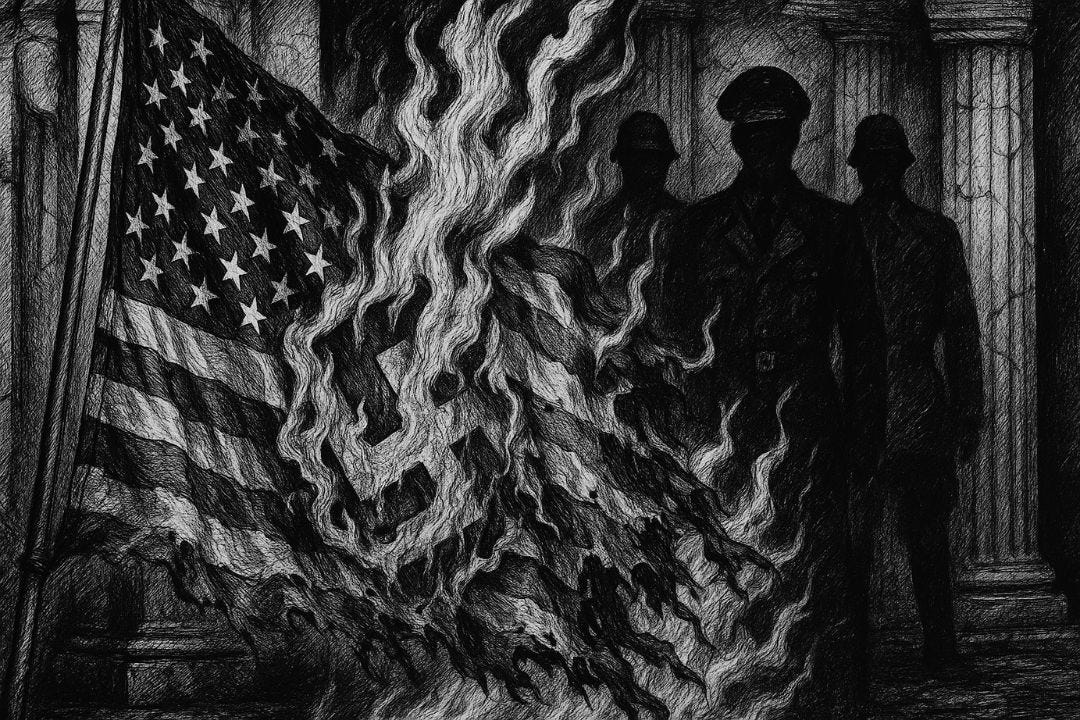
What Antifa Stands For
The word “Antifa” comes from anti-fascist. It describes a loose network of activists and groups who oppose fascism, white supremacy, and far-right authoritarian movements.
Let me say that again. Antifa is about one thing, standing up against fascism, white supremacy, and far-right authoritarian power.
It is not a centralized organization, not a formal political party, and not a single membership-based group. Instead, it is more of a broad label for individuals and small collectives who use direct action, protests, and sometimes confrontational tactics against groups they identify as fascist or extremist.
Historically, Antifa in the U.S. was a niche movement, more active in Europe against neo-Nazi groups. It gained visibility in the U.S. after the 2017 Unite the Right rally in Charlottesville, where everyday Americans, with the help of Antifa activists, physically confronting white supremacists, neo-Nazis, and far-right militia members. I’m sure you remember Charlottesville, where a neo-Nazi drove his car into a crowd of counter-protesters, killing Heather Heyer and injuring many others. The same event where Trump claimed “there were very fine people on both sides.”
Antifa’s core philosophy is opposition to authoritarianism, racism, and far-right extremism. In the United States, this has primarily meant counter-demonstrations against neo-Nazis, white nationalists, and groups connected to far-right militias.
The idea behind Antifa is that it fills a vacuum when governments and institutions fail to protect communities from racist violence and organized extremist groups. They see Antifa as a defensive movement standing against fascism and white supremacy.
From what I’ve seen and the people I’ve talked to during Trump’s second term, it’s hard not to think we need more organized counter-demonstrations against neo-Nazis, white nationalists, and far-right militias. Maybe it’s just me, but standing up to hate shouldn’t feel like a radical idea.
Critics point out that some Antifa activists have engaged in vandalism, property damage, and physical confrontations at protests. Because of this, they are often portrayed in media and by political opponents as violent agitators. See for example this physical confrontation..
Wait, this weren’t Antifa. These are government ICE agents taking a mother into custody. My bad.
How Trump Changed the Meaning of Antifa
The Trump administration played a major role in reshaping public perception of Antifa.
Trump repeatedly labeled Antifa as a domestic terrorist threat. His administration used “Antifa” as a political catchall to describe left-wing protesters, Black Lives Matter activists, and broader opposition movements. This blurred the distinction between peaceful protestors and the small minority of confrontational activists.
In other words, while Antifa historically meant “anti-fascist resistance,” during the Trump years it was rebranded by right-wing MAGA political rhetoric into a symbol of the “radical left” and a scapegoat for unrest.
Today in Trump’s world, this is considered legal and patriotic.
While associating with Antifa, which has been twisted by the Trump administration to mean chaos, riots, and violent extremism, is frowned upon.
Here’s the question you have to ask yourself: how is it that protests against hate get vilified, while violent federal crackdowns in our cities by ICE agents and others, that we see every single day, are framed as acceptable?
The Facts Matter
This is where critical thinking matters. Don’t let anyone condition you to believe that questioning authority or standing up to hate is the real danger. The very thing the Trump administration tells you is dangerous is exactly what they’re doing every single day in cities across America.
If you want to protect your freedom, you’ve got to start seeing through the noise, reflecting on what’s really happening, and asking yourself who benefits when truth gets twisted and resistance gets demonized.
Mitch Jackson, Esq.