

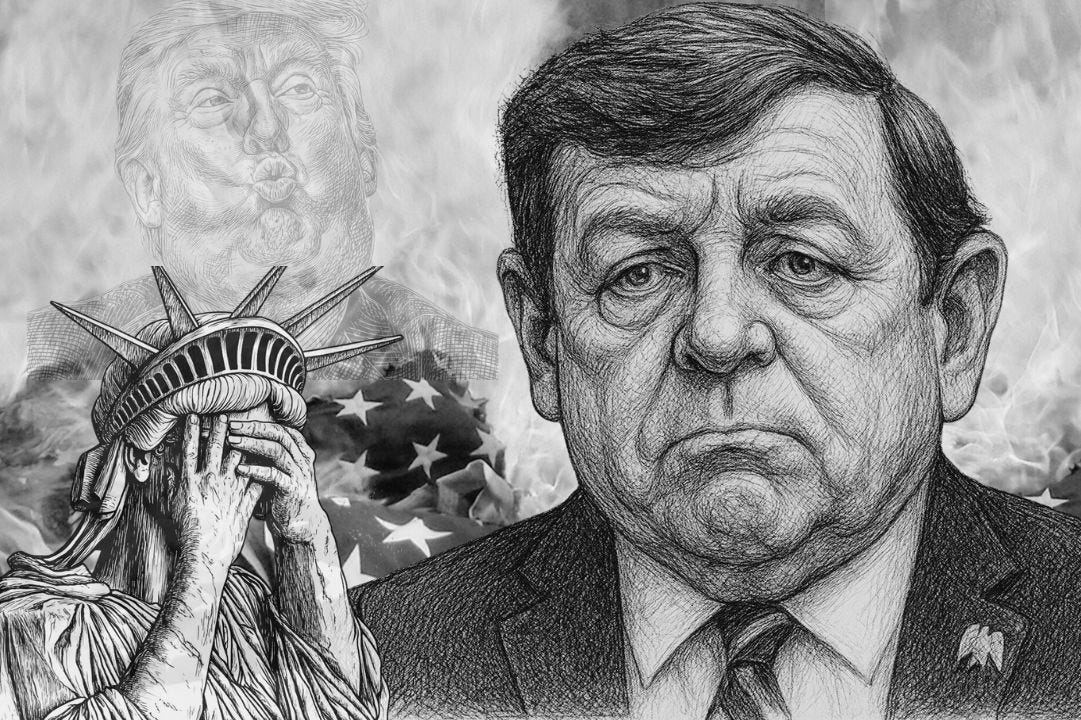
Power inside the justice system never slips away loudly, power gets handed to unqualified loyalists while attention drifts elsewhere. Read this piece, then decide whether silence still feels safe when control of the Department of Justice lands in the wrong hands.
Here is the question every American voter deserves to ask right now. Who holds real power inside the federal government today, and who decided to hand it to them. Most people focus on Cabinet members and judges. Fewer people look at the political operatives quietly placed inside the Department of Justice. One name matters more than most. Ed Martin.
Here is the part you probably have not heard yet. This role reaches into politically sensitive investigations and federal clemency decisions during a moment when democratic guardrails feel fragile. The surprise sits in plain view. This individual reached that position without the experience normally expected, without Senate confirmation, and without meaningful public accountability.
The promise of this piece is simple. You will understand who Ed Martin is, why his background raises serious alarms, and why silence around this appointment carries real risk. I write from the perspective of a lawyer who has spent decades watching how power gets abused when the public looks away. This moment deserves your attention.
Ed Martin Holds Power Without Preparation
Ed Martin occupies a position of authority inside the federal justice system without meaningful prosecutorial experience. He has never served as a federal prosecutor. He has never tried a criminal case. He entered the upper ranks of the Department of Justice without the professional grounding typically associated with decisions tied to charging authority, sentencing consequences, and civil liberties.
This gap matters because prosecutorial power reaches deeply into the lives of real people, shaping families, futures, and public trust in ways most citizens never see up close. That kind of authority demands restraint learned through experience, judgment formed through training, and responsibility reinforced by oversight, none of which anchored Ed Martin’s rise inside the justice system.
Authority inside the Department of Justice demands professional discipline and respect for constitutional limits. Elevating someone without those qualifications places pressure on safeguards designed to protect ordinary Americans from politicized enforcement.
A Record Defined by Legal and Ethical Conflict
Ed Martin’s professional history includes repeated clashes with legal and ethical boundaries. During his tenure in Missouri government, a major public records scandal unfolded. Court filings and litigation alleged that he ordered staff to delete emails to keep them from public disclosure. State officials denied the existence of records that later surfaced through backups. The episode produced years of litigation, public expense, and settlements.
This history matters because records laws exist to protect transparency. Public service carries obligations, not privileges. Allegations of intentional evasion signal risk when placed inside a justice system built on disclosure and accountability.
Additional disputes followed after a conservative organization terminated his leadership role amid internal conflict. The fallout moved into court, where judges found him liable for defamation based on false statements made about colleagues. During that same dispute, he was held in civil contempt for willful disregard of court orders.
Court records further describe actions that crossed professional norms. Reporting and filings indicate he secretly orchestrated and ghostwrote social media attacks aimed at the judge handling his case. Pressuring or discrediting a sitting judge through covert public campaigns strikes at the heart of judicial independence.
Patterns shape behavior under stress. Repeated disregard for legal boundaries does not fade with promotion. It follows the individual into positions of greater power.
Alignment With Election Denial and Extremist Narratives
Ed Martin publicly aligned himself with election denial efforts following the 2020 presidential election. He promoted Stop the Steal rhetoric. He echoed claims that undermined confidence in lawful electoral outcomes. These actions mattered then. They matter now.
Democracy relies on shared acceptance of verified results, a foundation that allows a diverse nation to function with trust and legitimacy. When leaders amplify false claims, they weaken civic stability, corrode public confidence, and invite division that lingers long after the headlines fade.
His conduct surrounding January 6 reinforces these concerns. He represented and supported individuals charged in connection with the Capitol attack. He embraced the broader Stop the Steal ecosystem surrounding the events of that day. Public defense of those narratives normalized conduct aimed at disrupting constitutional transfer of power.
The justice system depends on legitimacy. When officials tasked with upholding the law endorse movements built on falsehoods, the damage spreads beyond politics into the rule of law itself.
Associations That Deepen the Alarm
Public associations add further context. Ed Martin praised a Capitol riot defendant later described in reporting as espousing white supremacist and antisemitic ideology, including imagery involving a Hitler mustache. Public praise of such individuals reflects judgment failures that matter when entrusted with federal authority.
He also appeared within circles known for conspiracy promotion and misinformation. Engagements tied to figures who profit from outrage and distortion placed him within a media ecosystem hostile to democratic norms.
Repeated appearances on Russian state television further raised concern. He appeared more than one hundred times on platforms widely recognized as foreign propaganda outlets. These appearances went undisclosed during initial congressional review, with disclosures arriving only after scrutiny intensified.
Transparency exists to protect democratic accountability. Omission erodes confidence. Foreign propaganda networks seek to destabilize democratic societies by amplifying division and distrust. Participation without full disclosure raises questions every citizen deserves answered.
Sidestepping Constitutional Oversight
Senate Republicans declined to confirm Ed Martin as United States Attorney for the District of Columbia. That decision reflected bipartisan concern about his qualifications and conduct. Instead of stepping away from federal authority, a workaround followed. He was placed into senior Department of Justice roles that did not require Senate confirmation.
This maneuver bypassed a core constitutional safeguard designed to protect the public from unqualified or extreme appointments through advice and consent. Avoiding that process weakens democratic structure and erodes public trust.
This pattern fits a broader theme during Trump’s second term. Loyalists replace professionals. Ideology overtakes expertise. Accountability erodes through procedural shortcuts. The consequences ripple outward through agencies meant to serve the public, not a political movement.
The Department of Justice holds unique power. Political loyalty inside this institution threatens equal application of the law. History offers clear warnings about justice systems shaped by ideology rather than principle.
I’m not alone in my concerns. See how former pardon attorney for the Department of Justice, Liz Oyer, refers to Martin as one of the most dangerous people in America. As DOJ’s “weaponization” director and Pardon Attorney, she believes he is using the justice system to carry out Trump’s revenge agenda. In her video below, she points out that Martin is dangerously unqualified yet wields enormous power.
Why This Matters to You and Your Family
These developments reach far beyond Washington. Prosecutorial decisions affect voting rights, protest protections, sentencing outcomes, and civil liberties. Families experience consequences through lost income, disrupted futures, and fractured communities.
Children and grandchildren inherit the systems adults choose to defend or neglect. Weakening democratic norms today reshapes freedoms tomorrow. Silence teaches permission. Engagement teaches responsibility.
Trust in law binds a diverse nation together. When justice appears partisan, faith dissolves. Rebuilding trust requires years of effort. Preventing damage costs far less than repairing it later.
Naming the Risk and Refusing Silence
Public accountability begins with awareness. Ed Martin represents a case study in how unchecked power enters government quietly. Refusing to look away strengthens democratic health. Speaking openly disrupts normalization of conduct that endangers shared values.
Contacting representatives matters because accountability does not appear on its own, and demanding transparency keeps power from retreating into the shadows, while conversations within families, workplaces, and communities create the shared awareness that allows public pressure to shape outcomes when applied consistently and visibly. Democracy survives through participation that extends beyond a single vote, because engagement between elections sustains accountability, words shared carry real weight, and silence allows consequences to take root unchecked.
A Clear Ending With Purpose
You deserve leaders who respect the Constitution, honor truth, and protect justice for everyone. Ed Martin’s presence inside the federal justice system undermines those principles. Awareness marks the first step. Action follows awareness.
Speak up. Share this information. Ask questions. Demand better. Democracy survives when ordinary people refuse to accept quiet erosion of rights and norms. The future depends on citizens willing to stay present, informed, and unafraid to hold power accountable.
Mitch Jackson, Esq.
Thank you for reading Uncensored Objection. This is a reader supported publication. To support my work and our community, and for the full experience, consider upgrading your subscription to premium.