

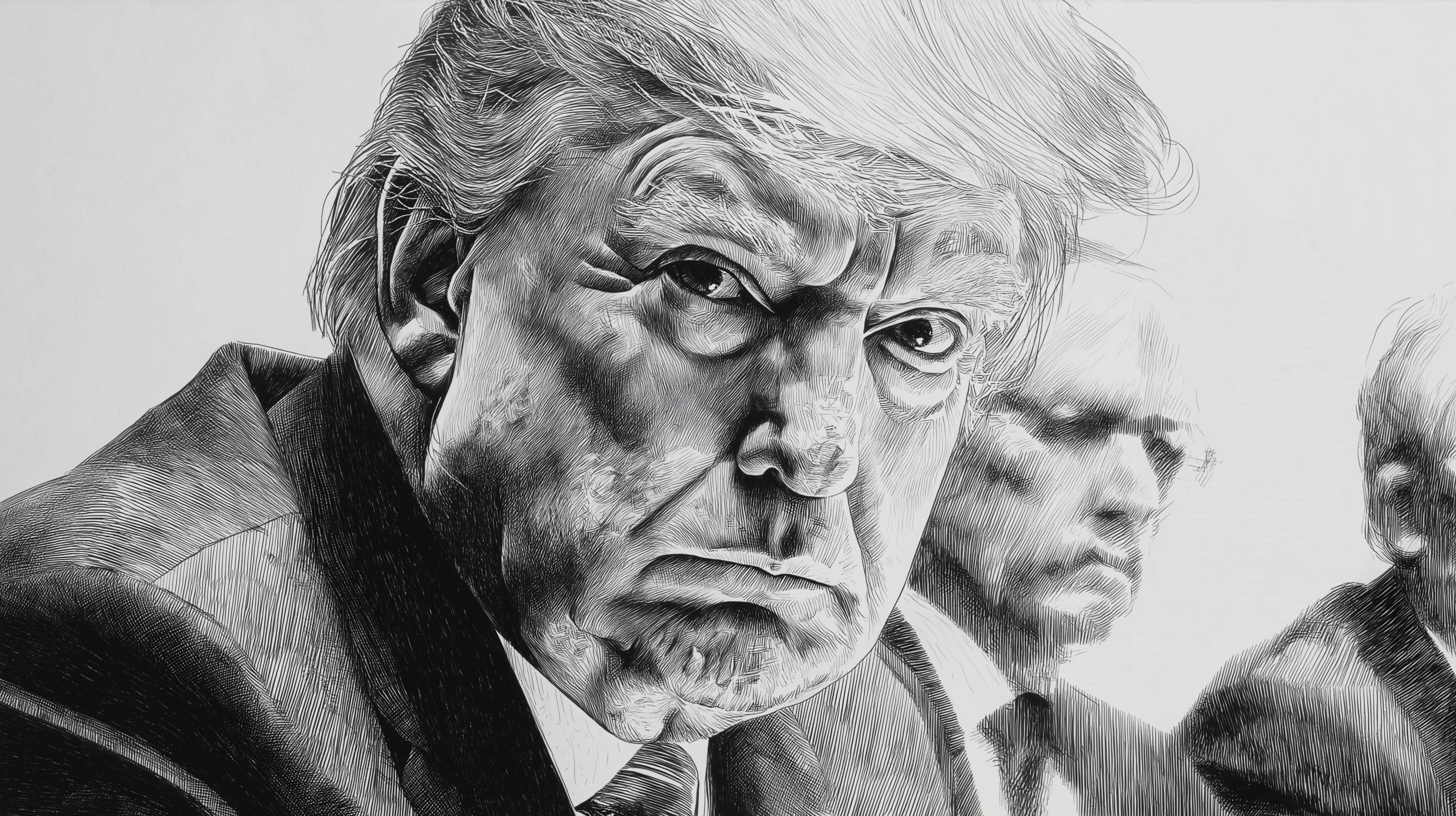
The next time someone claims this wasn’t a “real” criminal case, share this post with them. They’re either misinformed or echoing political talking points designed to mislead. This wasn’t theater. It was a real prosecution, in a real courtroom, decided by twelve ordinary citizens under the law.
The official name of the case is The People of the State of New York v. Donald J. Trump and the case/indictment number is IND-71543-23. It was issued by a grand jury in the County of New York (Manhattan). You can read all 16 pages here.
CONTEXT MATTERS: It matters who you listen to. I’m not a news network selling advertising to people who wear red hats. I’m a trial lawyer with 40 years in the trenches. Someone who’s tried more cases to verdict than most attorneys in America.
I wish none of this was happening. I wish we could all just live our lives. But when I see lies, gaslighting, and misinformation spreading like wildfire, I can’t stay quiet.
I know the law. I know the system. And I know it’s time to stop letting noise and stupidity drown out reality.
The Early Investigation
Before an indictment is filed, a prosecutor’s office must build a factual and legal foundation. In this case, the Manhattan DA’s office began probing allegations surrounding hush-money payments and related business-record entries tied to Stormy Daniels (and potentially others).
Investigators issued subpoenas, collected thousands of documents (invoices, ledger entries, checks), interviewed witnesses (e.g., lawyers, accountants), and reviewed corporate books of the Trump Organization and related entities.
They assessed whether any entries in business records appeared false, whether the entries were made with intent to defraud, and whether there was an underlying separate crime (a key element to elevate a misdemeanor falsifying business records into a felony under New York law) — i.e., did the entries conceal or facilitate another crime?
They waited until the investigation had developed enough evidence that they believed probable cause existed to present to a grand jury, meaning they were satisfied (or at least sufficiently so) that the key elements of the alleged crime (false entries, intent to defraud, intent to commit or conceal another crime) were supported by the evidence.
This careful build-up ensures that when the case goes to the grand jury, the prosecutor is offering a well-packaged presentation of facts and law.
The Prosecutor
The lead prosecutor was Alvin Bragg, the District Attorney for Manhattan. Before becoming the DA in 2022, he had been an assistant attorney general at the New York State Attorney General’s Office and an assistant U.S. attorney for the Southern District of New York. He also had served as chief of litigation and investigations for the New York City Council. He graduated from Harvard law.
The Grand-Jury Presentation and Role
Once the prosecutors believe they have a viable case, the next major procedural step in this kind of New York state prosecution is presenting the matter to a grand jury. Here’s how that likely played out:
A grand jury in Manhattan was convened to hear evidence presented by the DA’s office. The role of the grand jury is to determine whether there is probable cause to believe that a crime has been committed and that the defendant committed it. It is not a trial, but a screening device.
Prosecutors present to the grand jury. This includes witness testimony, documents, physical evidence, summaries of key facts, and legal instructions about the elements of the crime. The defense does not present in most cases; the defendant typically does not testify, and the grand jury proceedings are secret.
In this case, the indictment states “[t]he Grand Jury aforesaid, by this indictment, further accuses the defendant …” which signals that the grand jury returned the indictment.
The office’s decision to proceed indicates that the grand jury found sufficient probable-cause to indict on 34 counts of felony falsifying business records. Once the grand jury returns an indictment, the case moves to arraignment, and the criminal process begins (pre-trial motions, trial, etc.).
Because the indictment covers 34 separate counts, each tied to specific dates, entries, checks, invoices, etc., it shows that the prosecution considered individual circumstances, not just a broad brush. The inclusion of the aggravating factor (“intent to commit or conceal another crime”) shows that the office evaluated potential underlying criminality (election law violations, campaign-finance issues, tax concerns) alongside the false-entry issue.
Public statements pointed out that the prosecutor’s office “follow[ed] the facts and the law without fear or favor” reflect a posture that they did not rush ahead until satisfied. Also, media timelines show that this investigation spanned years, with pauses and internal deliberations, underscoring that the office weighed the evidence.
While the grand jury only needs probable cause (a lower threshold than proof beyond a reasonable doubt), the fact that the case moved forward signals the prosecutors believed they had a strong factual basis.
The Specific Charges
Trump was indicted on 34 counts of Falsifying Business Records in the First Degree, in violation of New York Penal Law § 175.10.
The counts allege that he made or caused to be made false entries in business records of an enterprise (specifically the Donald J. Trump Revocable Trust and/or “the Trump Organization”) with the intent to defraud and to commit or conceal another crime such as (1) Violations of New York election laws or campaign-finance laws (e.g., improper contributions or expenditures); (2) Tax violations (mis-characterising payments to evade tax or hide deductible/non-deductible items) and (3) Potential other underlying frauds (including business-record/financial mis-representations). 1
In this case this included the false entries related to payments and reimbursements connected to a hush-money payment made to adult-film actress Stormy Daniels, which the prosecution alleges were disguised as legal expenses but were actually reimbursements related to that payment.
The time-period for many of the alleged false entries is around February 14, 2017 (and other dates through 2017) as examples in the indictment show.
Burden of Proof
In any criminal case, the burden of proof sits squarely on the shoulders of the prosecution. In this case that is the Manhattan District Attorney’s Office.
The defendant, Donald Trump, has no obligation to prove anything. None.
He’s presumed innocent from start to finish unless the prosecution can convince twelve jurors beyond a reasonable doubt that he is guilty.
That phrase, beyond a reasonable doubt, isn’t just courtroom poetry. It’s the highest standard of proof in our entire legal system, and it exists for one powerful reason: to protect people from being wrongly convicted.
Think of it like this. Civil trials use “preponderance of the evidence.” That means “more likely than not.” (51% certainty, or a slight tipping of the scales, gets you over the line.)
Criminal trials use “beyond a reasonable doubt.” That’s not 100% certainty, but it’s very close. Jurors must feel firmly convinced of guilt after considering all the evidence.
The DA doesn’t just have to show that business records were false. They must prove every single element of the charge under New York Penal Law § 175.10:
The defendant made or caused a false entry in business records.
He did it intentionally.
He did it with the intent to commit or conceal another crime.
If jurors have a reasonable doubt about any one of those elements, the law requires them to acquit. Period.
Now, keep in mind that “reasonable doubt” is not a flimsy or imaginary doubt. It’s not an emotional hesitation. It’s a doubt based on reason and common sense, grounded in the evidence, or lack of it.
Jurors aren’t expected to be perfect, but they are expected to be rational.
If something in the prosecution’s story doesn’t add up, if a witness seems unreliable, or if the paperwork leaves room for interpretation, that’s where “reasonable doubt” enters the picture.
During deliberations, jurors look at each count, all 34 of them, individually. They go through the evidence: checks, invoices, internal memos, testimony.
They ask:
Does this prove the record was false?
Does it show intent?
Does it show an effort to conceal another crime?
Only when all twelve agree that the answer is yes beyond a reasonable doubt, can they convict on that count. If even one juror says, “I’m not fully convinced,” that’s a problem for the prosecution.
Keep in mind that the burden of proof isn’t just a legal technicality. It’s the moral backbone of our justice system. It forces prosecutors, whether it’s Alvin Bragg or anyone else, to build airtight cases.
It reminds jurors that convicting someone is serious, life-changing business. And it reinforces a truth that should never be forgotten. In America, guilt is proven. Innocence is presumed. Always.
The Judge
Judge Juan M. Merchan is widely respected within New York’s judiciary for his integrity, intellect, and steady command of the courtroom. A graduate of Baruch College and the Hofstra University School of Law, he has served on the bench for nearly two decades, presiding over some of the state’s most complex and high-profile criminal cases with distinction. Before his judicial appointment, he worked as an Assistant District Attorney in Manhattan and later as a Deputy Assistant Attorney General in the New York State Attorney General’s Office. Judge Merchan’s record has earned him recognition from multiple bar associations for fairness, professionalism, and excellence in judicial service, a reputation built on diligence, impartiality, and deep respect for the rule of law.
Who Defended Trump
The lead defense attorney was Todd Blanche, a former federal prosecutor turned white-collar defense lawyer. He attended Brooklyn Law School and was a prosecutor in New York’s Southern District and co-chief of its violent crimes unit and the White Plains division. He worked on cases related to bank and wire fraud, public corruption, and racketeering. Supporting him on the defense team were lawyers such as Susan Necheles and Emil Bove. Blanche is now the United States Deputy Attorney General.
The Jury Selection Process
Here’s how jury selection unfolded in the case.
A large pool of prospective jurors in Manhattan was summoned to serve. In New York the pool is drawn from registered voters, drivers’ licence or ID holders, tax filers, etc., to produce a cross-section of the community.
Potential jurors filled out questionnaires about basic eligibility (age, citizenship, residence, felony record) and also about background, media consumption, views, etc. For this trial, the court emphasised questions about whether potential jurors believed they could set aside opinions about Trump and judge purely on evidence.
During voir dire, both the prosecution and the defense asked questions of the pool, and the judge oversaw the process. For example, the judge asked: “Can you serve and be fair and impartial?”
Prospective jurors who said they could not set aside strong opinions about Trump or believed they couldn’t be impartial were dismissed. This basic question is given simply as an example. Almost every question you can think of and that you would want your lawyer to ask the potential jurors was asked. Follow-up questions were asked. Every detail was discussed before jury selection was finalized.
During this process, either side could ask that a particular juror be removed if there was a clear bias or inability to serve impartially; the judge decides. Each side had a limited number of juror removals without stating a particular cause. In this trial, both sides had up to 10 peremptory strikes.
Ultimately 12 jurors plus a number of alternates (traditionally 6) were selected. The jury was sworn in and the trial commenced once the panel was seated.
Here are several key reasons one can reasonably conclude the jury selection process was designed to, and did, produce a fair and impartial jury. First, the judge’s explicit emphasis on fairness and impartiality. The presiding judge, Juan M. Merchan, asked potential jurors directly if they could serve fairly and impartially, and required those who felt they couldn’t to step away.
Next, because this was a high-profile case involving a former president, special care was taken to identify strong opinions. For example, potential jurors were asked about their news consumption, whether they followed Trump-related content, whether they believed they could judge on evidence only.
The defense and prosecution both had tools (peremptory and for-cause challenges) to remove jurors who seemed biased or unsuited, thereby reinforcing impartiality. What also gets lost in the noise that that jury selection procedures are designed under state law to ensure jurors represent a cross section and are unbiased. The underlying constitutional right to an impartial jury (under the Sixth Amendment) applies. In fact, major news outlets reported that many prospective jurors were dismissed early because they said they could not be impartial.
Trial Testament & Evidence Presentation
Jury selection began around April 15, 2024 in Manhattan and the verdict was returned May 30, 2024. Therefore the trial spanned approximately six to seven weeks from the start of jury selection to verdict.
Beginning late April versus early May 2024: Key witnesses testified. For example, around April 30, 2024, witnesses such as the attorney for the adult-film actress and others testified. On May 7, 2024, was Stormy Daniels testimony. Trump’s former lawyer testified on May 13, 2024. The prosecution rested its case after calling about 20 witnesses.
On May 21, 2024, the defense rested. On May 29, 2024: Jury deliberations began. The jury asked to rehear testimony (about 30 minutes of read-back) on a key witness.
On May 30, 2024, the verdict was delivered. Trump was found guilty on all 34 counts.
After the verdict, the sentencing date was scheduled (and then postponed) to a date after the election period. Various post-trial motions were filed: motions for acquittal, motions to delay sentencing, appeals matters began.
The Jury’s Verdict: Guilty on All 34 Counts
As mentioned above, on May 30, 2024, after two days of deliberations, the jury found Donald J. Trump guilty on all 34 felony counts of Falsifying Business Records in the First Degree under New York Penal Law § 175.10.
Every single count.
Each charge corresponded to a specific false entry, things like checks, invoices, and ledger records tied to reimbursements for hush-money payments during the 2016 campaign.
Twelve New Yorkers sat through weeks of testimony, stacks of documents, and hours of legal instruction. They didn’t rush. They asked for read-backs of key testimony. They followed the law. And when they came back into that Manhattan courtroom, their message was unanimous: guilty beyond a reasonable doubt on all counts.
This is important:
A “guilty” verdict on § 175.10 means the jury concluded three things for each count:
A false entry was made in a business record.
It was made intentionally.
It was done to commit or conceal another crime.
That third piece, intent to conceal another crime, is what elevated these from misdemeanors to felonies. The prosecution argued those false records were meant to hide violations of state election and tax laws.
After the verdict, Judge Juan Merchan thanked the jurors for their service and released them from duty. Trump’s legal team immediately announced plans to appeal.
Sentencing was originally scheduled for July 11, 2024, then postponed pending post-trial motions and appeal issues.
Current Status
On May 30, 2024, a jury found Trump guilty on all 34 felony counts of falsifying business records in the first degree.
That makes him a convicted felon under New York law.
After the presidential election and before Trump was sworn into office, on January 10, 2025, Judge Juan M. Merchan entered a sentence of an unconditional discharge, meaning Trump received no jail time, no fine, and no probation despite the felony conviction. The conviction stands, but there’s no punishment beyond the felony record itself.
Trump continues to seek to move the appeal from state court into federal court, arguing for presidential immunity and for removal of the case to federal jurisdiction. A hearing in the U.S. Court of Appeals for the Second Circuit took place.
As of now, the conviction stands. It has not been overturned. The appeal process is ongoing.
So what does all of this mean right now? Well, Trump is a convicted felon (unless/until the appeal reverses the verdict). However, he currently faces no incarceration, no fine, no probation for the conviction (because of the unconditional discharge).
He remains free and his rights are largely intact, though his felony status may have legal consequences (e.g., firearm possession laws, supervision requirements) in New York. And the legal fight is not over: the appeal could potentially change things. If the conviction is reversed or sent back for a new trial, this status could shift.
No, This Wasn’t a “Weaponized DOJ.” It Was New York Justice, Plain and Simple.
Let’s clear something up once and for all. The case that convicted Donald Trump wasn’t brought by the Department of Justice. It wasn’t federal. It wasn’t Washington pulling strings.
It was a state case, run entirely by New Yorkers, under New York law.
The Manhattan District Attorney’s Office is not part of the federal government. It doesn’t take orders from the DOJ, the White House, or anyone in D.C. The Manhattan DA is an elected state official who answers only to the citizens of New York County, not to the President, not to Congress, and not to the federal system at all.
Here’s how it actually worked. Local investigators gathered evidence. A local grand jury, made up of everyday New Yorkers, reviewed that evidence and decided there was enough to indict. And a trial jury of twelve New Yorkers listened to testimony, reviewed documents, and reached a unanimous guilty verdict on all 34 felony counts.
That’s not political theater. That’s how justice works in this country. Local people. Local process. Local verdict.
So when someone says this was a “weaponized DOJ,” remember this: that’s like saying the Manhattan District Attorney takes orders from the Attorney General of Florida. It makes zero sense. The two have nothing to do with each other.
This wasn’t a hit job. It was accountability delivered through the system our founders designed, one that’s meant to be separate from politics, and powered by citizens, not politicians. And in this case, those citizens spoke loud and clear.
The Bottom Line
Twelve ordinary citizens, not politicians, not pundits, looked at the evidence and applied the law. That’s how our system works.
Trump is a 34-time convicted felon who now occupies the Oval Office.
You can disagree with the politics. You can debate the strategy.
But the verdict itself?
It was unanimous. It was deliberate.
And it came from the only voices that mattered in that courtroom — the jury.
Mitch Jackson, Esq.
Subscribe
If this kind of journalism matters to you, you can subscribe for free and help more people find it. If you’re able to support it with a paid subscription, that’s deeply appreciated. But it’s not required. The truth lives here, and it stays free. Because some things are just too important to hide.

The prosecution of Donald Trump under New York Penal Law § 175.10 was not only appropriate but legally inevitable if the rule of law means anything at all. Start with the raw numbers: New York has arraigned nearly 10,000 cases under this statute since 2015, the Manhattan DA’s office alone prosecuted 437 such cases in the decade before charging Trump, and DA Bragg himself had already brought 117 felony counts against 29 other defendants in his first 14 months in office, making this, in his own words, the “bread and butter” of white-collar enforcement in Manhattan. Critics who call the charges “novel” are conflating two very different things: the statute itself, which is among the most commonly prosecuted in New York, and the specific predicate crime used to elevate it to a felony, NY Election Law § 17-152, which, while rarely prosecuted on its own, was upheld as valid by two separate judges, including a federal judge in the Southern District of New York, and whose elements fit the proven facts like a glove: two or more persons conspired to promote the election of a candidate by unlawful means, and they acted on that conspiracy. The fact that a statute has been rarely used does not make it invalid or its application improper, it means no one had previously engaged in this precise species of misconduct at this scale, which is an indictment of the defendant’s conduct, not the prosecutor’s charging decision. Moreover, the campaign-finance-as-predicate theory had direct precedent in New York: Richard Brega was convicted of felony falsifying business records for funneling $40,000 through straw donors to a county executive campaign, and former Assemblyman Clarence Norman was convicted of the same charge predicated on campaign finance violations following two separate trials, both cases in which the books-and-records felony was built on top of election law violations, exactly as in Trump’s case. The jury heard from 22 witnesses, reviewed invoices, checks, bank statements, audio recordings, phone logs, and text messages, deliberated carefully, and returned a unanimous guilty verdict on all 34 counts, not because of who the defendant was, but because the evidence proved beyond a reasonable doubt that he falsified dozens of business records to conceal a scheme to corrupt a presidential election. To argue that a former president should be exempt from a statute that has been applied to corrections officers who falsified use-of-force reports, Morgan Stanley vice presidents who embezzled millions, slumlords who committed tax fraud, and Hurricane Sandy relief workers who stole disaster funds is to argue not for equal justice, but for a system in which power itself is a defense, and that is the precise opposite of what the rule of law requires.
Hey Mitch!!
Wow!!! You did it again, explained a complicated trial and all of the rumors and lies surrounding it, and made it totally understandable to those of us who do not speak legalese!! He had a fair and unbiased trial, by the State, independent of the DOJ. That made a clear distinction for me. I'm just wondering, when is he going to pay for being a 34 time convicted felon?? Will this resume after his term??? How can he get away w no jail time, no fines, no consequences?? If it was any other regular person, we'd get thrown in the slammer and they'd throw away the key. How can he continue now to get away w so many illegal things??? Asking for 80 or 90 million Americans, who I hope show up to vote all blue!!
Cheers and many thanks, Judy
😊♥️🐾🌿🌏
Thorough and thoroughly accessible examination; thank you very much. 🫱🏻🫲🏼 I remember looking at the juror profiles of the trial itself. 🤔 I was concerned that had someone like me been in the pool for either jury, (s)he would have tempted to say (s)he would be impartial -- when one would have known that (s)he damn well could not be impartial 🤥 -- to seek the thrill of participating in a high-profile proceeding. 😳 I was relieved to find that at least some jurors were likely to be pro-business and conservative.🗽 Yet they all voted to convict.⚖️