

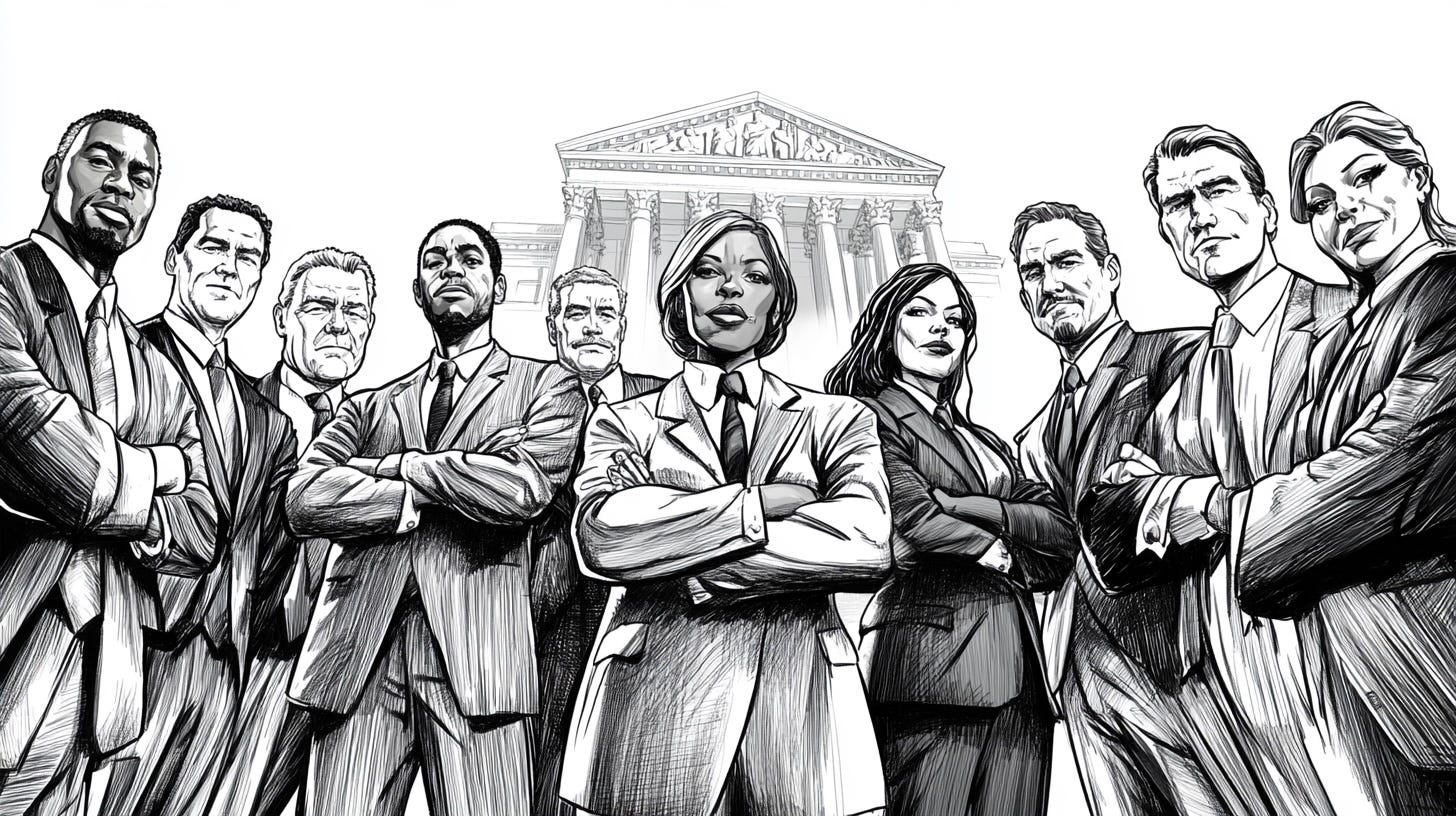
On January 21, 2010, five unelected justices handed corporations and billionaires a weapon no lobbyist could have purchased the day before. The legal right to spend unlimited money to influence your elections. The case was Citizens United v. Federal Election Commission. The vote was 5 to 4. And the consequences have reshaped American democracy in ways the Founding Fathers never intended and would never recognize.
You are living in the wreckage of that decision right now, in April 2026, watching a second Trump administration govern on behalf of donors and special interests while the rest of us scramble to understand how our system got this broken. This is the story of how it happened, why it matters more than ever, and what it will take to fix it.
Listen to the audio version on the app

What Citizens United Actually Did
Citizens United was a nonprofit corporation that produced a film attacking Hillary Clinton during the 2008 presidential primary season. Federal law at the time, specifically the Bipartisan Campaign Reform Act of 2002, known as McCain Feingold, prohibited corporations and unions from using their general treasury funds to pay for electioneering communications within 30 days of a primary or 60 days of a general election.
The Federal Election Commission blocked the film’s distribution. Citizens United sued.
The Supreme Court, led by Justice Anthony Kennedy’s majority opinion, ruled that the government cannot restrict independent political expenditures by corporations, associations, or labor unions. The Court held that political spending is a protected form of free speech under the First Amendment, and that corporations hold the same free speech rights as individual citizens.
Two legal conclusions drove that ruling. First, the Court found that corporations are persons for purposes of First Amendment protection. Second, the Court held that independent expenditures, money spent on political messaging not coordinated with a candidate’s campaign, cannot be limited, regardless of the source or the amount.
Justice John Paul Stevens wrote a 90 page dissent. He warned that the majority’s reasoning threatened to undermine the integrity of elected institutions across the nation. He was right. And every election cycle since 2010 has proven him right again.
The Immediate Legal Fallout
Citizens United did not directly address contribution limits to candidates or political parties. Those limits technically remained in place. What the decision did was open the door for unlimited spending through outside groups, and courts moved fast to walk through it.
In March 2010, the D.C. Circuit Court of Appeals decided SpeechNow.org v. FEC. Relying directly on Citizens United, that court held that contribution limits to independent expenditure groups were also unconstitutional. That ruling created what we now call the Super PAC.
A Super PAC can raise unlimited funds from corporations, unions, associations, and individuals. It can spend that money on advertising, mailers, digital campaigns, and voter outreach, as long as it does not formally coordinate with a candidate’s campaign. The coordination rule, in practice, is a legal fiction. Former campaign managers run Super PACs for their former candidates. Candidates appear at Super PAC fundraisers. Consultants move freely between campaigns and Super PACs. The wall between them exists on paper and nowhere else.
The Numbers Tell the Real Story
Before Citizens United, outside spending in federal elections was measured in the hundreds of millions of dollars. After Citizens United, the floodgates opened.
In the 2010 midterm elections, the first federal election cycle after the ruling, outside spending doubled compared to 2006.
By the 2012 presidential election, Super PACs had spent over $600 million. Sheldon Adelson and his wife Miriam spent at least $98 million in disclosed contributions that cycle, with estimates placing the total as high as $150 million when you include contributions to dark money groups that do not disclose their donors. One couple. One checkbook. More spending power than millions of ordinary voters combined.
By 2020, outside spending in federal elections exceeded $3 billion for the first time. The 2024 election cycle shattered every record that came before it, with total outside spending reaching $4.5 billion. More than half of that spending came from groups that do not fully disclose the source of their funding. In that same cycle, the top ten individual donors contributed $599 million, accounting for 7 percent of all federal fundraising. Small donations of less than $200 accounted for just 16 percent of all political contributions, down from 22 percent in the 2020 cycle.
That is not democracy. That is an auction.
Why Citizens United Is Destroying Your Representation
The core problem is the corruption of political representation. Elected officials in this country are supposed to represent the voters in their districts and states. Citizens United made it financially rational for elected officials to represent their largest donors instead.
Consider the mechanism. A senator who votes against the financial interests of a major industry Super PAC risks tens of millions of dollars in attack advertising at the next election cycle. A senator who votes in alignment with that industry can expect favorable coverage and financial support. No phone call needs to be made. No explicit deal needs to be struck. The incentive structure does the work silently and efficiently, every single day, in every committee hearing and every floor vote.
The Court’s majority argued that independent expenditures do not create a corruption risk. That argument has aged about as well as a gallon of milk left on a hot sidewalk. The legal definition of corruption the Court used, direct exchange of money for votes, is the narrowest possible definition. Political scientists, ethicists, and former members of Congress recognize a broader form of corruption, the systematic distortion of legislative priorities based on donor interests. Citizens United made that form of corruption legal and scalable across every level of government.
The ruling also blew the door wide open for dark money. Nonprofit organizations organized under Section 501(c)(4) of the tax code, so called social welfare organizations, are not required to disclose their donors. They can raise unlimited funds and spend them on political advertising. They can funnel money to Super PACs. Dark money expenditures have exploded from less than $5 million in 2006 to more than $1 billion in the 2024 presidential election alone. The result is a shadow financing system where the true source of political spending is deliberately hidden from the people whose votes are being targeted. You cannot follow the money because the law no longer requires anyone to show it to you.
Foreign influence is a real and documented concern as well. Foreign nationals are prohibited from contributing to U.S. elections. Shell corporations are not. A foreign government or foreign business can establish or invest in a domestic shell company, which then funds a Super PAC or 501(c)(4). The FEC has limited investigative capacity and enforcement resources. The disclosure gaps Citizens United enabled make detection and prosecution extraordinarily difficult.
And here is the part that should keep you up at night. In a widely cited and debated 2014 study, political scientists Martin Gilens and Benjamin Page analyzed 1,779 policy issues and found that economic elites and organized business groups have substantial independent influence on U.S. government policy, while average citizens have little or no independent influence when elite preferences are accounted for. Some scholars have challenged the study’s methodology, and the debate continues. The core pattern, though, matches what most Americans already feel in their bones. Your voice in this democracy is being drowned out by people who can write seven and eight figure checks. Citizens United gave them the megaphone. And right now, in 2026, you are watching the consequences of that megaphone play out in real time, as an administration that ran on populist promises governs on behalf of the donor class that funded its rise.
How to Overturn Citizens United Through the Courts
Reversing Citizens United through judicial action requires a Supreme Court majority willing to reconsider or limit the ruling. That is a real possibility, not a fantasy, and here is how it could happen.
The most direct path is a new case that directly challenges the core holdings. A state or federal law that imposes spending limits on independent expenditures, crafted specifically to give the Court an opportunity to revisit the issue, could generate the right vehicle. Montana tried this in 2012 with its century old Corrupt Practices Act. The Supreme Court summarily reversed Montana’s Supreme Court in American Tradition Partnership v. Bullock without full briefing or argument. The four dissenting justices, Ginsburg, Breyer, Sotomayor, and Kagan, explicitly called for reconsideration of Citizens United. That dissent is a roadmap for future litigators.
A future Court with different composition could take up a well constructed challenge and apply different analytical frameworks. The majority in 2010 relied on an incorrect premise, that independent expenditures carry no corruption risk. Sixteen years of empirical evidence accumulated since that ruling could be presented to undercut that factual assumption. Courts are not entirely immune to reality.
Litigators can also chip away at the ruling’s edges without a direct frontal assault. Stronger disclosure requirements survive Citizens United. The majority opinion actually endorsed transparency and the importance of disclosure. Litigating to expand and enforce disclosure mandates, close the dark money loopholes in 501(c)(4) law, and tighten foreign national spending prohibitions can reduce the ruling’s practical damage while the broader fight continues. The Campaign Legal Center is doing exactly this kind of work right now, including a rare direct citizen suit against alleged dark money nonprofit Iowa Values that, if successful, would create enforceable judicial precedent making it harder for the FEC to ignore its own enforcement duties.
State level experimentation matters here too. State constitutional amendments and state campaign finance laws that operate independently of federal First Amendment doctrine can create models and generate legal records that a future Court could use to justify limiting Citizens United’s scope.
How to Overturn Citizens United Through Congress
Congress has two primary paths. Legislation and a constitutional amendment.
On the legislative side, the DISCLOSE Act is the most prominent proposal. Its full name is the Democracy Is Strengthened by Casting Light On Spending in Elections Act. It would require Super PACs and dark money groups to disclose donors who contribute above a threshold amount. It would also require organizations to identify their top donors in political advertisements. The DISCLOSE Act passed the House in 2010 and again in 2022. The Senate blocked it both times through the filibuster. A Senate that eliminates or reforms the filibuster, or reaches 60 votes for closure, could pass the DISCLOSE Act immediately.
The Stop Illegal Campaign Coordination Act targets another glaring weakness in the current system. It would prevent Super PACs and campaigns from coordinating, closing the loophole that everyone in Washington knows exists and no one in power wants to fix.
Public financing systems can also reduce the practical power of Super PACs without overturning Citizens United. Small dollar matching programs, where the government matches small individual contributions at a multiplied rate, amplify the political voice of ordinary citizens and reduce candidates’ dependence on large donors. New York City’s public financing program is the most studied model at the municipal level, and it works. Federal versions of this matching system have been proposed in multiple sessions of Congress, and they would give everyday Americans a fighting chance against the billionaire donor class.
The constitutional amendment route is the most durable and the hardest. An amendment overturning Citizens United would require two thirds approval in both the House and the Senate, followed by ratification by three fourths of state legislatures, meaning 38 states. Multiple amendment proposals have been introduced, including Senate Joint Resolution 19 and the We the People Amendment. None has reached a floor vote in both chambers. Polling consistently shows that over 70 percent of Americans across party lines oppose the Citizens United ruling. That level of public support is the foundation for an amendment campaign, even if the legislative path requires sustained, long term organizing over years and decades.
What You Can Do Right Now
You have standing in this fight whether you are a voter, a lawyer, a candidate, a business owner, or a community organizer.
Support organizations litigating campaign finance cases. The Campaign Legal Center, Democracy 21, and Common Cause are at the front of that work every single day. Demand that your senators vote for the DISCLOSE Act and end the procedural obstruction that has blocked it for over a decade. Support state level public financing ballot measures in your state. Run for local office yourself if you are tired of waiting for someone else to fix this.
When a politician tells you that Citizens United is settled law and nothing can change it, recognize that argument for what it is. A defense of the status quo that benefits incumbents and donor classes, not a statement of legal or democratic principle. Every single person who makes that argument has a financial incentive to keep the current system exactly the way it is.
The Supreme Court has reversed itself before. Plessy v. Ferguson fell to Brown v. Board of Education. Bowers v. Hardwick fell to Lawrence v. Texas. Settled law is only as permanent as the will to change it.
Citizens United is not a life sentence for American democracy. It is a wound. And wounds heal when people stop accepting the pain as normal and start demanding treatment.
The question is not whether this can be fixed. The question is whether you, and millions of Americans like you, decide that fixing it is worth the fight. Your kids and grandkids are counting on the answer. Make it the right one.
Mitch Jackson, Esq. | recommendations
They’re Counting on Your Silence. Subscribe and Prove Them Wrong.
Every week on Uncensored Objection, I break down the stories and legal fights that the powerful hope you never read about. If this article opened your eyes, subscribe now and share it with someone who needs to see it. This is how we build an informed electorate, one reader at a time.