

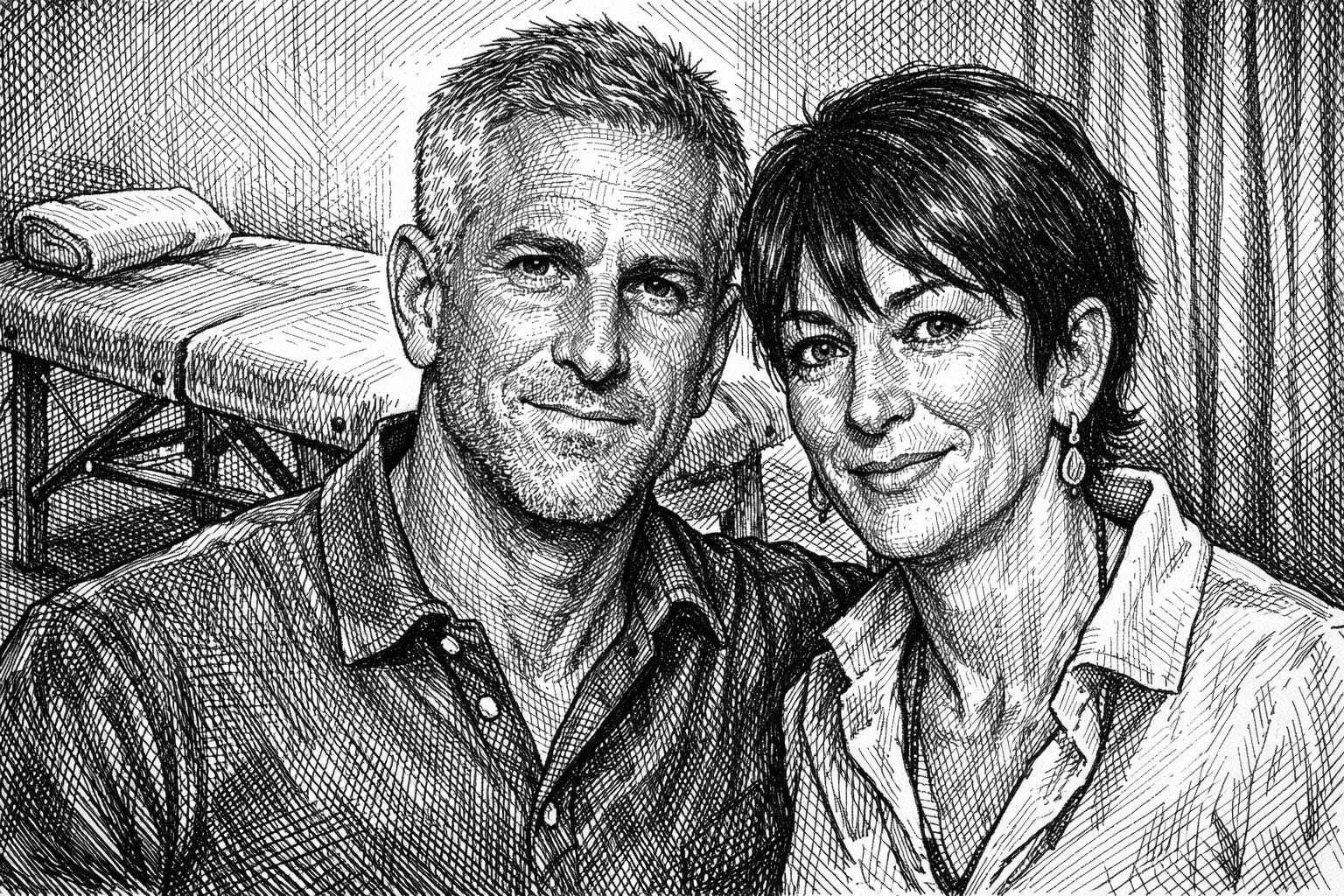
Casey Wasserman wrote to Ghislaine Maxwell: “Where are you, I miss you. I will be in NYC for 4 days starting April 22… can we book that massage now?” The next day, he escalated: “I thought we would start at that place that you know of, and then continue the massage concept into your bed… and then again in the morning… not sure if or when we would stop.” Maxwell responded: “Umm – all that rubbing – are you sure you can take it? The thought frankly is leaving me a little breathless. There are a few spots that apparently drive a man wild – I suppose I could practise them on you.”
Wasserman is chairman of the 2028 Los Angeles Olympics and founder of one of the world’s largest sports and entertainment agencies. He became one of the most prominent figures to face immediate professional consequences from the Epstein files after sexually suggestive 2003 emails between him and convicted sex trafficker Ghislaine Maxwell surfaced in the DOJ’s document release. Within two weeks, a cascade of client departures, led by pop star Chappell Roan and soccer legend Abby Wambach, forced the billionaire heir to Lew Wasserman’s Hollywood legacy to announce the sale of his entire agency. He has not been charged with any crime, and the LA28 Olympic board unanimously backed him, but the episode illustrates how the Epstein files have turned social proximity to Epstein and Maxwell into a career-destroying liability, even absent criminal conduct.
The documents emerged from a massive DOJ release of over 3 million pages mandated by the Epstein Files Transparency Act, signed by Trump on November 19, 2025. Wasserman’s case sits at the intersection of Hollywood power, Olympic politics, and the unresolved public reckoning over Jeffrey Epstein’s network of enablers.
The grandson of Hollywood’s “last mogul” built his own empire
Casey Wasserman was born June 28, 1974, in Los Angeles, the grandson of Lew Wasserman, arguably the most powerful entertainment executive of the twentieth century. Lew ran MCA/Universal for nearly three decades, invented talent packaging, pioneered profit-participation deals, and counted presidents and movie stars among his closest confidants. He received the Presidential Medal of Freedom in 1995 and was known simply as “The Last Mogul.”
Casey’s path was shaped by proximity to that power but also by personal upheaval. His parents divorced when he was seven. His biological father, Jack Myers, was later convicted of money laundering; Casey didn’t attend his funeral. At 18, he legally changed his surname from Myers to Wasserman. He and Lew shared breakfast every Saturday and Sunday until the patriarch’s death in 2002. Though Lew enforced strict no-nepotism rules at MCA, he made Casey president of the family’s charitable foundation at age 21.
After graduating from UCLA with a political science degree in 1996, Wasserman briefly worked in investment banking before buying the LA Avengers arena football team in 1998 at age 24, becoming the youngest professional sports team owner in America. That same year, he founded what would become Wasserman (originally Wasserman Media Group), a sports marketing firm that grew through aggressive acquisitions into a global agency spanning six continents with roughly 4,000 employees and estimated annual revenue of $500–750 million. Key acquisitions included Arn Tellem’s NBA/MLB practice in 2006, Paradigm Talent Agency’s music division in 2021, and Brillstein Entertainment Partners (representing Brad Pitt) in 2023. Major clients ranged from Coldplay and Kendrick Lamar to NFL first-round draft picks and WNBA stars like Brittney Griner and Paige Bueckers.
In 2014, LA Mayor Eric Garcetti tapped Wasserman to lead the city’s Olympic bid. He successfully steered the campaign that won Los Angeles the 2028 Summer Games, a $7+ billion undertaking built around existing venues like SoFi Stadium and the Coliseum. By 2025, Wasserman was simultaneously one of the most powerful figures in sports, entertainment, and global athletics governance.
What the emails actually said: flirtation with a convicted trafficker
The DOJ’s release contained email exchanges from March and April 2003 between Wasserman’s personal account and Ghislaine Maxwell. The correspondence was sexually charged and unmistakably flirtatious. At the time, Wasserman was married to Laura Ziffren Wasserman, who was reportedly eight months pregnant with their son during the April exchanges. Here’s what they wrote to each other and what happened next…
On March 14, 2003, Maxwell told Wasserman she had been thinking of him “at inappropriate moments” and described a “tight leather flying outfit.” Wasserman replied: “I think of you all the time… So what do I have to do to see you in a tight leather outfit? I am in NY tonight, you’re not, what am I to do? Xoxo cw.”
On April 1, Wasserman wrote: “Where are you, I miss you. I will be in NYC for 4 days starting April 22… can we book that massage now?” The next day, he escalated: “I thought we would start at that place that you know of, and then continue the massage concept into your bed… and then again in the morning… not sure if or when we would stop.” Maxwell responded: “Umm – all that rubbing – are you sure you can take it? The thought frankly is leaving me a little breathless. There are a few spots that apparently drive a man wild – I suppose I could practise them on you.”
In another exchange, Maxwell referenced “JE” (Jeffrey Epstein) wanting to visit Los Angeles to look at Malibu summer rentals, suggesting she should “pick a week” to come to LA. Wasserman replied: “The only thing I want from Paris is you.” Maxwell also asked whether it would be “foggy enough so that you can float naked down the beach and no one can see you unless they are close up.” When Maxwell offered to send British treats like cheddar cheese, baked beans, and KitKat bars, but Wasserman declined: “Among all my desires, that combination is pretty low on the list.” What did he want instead? “You, me, and not else much.”
The emails do not contain direct references to young women, minors, or trafficking. However, the repeated “massage” language drew particular scrutiny given Maxwell’s documented role in recruiting victims who provided “massages” to Epstein. The files also include an FBI interview with a physician on the 2002 Africa trip aboard Epstein’s Boeing 727, the trip where Wasserman and Maxwell apparently met. The doctor recalled “about four women ages 20 to 22” on the flight: “No one knew why they were there as everyone else had a purpose.” Three described themselves as a masseuse, a model, and a ballerina. The physician witnessed Epstein “grab and rub” the buttocks of at least one.
Two weeks of cascading fallout forced his hand
The unraveling was swift. Within 24 hours of the document release, Wasserman issued a statement: “I deeply regret my correspondence with Ghislaine Maxwell which took place over two decades ago, long before her horrific crimes came to light. I never had a personal or business relationship with Jeffrey Epstein.” He described his sole interaction with Epstein as the 2002 Clinton Foundation humanitarian trip to Africa, a flight that also carried Bill Clinton, Kevin Spacey, Chris Tucker, and businessman Ron Burkle.
But the dam broke. Bethany Cosentino of Best Coast became the first artist to publicly demand Wasserman step down on February 5, writing: “I did not consent to having my name or my career tied to someone with this kind of association to exploitation.” Next, Chappell Roan, one of music’s biggest rising stars, announced her departure: “No artist, agent or employee should ever be expected to defend or overlook actions that conflict so deeply with our own moral values.” That same day, senior music agents including SVP Duffy McSwiggin and veteran agent Marty Diamond (representing Coldplay) reportedly delivered an ultimatum: sell them the music business and leave, or they would walk.
The exits accelerated including Abby Wambach, Dropkick Murphys, Orville Peck, Wednesday, Weyes Blood, Chelsea Cutler, Beach Bunny, Sylvan Esso, Water from Your Eyes, and others. Wambach posted on Instagram: “Casey should resign. He should leave, so more people like me don’t have to.” Hope Solo criticized the silence of the agency’s remaining athletes: “Their current silence is deafening.” CNN contacted over 70 Wasserman artists; none replied. The agency quietly removed its artist roster from its website.
At least nine Los Angeles politicians called for Wasserman’s resignation from LA28. Councilmember Monica Rodriguez captured the mood: “This is supposed to be the best of humanity, and you’re talking about the chairman being associated with an individual that was a co-conspirator in the largest international sex-trafficking scandal in the world.” County Supervisor Lindsey Horvath framed it starkly: “Either being included in the Epstein files is disqualifying for leadership, or it’s not.”
Yet the LA28 board held firm. The executive committee, including Jeffrey Katzenberg, Jeanie Buss, Jessica Alba, and Kevin McCarthy, unanimously backed Wasserman after commissioning law firm O’Melveny & Myers to review his interactions. Their conclusion: his relationship with Epstein and Maxwell “did not go beyond what has already been publicly documented.” Mayor Karen Bass declined to call for his resignation, saying LA28 was “a separate and independent nonprofit organization.”
Shortly after all of this, Wasserman sent an all-staff memo announcing the sale of the entire agency. “I believe that I have become a distraction,” he wrote. He apologized for “my past personal mistakes” and described his interactions as “one humanitarian trip to Africa and a handful of emails that I deeply regret sending.” Agency president Mike Watts would assume day-to-day control. Wasserman said he would devote his full attention to delivering the 2028 Olympics.
No criminal charges, but a permanent stain
Wasserman has not been charged with any crime. Los Angeles District Attorney Nathan Hochman stated publicly: “I see no evidence whatsoever that Mr. Wasserman has committed any type of criminal violation.” Deputy Attorney General Todd Blanche said on February 2, 2026, that there would be no additional prosecutions related to Epstein, noting the materials did not “allow us necessarily to prosecute somebody.”
The legal distinction matters. The emails reveal a flirtatious, likely sexual, personal relationship between Wasserman and Maxwell, not participation in trafficking. The correspondence predates Epstein’s first arrest by three years and Maxwell’s conviction by nearly two decades. But in the court of public opinion, the distinction between criminal liability and moral complicity has proven immaterial. Rolling Stone reported that Wasserman’s executive team had confronted him in an “intervention-like setting” before the document release, after earlier reports of his Epstein associations began circulating in 2024. He reportedly assured them “there’s nothing else” that would surface. When the emails dropped, his closest associates felt betrayed.
The controversy also compounded earlier reputational damage. For example, an earlier 2024 Daily Mail exposé alleged Wasserman was a “serial cheater” with a pattern of relationships with subordinates. Billie Eilish had already left the agency in August 2024 following that report. Wasserman’s current fiancée, Jenny Chandler, first worked as a flight attendant on his private jet.
The broader Epstein files release reshaped accountability politics
The documents that engulfed Wasserman emerged from one of the largest government transparency exercises in American history. The Epstein Files Transparency Act, co-sponsored by Republican Thomas Massie and Democrat Ro Khanna, passed the House 427–1 on November 18, 2025, and the Senate by unanimous consent the same day. Trump signed it into law the following day, requiring the DOJ to release all unclassified Epstein-related documents within 30 days.
The path to that law was contentious. Trump had promised during his 2024 campaign to release “the Epstein list,” but his administration pivoted after AG Pam Bondi briefed him in May 2025 that his own name appeared throughout the files. A July 2025 DOJ memo attempted to close the matter, concluding no “client list” existed and no further disclosure was warranted. That memo triggered a bipartisan firestorm and the congressional discharge petition that forced the legislation to the floor.
The January 30, 2026 partial release of over 3 million pages, 180,000 images, and 2,000 videos, named dozens of prominent figures. Trump’s name appeared 3,000+ times (largely in news clippings, though the files included suggestive Epstein emails about Trump). Elon Musk’s emails revealed him trying to arrange a visit to Epstein’s island, contradicting his public denials. UK politician Peter Mandelson resigned from Labour and the House of Lords after documents showed continued contact with Epstein post-conviction; London’s Metropolitan Police launched a criminal investigation. Commerce Secretary Howard Lutnick’s correspondence about visiting Epstein’s island surfaced. Former Victoria’s Secret mogul Les Wexner was revealed to have been designated an FBI co-conspirator in a 2019 internal document, though he was never charged.
The DOJ explicitly cautioned that “appearing in the files is not an indication of wrongdoing.” Deputy AG Blanche acknowledged that only two people, Epstein and Maxwell, have ever been prosecuted. The files include unverified tips, hearsay, and potentially fabricated material alongside legitimate evidence. Former federal prosecutor Barbara McQuade described the gap between public expectation and legal reality as “awful, but lawful” conduct that is morally reprehensible but fails to meet the evidentiary threshold for criminal prosecution.
The release was also marred by catastrophic redaction failures. At least 31 victims’ names were left exposed, including nude photographs with visible faces. Attorneys reported “thousands of redaction failures” affecting nearly 100 survivors. Virginia Giuffre, one of Epstein’s most prominent accusers, had died by suicide on April 25, 2025, at age 41, before ever seeing the files released, lending tragic urgency to the transparency push.
Conclusion
Casey Wasserman’s story distills the central tension of the Epstein files into a single career arc. A man whose grandfather built Hollywood’s most powerful talent empire, who himself assembled a global agency and won the Olympics for his city, now faces the sale of his life’s work over a handful of two-decade-old emails with a woman later convicted of sex trafficking children. No prosecutor has alleged he committed a crime. No victim has named him. The emails themselves, while revealing an extramarital sexual pursuit of Maxwell, contain no evidence of involvement in trafficking.
Yet the fallout has been devastating, and arguably proportionate to the broader reckoning the Epstein files demand. The 3.5 million pages released to date have revealed not a neatly defined criminal conspiracy but something perhaps more disturbing: an ecosystem of wealth and social access in which one of history’s most prolific sex traffickers moved freely among presidents, billionaires, and Olympic chairmen, and where the line between innocent association and complicity remains agonizingly difficult to draw.
Wasserman’s case will likely be remembered not for what it proved, but for what it symbolized, the moment when proximity to Epstein’s world, even without criminal conduct, became an uninsurable professional liability.
Monday Update: Thomas J. Pritzker, the 75 year old billionaire Hyatt Hotels heir, resigned immediately on Monday as executive chairman over his ties to convicted sex offender Jeffrey Epstein. He told the board he exercised terrible judgment staying in contact with Epstein and Ghislaine Maxwell after Epstein's 2008 sex crimes plea. Released files show frequent meetings and correspondence, including at Epstein's Manhattan townhouse. In one 2018 exchange, when Epstein's girlfriend said she planned to find him a new girlfriend on a trip Pritzker helped arrange, Pritzker replied with a smiley face and "May the Force be with you." Other records reveal Epstein joking about a Dalai Lama and Woody Allen lunch and coordination around invitations to the Pritzker Prize ceremony in Beijing. I shared the metaphorical proverb over the weekend, "if you lie down with dogs, you wake up with fleas." More are coming.
The point I'm making in this article is simple: “If you lie down with dogs, you wake up with fleas.” Proximity is a decision, and decisions carry consequences long after the moment feels convenient.