

Introduction
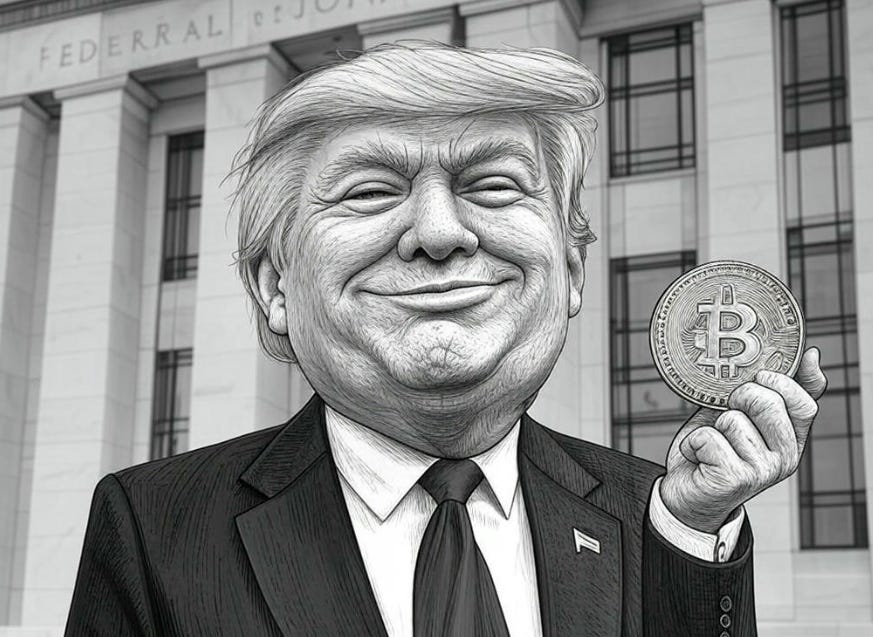
President Donald Trump’s announcement of a U.S. Crypto Strategic Reserve marks an unprecedented and perilous departure from sound fiscal stewardship. On Sunday, Trump revealed via social media that his recent executive order would direct the Treasury to stockpile cryptocurrencies – including Bitcoin, Ether, XRP, Solana, and Cardano – as part of a strategic national reserve . The idea has already sent crypto markets into a frenzy, with Bitcoin’s price spiking over 11% in mere hours after the announcement.
But beyond the speculative celebration, this initiative is a terrible idea: an inappropriate risk of taxpayer money that serves no true public interest. I believe that establishing a crypto reserve is reckless and unsound, especially after examining the concept through historical context, the intended purpose of strategic reserves, the false promises being sold, the overwhelming risks involved, the glaring conflict-of-interest potential, and why it all amounts to a dangerous misuse of public funds.
DISCLAIMER: This is an investigative opinion piece and does not provide legal, financial, tax or investment advice. Always do your own due diligence and consult with an experienced professional in your state, region or country.
Search AI: The best insights come from asking the right questions. This article is already set up on our Perplexity AI page—just click, explore, and dig deeper. Research every angle, challenge assumptions, and follow your curiosity wherever it leads.
A Brief Historical Context
Government reserves have long been used to safeguard essential national interests. The United States maintains strategic reserves of critical commodities like oil and gold – assets whose value or utility is well-established and serve as bulwarks in times of crisis. For example, since the 1970s the U.S. Strategic Petroleum Reserve (SPR) has existed “to protect the economy and strengthen national security during major oil supply disruptions,” allowing presidents to release oil in emergencies like wars or natural disasters. This stockpile of hundreds of millions of barrels ensures that, if global oil supplies are cut off, the nation can still fuel its economy and military.
Likewise, central banks (including the U.S. Federal Reserve) hold gold reserves as a form of monetary stability. Gold has historically been a foundation of trust in currencies – it’s a finite, universally valued asset that carries no counterparty risk. As Reuters has noted, gold in national vaults provides a “source of trust in a country, in all economic environments,” acting as a hedge against inflation and a safe-haven store of value. In short, oil and gold reserves have proven their strategic worth over decades (or even centuries) by buffering the nation against external shocks and by underpinning financial stability.
It’s important to recognize why these traditional reserves serve the public interest. Storing oil isn’t about turning a profit – it’s about ensuring Americans can heat their homes and drive to work even if a geopolitical crisis disrupts supply. Hoarding gold isn’t about speculation – it’s about having an internationally recognized asset of value to backstop the currency or government credit in dire times. These reserves are akin to an insurance policy: emergency resources accumulated during stable times to deploy when disaster strikes. They exemplify prudent, conservative stewardship of national wealth.
This historical context makes the notion of a cryptocurrency reserve look utterly out of place. Unlike oil or gold, Bitcoin and its digital peers have no track record of providing stability or tangible utility in a crisis. To the contrary, as we shall see, crypto assets embody instability and uncertainty – the exact opposite of what a strategic reserve is meant to provide.
The Purpose of a Strategic Reserve
By definition, a strategic reserve is meant to serve as a safety net for the nation. Whether it’s barrels of petroleum or bars of gold bullion, the goal is to stabilize the country during emergencies – to ensure continuity of critical supplies, economic confidence, or financial solvency when normal markets falter. Strategic reserves are not intended as investments or moneymaking ventures; they are policy tools for national security and economic resilience.
For instance, crude oil stockpiles can be released to blunt the impact of an oil embargo or hurricane damage to refineries. Gold reserves bolster faith in a nation’s currency and creditworthiness, especially in times of monetary crisis or war. In short, these reserves are strategic because they guard against foreseeable threats and uncertainties. They are carefully managed for stability, often by non-partisan agencies, and typically involve assets with intrinsic utility or universally acknowledged value.
Cryptocurrency simply does not satisfy any of the core purposes of a strategic reserve. What strategic national interest is served by a cache of Bitcoin? In an economic emergency or a war, you cannot fuel vehicles or power homes with Bitcoin; it’s useless as a physical resource. It is not a backing for the dollar (which is a fiat currency supported by the U.S. government’s full faith and credit) – in fact, Bitcoin itself derives much of its perceived value from the stability of the very fiat currencies it purports to replace.
Unlike gold, which central banks around the world hold and which the International Monetary Fund recognizes as a reserve asset, cryptocurrencies have no official recognition as reserves. Monetary gold is still counted as part of countries’ official reserves by institutions like the IMF, but “Bitcoin is almost certain not to be recognized” in the same way .
Financial analysts have bluntly called Bitcoin the “purest form of speculative asset,” emphatically denying “that it can play a major role as a reserve asset for most central banks, unlike gold.” In other words, crypto fails the basic test of a strategic reserve asset: it offers no reliable utility or stabilizing value to the government or taxpayers when crisis hits.
Furthermore, a strategic reserve is meant to be dependable. The government must be able to deploy it with confidence that it will alleviate the problem at hand. If the U.S. is faced with a sudden oil shortage, releasing oil from the SPR directly helps – supply increases, prices ease, citizens and industries feel immediate relief. If the U.S. faced a run on the dollar or some financial panic, having gold reserves or other hard assets can reassure markets or be sold to raise stable funds. What would a crypto reserve achieve in such scenarios?
If markets are tanking, dumping volatile digital coins into the mix could just as easily deepen panic as help it. If anything, the government might find itself needing to bail out its crypto reserve if prices collapse – a complete inversion of the reserve’s intended role as a savior in hard times. In sum, cryptocurrency does not belong in the same sentence as “strategic reserve,” because it cannot perform the fundamental function of risk mitigation that these reserves are supposed to provide.
False Promises: The Alleged Benefits
Proponents of Trump’s crypto reserve idea have floated a number of supposed benefits to justify it. These range from giving cryptocurrency an official stamp of legitimacy to boosting its price, fostering innovation, and clarifying regulation. On the surface, some of these claims might sound appealing to crypto enthusiasts. In reality, none of these promises hold water, and certainly not when weighed against the costs and risks. Let’s examine the major arguments one by one and why they don’t justify government involvement:
• “Legitimacy” and Mainstream Acceptance: Advocates argue that if the U.S. government holds crypto, it confers legitimacy and mainstream credibility on these assets. It’s true that Trump’s endorsement has excited the market – industry voices are cheering that this “active participation” by the government could accelerate adoption and “strengthen the U.S.’s leadership in digital asset innovation.” But legitimacy cannot be simply granted by decree, especially not to something as inherently unstable as crypto.
Artificially propping up an asset with taxpayer funds only masks its underlying weaknesses; it doesn’t fix them. If a cryptocurrency cannot earn public trust on its own merits, the government should not be risking public money to boost its image. That’s not legitimacy – that’s marketing at public expense. And if the bubble bursts, the fact that the government endorsed it could actually undermine trust in public institutions (who led people off a cliff). In short, real legitimacy comes from proven stability and utility, which crypto lacks.
• Boosting Prices and “Profit” for the Public: There’s an implicit promise that by buying a bunch of Bitcoin and other coins, the government could make their prices “go to the moon,” presumably enriching the country (and, not coincidentally, any private crypto holders lucky enough to ride the wave). Indeed, markets immediately surged on Trump’s announcement , and some see a state-driven price pump as a positive. This logic is extraordinarily dangerous. Governments are not hedge funds – and treating public funds like seed capital for speculative profit is a gross abuse of mandate. Yes, a large government buy can drive prices up in the short term (we just saw a ~10% jump), but what about the inevitable downswing? What happens when the government stops buying, or needs to sell? Prices that soar can just as easily crash, wiping out the supposed gains.
The U.S. Treasury is not meant to be day-trading altcoins. Chasing price surges is the logic of a gambler, not a steward of the economy. If the government explicitly tries to inflate asset values, it’s essentially engaging in market manipulation – picking winners and losers – which shatters the notion of a fair, free market. And critically, any “profits” would be paper-thin and could evaporate overnight (more on that when we discuss volatility). The alleged upside of a price boost is no justification for the massive downside risk of a crash that taxpayers would bear.
• “Regulatory Clarity” and Integration into the Financial System: Some supporters claim that if the government itself holds crypto, it will finally force clear regulations and integrate crypto into the financial system in a positive way. They argue this move will “provide greater regulatory clarity,” as one crypto investment firm head said of Trump’s plan. It’s true that U.S. crypto regulation has been somewhat murky, but buying coins for a reserve is neither necessary nor sufficient to clarify rules. Regulation comes from thoughtful legislation and enforcement, not from the government becoming a market participant. In fact, the opposite might happen: once the government has skin in the game, it might regulate in its own self-interest rather than in the public interest.
Will a Trump administration that’s holding billions in Bitcoin be tempted to, say, soften regulations on crypto exchanges to prop up its investment? Will policymakers become reluctant to crack down on fraudulent crypto schemes because it might crash “our” holdings? This entanglement muddies the waters and could breed regulatory capture, where the industry’s fortunes and the government’s incentives align at the expense of consumer protection. We do need clearer crypto rules – but we don’t need to spend tax dollars on crypto to get there. In fact, we’d be better off keeping the government as an impartial referee, not a biased player on the field.
• Encouraging Innovation and Competitiveness: Another claim is that establishing a crypto reserve shows the U.S. is forward-thinking and will encourage blockchain innovation domestically. Proponents fear that if the U.S. doesn’t embrace crypto, it will fall behind countries that do. This is a red herring. The U.S. can support blockchain research and innovation without endorsing any particular cryptocurrency as a reserve asset. Innovation comes from investment in education, startups, and sensible tech policy – none of which requires the Treasury to buy digital tokens. Ironically, pouring billions into buying existing coins does nothing to encourage new innovation; it simply inflates the value of old ones.
Meanwhile, truly innovative uses of blockchain (for example in fintech infrastructure or secure recordkeeping) could languish if everyone is instead chasing the government-fueled coin rally. And it’s worth noting: no major economy on Earth has done this. We’re not falling behind by not gambling public money on crypto; rather, Trump’s plan is a radical outlier. If anything, it risks turning the U.S. into a cautionary tale rather than a leader. Real leadership in digital assets would mean crafting smart regulations and possibly exploring a central bank digital currency – actions that build frameworks, not betting the farm on volatile assets.
In summary, the promised benefits of a crypto strategic reserve are illusory. Legitimacy that depends on taxpayer bailout isn’t real legitimacy. Price gains can turn to losses in a blink. Regulatory clarity doesn’t require owning the thing you’re regulating. And innovation thrives on good policy, not reckless investment. The justifications being offered are false promises – shiny distractions from the very real dangers and costs this scheme entails.
The Overwhelming Risks
If the supposed upsides of a crypto reserve are shaky, the downsides are overwhelming. Cryptocurrency is fraught with risks that make it entirely unsuitable for stewardship with public funds. These risks aren’t just theoretical – they are well-documented and have been painfully demonstrated in real-world episodes. Here is an in-depth look at the major hazards of this initiative:
• Extreme Volatility: Cryptocurrencies are notorious for their wild price swings. Unlike strategic assets like oil (which, though it fluctuates, has a relatively knowable range tied to production costs) or gold (which has millennia of history as a store of value), crypto prices can plunge or skyrocket on speculation alone. As the Connecticut Department of Banking warns consumers, “a cryptocurrency’s value can change constantly and dramatically. An investment that may be worth thousands of dollars today could be worth only hundreds tomorrow,” with no guarantee it will ever recover. This kind of volatility is antithetical to the stability one expects of a reserve. Imagine if the value of the U.S. oil reserve could drop 50% in a week – that would defeat its purpose as a strategic buffer. Yet Bitcoin routinely sees swings of that magnitude. In 2022, for instance, Bitcoin lost over 60% of its value from its peak, and we’ve seen single-day drops of 10-20% on mere rumors.
Even projects bearing Trump’s own name have not been immune to crypto’s boom-and-bust nature: his much-hyped NFT “Trump Digital Trading Cards” collection plummeted by 80% in value within two weeks of its launch, after an initial speculative surge. This underscores a crucial point: if the U.S. government buys crypto high and the price later collapses (as history suggests it will at some point), taxpayers would be left holding the bag. The reserve’s value could evaporate just when we need it most. Far from being a safety net, it would be a trapdoor under the nation’s finances.
• Security Vulnerabilities and Theft: Unlike gold in Fort Knox or oil in salt caverns, digital assets introduce enormous security risks. Cryptocurrency is stored in wallets secured by cryptographic keys – if those keys are lost or stolen, the assets are gone forever with no recourse. The crypto ecosystem is rife with hacking and theft. One U.S. regulator recently noted that “crypto is highly fragmented and prone to hacks” and this is no understatement. In 2022, North Korean hackers stole more cryptocurrency than in any previous year on record – hundreds of millions of dollars – using increasingly sophisticated cyber-attacks. Those funds, experts believe, went directly to funding North Korea’s weapons programs .
Now consider the implications: by creating a giant U.S. crypto reserve, we’d be painting a bullseye on it for every cybercriminal in the world. Hostile state actors and rogue hackers would love to drain America’s crypto wallets. Can we trust that our government’s cybersecurity is infallible? History says otherwise – even highly secure systems (from federal employee databases to top-secret defense networks) have been breached. The recent Byzantine hacks on cryptocurrency exchanges and DeFi platforms (some losing hundreds of millions in a single hack) show how vulnerable these assets are. A single lapse – one corrupt insider or one exploited software flaw – and billions of taxpayer dollars could vanish into the ether, literally.
Additionally, maintaining the reserve would require either entrusting third-party custodians (which raises questions of oversight and reliability – remember the collapse of exchanges like FTX, where poor controls led to loss of customer funds) or developing government cold storage that must be continually updated against new threats. The security overhead and risk is immense. We would be effectively daring hackers to try to steal our national “savings”. No such risk exists with barrels of oil or stacks of gold bars. This is a new, unnecessary threat to national assets.
• Market Manipulation and Conflicts of Market Dynamics: The government becoming a whale in the crypto market introduces the risk of market distortion and manipulation – intentional or not. We saw the immediate effect: the mere announcement of Trump’s plan sent Bitcoin and other coin prices soaring by double-digits. That might sound positive, but think about what it implies: crypto prices are so sentiment-driven and liquidity-fueled that a single government tweet can add $300+ billion to the market cap in hours. What happens when the government actually starts buying? Prices could shoot up even more – only to potentially implode if the government ever pauses or reverses course. Investors (including possibly insiders) could front-run government purchases, or dump ahead of government sales, amplifying volatility.
By being in the market, the government might also inadvertently manipulate global crypto prices, raising questions of fairness and legality. If U.S. taxpayers are propping up crypto, are we effectively picking winners (the coins in the reserve) and losers (any coins not blessed by inclusion)? It certainly appears so – notice that Trump singled out five cryptocurrencies by name , and those coins instantly jumped in value, rewarding their holders. This kind of market intervention is unprecedented; it’s akin to a president naming specific stocks the Treasury will buy, causing a speculative frenzy. It opens the door to massive conflicts of interest and abuse (which we’ll discuss in the next section).
Even if done with honest intentions, the government’s heavy hand could destabilize crypto markets – an irony, since presumably the reserve is supposed to add stability. In short, crypto is a relatively thinly traded, psychology-driven market; a strategic reserve would make the U.S. government a hyper-influential actor in a way that could easily spiral out of control. If a future president woke up and decided to unload the reserve, it could crash the entire crypto ecosystem. Conversely, propping it up indefinitely is not sustainable. This is a lose-lose scenario: either distort markets by constant support or face havoc when you stop.
• Taxpayer Exposure to Speculative Losses: Perhaps the most gut-wrenching risk is that everyday American taxpayers are being forced to assume the risk of a highly speculative gamble. When crypto prices tank – not if, when – it will be public money burned. We saw this vividly with El Salvador’s much smaller-scale Bitcoin experiment: the Salvadoran government spent about $85.5 million buying Bitcoin in late 2021, only to see the value of its holdings plunge by roughly $22 million within months. That is a direct loss of public resources – money that could have been spent on schools, hospitals, or policing, instead vanishing due to a speculative bet. In the U.S., the scale could be far larger.
Are we prepared to explain to American families that billions of their tax dollars went down the drain because the government decided to play crypto-trader? Unlike a private investor who knowingly accepts the risk of losing their own money, taxpayers were never given a choice in this gamble. It is profoundly unethical to place the public’s money into such peril for unclear benefit. Even if you personally believe in crypto, consider that as of today the majority of Americans do not use or trust cryptocurrency. Forcing all taxpayers to bankroll a crypto reserve is effectively making everyone a crypto investor against their will – and not just any investor, but one buying at enormous scale after prices have already run up on hype. It’s the equivalent of dragging every citizen to a casino and putting their tax money on the roulette wheel.
This risk alone – the risk to public funds that could otherwise be used for genuine public goods or returned to citizens – should be disqualifying. (I will explain in more detail why this is a misuse of taxpayer money in a later section, but it bears stating as a “risk” as well: this plan endangers the financial resources of the nation, plain and simple.)
In sum, the risks of establishing a crypto strategic reserve are clear and overwhelming. We have extreme volatility that could wipe out value, security threats that could literally let adversaries steal our reserve, the prospect of market manipulation and distortion, and the guaranteed exposure of taxpayers to massive potential losses. Any one of these should give policymakers pause. Together, they paint a picture of a policy so perilous that it veers into the absurd. It is as if someone looked at all the warning signs and red flags around crypto and said, “Let’s make that the government’s problem now.” This is not strategic foresight – it’s strategic folly.
Conflict of Interest & Corruption Concerns
Beyond the economic and security risks, Trump’s crypto reserve scheme raises alarming conflict of interest and corruption concerns. It blurs the line between public policy and private gain in ways that should trouble every American.
Even before this announcement, the Trump family and inner circle have dabbled in crypto ventures that invite skepticism about their motives. Now, by intertwining crypto with government policy, the potential for self-dealing, insider enrichment, and outright corruption skyrockets. Consider several angles of concern:
• Political Cronyism in Coin Selection: The decision of which cryptocurrencies to include in the reserve is inherently political – and ripe for lobbying and favoritism. We’ve already seen hints of this: one of the five coins Trump named is XRP, the token of Ripple Labs . This is the same Ripple that “backed a super PAC to influence congressional elections” in favor of crypto-friendly candidates. Such a coincidence raises eyebrows. Was XRP included because it’s truly “strategic” (hard to argue, given it’s just one of hundreds of altcoins), or because its backers curried favor?
By picking winners, the administration opens itself to intense lobbying pressure from crypto companies and investors vying to get their coin on the list. We could easily end up with a “strategic reserve” not of the most systemically important cryptocurrencies, but of the ones with the best-connected lobbyists or the most influence in Trump’s circle. This is an open invitation to pay-to-play politics and the kind of swampy corruption that even appearance-wise severely undermines public trust.
• Insider Trading and Personal Enrichment: The possibility of insider trading and personal profit from this policy is off the charts. If government officials (or friends and family of officials) know in advance which assets the U.S. will buy, they can quietly accumulate those coins beforehand and then cash in on the price spike when the news or purchases hit the market.
Even if laws or ethics rules ostensibly prohibit this, enforcement is difficult – crypto wallets can be anonymous, and who’s to say Uncle Sam’s new crypto czar didn’t tip off a buddy or use an undisclosed account? We’ve already watched one Trump associate, former strategist Steve Bannon, get involved in a shady crypto scheme: Bannon and Trump adviser Boris Epshteyn helped launch a MAGA-themed cryptocurrency called $FJB (ostensibly standing for a slogan against President Biden).
According to an ABC News investigation, that token’s leadership made grand promises and even claimed a portion of proceeds would go to charity – but in reality the coin lost 95% of its value in just 13 months due to alleged mismanagement and hype, and buyers were left outraged as Bannon and Epshteyn appeared to have “jumped ship”. This episode shows how easily those in Trump’s orbit have treated crypto as a pump-and-dump scheme to fleece supporters.
Now imagine similar behavior, but with the power of the U.S. government behind it. It’s not hard to envision scenarios where officials talk up the reserve or make strategic announcements to nudge prices in a favorable direction for their private holdings. Given Trump’s own history of blurring public and private interests, we have every reason to fear that this reserve could become a vehicle for insider profiteering.
• Trump’s Personal Crypto Entanglements: President Trump himself is not a neutral party in the crypto world – he has already tried to monetize his brand through digital assets. In late 2022 and 2023, he launched series of NFT trading cards bearing his image, which sold out and then cratered in value, as noted earlier. More alarmingly, just before taking office this January, Trump even oversaw the launch of a Trump-branded crypto token ($TRUMP) through companies linked to his business empire. Those companies retained an 80% stake in the tokens, meaning Trump-linked businesses “could have gained $8 billion worth of crypto over the weekend” of the launch if speculative interest held. Ethics experts immediately flagged this as “a blatant financial conflict of interest on behalf of the president…deepening his engagement in a world that raises real national security concerns.” Why? Because Trump’s administration now would be regulating an industry in which he (via his businesses) holds a massive direct stake.
This is unprecedented – a sitting president effectively printing his own quasi-currency and then having the government potentially prop it up. Although the announced strategic reserve (so far) involves well-known cryptos and not Trump’s personal token, the entanglement is still deeply problematic. Trump and his family could very well own Bitcoin or other coins (even if indirectly through trusts or proxies) and stand to gain enormously from government purchases that drive up crypto prices. Without full transparency (which, given Trump’s track record, is unlikely), the public won’t know if policy decisions are being made for the country’s good or for officials’ personal portfolios. This self-dealing risk is exactly why modern presidents have divested business interests or put assets in blind trusts – but crypto provides a new shadowy channel for enrichment that is hard to trace.
• Corruption and Fraud in the Crypto Industry: Tying the U.S. government’s fortunes to the crypto industry also means tying ourselves to an industry that has been rife with fraud, scams, and corruption. We only have to recall the collapse of FTX in 2022 – a major crypto exchange whose founder is now facing fraud charges – to see how poorly governed parts of this sector are. There have been numerous crypto Ponzi schemes, fraudulent initial coin offerings, and mismanaged “stablecoins” that turned out to be anything but stable.
By creating a strategic reserve, the government might have to transact with exchanges or custodians that later implode or vanish with our assets. Or it might end up implicitly defending bad actors in order to protect the value of its reserve. It’s not hard to imagine a scenario where a future administration feels pressure to bail out a failing crypto institution because its reserves are at stake – essentially dragging the public into crypto market corruption that we currently have the luxury of keeping at arm’s length. Additionally, the complexity and novelty of a crypto reserve could provide cover for corrupt officials to siphon funds. One shudders to think of a Watergate-like scenario but with a hardware wallet – the trail is harder to follow.
All told, mixing cryptocurrency with government operations creates fertile ground for corruption. As Danielle Brian of the Project On Government Oversight succinctly put it regarding Trump’s personal crypto moves: it raises “real national security concerns” when a president engages in such conflicts. Those concerns multiply tenfold when the entire federal treasury is dragged into the crypto Wild West.
In a healthy democracy, public policy should be made for public benefit, not to line politicians’ pockets or favor special interests. Trump’s crypto reserve scheme fails this test spectacularly. It is impossible to disentangle the policy from the people pushing it – people who have shown a willingness to exploit grey areas for personal or political gain. Handing them a pile of taxpayer-funded crypto is like handing the keys of the henhouse to the fox.
Even if one trusts the current actors (which, frankly, one shouldn’t in this case), consider the precedent: future leaders, seeing that public crypto reserves are on the table, might also be tempted to use them for their own agendas or pet projects. The conflict of interest and corruption potential is not just a bug of this plan; it’s a defining feature. This alone is reason to slam the brakes on the idea before irreparable damage is done to the integrity of our financial governance.
A Reckless Misuse of Taxpayer Dollars
At its core, funding a cryptocurrency reserve with public money is a gross misuse of taxpayer dollars. The government’s budget comes from our pockets – working Americans who expect that money to be used for the public good, or at least managed with prudence. To take those hard-earned dollars and pour them into extremely speculative assets is beyond irresponsible; it’s an outright betrayal of the public trust. Policymakers have a fiduciary duty to manage public funds cautiously, and this plan flouts that duty in spectacular fashion.
One has to ask: What essential public purpose does buying cryptocurrency serve that justifies spending potentially billions of taxpayer dollars? The honest answer is none. Unlike traditional reserves (oil to keep the lights on, grain reserves to prevent hunger, etc.), a crypto stash doesn’t tangibly benefit citizens. You can’t pave a road or cure a disease with Bitcoin. The only “benefit” would be if the government manages to sell the crypto later at a higher price – a pure speculation. But speculation is not the government’s job, and it’s certainly not something to fund with taxes we all paid for services and infrastructure. If a private citizen wants to gamble on Dogecoin, that’s their prerogative with their money. The government has no business gambling our money on any coin toss, literal or figurative.
The opportunity cost of this initiative is huge. Every dollar tied up in a risky crypto reserve is a dollar not going to genuine needs. As Lourdes Molina, a senior economist at the Central American Institute for Fiscal Studies, observed regarding El Salvador’s Bitcoin experiment: “Speculating with public resources in a context in which extreme poverty and food insecurity are increasing is irresponsible… The taxpayers’ money allocated to [Bitcoin] has had a high opportunity cost for citizens.” In El Salvador’s case, tens of millions that could have improved social services instead went into Bitcoin – and quickly dwindled in value.
In the U.S. context, we could be talking tens of billions of dollars. Think of what that could do if invested in the public interest: repairing aging highways and bridges, bolstering veteran healthcare, reducing the national debt (or at least the interest burden on it), funding research and education, preparing for climate disasters – the list is endless. Instead, Trump’s plan would siphon off a chunk of the treasury to sit in a crypto wallet, swinging wildly in value and benefiting virtually no one except perhaps existing crypto investors. It’s hard to imagine a more unnecessary and unjustifiable use of public funds.
From a fiscal responsibility standpoint, it’s jaw-dropping that such a proposal is even on the table. State securities regulators across the country named crypto-related investments the #1 threat to average investors in 2022 . They issued that warning to protect people from losing money in scams or volatile markets. And yet here we have the federal government proposing to do exactly what those regulators cautioned against – sink money into the top threat. If it’s too risky for an individual’s retirement account, it’s too risky for the national coffer.
The government doesn’t even allow pension funds or municipal treasuries to invest in extremely volatile, unregulated instruments – usually there are laws against it, precisely to protect citizens from officials who might be tempted to chase high-risk “opportunities” with public money. This crypto reserve idea is an end-run around those prudent norms. It effectively forces every citizen to become an involuntary investor in a new, unstable government crypto fund.
There’s also a moral dimension: taxation is a form of collective sacrifice. We all contribute part of our earnings so that the government can provide defense, infrastructure, safety nets, and other collective benefits. When that sacrifice is diverted into something like this, it feels like a betrayal of the social contract. Americans did not consent to have their tax dollars used as poker chips in a high-stakes crypto game.
If this precedent is allowed, what next? Will we see taxpayer money used to buy up meme stocks because a president thinks it’s a good idea? It sounds absurd, but this is exactly the slope we’re sliding down. Public money should be managed with a level of care higher than one’s own, because it is entrusted by others. Here we have the opposite: an administration treating public money more recklessly than most individuals would treat their own cash.
El Salvador’s cautionary tale again is instructive. The country faced criticism from the IMF and many economists for its Bitcoin buys, which did not deliver the economic benefits promised. As of early 2023, Bitcoin adoption in El Salvador was minuscule in daily life, and the country found itself short on cash, even as it doubled down on the “dream” with taxpayer funds .
It’s an “irresponsible gamble” that contributed to a credit-rating nightmare and strained public finances, according to observers. The U.S. has far more resilience and resources than El Salvador, of course, but that’s all the more reason not to needlessly throw money into the fire. We have the luxury of learning from smaller experiments so we don’t replicate their mistakes on a larger scale.
No matter how one slices it, forcing taxpayers to fund crypto purchases is an unnecessary, irresponsible gamble with public funds. It is essentially nationalizing the risk of one of the most speculative sectors of the market. If things go south, taxpayers could be left with a gaping hole in the Treasury that might need to be filled by higher taxes or cuts to essential programs.
Why take that chance? There is no compelling public interest that outweighs the financial security of the nation’s budget. In an era where we constantly hear debates about budgeting and deficits, it is flabbergasting to contemplate blowing billions on digital tokens that produce no goods or services for Americans. The bottom line: this initiative is a reckless misuse of taxpayer dollars, and it should outrage citizens across the political spectrum who expect their government to use resources wisely and for the common good.
Conclusion: A Dangerous Precedent
Trump’s push to establish a U.S. Crypto Strategic Reserve is not just a bad idea in the here and now – it is a dangerous precedent that could distort the trajectory of U.S. economic policy for years to come. If allowed to proceed, it signals that the federal government is willing to cast aside prudence and principle to chase speculative trends.
It would blur the important line between governance and gambling, inviting future leaders to try similarly reckless experiments with public funds under the guise of “strategic” planning. Once the door is open, how do we shut it? If a president can justify crypto hoarding today, a future administration might justify all sorts of questionable “reserves” or market interventions tomorrow, citing this as an example.
The long-term implications are deeply troubling. Internationally, it could undermine confidence in the United States’ financial leadership. The U.S. dollar is the world’s reserve currency largely because of the perception that America manages its economy and reserves judiciously. Start mixing in Bitcoin volatility and headline-grabbing stunts, and that confidence could erode. (Already, some might argue, the mere fact of the announcement has caused raised eyebrows in financial capitals.)
Domestically, this precedent could weaken institutional checks on executive overreach in economic policy. If Congress does not step in to assert its power of the purse now, it might find future presidents citing this episode to justify all manner of unilateral financial schemes. It also effectively places ideology (or even personal interest) above empirical evidence in policymaking – a very poor precedent for a nation’s economic health.
Ultimately, this initiative epitomizes unsound governance. It’s driven by hype and a touch of magical thinking – the notion that declaring something “strategic” makes it so, or that taking a wild risk is acceptable if you wrap it in patriotic language. But calling a gamble “strategic” doesn’t change the fact that it’s a gamble. And there is nothing patriotic about endangering the nation’s finances and credibility.
Many experts, including those with libertarian or free-market leanings, have criticized the idea of governments betting on crypto. George Selgin, a monetary economist, noted that El Salvador’s attempt to “bitcoinize” its economy was “a complete flop,” adding: “Why any other country would wish to follow such an example is beyond me.” We should heed those words. The United States does not need to – and should not – follow or expand upon that flawed example.
In conclusion, President Trump’s crypto reserve plan is a reckless, perilous scheme that Congress and the American public must firmly reject. It confers no meaningful advantage to the country’s strategic position, while piling on enormous risks and inviting corruption. It takes the hard-earned money of taxpayers and places it on an irresponsible rollercoaster ride of speculation. This is not visionary leadership; it’s a lapse in judgment that could set a harmful precedent for treating the nation’s treasury like a speculative investment fund. The prudent path is clear: do not create this crypto reserve. Let private investors speculate if they choose, but keep public money far away from this casino. The role of government is to provide a stable economic foundation, not to shake it with high-risk bets.
America has been successful economically not by chasing fads, but by investing in real productivity, innovation, and sound institutions. We should continue on that proven path. It’s time to call this crypto reserve idea what it truly is: a dangerous folly. And it’s time for our leaders to step back from the brink, cancel this misguided initiative, and recommit to safeguarding taxpayer money and the nation’s financial integrity. Anything less would be an abandonment of their duty – and a disservice to every American who expects and deserves responsible governance.
Mitch Jackson, Esq. | links
This post is free.
But free doesn’t build the future.
Independent journalism only works when people like you choose to lean in—not just with attention, but with support.
If this work matters to you, today’s a great day to take the leap.
$5 a month. $50 a year. For you or gift to a friend.
A small investment in something bigger than all of us.

Total disaster waiting to happen courtesy of 🤮❗️
How is this fraudulent behavior able to happen?!?!?? I’m so furious that I have to wake up every morning to discover another one of Frumpy Boy’s irresponsible tweets has caused us WE THE PEOPLE, OUR TAXPAYER MONEY AT RISK OF BEING STOLEN, HIJACKED, MISUSED, etc. WE MUST STOP THIS PETULANT CHILD FROM BANKRUPTING US!!! This shit has got to STOP NOW! Democrats in Congress what will you do about this?!?!