

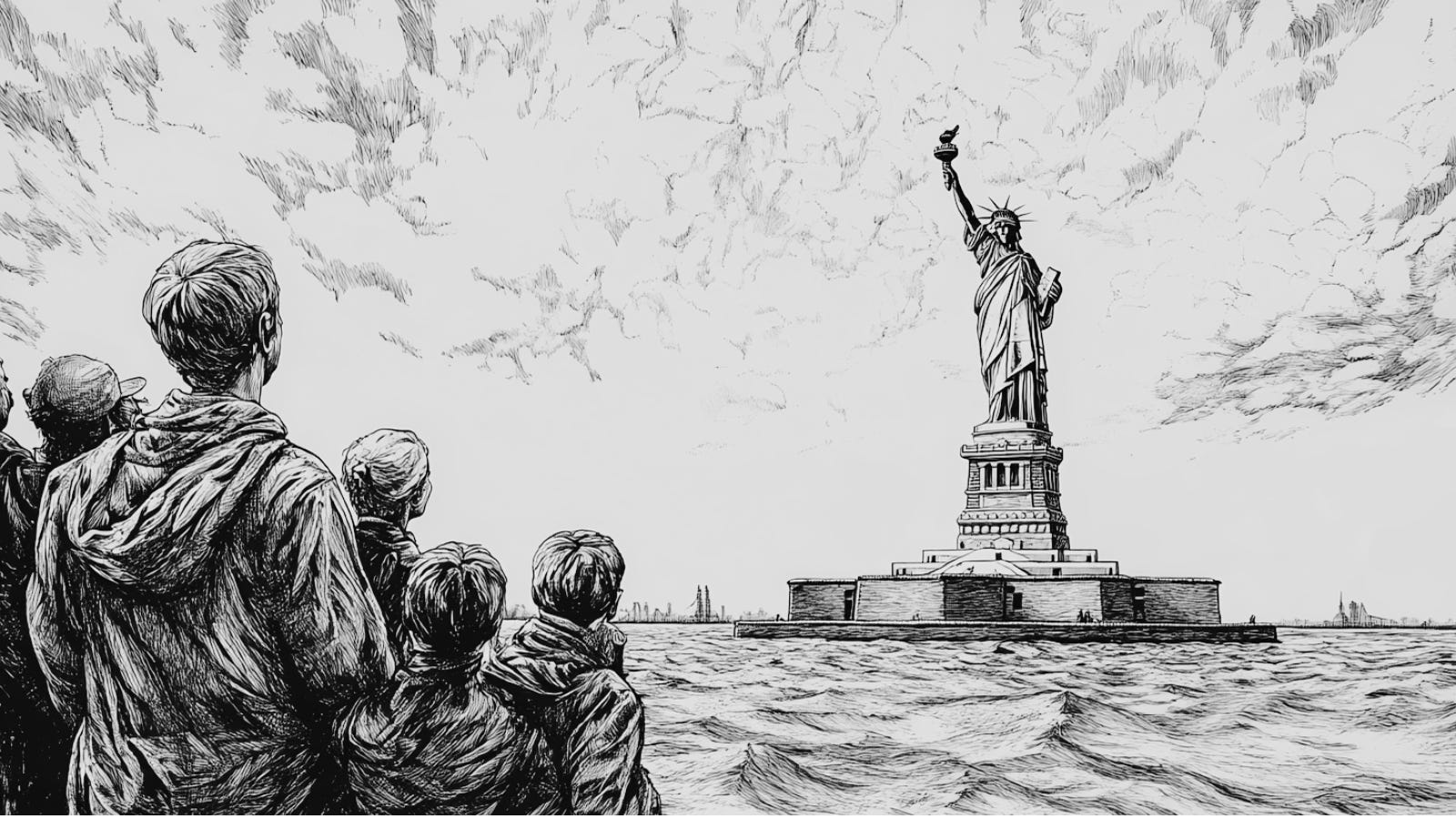
A Direct Attack on the Constitution’s Promise
Today, the Supreme Court faces one of the most consequential constitutional challenges of modern times: Donald Trump’s attempt to end birthright citizenship through executive order. After lower courts swiftly blocked his directive as unconstitutional, the Trump administration has now turned to the nation’s highest court via appeals, to start the process of urging the court to overturn over a century of settled law and strip millions of U.S.-born children of their rightful citizenship.
At issue is the 14th Amendment, which has long been interpreted to guarantee that anyone born on U.S. soil is automatically a citizen, regardless of their parents' immigration status. Trump's legal team argues that undocumented immigrants and temporary visitors are not truly “subject to the jurisdiction” of the United States, and therefore, their U.S.-born children should not be considered citizens. This radical reinterpretation seeks to undo a bedrock principle of American constitutional law, one that has been upheld without exception since the ratification of the 14th Amendment in 1868.
The stakes could not be higher. The Supreme Court’s decision will determine whether the United States continues its historic commitment to equal citizenship by birth or embarks on an uncharted path of exclusion and discrimination. If Trump prevails, America will face an unprecedented legal and social crisis—millions of people could suddenly find themselves **stateless in their own country.
This is an important and complicated issue. Search, explore, and take a deep dive into this article—along with all related issues—using our special Perplexity AI page. Just click, ask, and discover. No limits, no off-limits angles—just pure insight.
The 14th Amendment’s Broad Guarantee: “All Persons Born” Means All
The Citizenship Clause of the 14th Amendment was designed to be universal. Written in the aftermath of the Civil War, it sought to correct the grave injustice of slavery and the infamous Dred Scott v. Sandford decision, which had denied citizenship to Black Americans. The amendment’s language—”All persons born or naturalized in the United States, and subject to the jurisdiction thereof, are citizens of the United States”—was drafted with clear intent: to make citizenship an unchallengeable birthright for all born within the nation’s borders.
For 155 years, this principle has been reaffirmed by courts, scholars, and lawmakers alike. There has never been a serious legal challenge to the idea that children born on U.S. soil are citizens, regardless of their parents' nationality or immigration status—until now.
The Trump administration’s argument hinges on distorting the phrase subject to the jurisdiction thereof” to exclude the U.S.-born children of undocumented immigrants and temporary visitors. But this interpretation flies in the face of history, precedent, and common sense. The framers of the 14th Amendment were explicit in their intent: “subject to the jurisdiction” meant subject to U.S. law, not allegiance to another country. The only exceptions they recognized were children of foreign diplomats, enemy occupiers, or certain Native American tribes that were then considered sovereign nations.
Immigrants—documented or not—are indisputably subject to American law. They can be arrested, prosecuted, and sued in American courts. Their presence is regulated by U.S. statutes. Their children, born in U.S. hospitals, live under American governance. By any rational standard, they meet the definition of being “subject to U.S. jurisdiction”. The Supreme Court now faces a pivotal question: will it uphold the original intent of the Constitution, or will it bend to political pressure to redefine American citizenship?
Wong Kim Ark (1898): The Supreme Court’s Own Precedent
Trump’s legal challenge does not occur in a vacuum. The Supreme Court has already decided this issue—over a century ago in United States v. Wong Kim Ark (1898). That case involved a man born in San Francisco to Chinese immigrant parents. Despite his parents’ lack of U.S. citizenship, the Supreme Court ruled decisively that he was an American by birth, because the 14th Amendment’s Citizenship Clause applies to all born on U.S. soil, regardless of parental status.
The Court’s ruling was emphatic: being born within the territorial boundaries of the United States confers automatic citizenship, with only the narrowest of exceptions. Even the argument that Wong Kim Ark’s parents were “subjects of the Emperor of China” did not sway the justices—his birth in the U.S. was all that mattered.
For Trump to succeed in his case, the Supreme Court would have to overturn its own precedent and declare that its interpretation of the 14th Amendment for the past 125 years was somehow wrong. The implications of such a decision would be staggering. It would not only strip citizenship from millions of American-born children, but it would also call into question the entire framework of constitutional protections that rest on longstanding interpretations of civil rights amendments.
Twisting the “Jurisdiction” Clause: Trump’s Flawed Legal Argument
In its appeal, the Trump administration leans heavily on an unsupported legal theory—that undocumented immigrants and short-term visitors are not truly “subject to U.S. jurisdiction” because they still “owe allegiance” to another country. This argument has never been accepted by any court in American history.
Legally, this theory is baseless. The Supreme Court has repeatedly confirmed that anyone living within U.S. territory is subject to U.S. jurisdiction. In Plyler v. Doe (1982), the Court ruled that even undocumented immigrants are protected by the Constitution’s Equal Protection Clause, stating that the phrase subject to jurisdiction” applies to all people residing in the United States, regardless of status.
The Trump administration’s attempt to manufacture a loophole in the 14th Amendment is not based on legal reasoning—it is a political maneuver designed to exclude certain groups from full participation in American society. It is a thinly veiled attempt to undermine immigrant communities by denying their children the most fundamental right of all: citizenship in the country where they were born.
Nationwide Injunctions and the Role of the Courts
Recognizing the blatant unconstitutionality of Trump’s executive order, multiple federal courts swiftly issued nationwide injunctions, blocking the policy from taking effect while legal battles proceed. Lower court judges have already made clear that the law is not on Trump’s side. One ruling described the order as “a direct violation of the 14th Amendment,” while another noted that no court in U.S. history has ever adopted the president’s interpretation.
Yet the Trump administration has framed these injunctions as judicial overreach, arguing before the Supreme Court that lower courts should not have the power to halt executive actions on a nationwide scale. This argument is a distraction from the core issue: the policy is unconstitutional, and blocking an unconstitutional order is precisely what courts are meant to do.
The Human Toll: Fear, Exclusion, and a New Underclass
If the Supreme Court sides with Trump, the consequences will be devastating. Thousands of children born each year would suddenly lose their claim to U.S. citizenship, creating a new underclass of stateless individuals—unable to get passports, Social Security numbers, or any of the legal rights that come with citizenship. Families would be thrown into turmoil, unsure of their children’s legal status in the only country they have ever known.
Beyond the immediate legal chaos, such a ruling would send a chilling message to immigrant communities. It would deepen racial profiling and discrimination, as Americans of certain ethnic backgrounds would face increased scrutiny over their citizenship. It would fracture the very fabric of American society, fostering division and second-class status for millions.
The Supreme Court’s Choice: Upholding the Constitution or Bending to Politics
The Supreme Court now faces a defining moment. Will it uphold the clear meaning of the 14th Amendment, along with its own binding precedent? Or will it allow a politically motivated redefinition of citizenship that undermines the Constitution itself?
The outcome of this case will reverberate for generations. A ruling against Trump would reaffirm America’s commitment to equality and constitutional integrity. A ruling in his favor would set a dangerous precedent, opening the door for further erosions of fundamental rights.
The Constitution is not a policy document to be rewritten at the whim of any administration. The Supreme Court must recognize this attack on birthright citizenship for what it is: an unlawful, unethical, and unconstitutional assault on what it means to be an American.
Mitch Jackson, Esq. | links
This post is free.
But free doesn’t build the future.
Independent journalism only works when people like you choose to lean in—not just with attention, but with support.
If this work matters to you, today’s a great day to take the leap.
$5 a month. $50 a year. For you or gift to a friend.
A small investment in something bigger than all of us.

What is happening? Who has control of this government? It’s not Trump, he’s not smart enough. We have some very, hateful racists in control. I hate it here.
Thank you for today's post. It really helped me understand the 14th amendment and how it's been upheld since it was ratified. Will this Supreme Court find some argument to revise the law of the land that no other court, Supreme or otherwise, has ever accepted.?