

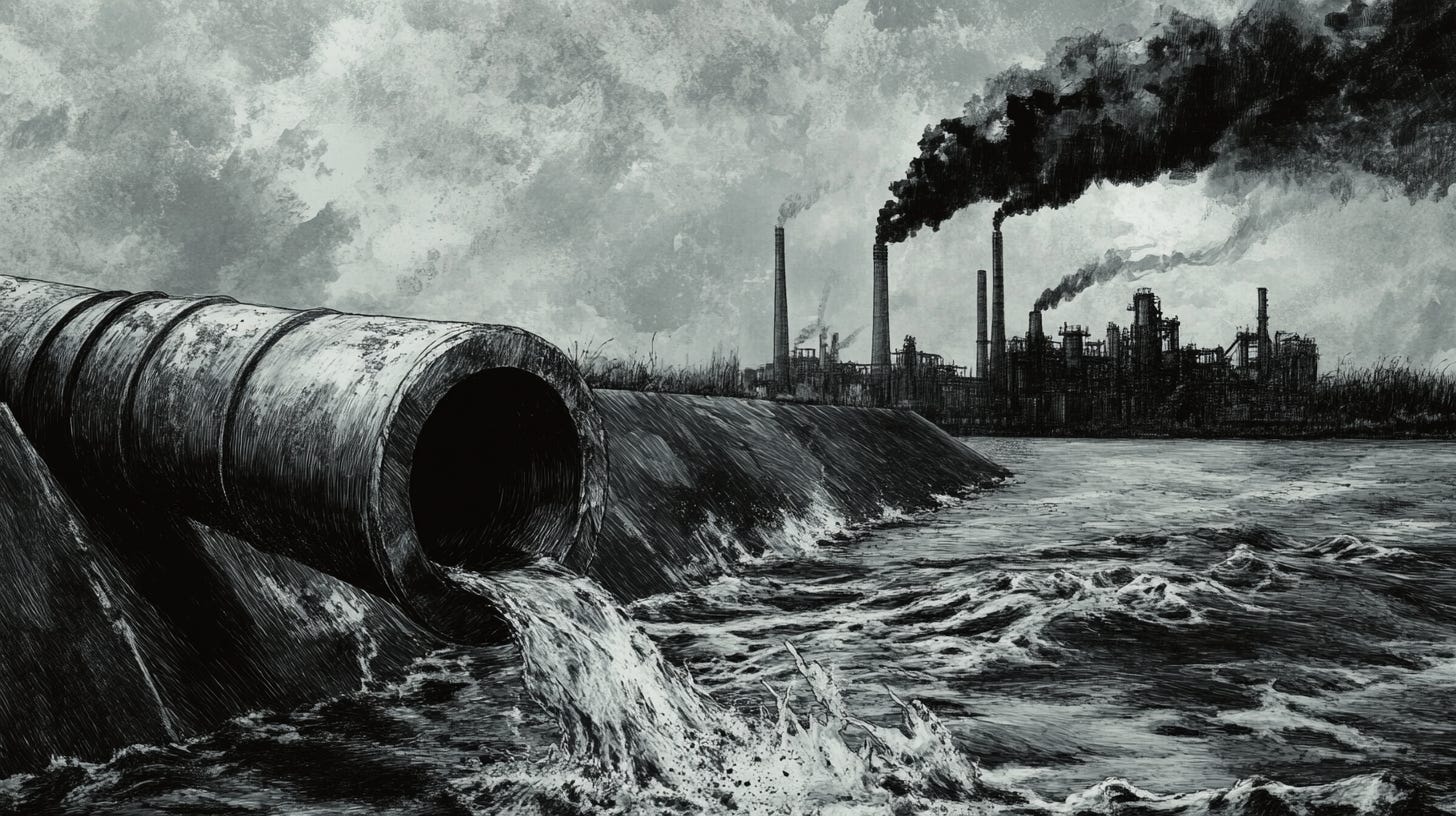
Everything Trump Touches Turns To Shit, And On Tuesday, That Now Includes Our Environment
I never thought I’d see the day when the U.S. government would launch an all-out assault on the air we breathe, the water we drink, and the planet we call home. Yet here we are. In one sweeping move on Tuesday, March 12, 2025, the Trump administration has gutted over 30 critical environmental protections, reversing progress that took decades to achieve.
Their justification? “Cutting costs” and “reducing burdens.”
Let’s be clear: the only people benefiting from this are fossil fuel executives and lobbyists. The rest of us? We’re left with poisoned water, filthy air, and a future set on fire.
This is important. Critically important. And I urge you to take a closer look. Because at times like these, seeing the whole picture isn’t just helpful—it’s essential. Use our special Perplexity AI page to explore the facts, examine the issues, and gain the clarity needed to fully understand what’s at stake.
The Environmental Disaster We Can’t Afford
The Trump administration has unleashed a regulatory rollback of staggering proportions, dismantling 31 key environmental protections in what can only be described as a corporate giveaway at the expense of public health. The EPA, under Lee Zeldin’s leadership, is gutting limits on greenhouse gas emissions from power plants, slashing fuel efficiency standards, and stripping away vehicle emissions rules—moves that will pump more pollution into our air and more money into the pockets of fossil fuel executives.
The Clean Power Plan? Gone. Methane leak controls for oil and gas companies? Eliminated. The Clean Water Act? Weakened. Protections for wetlands? Slashed. Even the very foundation of climate action—the 2009 Endangerment Finding, which legally classified greenhouse gases as harmful to human health—is now up for debate.
But it doesn’t stop there. The administration has also axed federal funding for electric vehicle infrastructure, making it harder for Americans to transition to cleaner cars, while gutting programs focused on environmental justice—ensuring that low-income communities, already suffering the worst pollution, will be left to fend for themselves. The United States has even withdrawn from international climate commitments, making it clear that corporate profits come before global responsibility.
All of this is being sold to the public as a way to lower costs, but in reality, it’s a shell game—one where everyday Americans pay more in healthcare expenses, climate disasters, and rising energy costs, while polluting industries pocket billions. This isn’t just deregulation. It’s a deliberate, calculated decision to put industry profits over people’s lives.
The Science is Indisputable
Dr. Michael Mann, one of the world’s leading climate scientists, called this rollback “a death sentence for the climate.” The Union of Concerned Scientists warned that these policies will increase carbon emissions at a time when we desperately need to cut them. The American Lung Association has made it clear: pollution-related deaths will rise. This is not political spin. This is fact.
Even worse, eliminating environmental justice programs means low-income communities and communities of color—already disproportionately suffering from pollution—will face even greater environmental hazards. The administration is literally choosing to let people get sick so corporations can save a few bucks.
A War on Clean Energy
Perhaps the most baffling part of this assault on the environment is the attack on electric vehicles (EVs). The administration has not only cut tax incentives for EV buyers, but they’ve also slashed funding for charging infrastructure. This is a direct handout to Big Oil.
The argument? That this will “lower costs” for consumers. But that’s nonsense. EVs already cost less to own than gas-powered cars over time, and with gas prices volatile, Americans should be encouraged to shift toward energy independence—not shackled to oil companies forever.
And what about jobs? The clean energy sector has been one of the fastest-growing industries in the country. Slowing down the EV transition doesn’t just hurt the environment; it kills American innovation and economic growth.
Who Wins? Not You.
So, who actually benefits from these rollbacks? Not the American people. Not small businesses. Not families struggling with healthcare costs related to pollution-induced illnesses.
The Trump administration’s aggressive rollback of environmental regulations is poised to significantly boost profits for large fossil fuel corporations, while everyday Americans bear the brunt of increased health risks and environmental degradation. For instance, the Colstrip power plant in Montana, lacking modern pollution controls, faced compliance costs estimated between $350 million and $665 million under previous regulations. The reversal of these rules allows such plants to continue operations without incurring these expenses, directly enhancing their profit margins. 
Moreover, the administration’s decision to relax vehicle fuel efficiency standards, previously projected to cost the auto industry $700 billion, permits manufacturers to prioritize less efficient, higher-margin vehicles without stringent regulatory constraints. This shift enables automakers to allocate resources away from compliance and toward more profitable ventures, potentially at the expense of environmental sustainability. 
Collectively, these regulatory rollbacks are anticipated to eliminate trillions of dollars in compliance costs for industries, as stated by EPA Administrator Lee Zeldin. While corporations benefit financially, the public faces increased pollution, health hazards, and long-term environmental costs, underscoring a profound imbalance where corporate profits are prioritized over public well-being. Corporate Savings: By avoiding compliance costs, large corporations could collectively save approximately $10 billion annually.
The Cost of Going Backward
We’re living in an era where every country that takes the climate crisis seriously is investing in green energy, sustainable infrastructure, and long-term solutions. But instead of leading the way, America is choosing to run backward.
The recent environmental policy changes not only favor large corporations but also impose significant financial burdens on everyday Americans. These rollbacks are poised to escalate healthcare costs, increase medical debt, and strain household finances in both the short and long term. 
Escalating Healthcare Expenses
Increased pollution resulting from deregulation leads to higher incidences of respiratory and cardiovascular diseases. This surge in health issues directly translates to rising medical bills for affected individuals. For instance, in 2022, 28% of adults reported foregoing necessary medical care due to unaffordable costs. This percentage is anticipated to rise as environmental conditions deteriorate, leading to more untreated health problems and higher long-term healthcare expenses.
Growing Medical Debt
The financial strain from increased medical needs often results in substantial medical debt. A 2023 survey revealed that many Americans, regardless of insurance coverage, struggle with healthcare affordability, leading to delayed or skipped medical treatments. This trend is expected to worsen as environmental health risks escalate, pushing more individuals into debt. 
Wider Economic Implications
Beyond individual medical expenses, the broader economy suffers as well. Chronic health conditions reduce workforce productivity, leading to economic losses. Additionally, increased healthcare costs divert household spending away from other sectors, stifling economic growth. Investments in public health have been shown to improve health outcomes and reduce healthcare costs, but underfunding these initiatives can lead to higher expenses for individuals and the healthcare system. 
Visualizing the Financial Impact
To illustrate the potential financial burden on American households, consider the following hypothetical data:
• Average Annual Healthcare Costs per Household: $5,000
• Projected Increase Due to Environmental Rollbacks: 20% 
• Additional Annual Cost per Household: $1,000 
With approximately 128 million households in the U.S., this equates to an additional $128 billion in healthcare expenses annually.Health and Economic Costs to the Public
While corporations may see financial benefits, the public is likely to bear the brunt of increased pollution through higher healthcare expenses and reduced quality of life. The Clean Power Plan, which aimed to reduce pollutants contributing to smog and soot by 25%, was estimated to prevent 140,000 to 150,000 asthma attacks among children and 2,700 to 6,600 premature deaths annually. The net climate and health benefits were projected between $25 billion and $45 billion per year starting in 2030. 
Conclusion
This isn’t about politics. It’s about survival. It’s about our kids being able to live in a world where they don’t have to fear the air they breathe or the water they drink.
While deregulation may boost corporate profits, it imposes substantial and often overlooked costs on everyday Americans. Rising healthcare expenses, increased medical debt, and broader economic repercussions highlight the need for policies that protect public health and promote economic well-being for all.
If the administration truly cared about lowering costs and helping Americans, they’d be investing in clean energy, not gutting it. They’d be protecting our environment, not selling it to the highest bidder. This decision isn’t about freedom or economics—it’s about greed. And it will cost us everything.
We can’t afford to let this happen.
Mitch Jackson, Esq. | links
This post is free.
But free doesn’t build the future.
Independent journalism only works when people like you choose to lean in—not just with attention, but with support.
If this work matters to you, today’s a great day to take the leap.
$5 a month. $50 a year. For you or gift to a friend.
A small investment in something bigger than all of us.
