

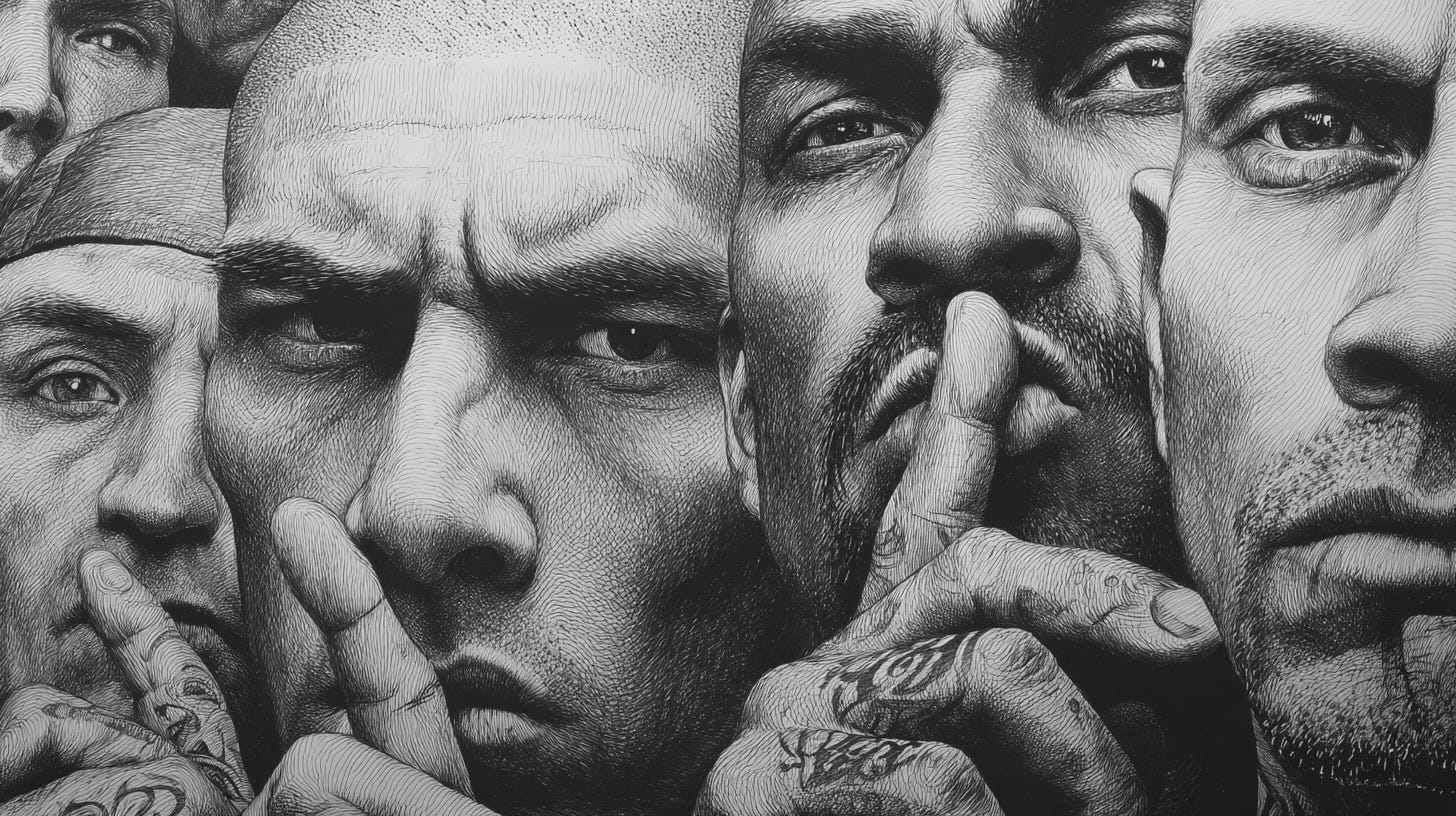
Imagine a dedicated law enforcement agent who spends years infiltrating a brutal gang. This agent builds trust with informants inside the gang, risking their life every day to gather intelligence that saves lives. Now imagine watching politicians throw that hard-won intelligence in the trash for a quick headline.
According to a New York Times article titled “Behind Trump’s Deal to Deport Venezuelans to El Salvador’s Most Feared Prison” this is exactly what’s happening. The article opened my eyes to details I hadn’t seen previously reported about the deportation deals Trump and his team made with El Salvador’s president, Nayib Bukele.
While researching and writing the piece, the reporters interviewed government officials, lawyers for deported migrants and relatives of migrants in the United States and Venezuela. They also reviewed internal records and court filings. Here’s what they found.
American officials are patting themselves on the back for shipping hundreds of alleged gang members to a massive prison in El Salvador. You might have seen images of these prisoners shackled and lined up in that notorious facility. It looks like a decisive victory against gang violence. It is not. It is a dangerous illusion, a shortsighted stunt that sacrifices our long term security.
Here is what they did. In March, our Secretary of State, Marco Rubio, struck a deal with El Salvador’s president, Nayib Bukele. The Trump administration wanted to use Bukele’s new mega prison as a dumping ground for mass deportations, a centerpiece of a plan touted as the largest deportation effort in American history.
Bukele agreed, on one condition. He demanded that the United States hand over nine leaders of the MS-13 gang who were in U.S. custody. These were no ordinary prisoners. Many of them were high ranking MS-13 members who had agreed to help U.S. law enforcement. They were informants, promised protection by our Justice Department in exchange for helping us take down one of the world’s deadliest gangs.
Think about that. These gang leaders chose to cooperate with us. They provided crucial information about their criminal network, information that was essential to dismantling MS-13 from the inside. Some even revealed evidence of corruption in Bukele’s own government. In return, we gave them our word and a degree of safety. That bond isn’t a polite agreement. It is often a matter of life or death, and it is a cornerstone of how we fight organized crime. Without it, we lose our most potent weapon against gangs: insider knowledge.
In a single phone call, Rubio assured Bukele that the United States would break that promise. He told Bukele that our Attorney General, Pam Bondi, would cancel the Justice Department’s agreements with those informants, clearing the way to deport them straight into Bukele’s hands. Two days after that call, the administration sent one of those informants, a gang leader named César López Larios, back to El Salvador. He had been helping U.S. prosecutors build cases, and then suddenly he was handed over to the same regime he was cooperating against. Imagine the message that sends to every other informant and every agent in the field: your life and your trust are bargaining chips now.
This deal is beyond troubling. It is a betrayal of our law enforcement officers who put their lives on the line, and a betrayal of the public trust that underpins our justice system. I do not use that word lightly. People within the Justice Department are alarmed and furious. They know how much damage that move did.
In one stroke, the DOJ undermined years of painstaking and dangerous work behind the scenes to get gang leaders to cooperate. If we show that we will abandon our informants whenever it’s convenient, how will we ever convince another criminal to help us? No one will risk testifying if they know we might break our promise and throw them to the wolves.
I have seen this up close as a lawyer who has watched other lawyers and law enforcement working on gang cases. Cooperating witnesses and informants are the bedrock of prosecuting organized crime. You cannot rely on wiretaps and raids alone; you need people on the inside who trust you enough to share secrets. That trust, once broken, is nearly impossible to repair. By ripping up deals with MS-13 informants, our leaders did more than burn a bridge; they sent a message to every potential informant: “Don’t bother helping the Americans, because we won’t have your back.”
This isn’t only about those nine gang leaders. It is about every future case where we need someone to flip and testify. It is about the detectives and federal agents out there right now, trying to convince midlevel gang members to turn on their bosses. Their job suddenly got harder because the credibility of the U.S. government took a hit. Imagine sitting across from a terrified young gang member, asking them to trust you enough to testify. What do you say when they reply, “Why should I trust you? You betrayed your last guys.” That is the nightmare scenario our agents now face.
By appeasing Bukele, we also let him cover up his own possible misdeeds. Remember, some of these informants gave evidence that people in Bukele’s government secretly worked with MS-13. Instead of using that information to demand accountability, our officials shipped the witnesses out of our reach. Bukele gets what he wants: silence about any deals he made with the gang. In return, we get a temporary place to dump prisoners. What a bargain.
Supporters of this deal, including some at the State Department, are already bragging that Americans are safer as a result. They point to hundreds of gang members from MS-13 and another group called Tren de Aragua who were recently packed onto planes and sent to that El Salvador prison. They celebrate these images as proof of a crackdown.
Real safety is not a photo op. Real safety comes from dismantling the entire criminal network. Tossing a few foot soldiers into someone else’s jail does not accomplish that. The gang leaders and their secrets are the keys to truly dismantling these organizations, and we threw away some of those keys for a quick public relations win.
The people cheering this on are forgetting history. We have seen time and again that you cannot eradicate a gang like MS-13 with brute force alone. These organizations snake their way through communities and across borders, hiding behind fear and codes of silence. They survive crackdowns.
What they cannot survive in the long run is sustained legal pressure and intelligence: the slow, steady work of flipping insiders and protecting witnesses to take out the gang’s leadership. That process takes patience and integrity. Yes, honor matters here. Deals with informants hinge on the government’s integrity. We have to keep our word if we expect others to come forward. If you break that honor, you feed the monster you are trying to slay.
Every American deserves a real plan to make our streets safer from gang violence. This was not a real plan. It was a stunt. It was a flashy show put on to convince you that something big was happening. In reality, it weakened the foundation of that massive crackdown. It is the national security equivalent of tearing out all the wiring in your house to turn on all the lights at once. You get a brilliant flash, and then a whole lot of darkness.
The next time you see a headline bragging about a massive gang crackdown, look a little closer. Ask yourself what it cost. In this case, the cost was our honor and our strategic advantage. It also cost us the trust that keeps our citizens and officers safe.
Mitch Jackson, Esq.
Somebody is going to get hurt. Could be catastrophic in scale. Just when you think Trump and administration must have hit rock bottom, they continue to amaze in even more terrible ways.